The most complete guide to Crete: 221 places on the map, 23 routes and 49 articles — with photos, videos and the story behind every place. No sign-up, no trackers.
Routes drawn along real roads
Weather at every stop
Full-text search
“Near me” by geolocation
Create your own printable itinerary
Satellite, terrain, dark mode
Works offline
⌕
Searches 1.7 million characters of descriptions, not just names
—places
4regions
—routes
—with video
Search results
—
Interactive map
Find what is near you
Filters narrow the map and the list at once. Zoom out and pins group together.
Region
Category
Фильтры карты
Landmarks
Featured places
RegionCategory
Routes
Ready-made day trips
Individual places
Articles about landmarks
Fodele and the Cretan roots of El Greco
Fodele all but disappears into the green of its plane trees and citrus orchards, and it is one of the most picturesque villages on Crete. It lies a little under thirty kilometres west of Heraklion in the municipality of Malevizi, some sixty metres above sea level and about three kilometres inland from the sea and the coast road, and has around 450 inhabitants, most of whom still live from oranges, lemons and vegetables. The name probably goes back to a Venetian family called Fodele, attested on the island from the 13th century; the place itself appears in a document of 1248 recording the farmland a monastery held here, and again as “Fodhele” in the Venetian census of 1577, when it was counted in the province of Mylopotamos.
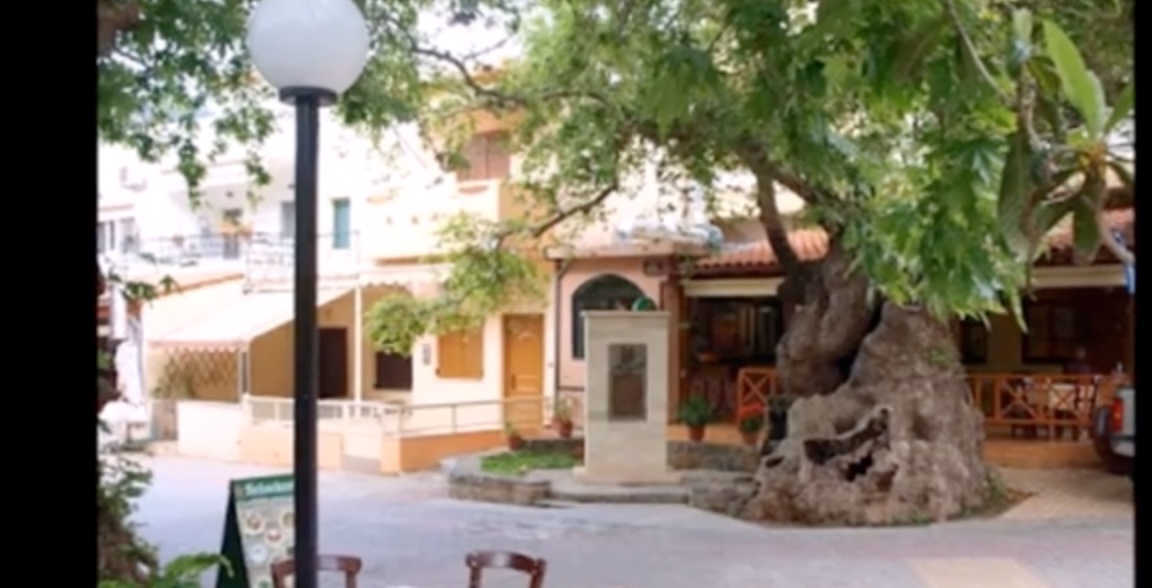
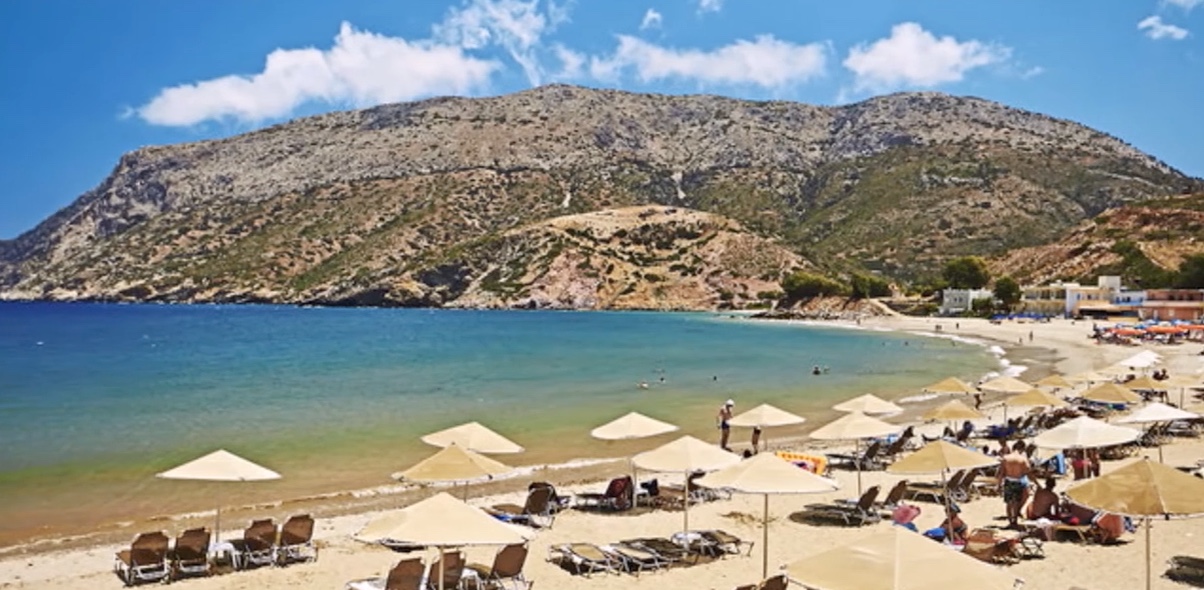
In the lanes the rustle of leaves mingles with the murmur of the Pantomantris, which already had a reputation among the Venetians for its abundant water – a report of 1595 makes a point of mentioning the river – and which runs through the middle of the village before reaching the sea in a graceful bay. Legend has it that this quiet anchorage was once the trading port of the ancient city of Axos; the harbour town is identified with a place the ancients called Pantomatrion. Remains of a Minoan settlement have been found close by, at a spot known as Pera Galina, and on the heights above the valley stand the ruins of the watchtowers (koules) that the Ottomans built during the uprising of 1866–69 – the Red Tower, the Koules of Fodele and the Koules of Koprokefala among them. On the village square, coffee houses and stalls selling woven goods and embroidery line up beneath the great plane trees, with a small park and picnic tables close at hand and footpaths setting off into the valley. But Fodele is known above all for its oranges, to which the cultural association devotes a festival every March.
The Church of the Presentation of the Virgin
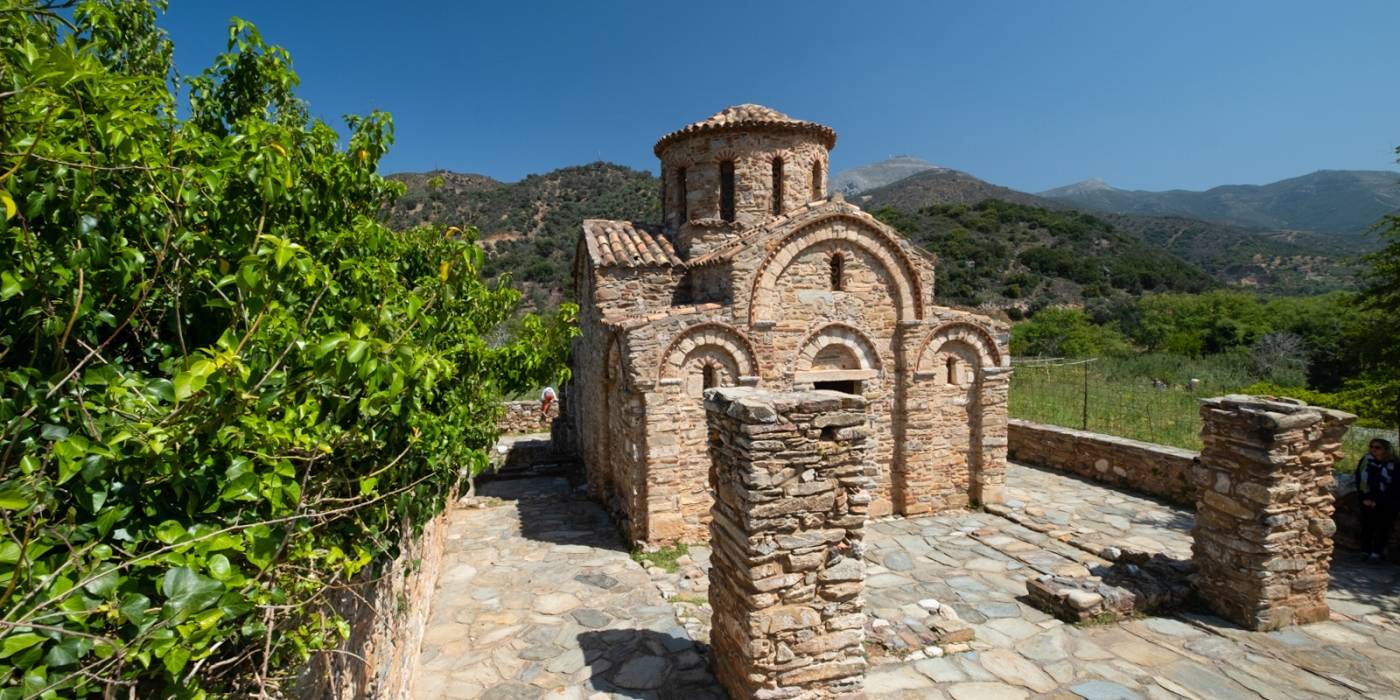
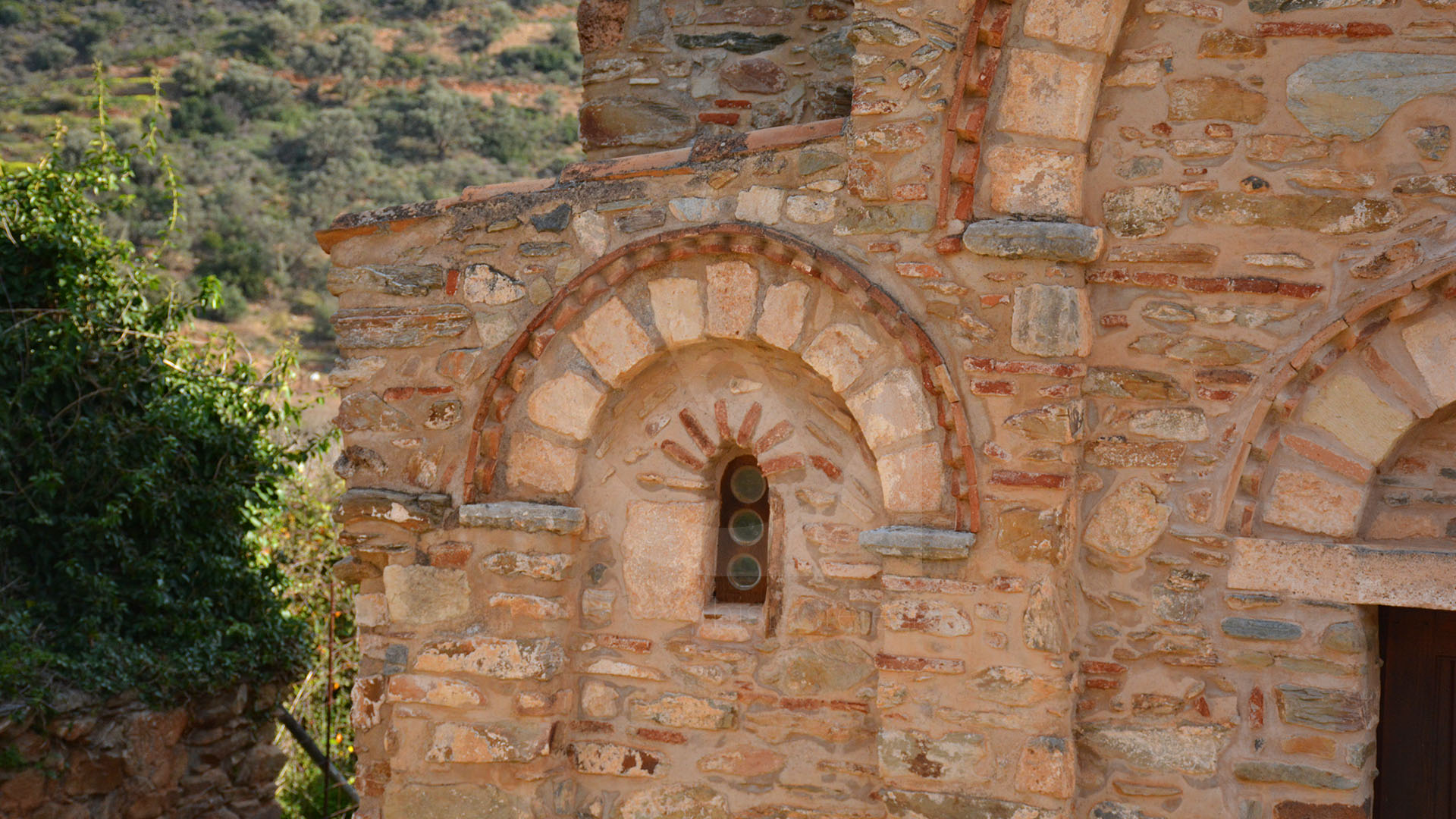
On the edge of the village, about a kilometre up the valley at a spot called Loumbinies, in the middle of orange orchards and directly opposite the museum house of Domenikos Theotokopoulos, stands one of Fodele’s treasures: the Church of the Presentation of the All-Holy Mother of God (Ekklisia ton Eisodion tis Theotokou), built in the 11th century and known to everyone in the village simply as the Panagia. A paved lane leads out to it from the square, an easy walk for anyone who prefers to leave the car under the plane trees. Almost a thousand years old and modest in scale, the building is moving for its beauty and for its atmosphere of quiet devotion.
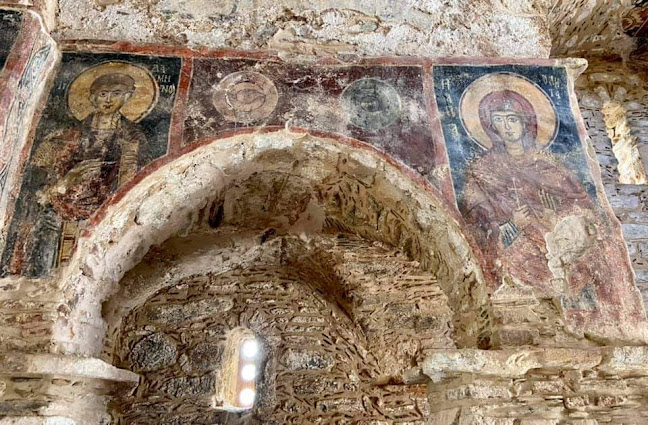
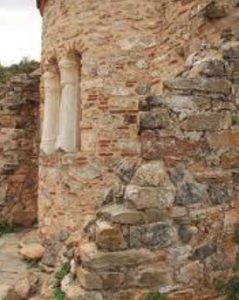
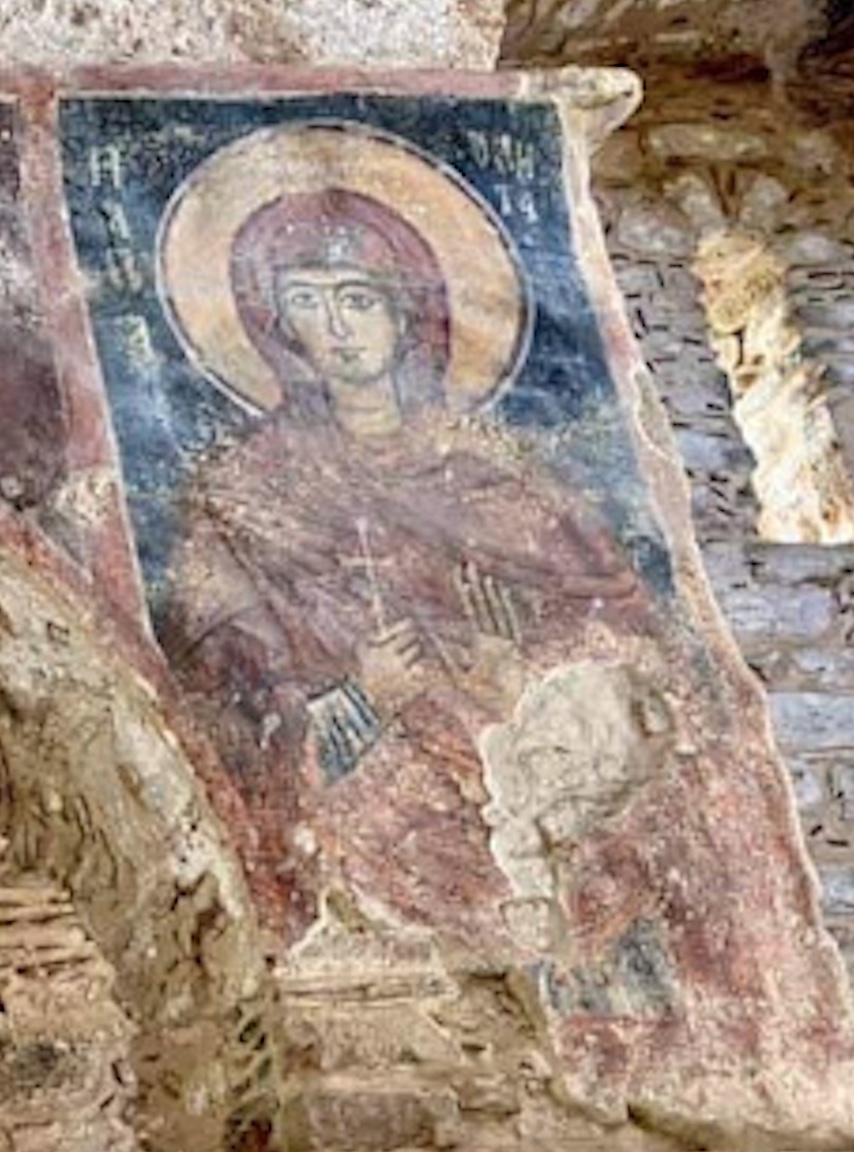
The architecture brings together the inherited features of Byzantine building that mark the Orthodox churches of Crete. It is a domed cross-in-square church, built without a narthex; its plan follows the practice of mainland Greece, while the blind arches and careful brickwork betray a schooling in models from Constantinople, and the cylindrical drum of the dome is pierced by eight narrow windows. It was raised over the central part of an Early Christian basilica, probably of the 6th century, a three-aisled building with a marble-paved floor that measured about 16 by 12 metres. The outer walls of that predecessor can still be traced around the later church, column bases from it are lodged in the masonry, and in what was once the north aisle a baptismal font faced with marble can be made out. On the walls two layers of painting survive in part, both of high quality. The older, from the middle of the 11th century, shows rows of standing saints, Constantine and Helena among them; a later layer in the southern arm of the cross, dated by an inscription to 1323, depicts scenes from the life of the Virgin. The church is open on Saturdays and Sundays from 8.30 to 15.30 between May and October, and on Sundays only, at the same hours, from November to April.
Local tradition holds that it was this very church that awakened in the young Domenikos Theotokopoulos his inclination towards icon painting. The episode cannot be documented, but it does link the early artistic surroundings of Fodele aptly with the Byzantine tradition of Crete. In El Greco’s early works the Byzantine composition, the severe drawing and a particular feeling for light are unmistakable.
Later, in his intensely expressive painting, these traits took on an entirely new resonance.
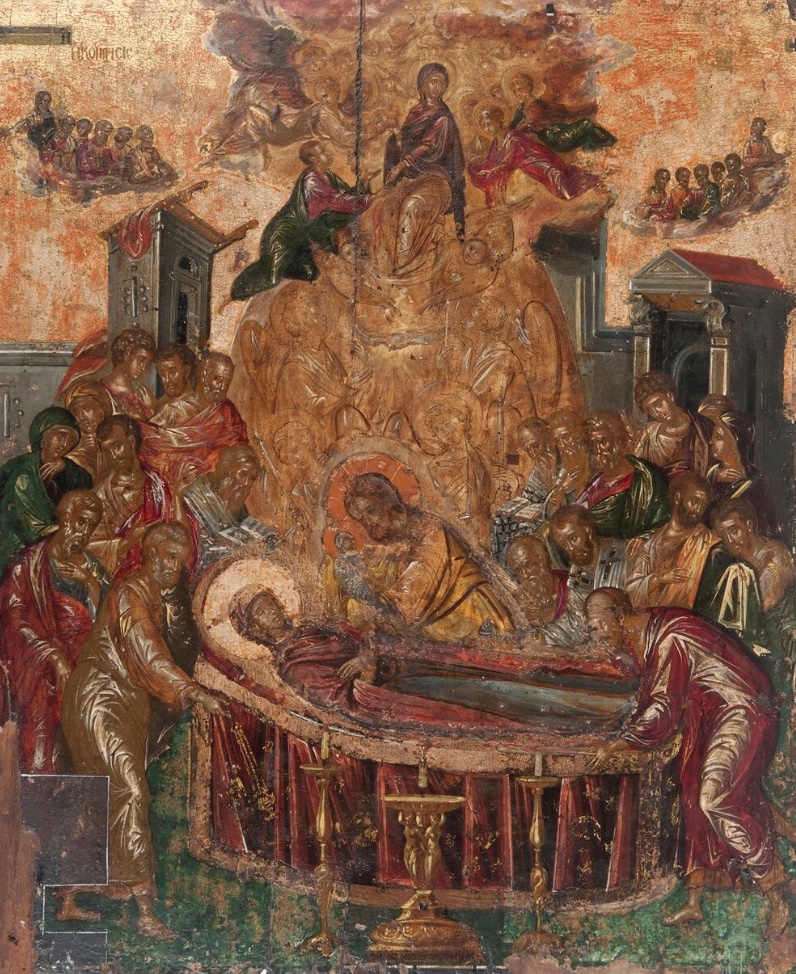
On this foundation the artist developed a language of his own, in which the Byzantine inheritance fused with Venetian painting and the culture of the Spanish Renaissance. The icon shown below, the “Dormition of the Virgin”, dates from his Cretan years, about 1565–66: a small panel in tempera and gold, barely 61 by 45 centimetres, which keeps to the Orthodox scheme while already borrowing from Renaissance engravings. It bears his signature, written on the base of the central candelabrum, and is kept in the Church of the Koimesis at Ermoupoli on Syros, where it was recognised as his work only in 1983.
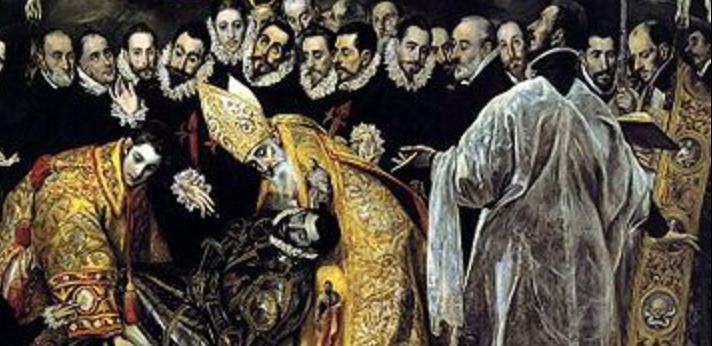
The icon painting of Crete remained a foundation of his art even in Toledo – scholars have pointed to the kinship between the composition of the Syros Dormition and that of the “Burial of the Count of Orgaz”, painted two decades later. For that reason the Church of the Presentation at Fodele is regarded not only as a monument of medieval architecture but as part of the cultural memory of the painter’s early years.
The museum house and the question of the birthplace
The painter, who according to local tradition was born at Fodele in 1541 – the old hamlet of Skotini is named as the family’s home – left an indelible mark on the art of the Renaissance. His father, Georgios Theotokopoulos, was a merchant and tax collector who died in 1556; an elder brother, Manoussos, also prospered in trade. Domenikos became famous for his unmistakable religious pictures and portraits, painted with a passionate, restless hand.
The young Domenikos began his career as an icon painter in Candia, today’s Heraklion and then the capital of Crete, where his talent was quickly noticed. As early as 1563 a document calls him a master; in June 1566 he witnessed a contract, signing in Greek as master Menegos Theotokopoulos, painter; and on 26 December of that year he asked leave to dispose of one of his panels, a Passion of Christ on a gold ground, by lottery. The two painters who appraised it the following day, one of them the icon painter Georgios Klontzas, set its value at seventy gold ducats. The desire to take his art further led him in 1567 to Venice, the cultural capital of the age, where he could study the works of great masters such as Titian and Tintoretto. The Venetian years shaped his style for good; the first traits of Mannerism appeared, and they grew stronger during his stay in Rome from 1570, where through the miniaturist Giulio Clovio he became a guest of Cardinal Alessandro Farnese in the Palazzo Farnese and where, in September 1572, he paid his dues to the Guild of St Luke as a painter of miniatures.
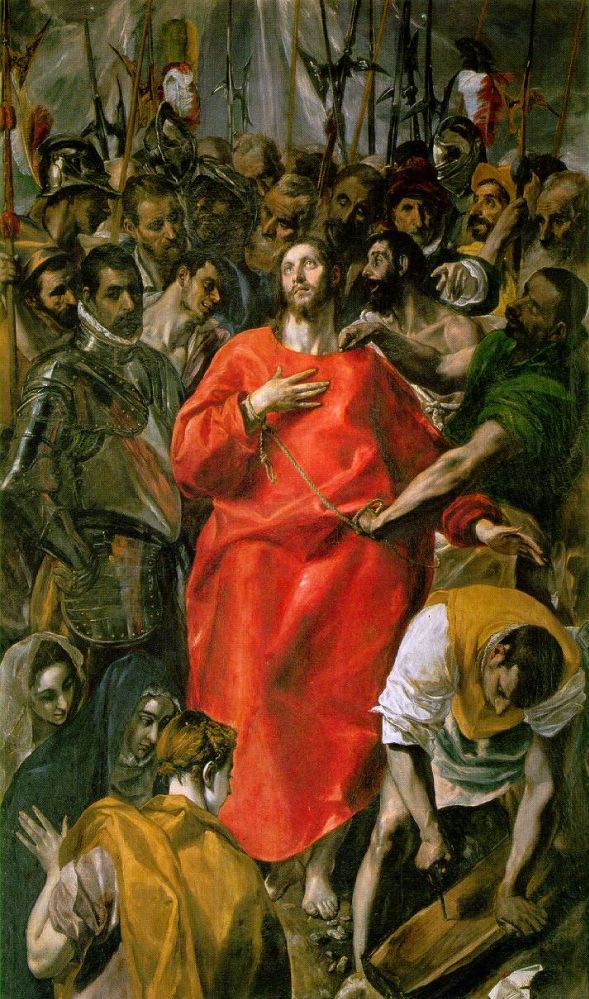
The search for new horizons brought Theotokopoulos to Spain in 1577, where he settled for good in Toledo – the city that became his second home and where he was known simply as the Greek. In the year of his arrival he signed contracts for the altarpieces of Santo Domingo el Antiguo and for the “Disrobing of Christ”; his son Jorge Manuel, later his assistant, was born in 1578. It was in Toledo that El Greco painted most of his celebrated works.
Among them is “The Burial of the Count of Orgaz”, which he painted between 1586 and 1588 for the church of Santo Tomé in Toledo. Commissioned by the parish priest, Andrés Núñez, the huge canvas – 4.8 metres high and 3.6 wide – shows St Stephen and St Augustine descending from heaven to lay Don Gonzalo Ruiz de Toledo in his tomb with their own hands; the benefactor had died in 1323, the very year inscribed on the later frescoes at Fodele. The boy in the foreground is Jorge Manuel, and the painter set his own likeness among the mourners. The picture still hangs in the church for which it was made.
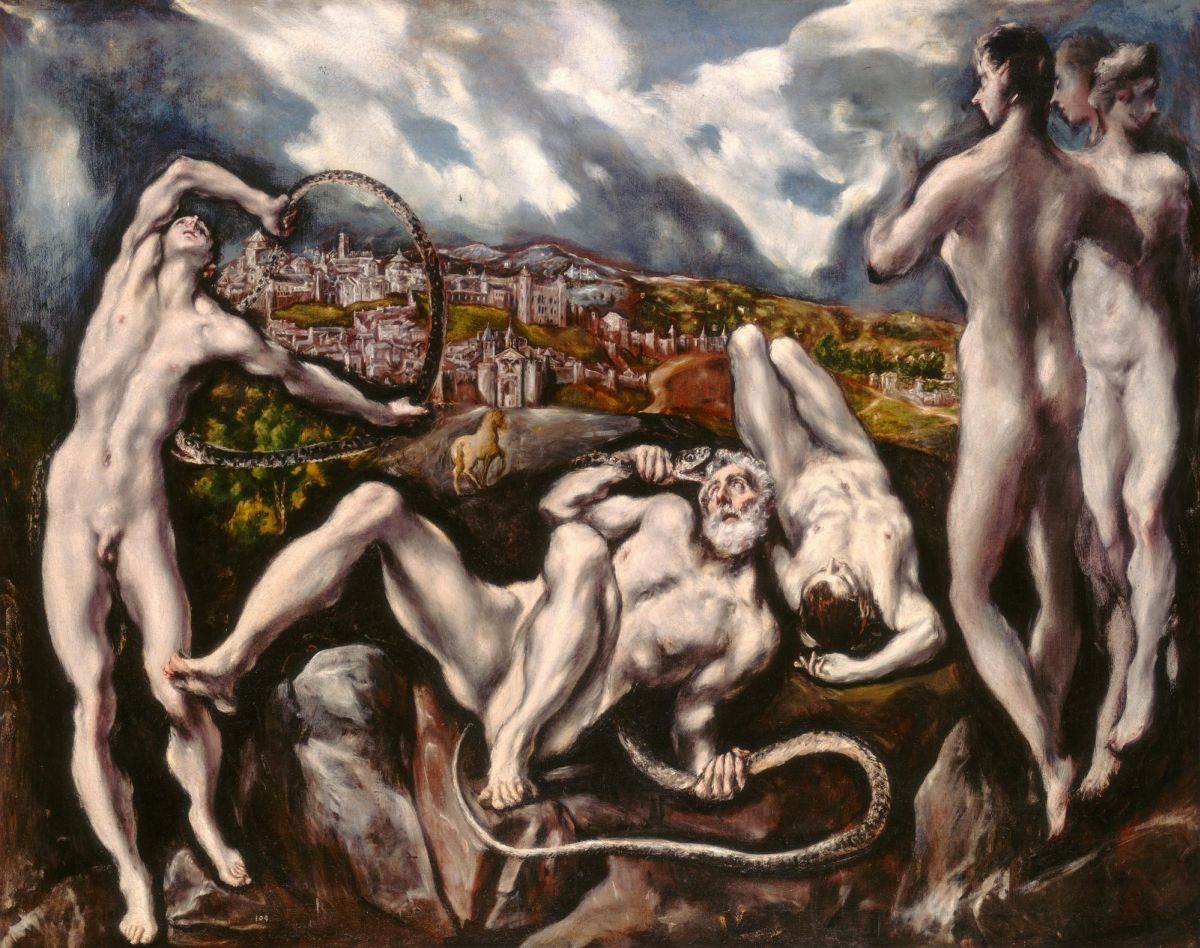
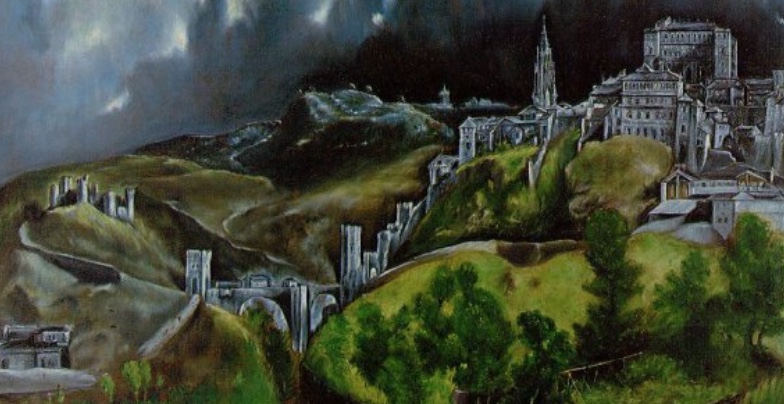
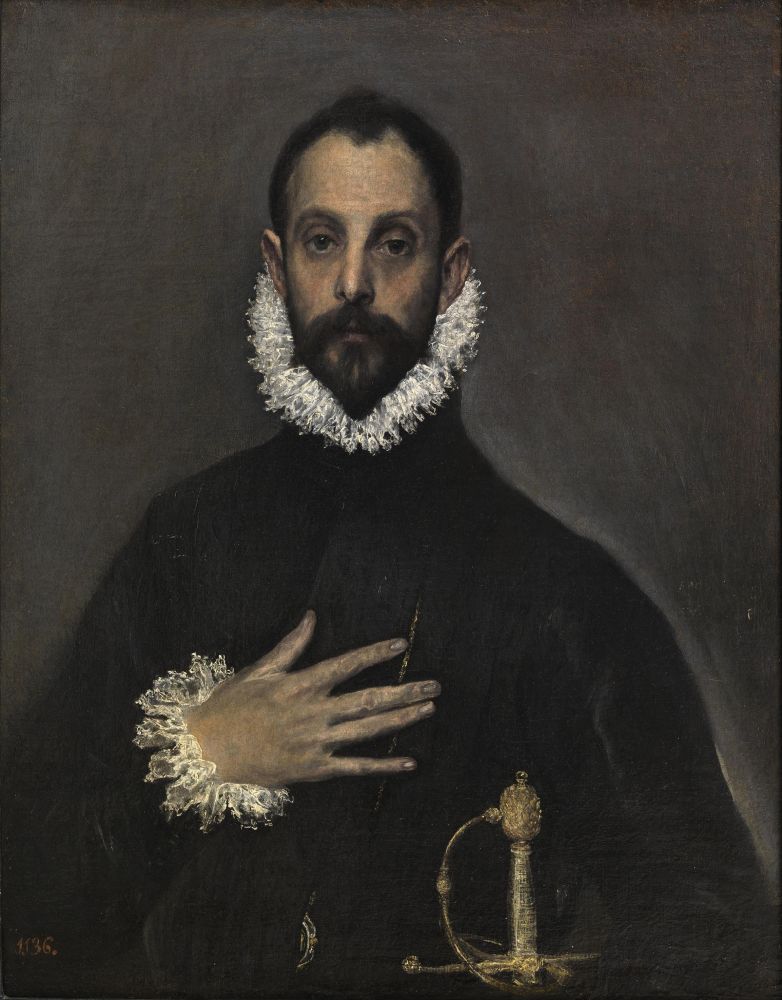
To these must be added the “View of Toledo”, painted in the closing years of the 16th century and now in the Metropolitan Museum of Art in New York, and numerous portraits and religious compositions. His works are distinguished by elongated figures, an intense use of colour and light and a deep spiritual content – qualities that make his style unique and recognisable at a glance. To the end he signed in Greek letters and liked to add to his name the word “Kres”, the Cretan.
In his lifetime El Greco was not unreservedly appreciated in Spain. He died in Toledo on 7 April 1614 and was buried in Santo Domingo el Antiguo, the church of his first Spanish commission. After his death, however, his work came to exert considerable influence on the development of European art; it was above all the painters of the modern movement – Cézanne, Picasso, the Expressionists – who discovered him as a forerunner. Today he is counted among the greatest masters of his age, and his pictures hang in the leading museums of the world.
The birthplace of Domenikos Theotokopoulos remains a matter of scholarly debate: no document unambiguously confirming Fodele has been found. The village preserves this version as a local historical tradition resting on indirect evidence and cultural memory.
All the same, Spanish professors and students, after lengthy enquiries carried out together with the Spanish consulate in Greece and under the direction of Professor Tormo, the archaeologist from the University of Valladolid, considered confirmed the popular tradition that Fodele was the birthplace of Domenikos Theotokopoulos. On 27 July 1934 they travelled to the “enchanting little village of Fodele” to pay homage to the great painter and to his home. They brought with them a bronze plaque set into a piece of rock from Toledo and put it up in the village, where it can still be seen beneath the plane trees.
The inscription on the plaque runs, in translation: “The Faculty of History of the University of Valladolid, pulse-beat in the heart of Castile, dedicates to Fodele this slab, hewn from the rock of Toledo, in memory of the glory of Domenikos Theotokopoulos. July 1934.”
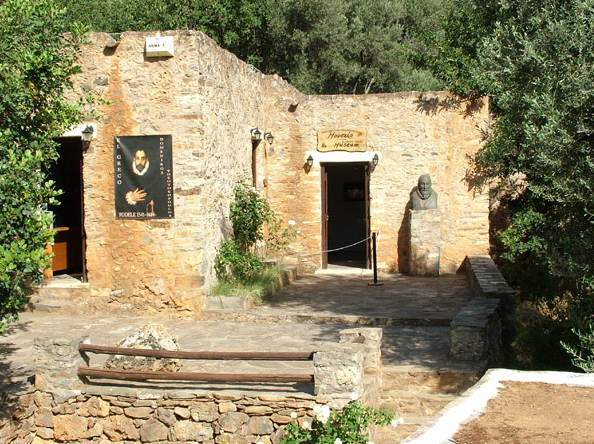
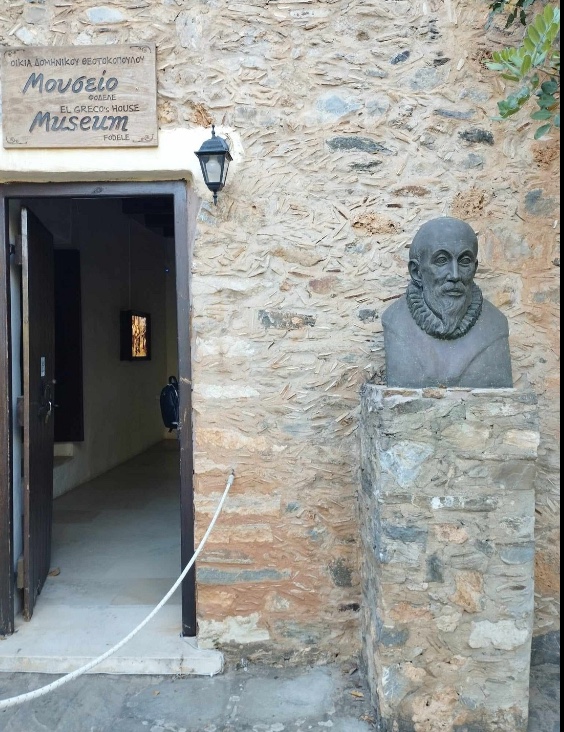
The museum itself is a restored stone house of post-Byzantine date, carefully rebuilt under the supervision of the Greek Ministry of Culture, which also bore the cost; work began in 1982 and the house opened to visitors in 1998. Of the once derelict property, which the villagers had always called the house of the Theotokopoulos family, only stumps of walls were standing before the restoration.
At the entrance the visitor is greeted by a bust of El Greco by the Greek sculptor Thanasis Apartis, made in 1964 – a symbol of the artist’s lasting bond with his native land.
El Greco’s road from Crete to Toledo
The museum shows reproductions of El Greco’s works; the only originals from his hand on Crete belong to the Historical Museum in Heraklion, founded in 1953, which looks after the small “Baptism of Christ” of about 1567–69 and the “View of Mount Sinai with the Monastery of St Catherine” of 1570–72 – both, that is, painted after he had left the island. People come to Fodele above all for the sake of the place – for the valley, the church, the family memory and the artistic surroundings in which the future master grew up.
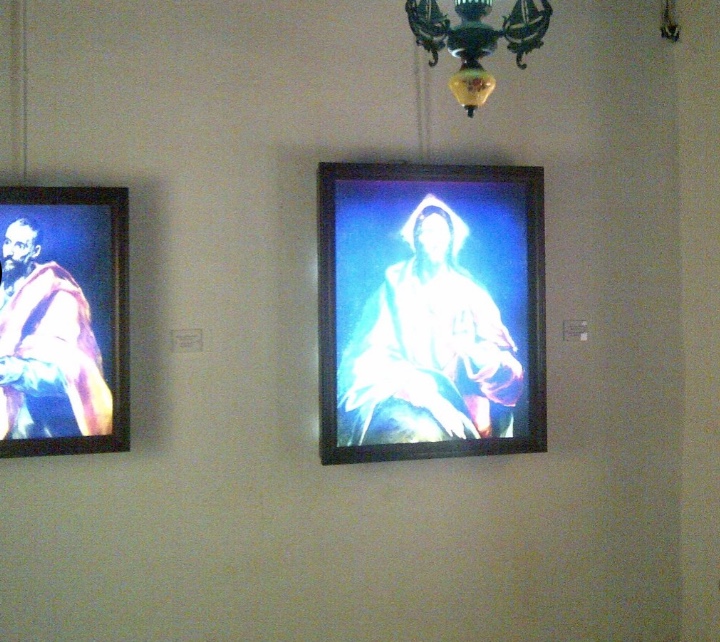
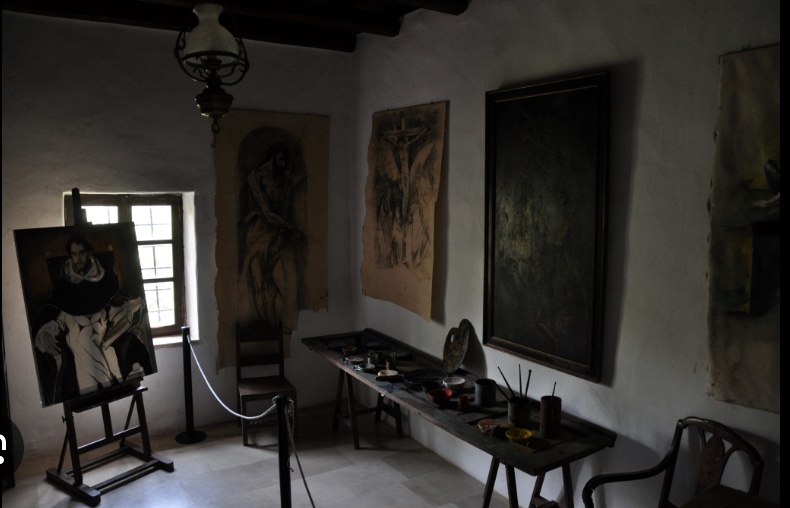
Inside, one of the rooms is fitted out as a studio. Also on view are rare photographs and documents on the history of the celebrations and cultural events held in El Greco’s honour, including pictures of the arrival of the professors from Valladolid. The copies, shown as back-lit reproductions, make it possible to see in one place works now scattered among the museums of Europe – the “Christ Carrying the Cross” of 1602 in the Prado, for instance.
The museum also gives information about El Greco’s family and forebears, and directly opposite rises the thousand-year-old Church of the Presentation, which local tradition links with the master’s spiritual and artistic formation. Those with time to spare can follow the footpath through the orange groves – a network of trails starts from the village square – or take the minor road four kilometres further up the valley to the Monastery of Agios Panteleimon, which stands at an altitude of some 170 metres. It dates from the second half of the 17th century, when Venetian rule on Crete was drawing to its close, and during the uprising of 1866–69 it served the insurgents as a base.