The most complete guide to Crete: 221 places on the map, 23 routes and 49 articles — with photos, videos and the story behind every place. No sign-up, no trackers.
Routes drawn along real roads
Weather at every stop
Full-text search
“Near me” by geolocation
Create your own printable itinerary
Satellite, terrain, dark mode
Works offline
⌕
Searches 1.7 million characters of descriptions, not just names
—places
4regions
—routes
—with video
Search results
—
Interactive map
Find what is near you
Filters narrow the map and the list at once. Zoom out and pins group together.
Region
Category
Фильтры карты
Landmarks
Featured places
RegionCategory
Routes
Ready-made day trips
Individual places
Articles about landmarks
Agia Pelagia: the bay, the monastery and ancient Apollonia
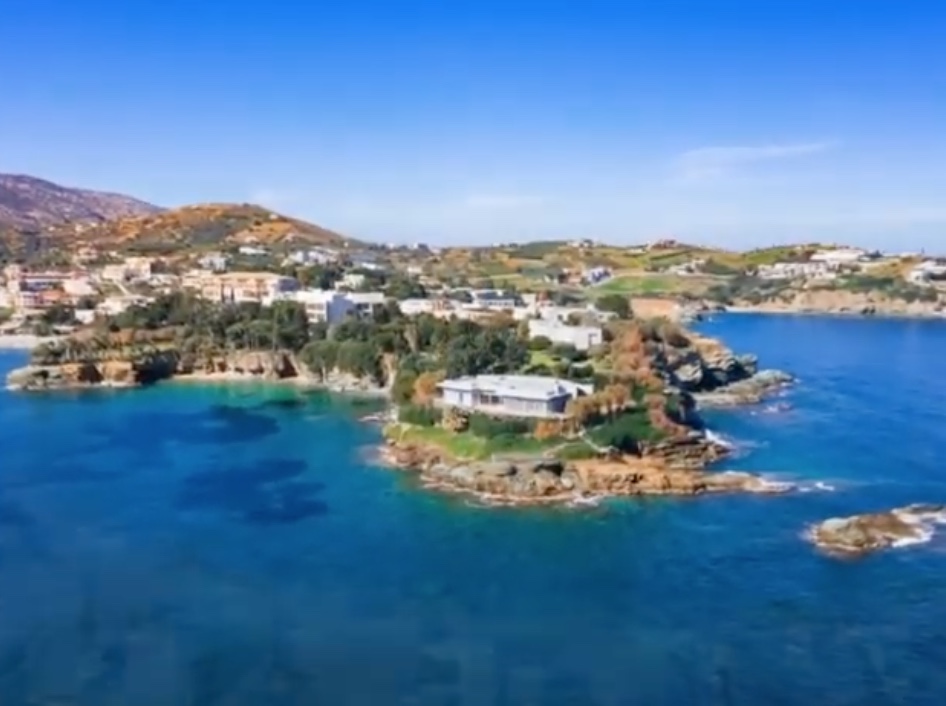
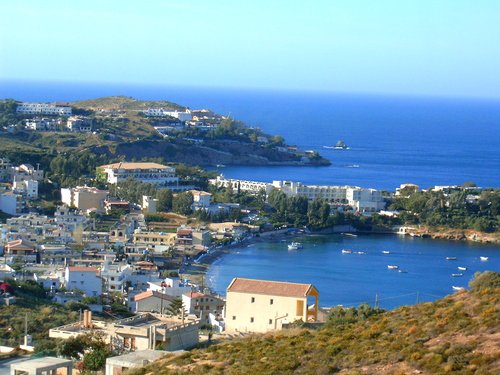
Natural beauty, ancient history and modern comfort run into one another in this resort. The road leaves the coastal highway on the heights, 21 kilometres from Heraklion, and winds down in wide bends; from above, the view already opens on a semicircular basin enclosed by rocky headlands, so that it looks almost like a lake. The northern arm is Cape Souda, which takes the force of the north wind and keeps the water inside calm. Out on the horizon lies the uninhabited island of Dia. Regular buses run from Heraklion for those without a car.
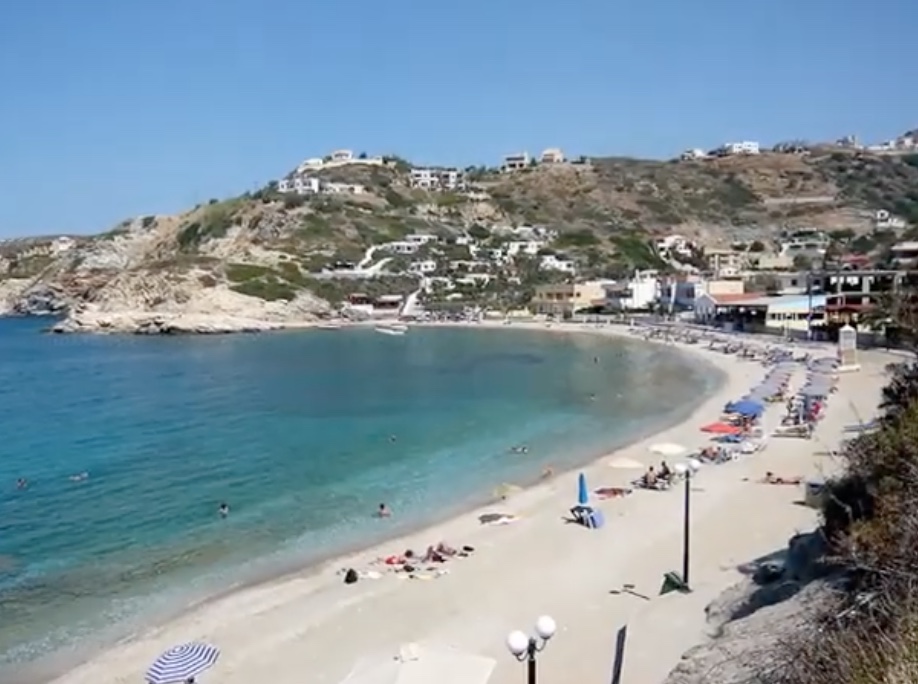
The place is known for its calm water, for a bay sheltered from the northerly winds of summer, and for its sandy beaches. The main beach is a long, narrow strip of sand beside greenish water, closely set with sunbeds in high season. Bathers have history all around them here, with tavernas, accommodation and diving schools close at hand. A short distance from the main beach lie the smaller coves of Psaromoura and Mononaftis – roughly a kilometre off, beyond the two tiny sandy inlets of Fylakes and the cove of Kladissos – and further east Ligaria and Made; the little shingle cove of Vlychada, east of the resort, can be reached only by swimming. The bay is good for swimming and for doing nothing, and its monuments show in a single spot a present-day seaside resort, an ancient port and an old sanctuary. As late as the 1960s there was little more on the shore than a few fishermen’s huts and the storehouses of the farmers from the hill village of Achlada, within whose bounds the bay lies.
The chapel of St Pelagia and the monastery legend
The little church of St Pelagia, a former metochi of Savvathiana Monastery, stands directly above the bay and gives the place its own character; it recalls the centuries-old history and religious life of the district. How much weight the pilgrimage carried is shown by a Venetian decree of 1519, which raised the saint’s day to a public holiday. Travellers of the 19th century describe processions in which portable icons were escorted to the chapel by the sea. The monastery itself, which stood about a kilometre from the beach and was famous throughout the Venetian period, has long since vanished – what remain are the church, the cave of Evresi and the name the bay bears to this day.
The feast of St Pelagia
The archaeological finds from Kladotos (also Kladissos) tell of the rich past of this stretch of country: burials of Late Minoan date, buildings of the 4th century BC and public structures attributed to ancient Apollonia. The traces had already been pointed out at the end of the 19th century by the Italian Antonio Taramelli, who worked on Cape Souda and recorded port installations and the remains of a water supply. When a large hotel was built in the 1970s, Stylianos Alexiou and Athanasia Kanta carried out rescue excavations. They uncovered a prytaneion, the seat of the city’s magistrates, which served at the same time as the andreion, the hall where the citizens dined in common: a building of dressed poros blocks measuring about 15 by 6.30 metres, with plastered floors, interior walls painted in bands of red, white and yellow, and two four-sided hearths for the perpetual fire of the community, still filled with fine ash when they were found. It was put up in the 4th century BC and destroyed in the 2nd. A lane and a flight of sixteen steps of slate slabs divide it from a second building to the west, entered from the north. Potters’ workshops, among them one for fine clay figurines that still carry their paint, and private houses underline the importance of the place as a cultural and economic focus in antiquity. The finds are kept in the Heraklion Archaeological Museum.
Every year on 17 July the panigiri in honour of St Pelagia and St Marina is celebrated – with a service, a procession and a festival of the whole community, at which Cretan music is played far into the night. The church’s commemoration of the saint on 8 October is kept more quietly, when the bathers have long since left the beach to the local people again.
According to the ancient sources Apollonia came to a sudden end: in 171 BC the Kydonians from the west of the island fell upon the town, which was their ally, and destroyed it; its territory then passed to Knossos. That the ground still holds surprises was shown during recent building works by the municipality of Malevizi, when an extensive necropolis came to light – including a grave stele of the 5th century BC, of island marble, with the figure of a young archer, which is counted among the most important Classical finds in Crete. On the cape that closes the bay to the north a sanctuary of Zeus is thought to have stood; the chapel on the headland continues the veneration of the spot in Christian form.