The most complete guide to Crete: 221 places on the map, 23 routes and 49 articles — with photos, videos and the story behind every place. No sign-up, no trackers.
Routes drawn along real roads
Weather at every stop
Full-text search
“Near me” by geolocation
Create your own printable itinerary
Satellite, terrain, dark mode
Works offline
⌕
Searches 1.7 million characters of descriptions, not just names
—places
4regions
—routes
—with video
Search results
—
Interactive map
Find what is near you
Filters narrow the map and the list at once. Zoom out and pins group together.
Region
Category
Фильтры карты
Landmarks
Featured places
RegionCategory
Routes
Ready-made day trips
Individual places
Articles about landmarks
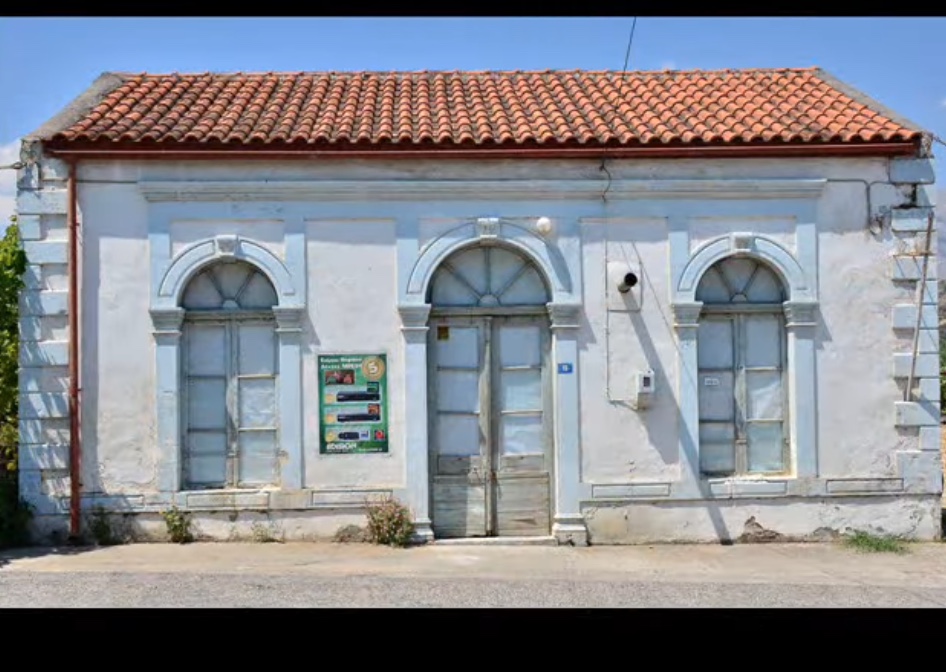
Sivas – a traditional village of the Messara
Sivas (Σίβας) lies on the south-western edge of the Messara Plain, at the foot of the Asterousia Mountains, at an altitude of about 110 metres and some 60 kilometres from Heraklion. The palace of Phaistos is only three and a half kilometres to the north, on its ridge above the Geropotamos, and the road to Matala passes close by. The village, which had a little over 400 inhabitants at the census of 2011, is a protected traditional settlement with stone houses, dressed door frames, old wells and strikingly broad lanes that open on to a shady village square. The inhabitants live chiefly from the olive, from vines and from growing produce by natural methods; there are also a few tavernas and guest houses in restored properties.
Architecture and ecclesiastical heritage
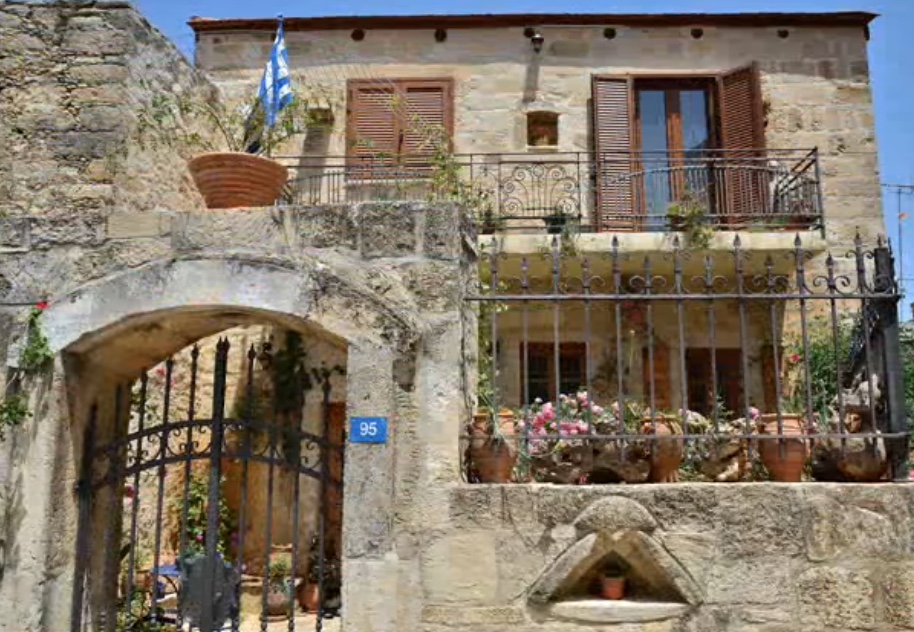
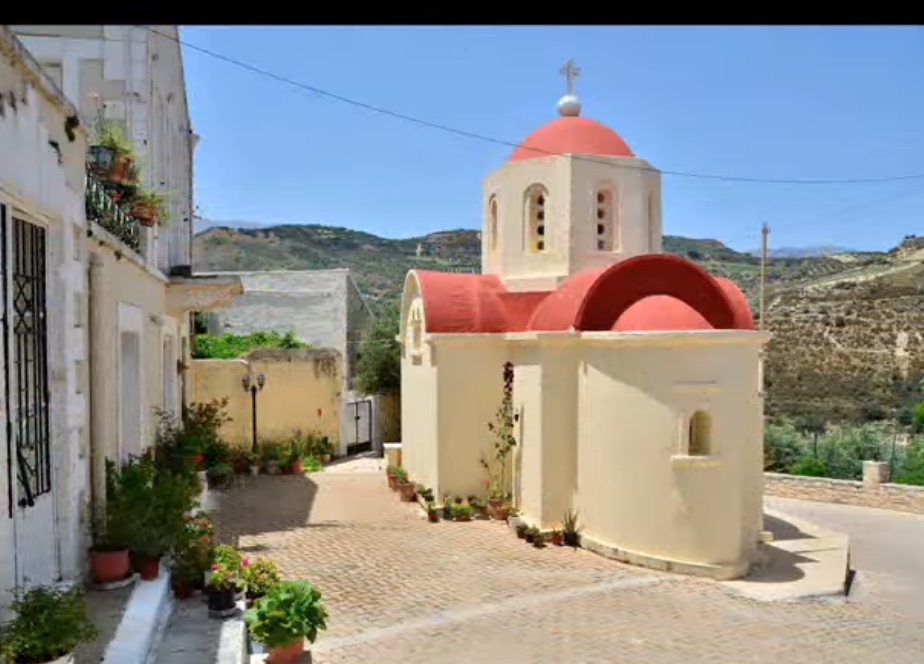
Sivas is known for its stone mansions with round-arched gateways, carved family coats of arms and inscriptions of their owners. Around the settlement stands a remarkable number of churches and chapels: St John the Baptist, Agios Georgios, Agia Paraskevi, Agios Spyridon, Agios Nikolaos, Agia Marina (beside which a spring rises), Agios Eumenios, Agios Panteleimon, the Panagia and the Prophet Elijah. Such density is characteristic of the old Cretan villages, in which the memory of the parish and of individual families was preserved in small churches and chapels. Not far from the village, in the Asterousia Mountains, lies the fortified monastery of the Panagia Odigitria.
The hill of the Prophet Elijah and the wells
The church of the Prophet Elijah (Profitis Ilias) stands on the hill of the same name and commands a wide view across the Messara to Psiloritis. In Orthodox tradition Elijah is regarded as a zealous defender of the faith and as patron of the mountain heights; his chapels therefore stand on summits almost everywhere. The stone well at the entrance to the village, now itself protected as a monument, recalls the daily life of the old village: the water served farm and household, the well was a meeting place, and the nearness of the churches lent it a special significance.
A story from the early 1870s, shortly after the uprising of 1866 to 1869, is attached to it. An Ottoman tax collector from a neighbouring village is said to have forced his way into the church, mocked the faith of the Christians and fired his pistol at the icon of Christ. Shortly afterwards a bee stung him on the lip, which swelled alarmingly. The priest prayed for him, the man recovered – and in gratitude endowed the well at the entrance to the village. The bullet hole in the icon is still shown in the main church today.
The church of St John the Baptist
The main church of Sivas is dedicated to the Beheading of St John the Baptist (Agios Ioannis Prodromos). Building began in 1864, the same year in which the villagers put up the old community school at their own expense; it was consecrated in 1868, while the great Cretan uprising was still in progress. Inside, a carved wooden templon and icons by the Cretan painter Ioannis Stathakis have survived. Church, school and the village square designed by the engineer and benefactor Alexandros Manidakis together form the heart of the village.
Archaeological sites in the surrounding area
In the country around Sivas early tholos tombs of the Messara were discovered – circular buildings for the burials of whole clans, dated to the period from about 2600 to 2000 BC. Italian archaeologists, the same mission that under Federico Halbherr was then uncovering Phaistos and Agia Triada, investigated them at the beginning of the 20th century. These monuments of the Early Minoan period show that the area around the present village was settled, and bound into the cultural landscape of the Messara, long before the village itself came into being. Phaistos, Agia Triada with its painted sarcophagus and its archive of Linear A tablets, the Minoan harbour of Kommos and further excavation sites lie very close at hand, and Roman Gortyn, too, is quickly reached. Sivas is therefore well suited as a quiet base from which to get to know the south of Crete – with evenings on the village square instead of on the seafront promenade.