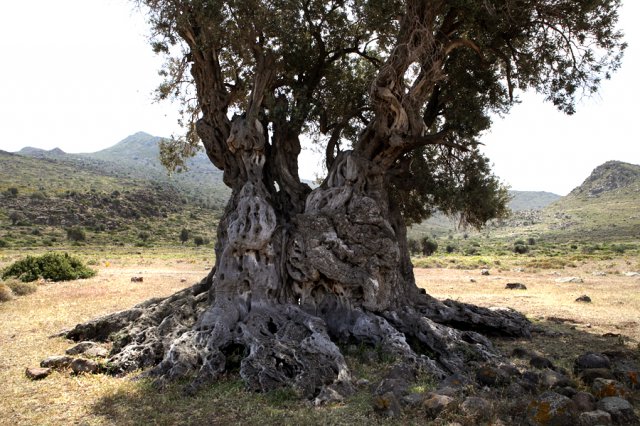
Palea Roumata – mountain village of the ancient olive tree
The most complete guide to Crete: 221 places on the map, 23 routes and 49 articles — with photos, videos and the story behind every place. Everything is open and free: no sign-up, no paid sections and no advertising, open or hidden. You can install the guide on your smartphone as an app.
Routes drawn along real roads
Weather at every stop
Full-text search
“Near me” by geolocation
Create your own printable itinerary
Satellite, terrain, dark mode
Works offline
⌕
Searches 1.7 million characters of descriptions, not just names
—places
4regions
—routes
—with video
Search results
—
Interactive map
Find what is near you
Filters narrow the map and the list at once. Zoom out and pins group together.
Region
Category
Фильтры карты
Landmarks
Featured places
RegionCategory
Routes
Ready-made day trips
Individual places
Articles about landmarks
Palea Roumata and the olive tree of memory
Palea Roumata (Παλαιά Ρούματα), “Old Roumata”, is a mountain village in the south-east of the former province of Kissamos, at the foot of Mount Apopigadi, some 43 kilometres from Chania. The road from the city comes by way of Voukolies, through green valleys and the villages of western Crete. Travellers on the winding road to Kakopetros take the separately signposted turning for Palea Roumata; the village lies off the through road in a well-watered hollow at about 380 metres, with its territory climbing to some 1,300 metres on the mountain behind, and it is precisely this seclusion that has preserved its character. It is less a single village than a constellation of them – eighteen small settlements in all, among them Bougioukliana, Kafiana, Perachori, Lidiana, Pananiana, Vavouledo, Kechres and Platanes.
The chief sight of the place is an ancient olive tree with an enormous hollow. Local tradition puts its age at around three thousand years; the tree is recognised as a natural monument. The cavity in the trunk – the villagers speak of the “Koufalas” – is so roomy that, by their account, four or five people can stand inside it, and the trunk measures 10.5 metres round. The exact age of very old olive trees always remains an estimate, since the heartwood that would be needed to count the rings has long since rotted away; but the tree itself is protected and ranks among the monumental olive trees of Crete. It grows at 348 metres above sea level and belongs to the Mastoidis variety, known in Crete as Tsounati, grafted on to a rootstock of wild olive; the rank of monumental tree was conferred on it in 2008 by the Association of Cretan Olive Municipalities. It does not stand alone: several other very old olives grow close by.
A village among water, olives and chestnuts
Palea Roumata lies in a district of abundant springs and dense vegetation – a Crete which, with its streams, plane trees and ferns, recalls a range of wooded northern hills rather than the bare coasts of the south. Olives, vines and chestnuts are grown; stock-rearing and the processing of farm produce add to the living, and the village has its own olive-oil mill. Olive oil is still the principal product of the area: there are tens of thousands of trees around the village. In autumn, when the chestnuts ripen, people come out from Chania to walk beneath the old trees.
Nature trails have been laid out in the surroundings, among them small gorges with running water. Two ravines meet above the village: that of Vavouledo, about two kilometres long, beginning some 1,500 metres from the village square and an easy, pleasant walk, and the wilder Trachinos, which calls for experience and has fixed ropes on its awkward passages; both were damaged by the winter storms of 2018–19 and have since been restored with waymarks and information boards. One route often mentioned leads from the chapel of St George near Chamalevri – a spot to which the tradition of a secret school of the Ottoman period attaches – through stream beds and green hamlets to the village. In the village itself there are a museum of history and folk life, a people’s library founded in 1944, in the midst of the occupation, as an act of intellectual resistance and now holding some 6,000 titles, and the women’s cooperative “I Archontissa”, which preserves the recipes and produce of the soil of Roumata and keeps up the old craft of weaving linen and silk.
Visiting the tree and its surroundings
The monumental olive is reached by a deliberate detour, off the main route to Kakopetros, along the turning for Palea Roumata. The visit combines well with a stroll through the village, a call at the museum and a tasting of local produce; a taverna, two coffee houses and a small shop see to the visitor’s needs. Visitors should not enter the hollow in groups or damage the trunk: the tree is alive, protected and still bears fruit, and its cavity calls for gentle handling.
In the hamlet of Vavouledo stands the Byzantine church of St Basil with wall paintings, held to be one of the oldest buildings of the district and attributed to the 11th century; at Perachori rises the church of the Dormition of the Virgin, whose Byzantine frescoes are counted a rarity. In the locality of Archontika the Venetian villa of the Renieri family survives – they were nobles who also kept a palace in the old town of Chania – a rare secular monument of the Venetian era in this part of the Chania region; the place name itself, “the manor houses”, preserves the memory of the former landlords. Taken together, these buildings show that Palea Roumata was no isolated village but part of a web of settlements and estates that had grown up over centuries.