Frangokastello – Venetian fortress, the battle of 1828 and the Drosoulites
The most complete guide to Crete: 221 places on the map, 23 routes and 49 articles — with photos, videos and the story behind every place. No sign-up, no trackers.
Routes drawn along real roads
Weather at every stop
Full-text search
“Near me” by geolocation
Create your own printable itinerary
Satellite, terrain, dark mode
Works offline
⌕
Searches 1.7 million characters of descriptions, not just names
—places
4regions
—routes
—with video
Search results
—
Interactive map
Find what is near you
Filters narrow the map and the list at once. Zoom out and pins group together.
Region
Category
Фильтры карты
Landmarks
Featured places
RegionCategory
Routes
Ready-made day trips
Individual places
Articles about landmarks
Frangokastello – the fortress on the Libyan Sea
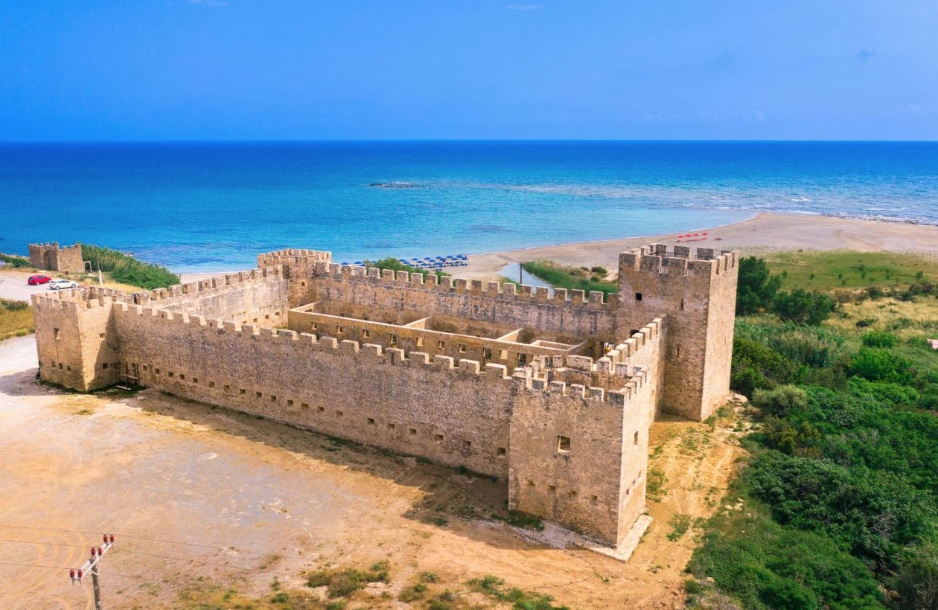
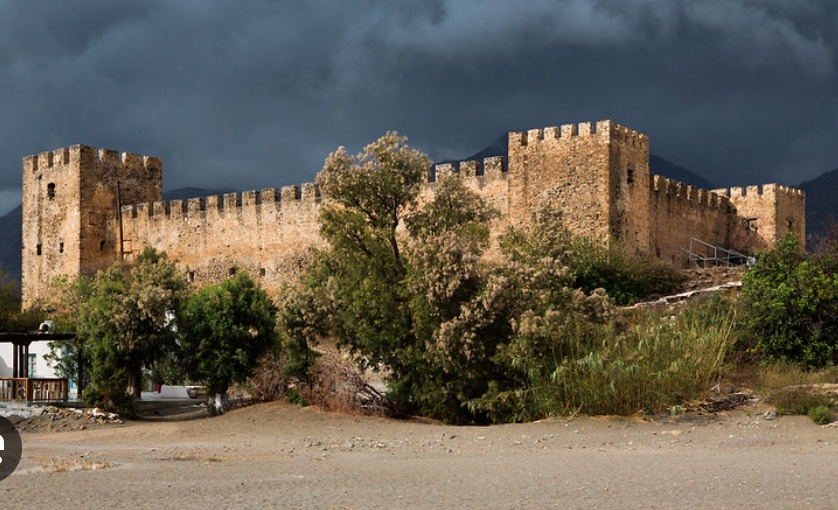
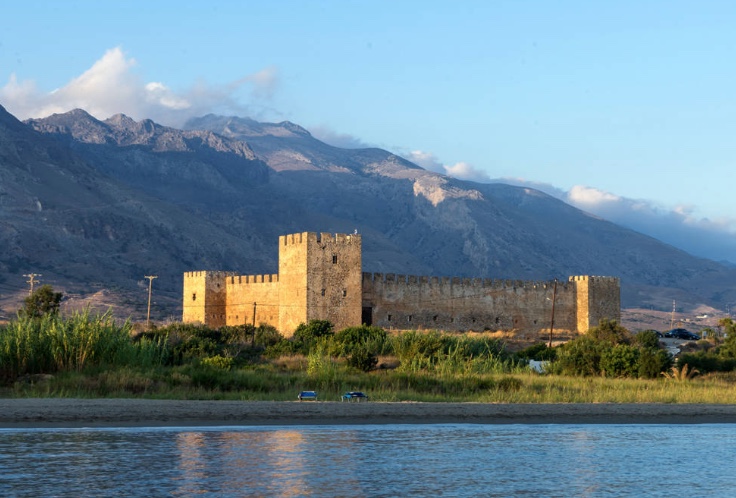
Frangokastello (Φραγκοκάστελλο) lies on the south coast of Crete, some twelve kilometres east of Chora Sfakion, on a flat coastal plain behind which the White Mountains rise almost without preamble. The rectangular walls with their four corner towers are a rare sight on the island: a castle that stands practically at the water’s edge, a few paces from a pale sandy beach with a shallow, lagoon-like bay that shelves so gently that one can wade a long way out. A little to the east, beyond the castle, the dunes of Orthi Ammos drop to a second, wilder strand. Today the fortress is known not only as a well-preserved monument but as a place where the historical memory of a war is bound up with the legend of the Drosoulites. The plain itself was settled long before the Venetians: Minoan sites of c. 1800–1450 BC have been identified in the surrounding countryside, and in the Middle Ages the district was the domain of the Skordilis clan, the archontic family that dominated Sfakia.
The Venetian archives date the construction to the years 1371 to 1374; the Senate in Venice gave its consent to the project on 10 February 1371, after the Venetian landowners of the district had petitioned for protection. The fortress was intended to guard the coast against corsairs and at the same time to keep unruly Sfakia in check – and to give the Venetian nobles of the plain somewhere to retreat to. The Venetians named it Castello di San Nikita, the castle of St Niketas, after a nearby church; but the name the locals gave it – Frangokastello, the “castle of the Franks” – prevailed so completely that it eventually found its way into the official documents, alongside the variants Castelfranco and Franco Castello. “Franks” was what the Orthodox Cretans called the Catholics of the West. Local tradition tells that the Venetian soldiers raised the walls by day, and that by night the six Patsos brothers from the neighbouring village of Patsianos pulled down what had been built; only after they had been betrayed, seized and hanged was the work completed.
Architecture and later alterations
The plan could hardly be simpler: a rectangle of dressed stone with vertical curtain walls and a massive tower at each corner, the south-western one rising above the other three. It is a fortification of the older type, designed above all against hand-held weapons; the bastioned system with sloping walls and great projecting salients reached Crete only later and was realised chiefly in the great fortresses of Rethymno and Heraklion. The south entrance owes its present form to the 19th century. Above the gate survive the Lion of St Mark – the emblem of the Republic of Venice – and the arms of four noble families. The complex was rebuilt in 1593–97 under Nicolò Donà, again in 1645, the year the Ottoman invasion of Crete began, and once more during the rising of 1866–69, when the Ottomans repaired what had been slighted after 1828. The buildings in the interior, and the crenellated battlements along the wall-walk, belong for the most part to the Ottoman period. The castle had already served the Ottomans once before: during the Orlov revolt of 1770 their army camped here, and it was at Frangokastello that the Sfakiot leader Daskalogiannis (Ioannis Vlachos) gave himself up, before being flayed alive in Heraklion.
The rising of Chatzimichalis Dalianis
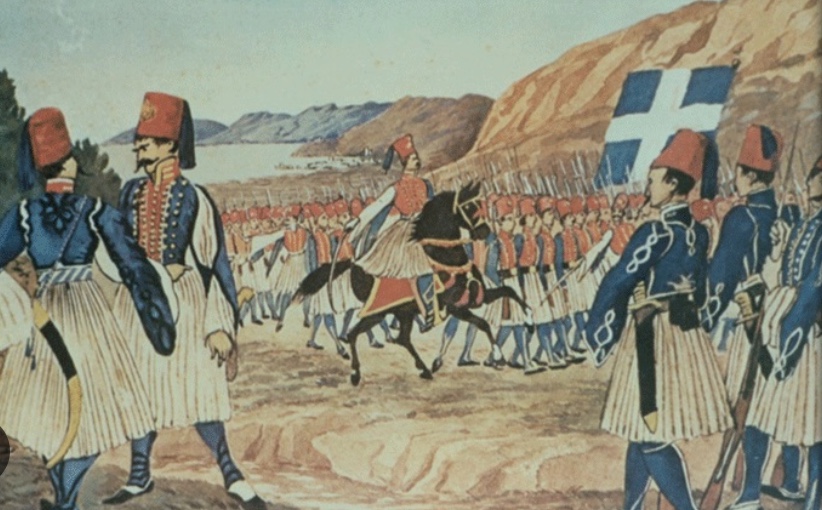
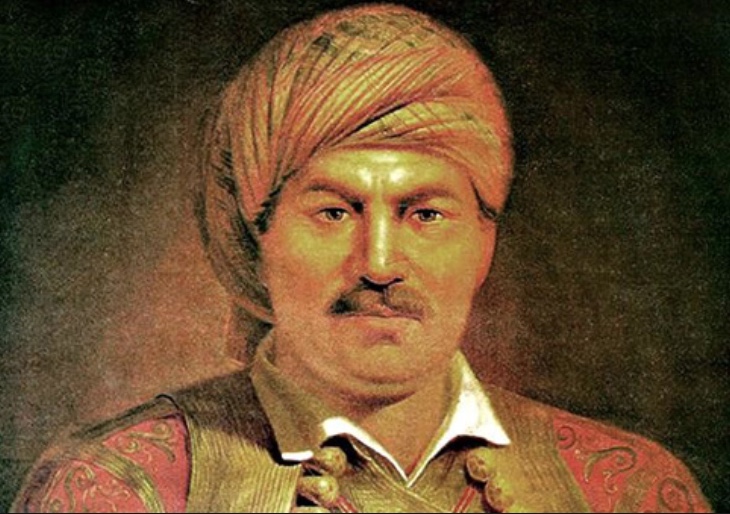
After the Treaty of London of 6 July 1827, by which Britain, France and Russia undertook to mediate between the Greeks and the Porte, Greek revolutionaries tried to rekindle the struggle on Crete, hoping to bring the island into the Greek state that was then taking shape. Chatzimichalis Dalianis, a commander from Delvinaki in Epirus, born around 1775 and raised in Trieste, where his father traded, had grown wealthy as a merchant before the war and had joined the Filiki Eteria, the secret society of the revolution, in 1816. He landed on Gramvousa on 5 January 1828 with some 600 foot soldiers and a hundred horsemen. After disputes over where the base of operations should be, he chose Sfakia, and in March 1828 he occupied Frangokastello. In May 1828 the bands of Manouselis, Manousogiannakis and Deligiannakis clashed with Ottoman troops; Mustafa Naili Pasha, the governor of Crete, called on Dalianis to leave the island. The commander’s reply has been handed down: “I have come to Crete to fight the Turks with my warriors, and may God decide the outcome of the battle.”
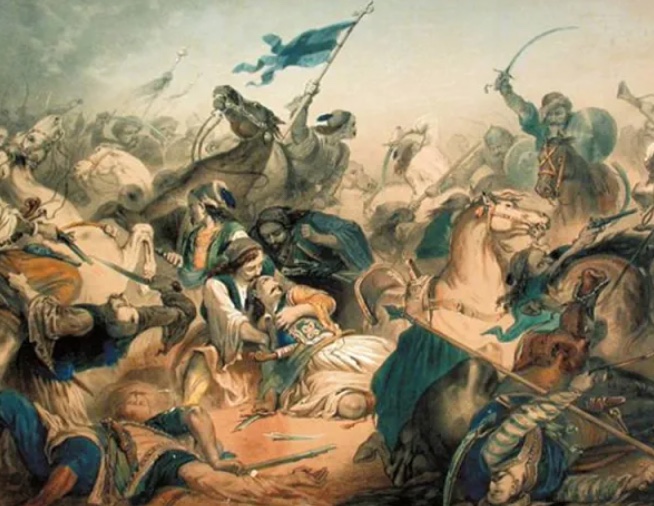
Dalianis held Frangokastello although the Sfakiots advised him to withdraw into the mountains and seek battle at Kolokasia, where the terrain favoured guerrilla warfare. He insisted on the plain, because there he could use his cavalry, and dismissed the doubters: “Guard your mountains, lest they run away from you, and watch how we fight down here.” Mustafa Pasha appeared before the castle on 13 May with about 8,000 infantry, several hundred horsemen and artillery, and on 18 May 1828 he advanced against the fortress. After bitter fighting Dalianis and most of his men fell; tradition gives 338 Greek dead, and the Ottomans are said to have lost up to 800, many of them killed in ambushes as the army moved through the gorges. Dalianis himself is said to have fallen before the gate after his sabre broke and his horse was killed under him. Those who remained inside the fortress were allowed, after about a week of siege, to march out with their arms and take ship for Greece. Mustafa Pasha then had the castle slighted so that it could not be held against him again. Crete joined the Greek state only in 1913.
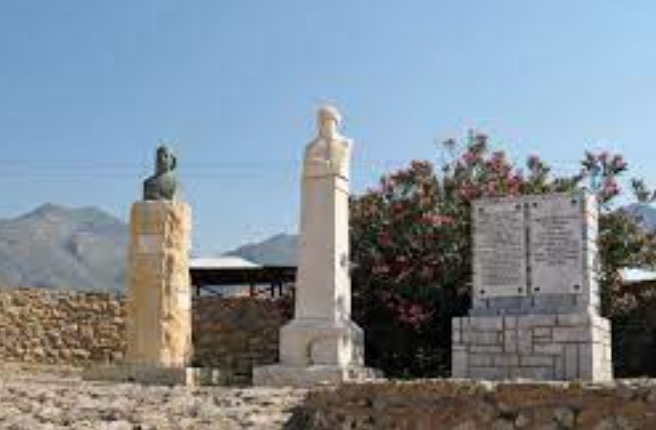
Local memory stresses that Mustafa Pasha, himself a native of Epirus, respected the courage of his opponent: Dalianis’s personal belongings, among them a New Testament, were handed over to his family. The episode shows how tangled this war was, in which men from the same province could face one another as enemies and yet, after the battle, keep their regard for the other’s bravery. A second tradition relates that a nun found the commander’s body, which had been left unburied, and laid it to rest at the nearby monastery of St Charalambos; another story has the bodies of the fallen covered by the drifting sand of Orthi Ammos. In front of the fortress a monument today commemorates Dalianis and his companions, and the anniversary of the battle is kept each May with a memorial service.
The Drosoulites – “shadows of the dew”
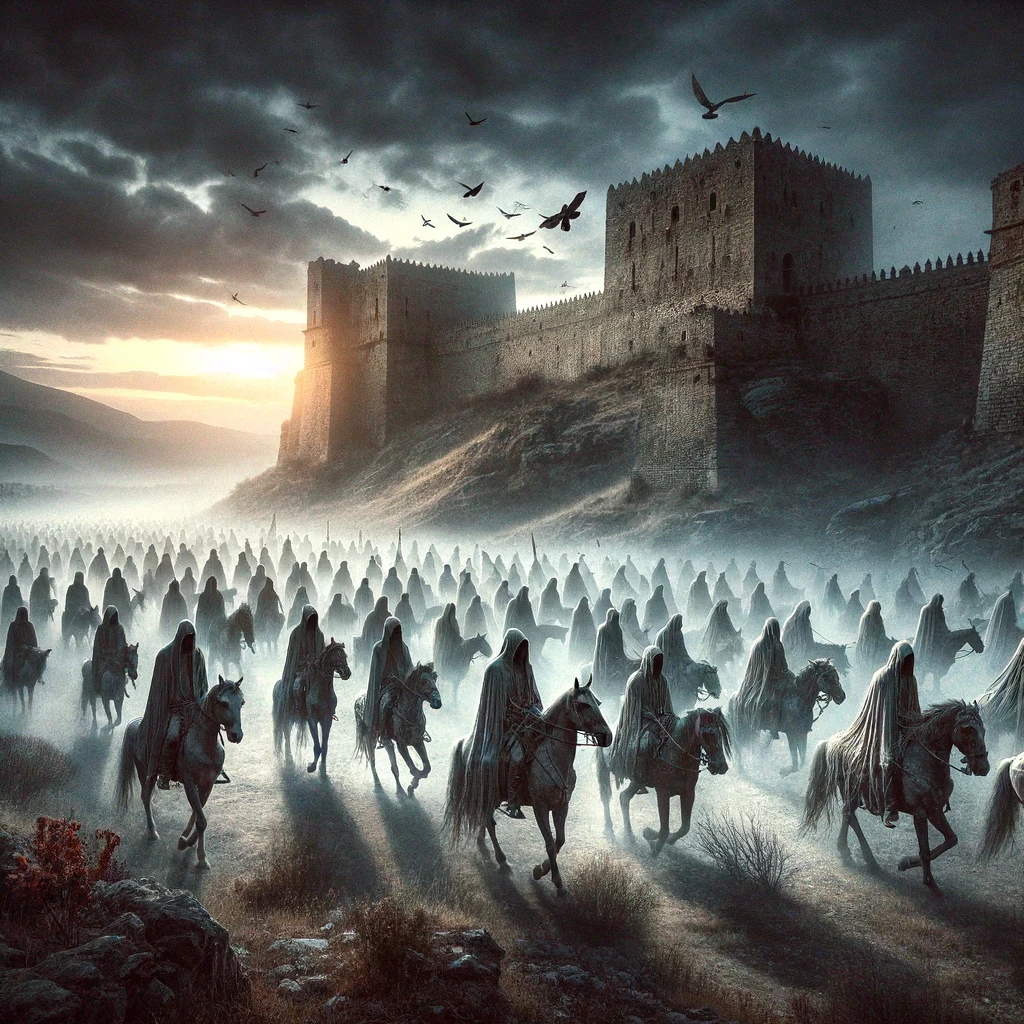
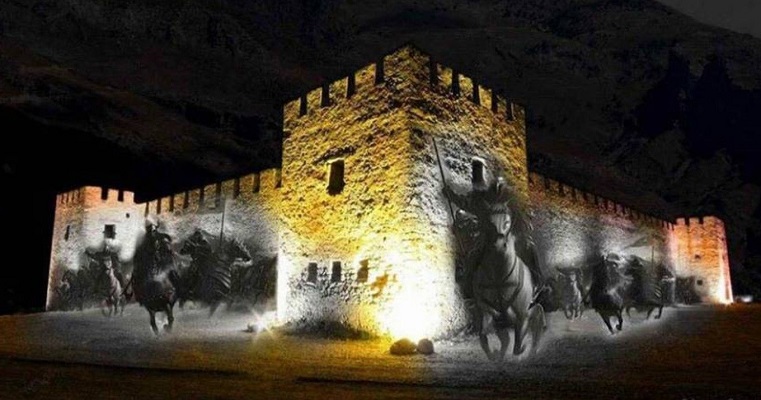
Drosoulites (Δροσουλίτες) is the name given to the shadows that sometimes appear at daybreak over the plain of Frangokastello in late May and early June, around the anniversary of the battle. Popular tradition recognises in them the armed host of Dalianis’s fallen – foot soldiers and horsemen with glinting weapons – emerging from the direction of the monastery of Agios Charalambos and moving towards the sea and the fort. Those who claim to have seen them speak of a few minutes, perhaps eight to ten, when the sea is glassy and the air damp and windless; they are said to be visible only from the plain, from a distance of a kilometre or so, and to dissolve as soon as the sun climbs higher. In this way the apparition became part of the remembrance of the battle and of the yearly rites for the dead.
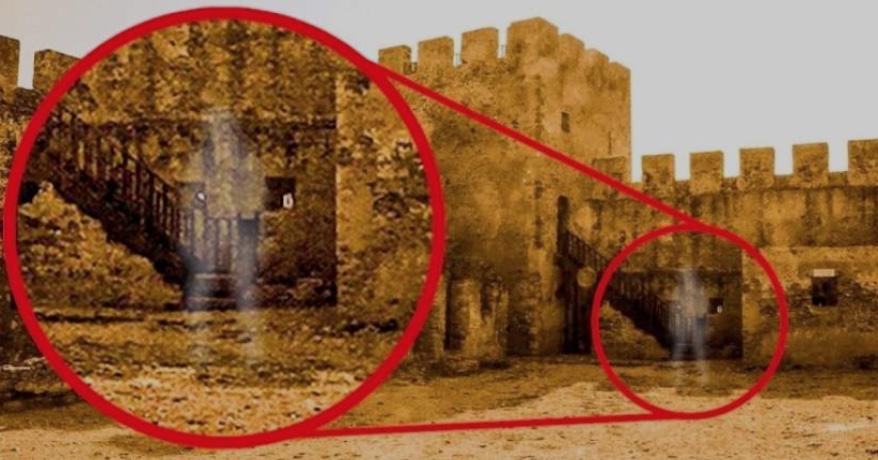
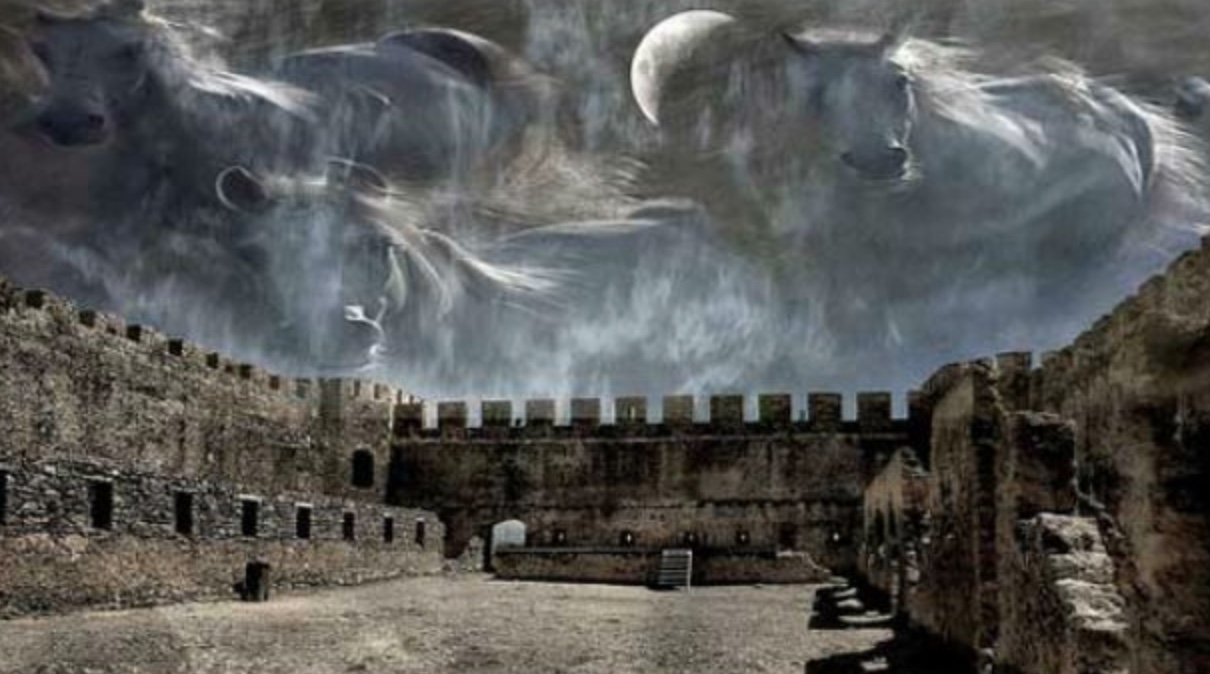
It is told that in 1890 a Turkish detachment, taking the shadows for rebels, formed up for battle and then fled, and that during the German occupation a patrol mistook the figures for partisans and opened fire. The British researcher E. Bennett investigated the phenomenon in 1928, the centenary year of the battle. Scientists and popular historians have proposed various explanations: a reflection of light in the morning haze, optical refraction, a Fata Morgana or a collective perception, and some writers have placed the phenomenon alongside the “phantom armies” reported in Britain and Germany. The suggestion that it is a mirage of troops on the distant Libyan coast is regarded as unconvincing because of the great distance, and no explanation has won general acceptance. The word “Drosoulites” is connected with the Greek δρόσος, “dew”.
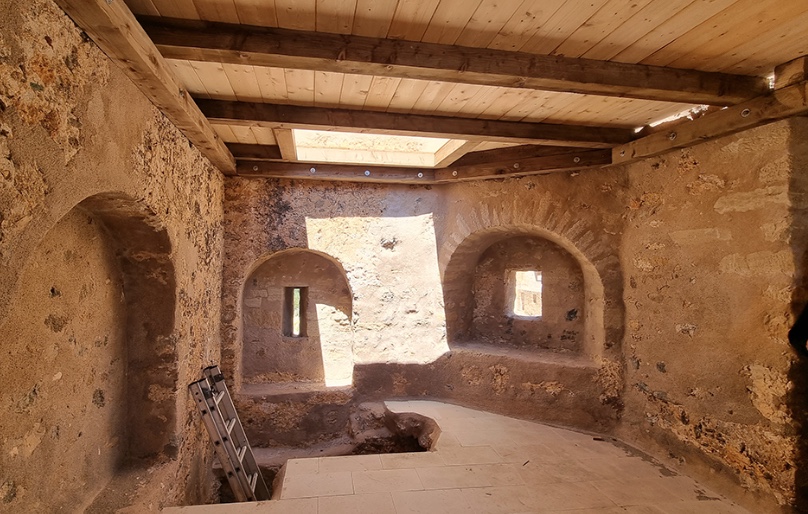
Frangokastello is a listed monument in the care of the Greek Ministry of Culture. In recent years the southern barracks, the walls and individual stretches of masonry have been consolidated and restored. The aim of the work is to preserve the fortress in its historical form – not to turn it into a reconstructed stage set. The inner courtyard is open in season for a small entrance fee, and in summer it occasionally provides the setting for cultural events; at times the interior has been closed while restoration work was in progress, so it is worth checking locally before making a special journey. The exterior, the beach and the monument can be seen at any time, and the fortress is at its most photogenic in the low light of early morning or late afternoon, when the walls glow against the sea and the mountains.