The most complete guide to Crete: 221 places on the map, 23 routes and 49 articles — with photos, videos and the story behind every place. No sign-up, no trackers.
Routes drawn along real roads
Weather at every stop
Full-text search
“Near me” by geolocation
Create your own printable itinerary
Satellite, terrain, dark mode
Works offline
⌕
Searches 1.7 million characters of descriptions, not just names
—places
4regions
—routes
—with video
Search results
—
Interactive map
Find what is near you
Filters narrow the map and the list at once. Zoom out and pins group together.
Region
Category
Фильтры карты
Landmarks
Featured places
RegionCategory
Routes
Ready-made day trips
Individual places
Articles about landmarks
The Palace of Knossos – centre of the Minoan world
The Minoan palace is the greatest legacy of Knossos, the famous city of antiquity whose history ran without a break from the Neolithic to the 5th century AD. It rises on the low hill of Kephala beside the little River Kairatos, about five kilometres south-east of Heraklion, a position that gave it easy access both to the sea and to the interior of Crete. Tradition placed here the throne of the wise King Minos, whom Thucydides remembered as the first ruler known to have built a navy and made himself master of the Aegean. Wrapped in the dark myths of the Labyrinth and the Minotaur and in the tales of Daedalus and Icarus, the palace still works on the imagination and draws travellers who want to come close to the riddles of the earliest European past. The memory never faded in antiquity: the Greek and Roman city that succeeded the palace – under Rome it bore the title Colonia Iulia Nobilis Cnossus – stamped the Labyrinth on its coins.
The earliest traces of settlement in the area of the palace belong to the Neolithic (7000–3000 BC). Occupation continued through the Prepalatial period (3000–1900 BC), at the end of which the ground was levelled for the building of a great palace. This first palace was destroyed around 1700 BC, probably by an earthquake. On its ruins a second, still more splendid one was raised, and it is essentially this building, the high point of Minoan architecture, that the visitor walks through today. After a partial destruction around 1450 BC Mycenaeans settled at Knossos and ran the palace for another century, keeping their accounts in Greek. The end came around 1355 BC in a great fire. The area was reoccupied in late Mycenaean times and remained inhabited down to the Roman period.
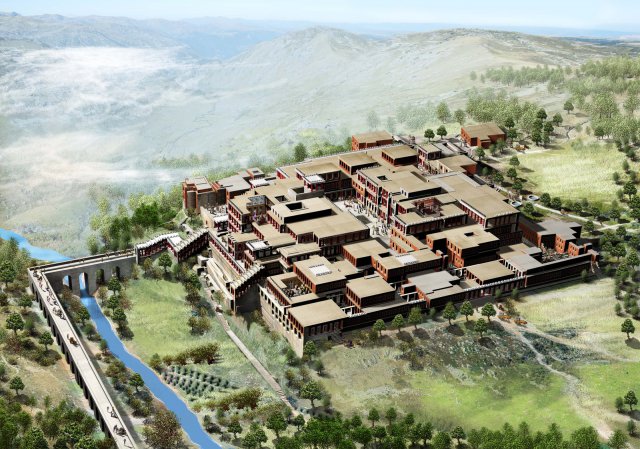
Arthur Evans began excavating at Knossos at the beginning of the 20th century; the restorations that followed altered the appearance of the uncovered buildings considerably. Within three years some 20,000 square metres had been cleared, and Evans spent the rest of a long life interpreting what he had found, staying from 1907 in the Villa Ariadne, which Christian Doll built for him beside the site, and setting out his conclusions in The Palace of Minos. In 1926 he made over the palace, the grounds and the villa to the British School at Athens, which handed them on to the Greek Archaeological Service in the early 1950s. The palace was a building of several storeys – as many as five have been counted in the east wing – and covered an area of 20,000 square metres; some eight hundred rooms can be traced, and the original total is put at well over a thousand, perhaps as many as thirteen hundred. The variety of building materials is striking: limestone, timber, rubble and plaster, coloured stucco, upright slabs of gypsum and marble-like stone facing the walls, and the frescoes that decorated rooms and corridors. The columns were of wood, set on stone bases beneath rounded capitals and tapering downwards, the reverse of the later Greek practice. The Minoans’ high technical knowledge shows in architectural and structural solutions of their own devising: light wells and walls made up of rows of doors, the polythyra; timber beams to brace the masonry; and a branching network of water pipes and drains. The video below shows a reconstruction of the palace.
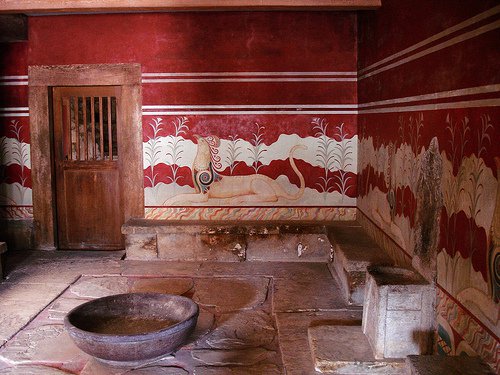
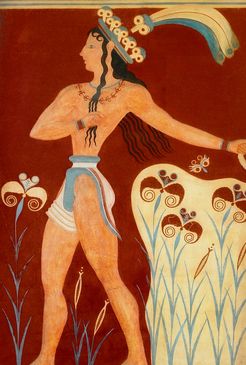
The palace unfolds around the great Central Court, the place of public gatherings. A second court, the West Court, formed the official approach and was the scene of ceremonies. The west wing held the official rooms of administration and cult: the Tripartite Shrine, the Temple Repositories and the Pillar Crypts. Outstanding among them is the Throne Room, with its lustral basin and its throne of alabaster – the fine local gypsum – set against the middle of the north wall, stone benches running along three sides and griffins painted on the walls; in the anteroom stands a wooden replica of the throne. Evans took the seat for that of Minos himself, though later scholars have thought rather of a priestly or ritual use, and the question remains open. Behind these rooms run the long West Magazines with their man-high storage jars for oil, wine and grain – as many as four hundred pithoi, it has been reckoned, with a combined capacity of about 78,000 litres. In the south the most important features are the South Propylaeum, the Corridor of the Procession and the south entrance with the fresco of the “Prince of the Lilies”. The east wing contained the residential quarters and the great reception halls, among which the Hall of the Double Axes and the Queen’s Megaron stand out. Down to them leads the majestic Grand Staircase, whose steps are still the Minoan ones.
The north entrance connected the palace with the harbour of Knossos. It is flanked by raised colonnades, the western one decorated with the relief fresco of the bull hunt; the pillared hall in front of it Evans called the “Customs House”. A broad paved processional way, the Royal Road, led from the Little Palace and the town to the north-west corner of the palace, where there was an open place of assembly with tiers of steps, the so-called Theatral Area, with room for about 500 spectators. It is tempting to think here of the dancing floor that, according to Homer, Daedalus made for Ariadne.
Around the palace spread the Minoan town, and on the surrounding hills lay its cemeteries. Among the important buildings of the same period are the South House, the House of the Sacred Podium, the Little Palace, the Caravanserai, the Royal Villa and the Temple Tomb. Of Roman Knossos, the colony founded on the old city, the Villa of Dionysos with its mosaic floors of the 2nd century AD is the most considerable building.
The whole complex was equipped with a carefully planned system of water supply and drainage. It testifies to engineering of a high order which, together with light wells and through-ventilation, kept the rooms cool in summer and warm in winter. Clay pipes, tapered and fitted one into the next, brought spring water from more than a kilometre away, while channels, drains and sloping surfaces carried rainwater and waste out of the building.
Engineering and frescoes
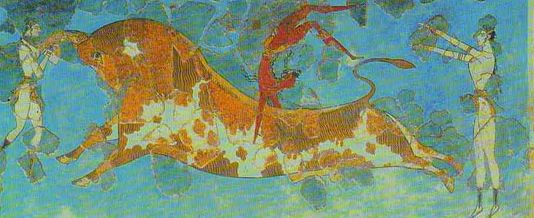
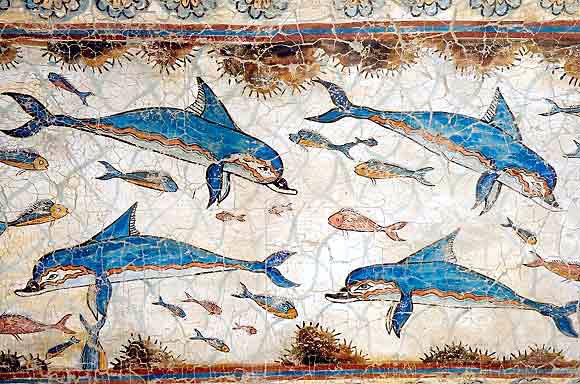
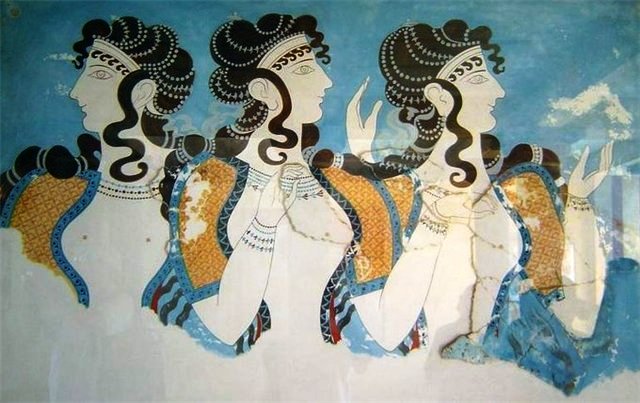
The walls of most rooms were painted with frescoes. They are the most important source of information about the society and culture of the Minoan age, since the Minoans’ own script has yet to be deciphered. Processions of gift-bearers, the young Cup-Bearer, crowds packed into a grandstand or gathered in a sacred grove, blue monkeys and blue birds: the subjects range from court ceremony to sheer delight in nature. What the visitor sees in the palace – the dolphins in the Queen’s Megaron, the griffins in the Throne Room, the bull-leaping – are copies; the originals, often completed from small fragments by Evans’s restorers, Émile Gilliéron and his son of the same name, hang in the Archaeological Museum of Heraklion, to which all the other finds have also gone.
Archaeological investigation has shown that the town was not surrounded by defensive walls – a sign of stable, peaceful development and of economic prosperity. The state of Knossos commanded a powerful merchant fleet and maintained close trading relations with the inhabitants of the Greek mainland and with all the islands of the Mediterranean, as well as with Egypt; it is this sea power that lies behind the Greek memory of Minos as lord of the Aegean. Estimates of the population of the town at its height differ widely, starting at around ten thousand and rising to several tens of thousands; the boldest go as high as a hundred thousand.
Egyptian influence can be felt in the wall painting and the reliefs. Scenes of the lion hunt, of the kind beloved of Mycenaean art, cats stalking birds, acrobatic feats with the bull – all vividly recall related motifs in Egyptian reliefs and paintings.
In the wall painting and small-scale sculpture of Knossos female figures appear very often, and scholars have given them names such as “La Parisienne” and the “Ladies in Blue”. On the religious ideas of the Minoans there is no agreement; double axes, bulls’ horns and the faience figures of the so-called Snake Goddesses from the Temple Repositories are regarded as their most important evidence.
Myths and legends of the Palace of Knossos
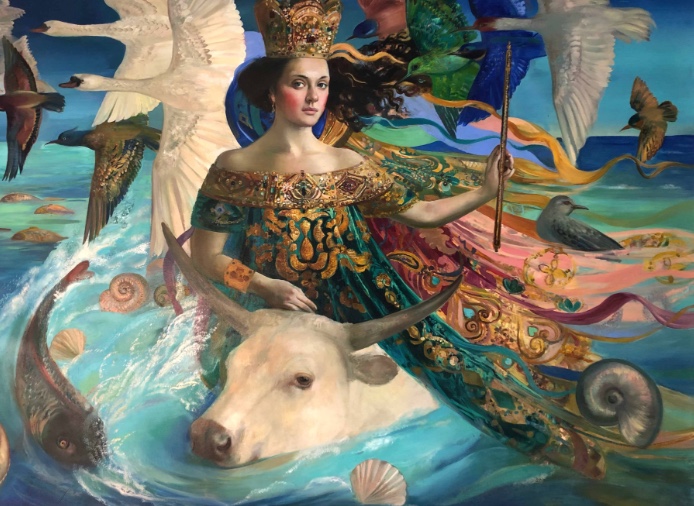
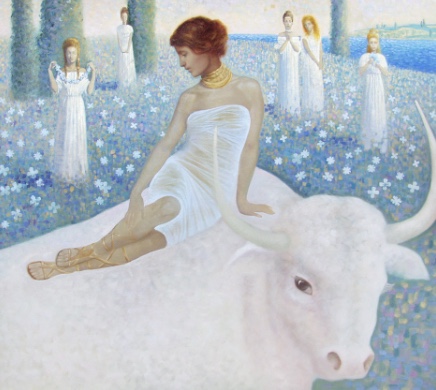
In the distant past, when the gods walked among mortals and the sky with its clouds touched the earth, there lived a beautiful princess named Europa. She was the daughter of the Phoenician king Agenor and the lovely Telephassa – so, at least, the poet Moschus has it; in the Iliad her father is Phoenix, Agenor’s son – and her home was the coast of Tyre and Sidon. Europa was so graceful that even the flowers leaned towards her, as though they wished to touch her beauty.
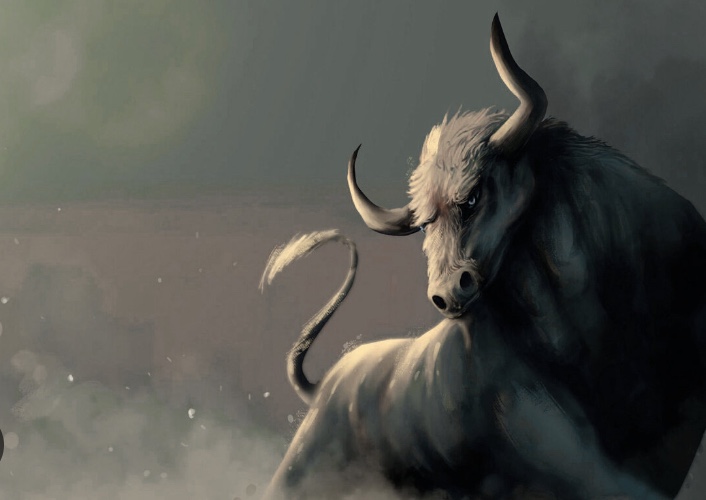
One day, as Europa was gathering flowers by the seashore with her companions, her eye fell on a white bull of unusual beauty. He was unlike all others: his coat shone in the sun like the snow on the mountain peaks, and his eyes were full of kindness and gentleness. But this bull was none other than Zeus, greatest of the gods, who had fallen in love with Europa at first sight. The scene is told at length in the Europa of Moschus, written in the 2nd century BC, and again in the second book of Ovid’s Metamorphoses.
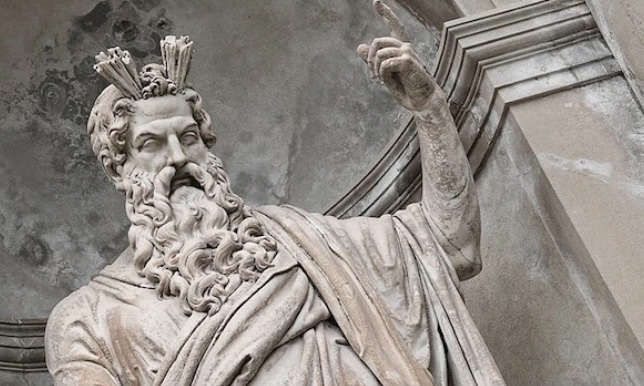
Zeus had taken the form of the bull in order to approach Europa and win her trust. Without fear she went up to him and even decided to sit on his back. At that moment Zeus rose gently and carried her away from the shore through the waves, her tunic, as Ovid has it, fluttering in the breeze. Having swum the sea he brought Europa to the island of Crete – according to Cretan tradition to Gortyn, beneath an evergreen plane tree – and there resumed his true form and made himself known to her. Europa was dismayed and enchanted at once. Zeus proclaimed her queen of the island and promised her everlasting love and his protection; among his gifts were a necklace made by Hephaestus, the bronze automaton Talos, the hound Laelaps that never lost its quarry and a javelin that never missed its mark. The white bull is commemorated in the constellation Taurus, and the princess gave her name to a continent – a usage first found among the Greek geographers of the 6th century BC. Europa later married Asterion, king of Crete, who adopted her children. From the union of Zeus and Europa came three sons: Minos,
who became the great king of Crete;
Rhadamanthys, who became a judge in the Underworld;
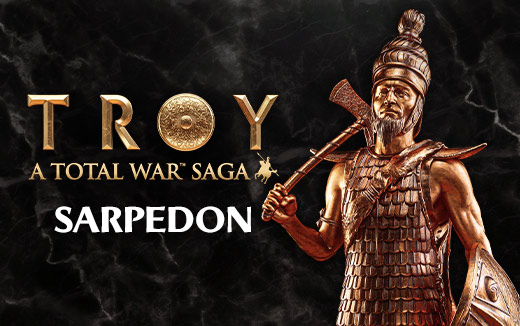
and Sarpedon, who took part in the Trojan War and became the hero of numerous ancient legends. Myth assigns the three brothers different destinies, which bind together Crete, Lycia and the Underworld.
Minos, son of Zeus and Europa, is the legendary king of Crete. He was not simply a ruler; he was the emblem of a kingship instituted by the gods, a link between gods and men.
Europa, Minos and the three princes
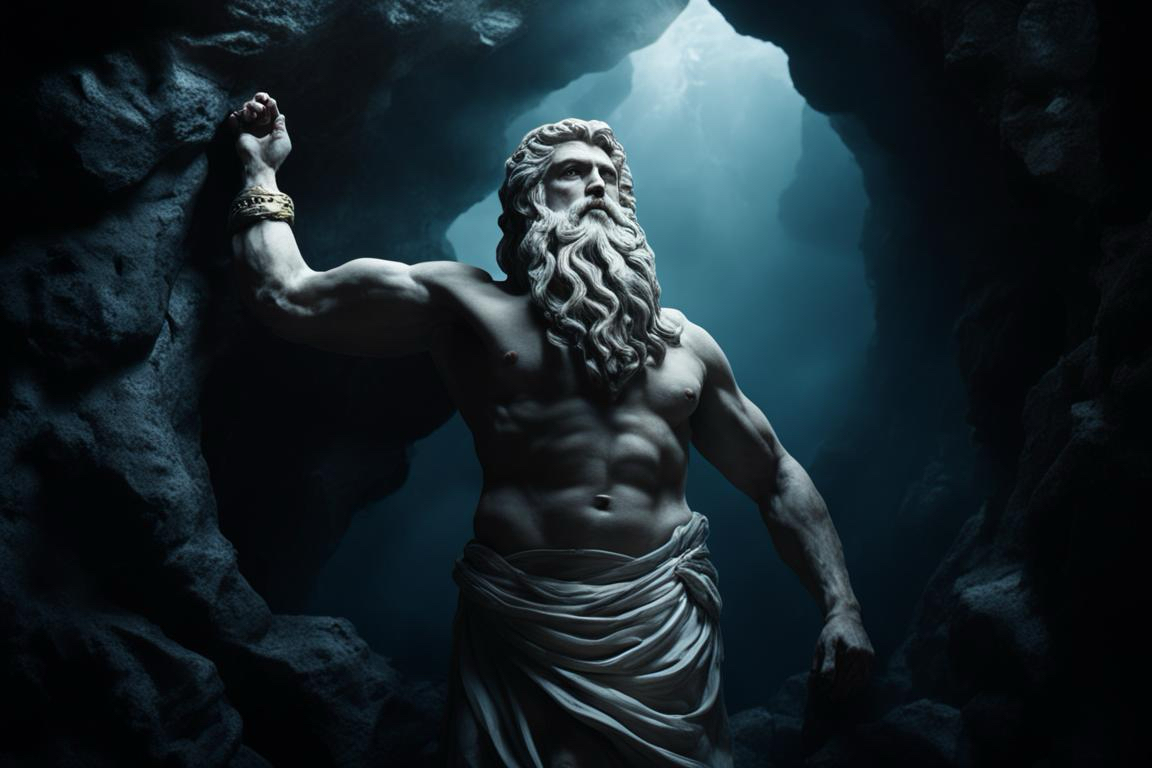
According to the myths, Minos went down every nine years into a cave where Zeus gave him the laws; tradition has in mind the Idaean Cave on Psiloritis. The idea goes back to two lines in the nineteenth book of the Odyssey, where Minos is the king who ruled in nine-year spans as the intimate of great Zeus, and Plato understood them to mean that he went regularly to be instructed by the god. This direct dealing with the highest deity not only strengthened his power over Crete but made his destiny unique and underlined his special role as mediator between the heavenly and the earthly. The death of Minos, like his life, is wrapped in myth. Some versions say that he was killed in Sicily, where he had pursued the fugitive Daedalus. He tracked the craftsman down at Kamikos, at the court of King Cocalus, by means of a puzzle only Daedalus could solve – how to pass a thread through a spiral seashell, which Daedalus did by tying it to an ant and luring the creature through with a drop of honey – and was then scalded to death in his bath by the king’s daughters. Others say that he became a judge in the Underworld together with his brother Rhadamanthys; in Plato’s Gorgias the two sit with Aeacus, and Minos has the deciding vote. Whatever his end, the figure of Minos embodies an age in which myth and reality interlocked and brought forth the culture and the values that have entered into the foundations of European civilisation.
Minos and his age stand for the golden age of Crete, a time of peace, prosperity and cultural flowering. At the same time they are a reminder that power and greatness are often attended by tragedy and trial. The myth of Minos teaches us to value wisdom and justice, and to understand that every decision has its consequences and every deed its price.
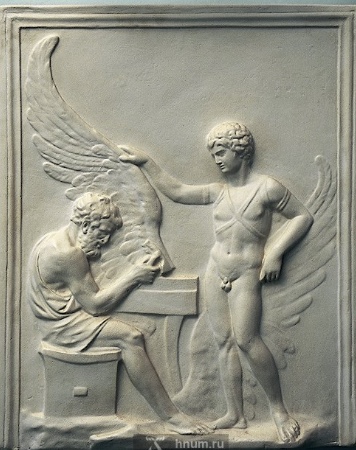
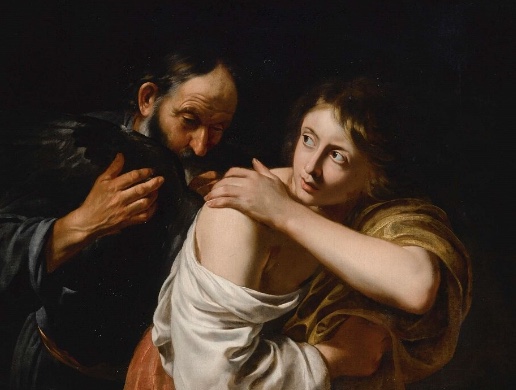
Daedalus, held to be the greatest builder and inventor of his time – the name itself means something like “cunning worker” – won fame because, at the command of King Minos, he created on Crete the Labyrinth in which the Minotaur was to be kept prisoner. Athenian tradition claimed him as one of its own, a grandson of the ancient king Erechtheus, who had fled to Crete after hurling his gifted nephew, the inventor of the saw and the compass, from the Acropolis out of envy. But the greatness of Daedalus aroused the jealousy of Minos, who would not allow so talented a man to leave Crete and serve another. And so Daedalus and his young son Icarus were shut up in the very Labyrinth that Daedalus himself had built – a maze so cunning, says Ovid, that its maker could scarcely find his own way out.
To escape, Daedalus made wings for himself and Icarus from birds’ feathers of different sizes, bound with thread and fixed with beeswax. He warned Icarus not to fly too low, lest the sea water weigh down the wings, nor too high, lest the sun melt the wax. The classic telling is in the eighth book of Ovid’s Metamorphoses.
During the flight, however, Icarus, seized by the intoxication of flying, climbed too high. The wax melted, the wings came apart, and Icarus fell into the sea and drowned; the Icarian Sea and the island of Ikaria have borne his name ever since. Daedalus flew on alone – to Sicily in most accounts, to Cumae in Virgil’s Aeneid. The myth stands for the limits of human striving and for the danger of overreaching.
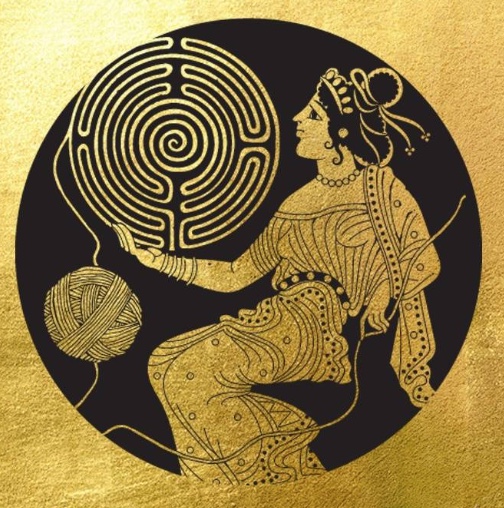
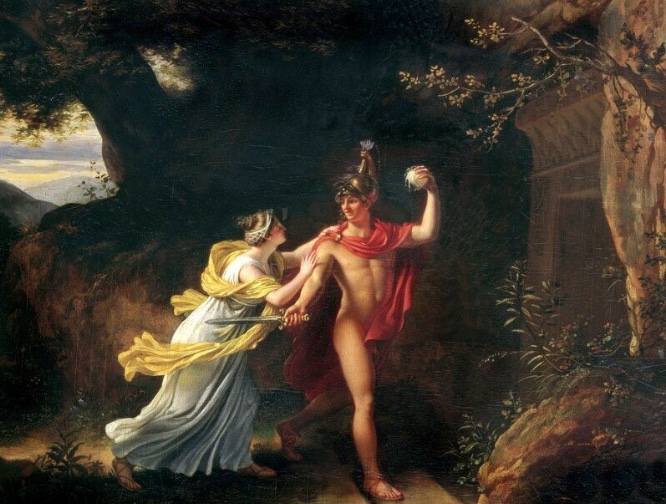
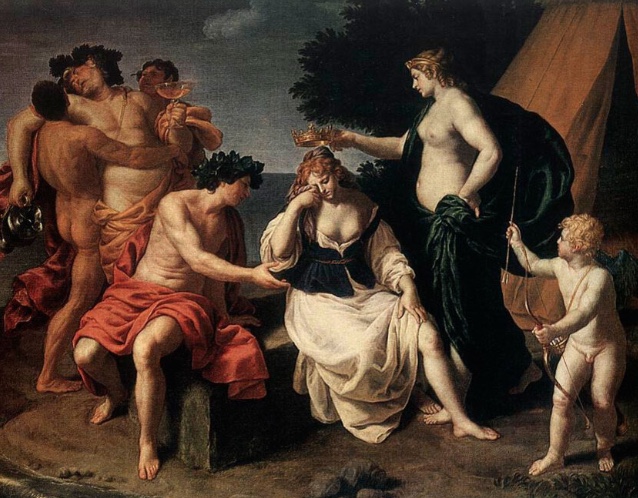
Ariadne, princess of Crete, embodies in Greek mythology feminine strength and readiness for sacrifice. As the daughter of Minos and of Pasiphae, herself a daughter of the sun god Helios, she grew up in the shadow of the mysterious Labyrinth, which hid in its depths the terrible Minotaur. Her life changed utterly with the arrival of Theseus, the Athenian hero whose calling it was to kill the monster. Ariadne fell in love with him at first sight and resolved to help her beloved.
That she gave Theseus the ball of thread – and with it, in some tellings, a sword – was an act not only of love but of courage: she was risking her life, for her father’s punishment would have been inescapable. With the thread Theseus, having killed the Minotaur, found the way out of the Labyrinth, and he took Ariadne with him. The story might end there, but it has a tragic sequel. Ariadne’s tragedy is played out on the island of Naxos – the Dia of Homer – where Theseus abandoned her; wholly taken up with his own ambition, he forgot the promise he had given her. The ancients themselves were not agreed about what happened there: in the Odyssey Ariadne is killed on Dia by Artemis, and Plutarch, in his Life of Theseus, collects several rival versions, including one in which there were two Ariadnes. In the tradition that prevailed, already known to Hesiod, Ariadne, left alone and in deep grief, meets Dionysus, god of wine and festive joy, who recognises in her not only a beautiful soul but an extraordinary strength. Dionysus falls in love with her, takes her as his wife and so raises her to the rank of a goddess; Oenopion and Staphylus are named among their sons. This union stands for Ariadne’s transformation from a victim of circumstance into a being with a divine destiny – and for the thought that even in the deepest despair fate can grant a new path and the possibility of a fresh beginning.
The bond with Dionysus not only restores justice in Ariadne’s life, it grants her eternal life among the gods of Olympus, where she is honoured as a goddess of passion and transformation. Her jewelled bridal crown, so the story goes, Dionysus flung into the sky, where it still shines as the constellation of the Northern Crown, Corona Borealis.
The myth of the quarrel between Minos and Poseidon holds a special place among the Greek legends, as an example of the deep and tangled relations between mortals and gods. From the outset Minos wished to secure his rule over Crete not by earthly achievements alone but by divine assent. Poseidon, god of the seas and of earthquakes, heard his prayer and sent him from the waves a magnificent white bull. This creature was no ordinary animal; it signified the favour of the gods and was meant to be sacrificed as a token of acknowledgement and thanks.
But Minos, overwhelmed by the incomparable beauty and majesty of the bull, decided to cheat fate: he kept the animal for himself and sacrificed a lesser one. This act of greed and pride roused the anger of Poseidon, who resolved to punish the Cretan king in a singular and cruel fashion.
Poseidon laid a spell on Pasiphae, the wife of Minos, and inspired in her a passionate, unconquerable love for the white bull. It was Daedalus who made the liaison possible, building for the queen a hollow wooden cow covered with real hide. From this unnatural passion came the Minotaur – his proper name was Asterion, like that of Europa’s husband – a being torn between his human and his animal nature, the embodiment of Minos’s guilt and of his pride. The birth of the Minotaur and the subsequent building of the Labyrinth by Daedalus underline the idea that human actions have inescapable consequences, above all when they spring from arrogance or ingratitude.
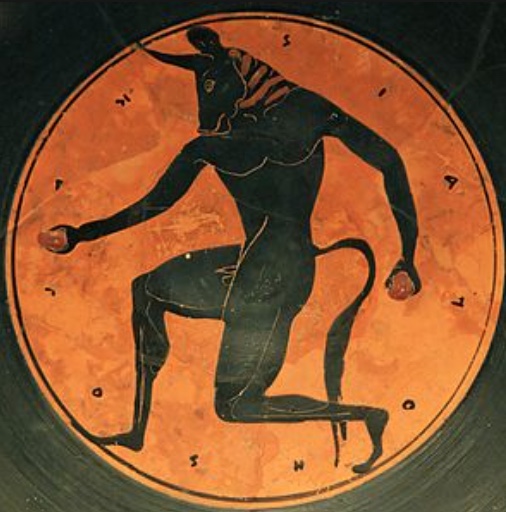
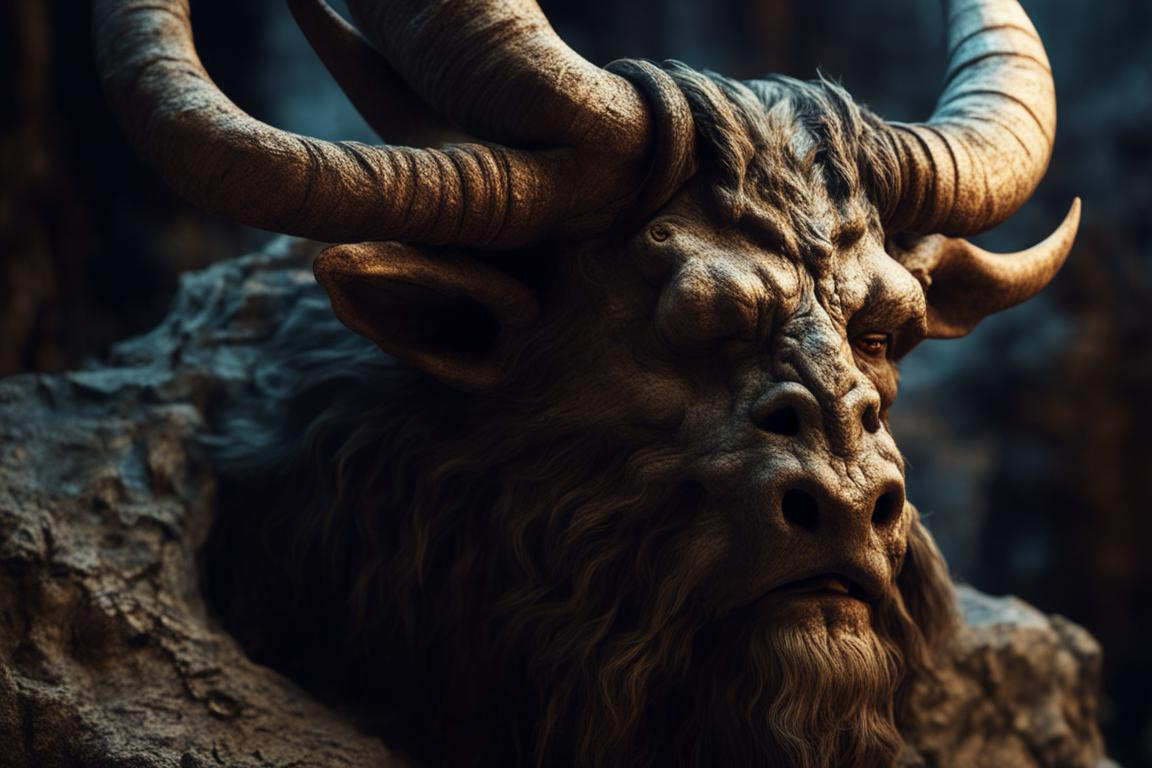
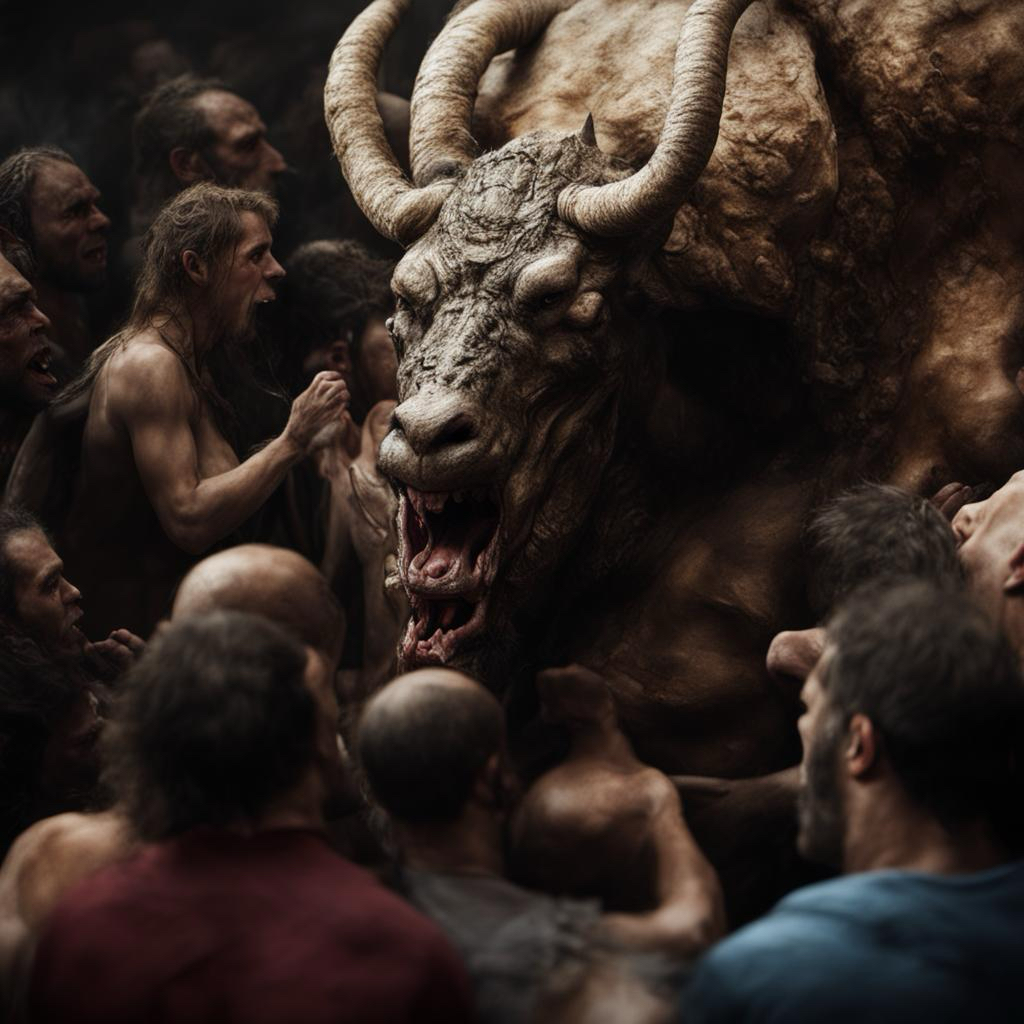
The Minotaur, a creature with the body of a man and the head of a bull, stands at the centre of one of the most enigmatic and gripping myths of the Greek world. Born of Pasiphae, wife of the Cretan king Minos, and the wondrous white bull sent by the sea god Poseidon, he became the living symbol of the anger of the gods and the consequences of human presumption.
After the birth of the Minotaur, Minos, wishing both to conceal the creature’s shameful origin and to protect his people from its savagery, ordered Daedalus, the greatest builder of his age, to construct the Labyrinth. This intricate building became not only the Minotaur’s prison but an image of the utter seclusion and loneliness in which he had to pass his life. The existence of the Minotaur in the Labyrinth remained shrouded in darkness and mystery. Already in antiquity the word labyrinth was linked with the labrys, the double axe, whose sign is cut into the pillars of the palace – Kalokairinos noticed it on the walls in his first trenches – and many a visitor believes he can recognise the original of the maze in the tangle of corridors and staircases at Knossos, a building of a thousand rooms on as many as five levels.
He fed on human victims, whom Athens was obliged to send to Crete every nine years as tribute for its defeat in war – seven youths and seven maidens. Minos had imposed the penalty after the death of his son Androgeos. So the Minotaur became a living reminder of the heavy price of pride and deceit. For all his cruel reputation he remained a tragic figure, a victim of circumstances that lay far beyond his power.
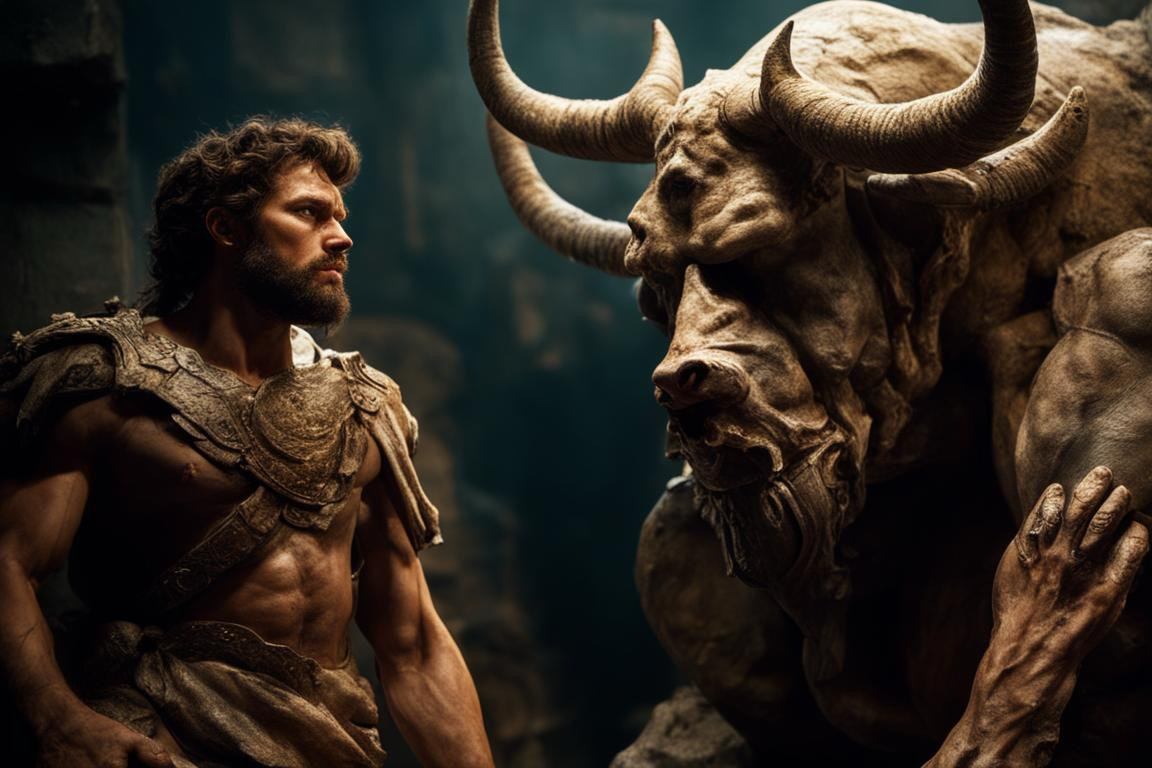
The action reaches its climax when Theseus, the young Athenian hero determined to put an end to this tribute of blood, enters the Labyrinth. Theseus kills the Minotaur. The deed not only freed Athens from its debt to Crete, it also ended the tragic life of a being that was as innocent as it was terrible.
The myth of the Minotaur closes the story of the Labyrinth with the theme of ordeal and deliverance. Theseus made his way into the subterranean world of the palace, killed the monster and, thanks to Ariadne’s thread, found his way out again. In cultural memory the tale has become a parable of the overcoming of fear, of the closed space and of one’s own cruelty.
Visiting Knossos
Knossos is the most visited archaeological site on Crete; a city bus runs out from the centre of Heraklion in about twenty minutes. In summer it is best to come as soon as the site opens in the morning or in the late afternoon, when heat and crowds ease off; there is hardly any shade on the site. The most fragile rooms, the Throne Room among them, can only be viewed from the threshold. The visit is most rewarding when combined with the Archaeological Museum of Heraklion, where the original frescoes, the Snake Goddesses and the inscribed tablets are on display. Since 2025 Knossos, together with five other Minoan palatial centres – Phaistos, Malia, Zakros, Zominthos and Kydonia – has been inscribed on the UNESCO World Heritage List.