Myrtos – a south-coast village, its Minoan valley and the memory of 1943
The most complete guide to Crete: 221 places on the map, 23 routes and 49 articles — with photos, videos and the story behind every place. Everything is open and free: no sign-up, no paid sections and no advertising, open or hidden. You can install the guide on your smartphone as an app.
Routes drawn along real roads
Weather at every stop
Full-text search
“Near me” by geolocation
Create your own printable itinerary
Satellite, terrain, dark mode
Works offline
⌕
Searches 1.7 million characters of descriptions, not just names
—places
4regions
—routes
—with video
Search results
—
Interactive map
Find what is near you
Filters narrow the map and the list at once. Zoom out and pins group together.
Region
Category
Фильтры карты
Landmarks
Featured places
RegionCategory
Routes
Ready-made day trips
Individual places
Articles about landmarks
Myrtos: the sea, a Minoan valley and the memory of 1943
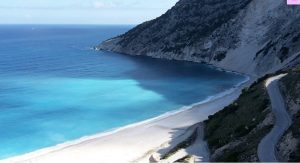
Myrtos lies on the Libyan Sea at the point where the Kryos Potamos – known further up its valley as the Sarantapichos – reaches the coast after its journey from the hills of Males. The long beach of grey sand and fine shingle, which flies the Blue Flag, begins directly below the seafront promenade with its tavernas and kafenia; the water is clear, deepens quickly and stays warm well into the autumn. Behind the whitewashed houses a green valley opens, with olive groves and orchards of oranges and lemons, and further east the greenhouses of the plain of Ierapetra stand in rows – the first of them introduced in 1966 by the Dutchman Paul Kuypers. Myrtos is held to be one of the warmest places in Crete, with temperatures of around 28°C in July and August and 13 or 14°C in January and February, and unlike many coastal resorts it has kept the character of a village. Some five hundred people live here – 518 at the census of 2021. Tourism arrived in the early 1970s, when the place was popular with hippies, but large hotel complexes are still absent, and life is lived in a few lanes between church, square and sea.
A young village on old ground
The Myrtos of today is surprisingly young. It came into being only towards the end of the 19th century – the census of 1881 found just 127 people here – when families from the hill villages of the hinterland, Gdochia above all, moved down to the coast, because the sea had become safe again once the danger of piracy had passed and oil, carobs and fruit could conveniently be shipped from here to Ierapetra. The site had of course been occupied long before. Remains of a Roman settlement, with mosaics and baths, came to light on the western side of the village, though much of a Roman villa has since been lost to coastal erosion; and the ancient place-name, taken from the myrtle that grows in the district, lives on in the modern one. A small archaeological collection in the village, the fruit of a schoolmaster’s passion for collecting, shows finds from the surrounding country and a vivid model of the Minoan settlement of Fournou Koryfi. The schoolmaster was Georgios Dimitrianakis (1923–1994), who taught at Myrtos from 1957 to 1977 and gathered up the vases, tools and fragments of figurines that lay about the fields east of the village, to save them from damage and theft. The collection has been housed since 2001 next to the old church in the middle of the village, and the model, at a scale of one inch to the metre, is the work of the British potter John Atkinson.
Pyrgos and Fournou Koryfi
The country round Myrtos is closely bound up with two Minoan sites, both on hills above the coast. Fournou Koryfi (Φούρνου Κορυφή), about three and a half kilometres east of the village, was excavated in 1967 and 1968 by the British archaeologist Peter Warren. The Early Minoan settlement of the 3rd millennium BC consists of dozens of small rooms built hard up against one another, some ninety in all: living rooms and storerooms, a potter’s workshop, places for weaving and for making wine and oil, and at the south-western edge a room interpreted as a shrine. Its people grew cereals, olives and vines and kept sheep, cattle and pigs; among the pottery is the Vasiliki ware typical of the period, and the potters’ turntables found here are now in the collection at Ierapetra. In the shrine was found the famous “Goddess of Myrtos”, a hollow clay vessel for libations in the shape of a woman cradling a jug in her arm; it can be seen today in the Archaeological Museum of Agios Nikolaos. Around 2200 BC the settlement perished in a fire and was not rebuilt.
The hill of Pyrgos (Πύργος), immediately east of the river mouth and about half a kilometre from the village, was by contrast inhabited for more than a thousand years. In the Neopalatial period a grand country house rose on its summit, with a paved court, a cistern and a staircase; a two-storey house tomb, a tower and finds of seals and of tablets in Linear A show that the valley was administered from here. The tomb held the remains of 65 people. Around 1450 BC this building too burned down – deliberately, it seems, for the houses of the village round it were spared. In Hellenistic times a watchtower was built on the hilltop. The site was excavated between 1970 and 1982 by Gerald Cadogan. The finds from both hills prove that the valley belongs to the earliest history of Crete; the river and the fertile land explain why people returned here again and again over thousands of years.
15 September 1943
The darkest chapter in the history of the village falls on 15 September 1943. After the engagement at Kato Symi, in which Cretan resistance fighters had defeated a German detachment, the occupying power ordered the whole tract of country from Viannos to the river bed at Myrtos to be laid waste. In the course of the morning the troops reached the village; the inhabitants were given two hours to leave it. In the early afternoon the arrests and shootings began: ten men, among them the president of the community, Michail Andreopoulos, who had still been trying to negotiate, were killed behind the church of Agios Antonios, and other inhabitants – old people, an invalid, a woman in her own house – elsewhere in the village. The houses were looted and at about four o’clock set on fire; two days later an eighteenth victim died. The survivors fled to Anatoli and Ierapetra, and the area was declared a prohibited zone. In the villages of the western province of Ierapetra a total of 131 people lost their lives in those days, men, women and children.
Today Myrtos combines this remembrance with a lively cultural life: in summer the cultural association puts on concerts, a village festival on the beach and film evenings in the courtyard of the church of St Antony. Those who stop here will find it a good base for excursions into the hills of Males and Anatoli, to the beaches of Tertsa to the west and to the Minoan hills to the east.