The most complete guide to Crete: 221 places on the map, 23 routes and 49 articles — with photos, videos and the story behind every place. No sign-up, no trackers.
Routes drawn along real roads
Weather at every stop
Full-text search
“Near me” by geolocation
Create your own printable itinerary
Satellite, terrain, dark mode
Works offline
⌕
Searches 1.7 million characters of descriptions, not just names
—places
4regions
—routes
—with video
Search results
—
Interactive map
Find what is near you
Filters narrow the map and the list at once. Zoom out and pins group together.
Region
Category
Фильтры карты
Landmarks
Featured places
RegionCategory
Routes
Ready-made day trips
Individual places
Articles about landmarks
The route to Lake Kournas
The suggested route begins with the coast and the upland of the Akrotiri peninsula, which pushes out into the sea like a broad head of rock between the Gulf of Chania and Souda Bay. Within a small compass it holds one of the stages on which the story of Cretan freedom was played out, two of the most important monasteries on the island and a gorge riddled with hermits’ caves – enough to fill a whole morning before the drive continues eastwards. The farthest point, Gouverneto, is only some 19 kilometres from Chania, so distances are never the difficulty; time is.
The hill of the Prophet Elias
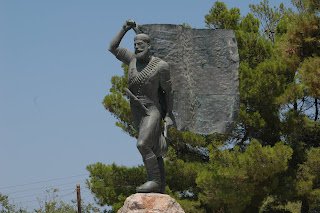
This is the place where the flag of Crete’s union with Greece was raised – and raised quite literally on a human body, which took the place of a flagstaff shot to pieces. Here, too, is the grave of Eleftherios Venizelos.
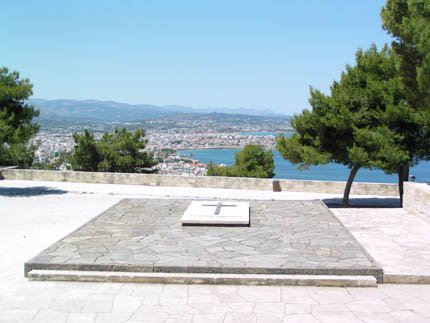
A few kilometres east of Chania the road climbs to the hill of the Prophet Elias (Profitis Ilias). From the top a wide panorama opens out: the town and its harbour, the green plain behind it, the sea and, commanding the whole of the south, the soaring summits of the White Mountains, which keep their snow well into spring. The view is at its most impressive in the late afternoon, when the light gilds the roofs of the old town.
The chapel of the Russian Tsar and the Venizelos graves
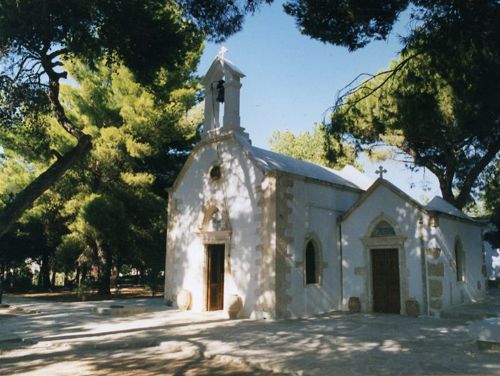
On the hill stands the church of the Prophet Elias, which has a remarkable history. During the struggle for liberation from Ottoman rule it was partly brought down by a direct hit from the allied fleet. It was rebuilt with money given by the Russian Tsar: when, shortly afterwards, an unexplained explosion occurred on board a Russian warship in Souda Bay, people saw in it the punishment of the Prophet, and the Tsar sought to appease him with this pious donation. A Russian ship, the Imperator Aleksandr II, had indeed been among those that fired on the hill.
Beside the church lies a cemetery with the graves of many Cretan national heroes and, on a plain terrace shaded by pines, the burial place of the Venizelos family. More will be said of Eleftherios Venizelos further on.
On the same hill stands the monument to Spyros Kagiales, who made his own body the staff of the national flag. Faced with such unexampled courage, the Italian commander-in-chief of the Great Powers’ fleet ordered the firing to cease. The statue, a gift from Cretans living in America, was unveiled in 1997, a hundred years after the event; every year on 9 February the day is commemorated here. What happened then is told below.
The man who became a flagstaff, and the events of 1897
What led up to it
Between 1890 and 1895 the Christian population of Crete found itself hard pressed: heavy taxes, oppression, acts of violence and murders on the part of the Ottoman authorities were the stuff of daily life. On 23 and 24 January 1897 – the dates follow the old calendar then in use, twelve days behind the Western one – the Christian quarter of Chania went up in flames, the bishop’s residence with it, and Christians were killed. “I saw Chania in flames,” Venizelos said afterwards. Thereupon about a hundred insurgents gathered on Akrotiri, determined to bring about the union of Crete with Greece by any means.
Their resolution of 25 January declared Ottoman rule abolished and called upon the King of the Hellenes to take possession of the island. In the days that followed more armed men arrived, hoisted the Greek flag and set up a revolutionary camp, with an assembly and a provisional government of its own; the young lawyer Eleftherios Venizelos sat on the committee that led it. Akrotiri had been chosen with care: the peninsula lies directly in front of Chania, close to Souda Bay, and from its heights every movement into and out of the town could be watched. In early February, moreover, a Greek expeditionary corps of some 1,500 men under Colonel Timoleon Vassos landed at Kolymvari, west of Chania, and Vassos at once proclaimed the union of Crete with Greece.
The Great Powers – Italy, France, Austria, Germany, England and Russia – did not, however, recognise the insurgents’ demand. They resolved to place the towns of Chania, Rethymno and Heraklion under international control, and concentrated their squadrons off the Cretan coast.
The bombardment of Akrotiri
On 9 February 1897 – 21 February by the Western calendar – at about half past three in the afternoon, the Italian Admiral Canevaro, who commanded the combined squadron, gave the order to shell the insurgents’ camp. The ships that opened fire included the British Revenge, Dryad and Harrier, the Russian Imperator Aleksandr II, the German Kaiserin Augusta and the Austro-Hungarian Kaiserin und Königin Maria Theresia. About a hundred shells came down on the hill. They spared neither the camp nor the chapel of the Prophet Elias – the one the Russian Tsar later had restored – nor the Greek flag that flew proudly in the wind above Akrotiri. Twice the flag fell to the ground, struck by the fire of the Great Powers, and twice it was set up again. Ordered beforehand to haul it down, Venizelos is said to have answered that the ships had their cannon and might fire, but that the flag would not fall.
When the third shell smashed the staff to pieces, the insurgent Spyros Kagiales, then a man of twenty-five from Chalepa, seized the cloth, made his own body the staff and held the flag high above him. When the admiral of the international squadron saw through his field glasses that the Greek flag was once more standing in the wind, borne now on the shoulders of a single man, he ordered the firing to stop. On board the ships, so the story goes, the crews broke into applause.
As Eleftherios Venizelos, who stood at the centre of events in those years, later related, Admiral Canevaro confessed to him with undisguised admiration that the heroic deed of Spyros Kagiales – Kagialedakis – had moved him to the core; that man, as he put it, had on that day
“by his deed literally defeated European diplomacy”.
The deed moved the admirals to put proposals for settling the Cretan question to their governments that were favourable to the Greeks. As early as March 1897 the Powers declared Crete autonomous under the suzerainty of the Sultan. At first, then, by the will of the Great Powers, Crete received autonomy under an international protectorate, which in 1898 freed the island from Ottoman rule; the arrival of Prince George of Greece as High Commissioner on 9 December of that year marked the end of the revolt. It was the harbinger of formal union with the Greek motherland on 1 December 1913. Kagiales himself lived modestly afterwards in Chalepa, where he died in 1929; he is said to have declined a pension with the words that he had acted for his country and not for pay.
Eleftherios Venizelos – a biographical note
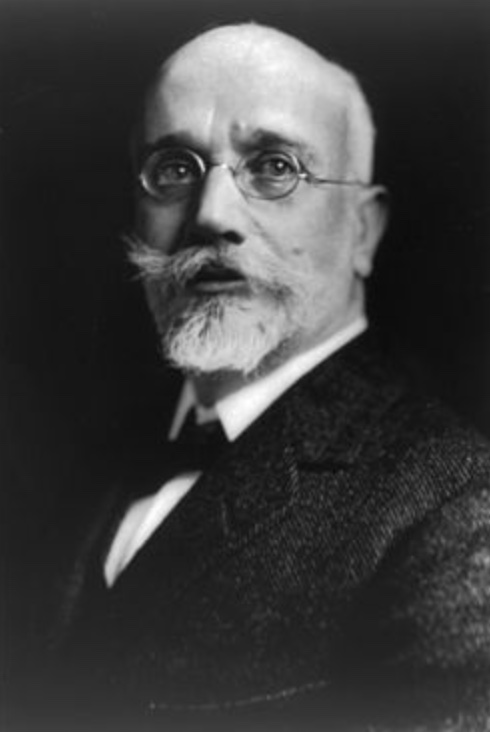
Eleftherios Venizelos is counted among the most important Greek politicians of the 20th century. A Cretan by birth, he was Prime Minister of Greece in the first decades of the century, and under his leadership the country doubled its territory. The long inscription on his gravestone is an extract from a speech he made in parliament in 1932. In it he concedes that he had no doubt made many a mistake in his life; yet all the powers of his soul and his body he had devoted to the struggle to free his people from its oppressors.
He was born on 23 August 1864 in Mournies, near Chania, and read law at the University of Athens. His Christian name – “the free one” – became the key signature of his life, of the struggle for the freedom of his native island and of all Greece. More than once he called on the islanders to resist Ottoman rule. After the rising at the end of the 1880s he had to leave Crete and go to Greece, to return to the island for good after the victorious revolt of 1897.
As a member of the provisional government, Venizelos at first worked closely with Prince George, the High Commissioner of the semi-autonomous island, to consolidate Cretan self-government. Later, however, the two fell out: Venizelos organised the movement for union with Greece, which the Prince opposed. Union was proclaimed in March 1905 in the mountain village of Therisso – a rising that cost Prince George his office – and recognised under international law in 1913. In 1910 Venizelos went to Athens, where he first became Prime Minister on 6 October of that year; five times in all he became Prime Minister at the most difficult moments of Greek history, for the last time in the early months of 1933. In the Balkan Wars, concluded by the treaties of London and Bucharest in 1913, and again after the First World War, the national territory was considerably enlarged. His quarrel with King Constantine I over Greece’s part in that war split the country into royalists and Venizelists for a generation.
Driven into exile at the last as an opponent of the monarchy – after the failed coup of 1935 he was condemned to death in his absence – he died in Paris on 18 March 1936, aged seventy-one. Beside him is buried his younger son Sofoklis, born in 1894, who likewise took part in political life and was himself Prime Minister several times; he died in 1964. The site of the grave was not chosen by chance: on this hill the Greek national flag was planted in 1897, and from here Venizelos liked, even in his lifetime, to look out over the town in which his career began.
On the drive from the hill into the interior of the peninsula and on towards the north coast there are two monasteries to visit: the Monastery of the Holy Trinity (Agia Triada) and the Monastery of Gouverneto, some five kilometres apart. Both played a large part in the history of the liberation movement, and Agia Triada shows a valuable collection of old icons. Both are working monasteries; at Gouverneto shorts and beachwear are not admitted.
The Monastery of the Holy Trinity
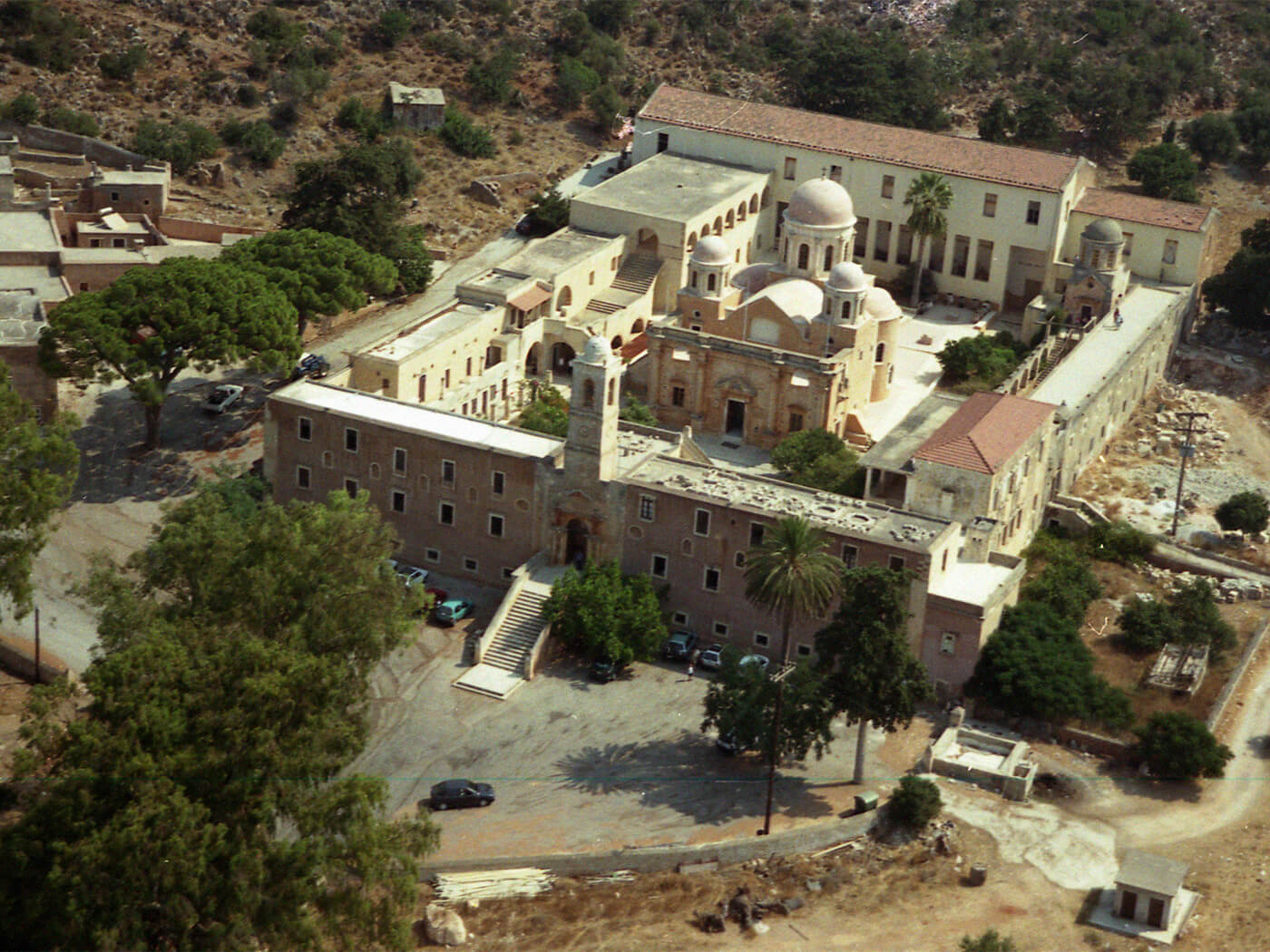
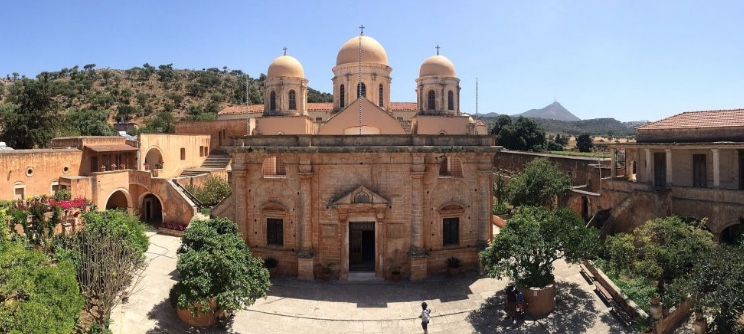
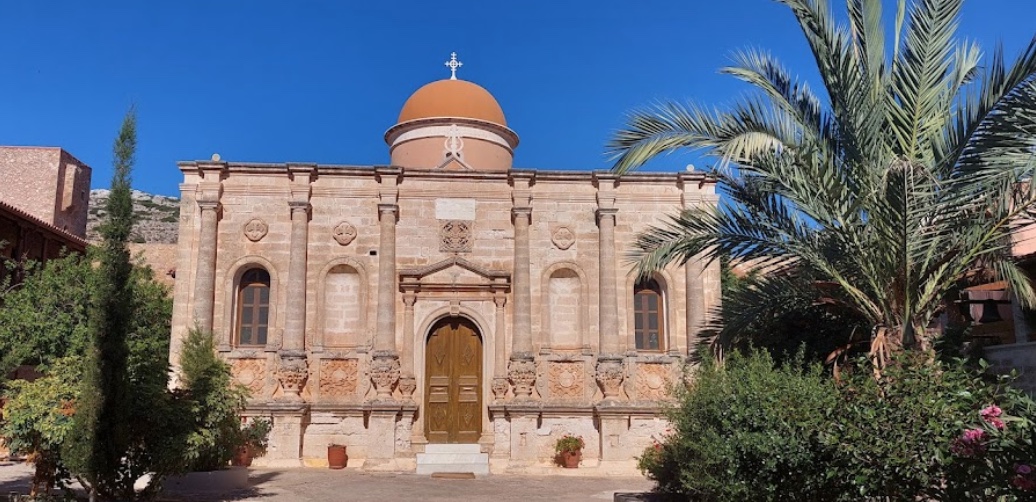
The monastery of Agia Triada Tzangarolon – the Trinity monastery of the Tzangaroli – is a stauropegial house, that is, bound directly to the Ecumenical Patriarchate of Constantinople. A dead-straight avenue of cypresses leads between vineyards and olive groves to its honey-coloured façade.
On the site of the present monastery there once stood a smaller, older one with its church. The rebuilding was begun around 1611 or 1612 by the monks Laurentios and Jeremias, brothers from a family of Venetian origin that had long lived on Crete and become Orthodox: the Tzangaroli. Jeremias, at home in both Greek and Latin learning, a friend of the Patriarch Meletios Pigas and versed in architecture, took his inspiration from the writings of the Italian master Sebastiano Serlio. Two dates carved on the building record the progress of the work: 1613 over the door of the cellar and 1631 in the inscription on the façade. After Jeremias’s death in 1634 his brother Laurentios carried the work on. In 1645, however, when the Ottomans came and took Chania, building broke off – the church had risen only as far as the springing of the dome. Under Ottoman rule the monastery was called Selvili Manastir, the “monastery with the cypresses”.
Later history
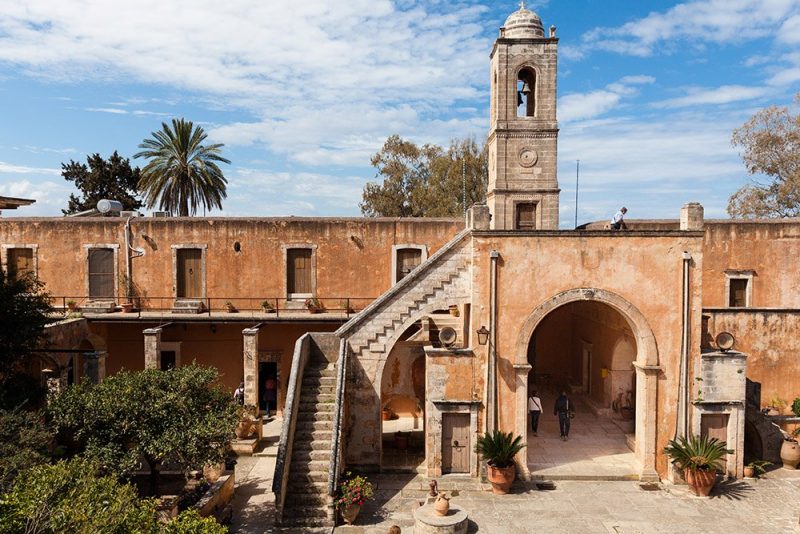
In 1821, the year of the Revolution, the monks fled; the Ottomans burned the monastery down, and many precious relics and manuscripts were lost. In 1830 the monks Kalliopios and Gregorios received permission to complete the church, and a theological school was opened here in 1833. The bell tower was put up in 1864. In the risings of 1866 and 1878 the monastery sided with the insurgents; from 1892 to 1905 it housed a seminary for priests, out of which the ecclesiastical school of Crete later grew, and during the revolution of 1896–97 the buildings served as a hospital and as the insurgents’ headquarters.
In the Second World War the monastery was used at first as an ammunition store; after the Germans took Crete a naval school and soldiers’ quarters were installed here. Today a brotherhood lives at Agia Triada once more. It works the surrounding vineyards and olive trees, and its wine and olive oil, which are sold in the monastery shop, are esteemed far beyond Crete. The patronal feast is kept at Pentecost; the monastery is usually open from eight in the morning until sunset.
The architecture
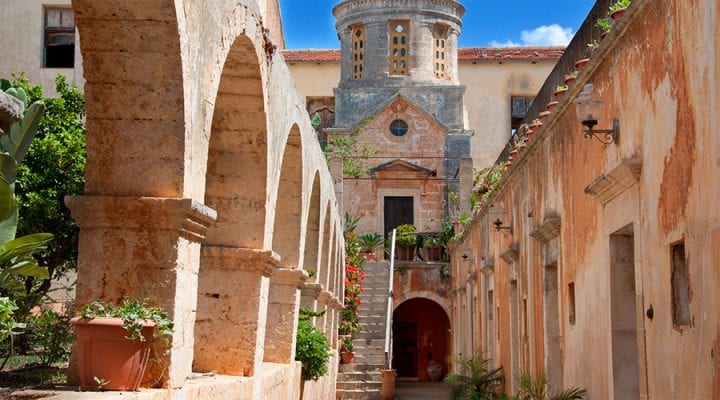
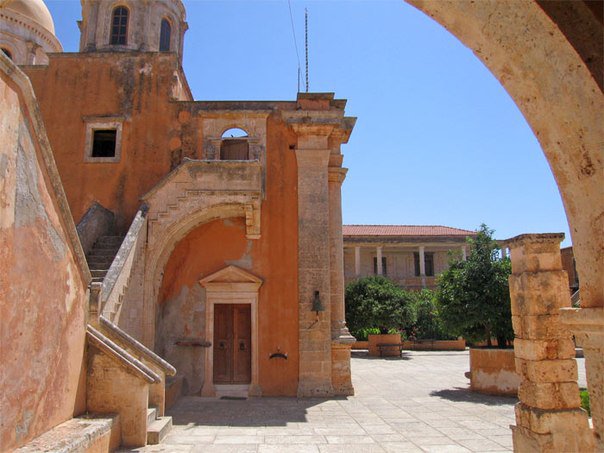
The monastery forms a closed quadrangle around an inner court, in the middle of which stands the katholikon. The main entrance is on the west side; a stately flight of steps leads up to it and ends on a landing. On either side of the portal stand pairs of massive Ionic columns carrying an entablature. Above them pairs of smaller Corinthian columns frame a round arch, and over these rises a large pediment with a Greek inscription. The design of the gate, worked in limestone, betrays the influence of Sebastiano Serlio.
Serlio’s influence shows also in the overall plan of the west range, which is three storeys high on the outside and two within. The Tzangaroli brothers evidently drew on ideas from the Italian architect’s seventh book, which deals with building on a slope – on ground, that is, such as the monastery occupies. Agia Triada is thus a principal work of that Cretan Renaissance which, in the last decades of Venetian rule, joined Eastern tradition to the formal language of the West.
The west wing contains the monks’ cells, the wine cellars and the old olive mill. The north side is taken up by the library, the south side by the ossuary and the abbot’s lodging. The ecclesiastical school that existed in the monastery at the end of the 19th and the beginning of the 20th century was housed in the eastern part. A small museum shows icons, embroidered vestments, liturgical vessels, crosses, historical documents and a liturgical manuscript of the 12th century, a parchment of the Liturgy of St Basil. Among the icons are a portable St John the Theologian of about 1500 and a 17th-century Last Judgement by Emmanuel Skordiles; a group from the mid-19th century includes a St John the Baptist of 1846, a Tree of Jesse of 1853, and a Hospitality of Abraham and a Descent into Hades, both of 1855.
The katholikon
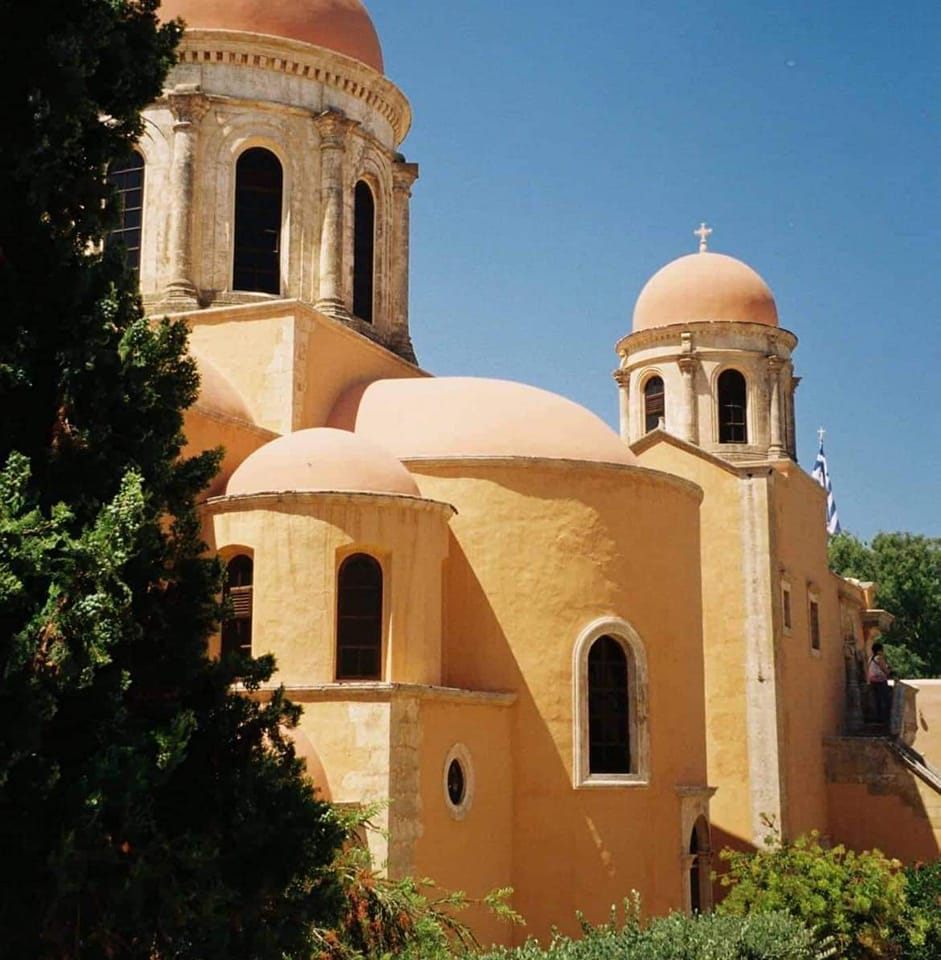
From the main entrance a vaulted passage leads into the inner court, where the katholikon stands among orange trees: a building of carefully dressed stone, a three-aisled domed basilica whose ground plan, with its three conches, also follows the tradition of Mount Athos. A narthex lies at right angles to the main aisle. The details, above all the ornament of the façade with its engaged columns, are inspired by Western architecture.
The iconostasis of 1836 is carved in wood and gilded; most of its icons are said to be by the painter Merkourios of Santorini. Two chapels belong to the church, each under a small dome of its own: that of the Zoodochos Pigi, the “Life-giving Spring”, and that of St John the Theologian. Beside the katholikon in the inner court stands a small church of Christ the Saviour.
The Monastery of the Lady of the Angels
The Monastery of Gouverneto, also called the Monastery of the Lady of the Angels (Kyria ton Angelon), is among the oldest and most important monasteries on Crete. It lies four kilometres north of Agia Triada, on a bare, windy plateau about 260 metres above the sea; the narrow road to it winds through a small rocky ravine.
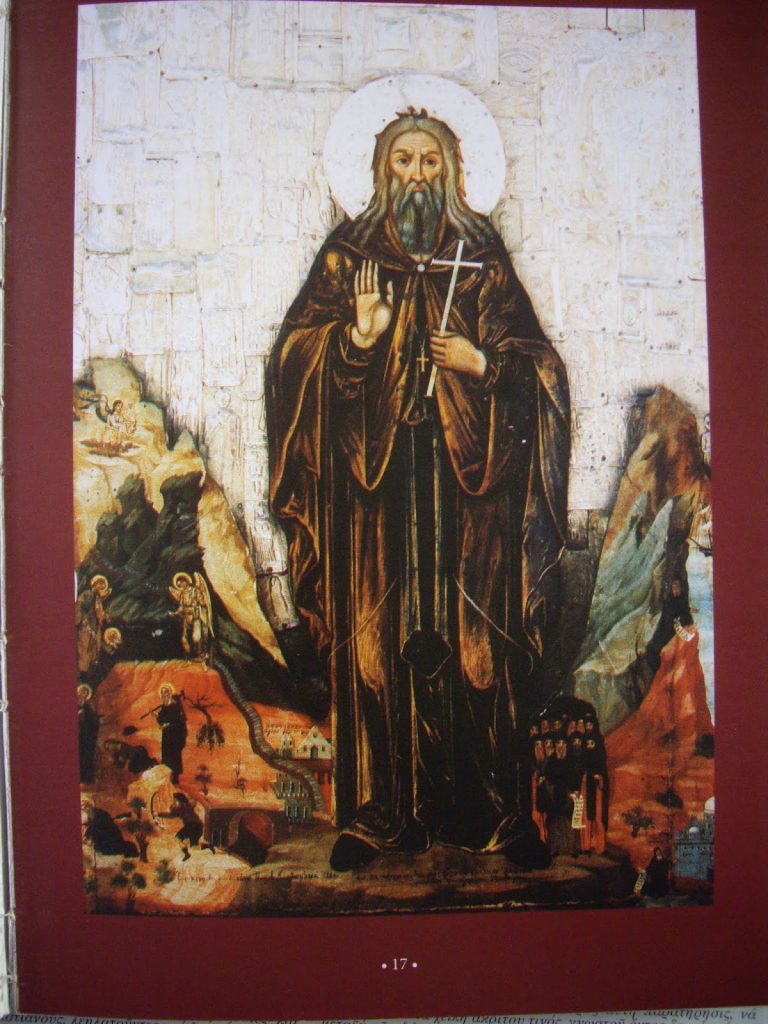
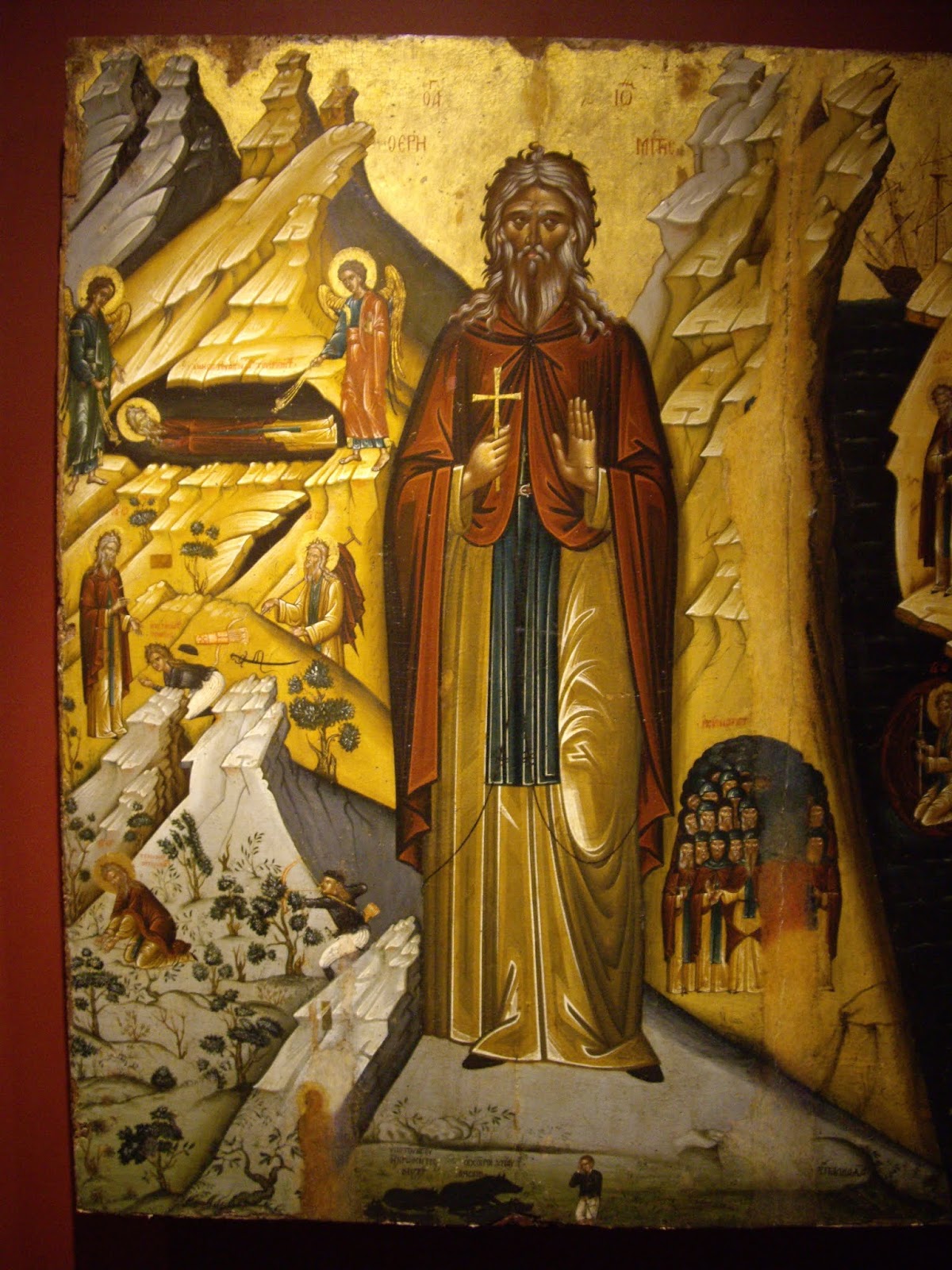
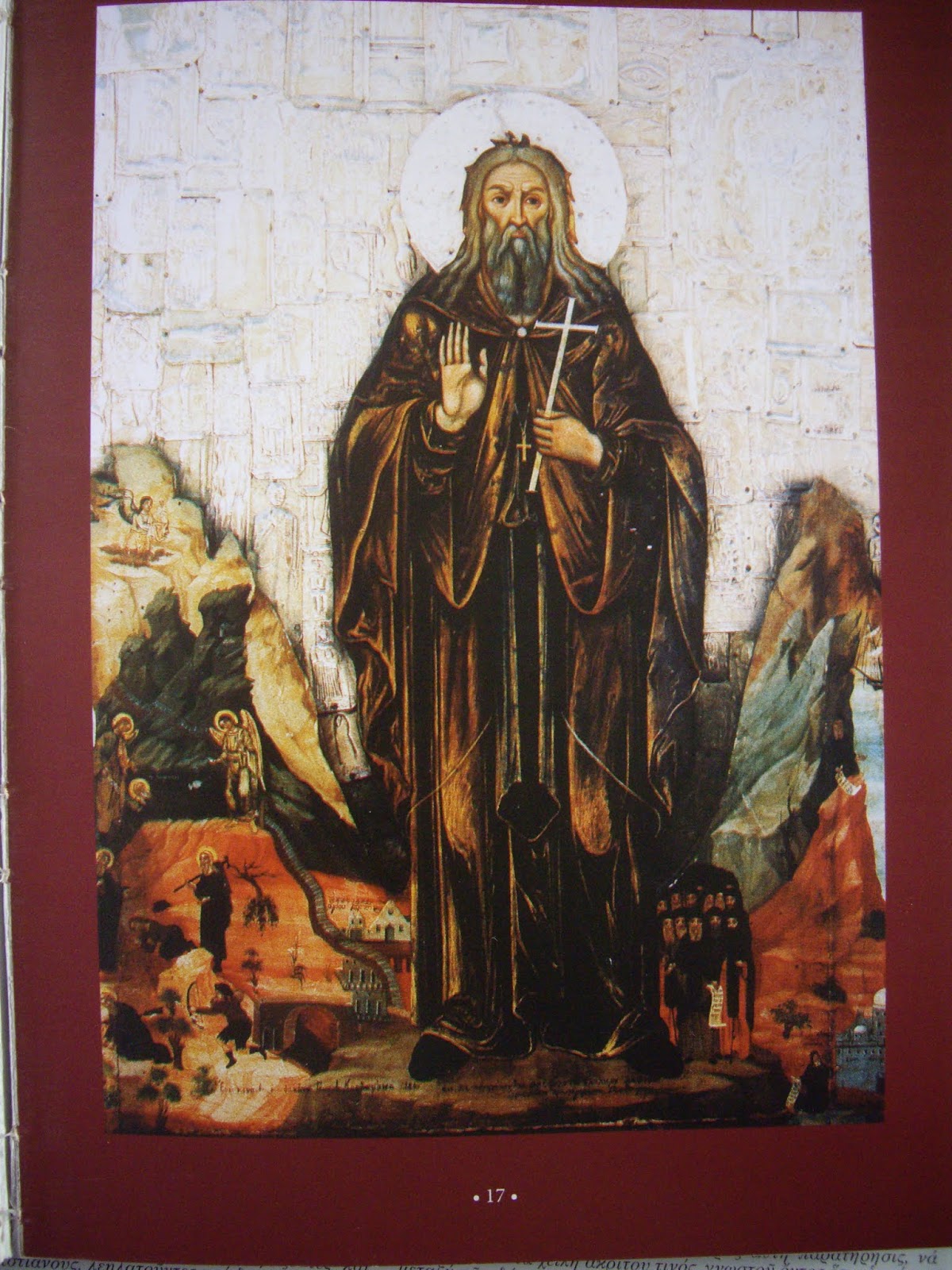
The place is dedicated to the memory of St John the Hermit, whose life – in the 11th century, by the usual dating – ended in a cave in the Avlaki gorge, where a hunter killed him by accident, taking him for an animal. Tradition does hold St John Xenos himself to be the founder of the monastery; it is more likely, though, that it was laid out by the monks of Katholiko, who continued in his ascetic way. To escape the raids of pirates they left Katholiko, close to the shore, and founded a new monastery higher up, in a safer position – in the year 1537, as an old inscription at the entrance attests. The old house was not forgotten: a path from Gouverneto drops into the gorge, reaching the Bear Cave (Arkoudospilios), once a place of the worship of Artemis, in about twenty minutes, and the ruins of Katholiko with the saint’s cave church some ten minutes beyond.
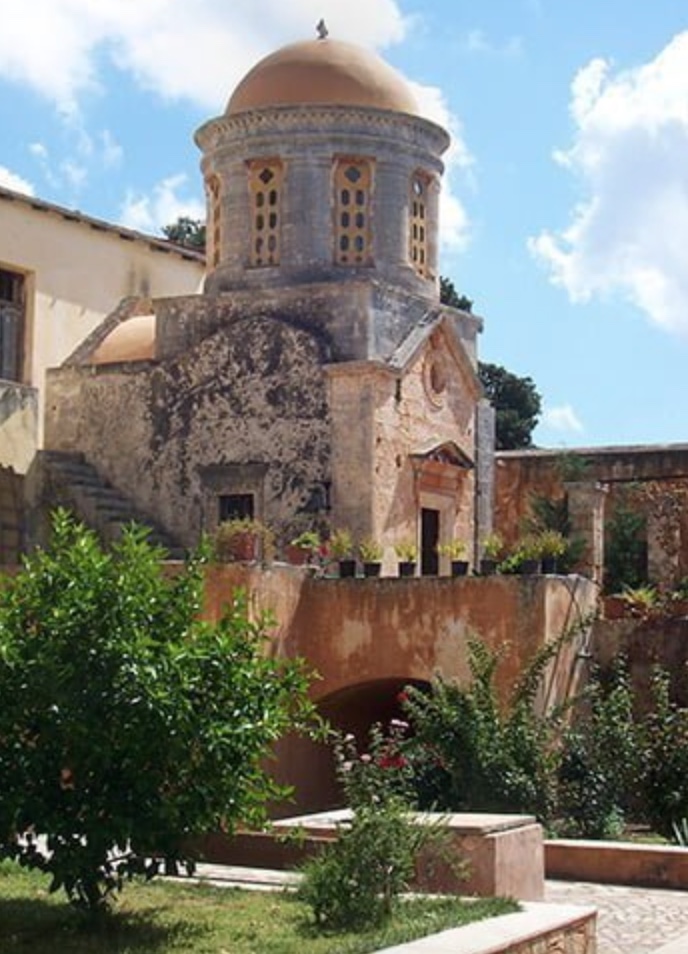
In 1620 the monastery came under the care of Agia Triada, and Jeremias Tzangarolos directed the building works. It was completed, however, only centuries after the Ottoman invasion of Crete, in the 19th century: the church, begun in 1632, was not finished until 1894. The complex resembles a small fortress: a rectangular court of roughly 40 by 50 metres, originally with a tower at each corner, of which two survive, and above the gate a machicolation for defence. Some fifty cells are ranged on two floors. The domed church in the middle of the court, dedicated to the Virgin, bears rich relief ornament of Italian inspiration on its façade, grotesque monsters among it; its side chapels are dedicated to the Ten Holy Martyrs of Crete and to St John the Hermit. Around 1637, when sixty monks were counted here, Gouverneto ranked among the largest and wealthiest monasteries on the island, and as late as 1818 it had fifty. In 1821 it was burned down and several of its monks were killed, but it remained inhabited. The Germans kept a guard post here in the Second World War, and a thorough restoration has been under way since 2005.
The old monastery
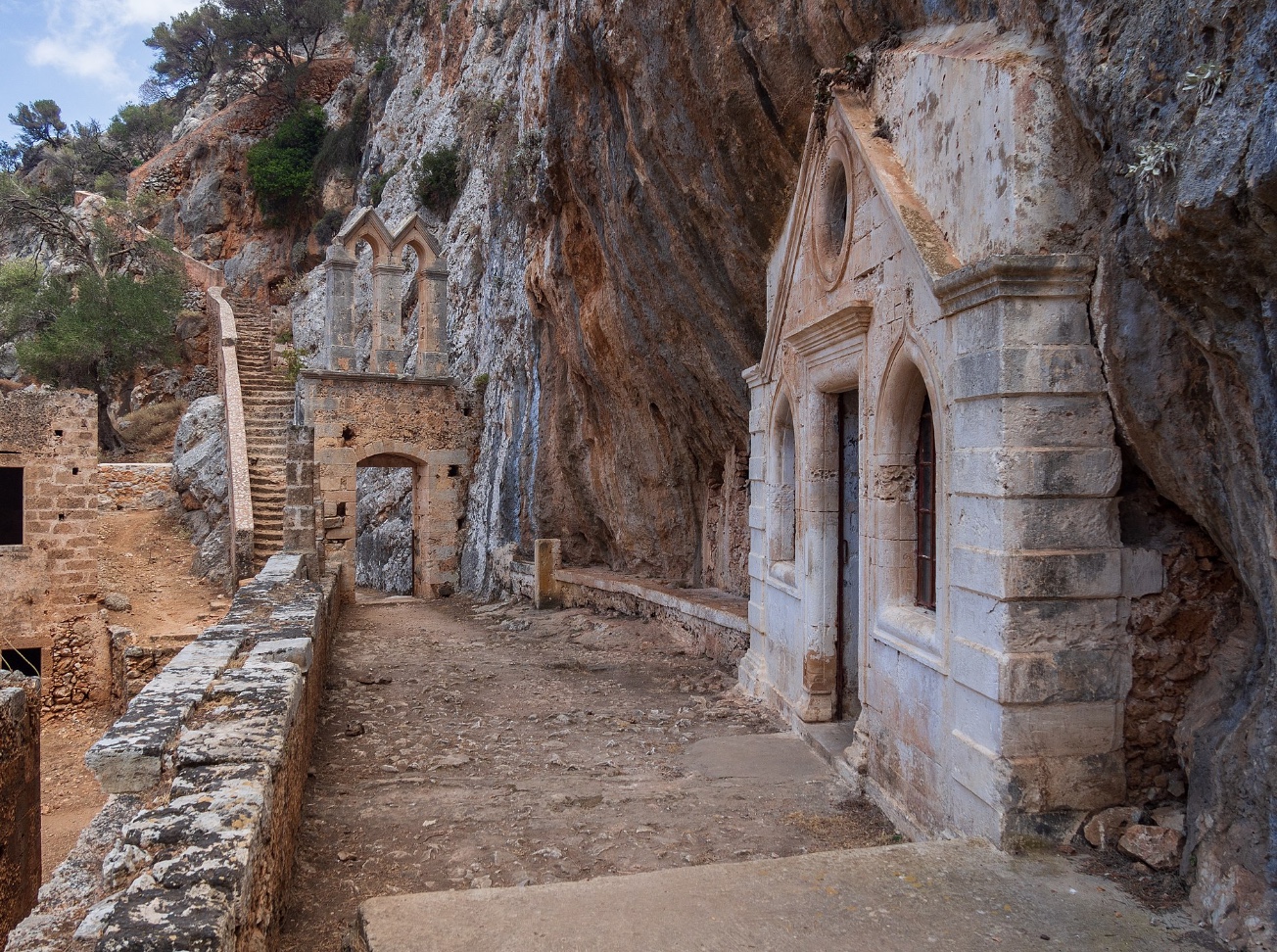
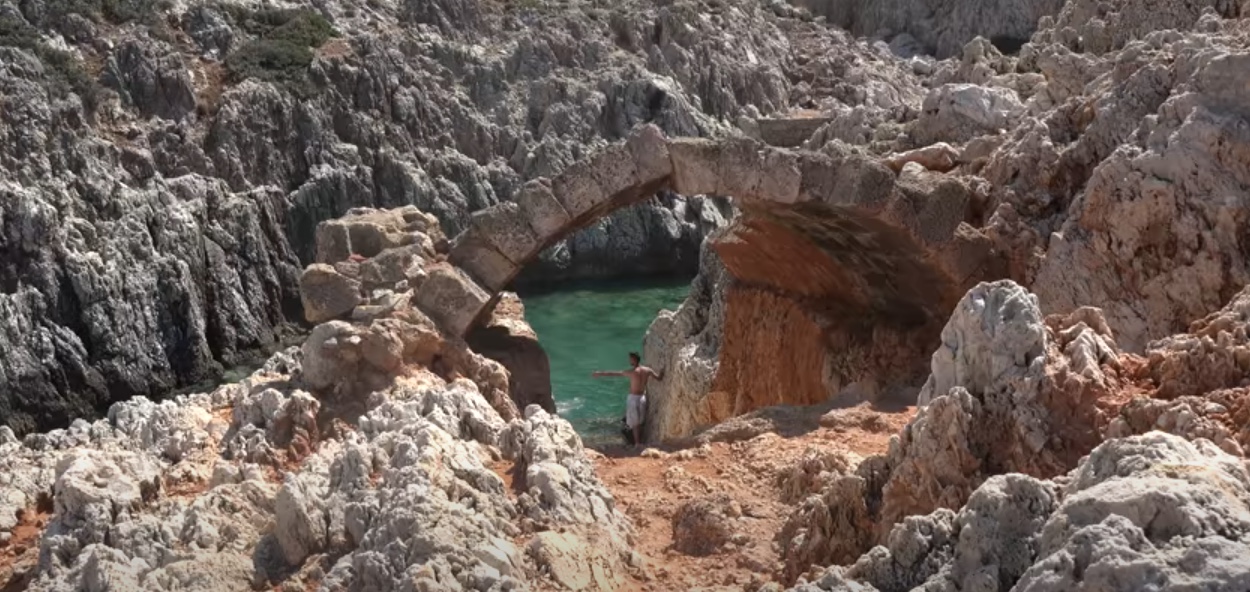
The holy monastery of John the Hermit, the Katholiko, is a ruin today. The buildings to be seen date from the end of the 16th and the beginning of the 17th century, when Jeremias Tzangarolos had a hand in the work here as well, but the place is held to be one of the oldest monastic settlements on Crete, its beginnings carried back as far as the 6th or 7th century. It lies not far from Gouverneto in the Avlaki gorge, beside the cave in which St John died. The monastery church consists of a small hollow in the rock, built out on its north side in dressed ashlar into a façade with Renaissance forms; in front of it lies a court carried on vaults, which served as large storerooms. A massive bridge spans the bed of the gorge and joins the church to the opposite slope, to which the cells and hermitages cling; a two-storeyed building and a short row of vaulted rooms were put up to lodge pilgrims, whose offerings, by the census of 1637, were among the community’s largest sources of income.
The Avlaki gorge and the cave of St John the Hermit
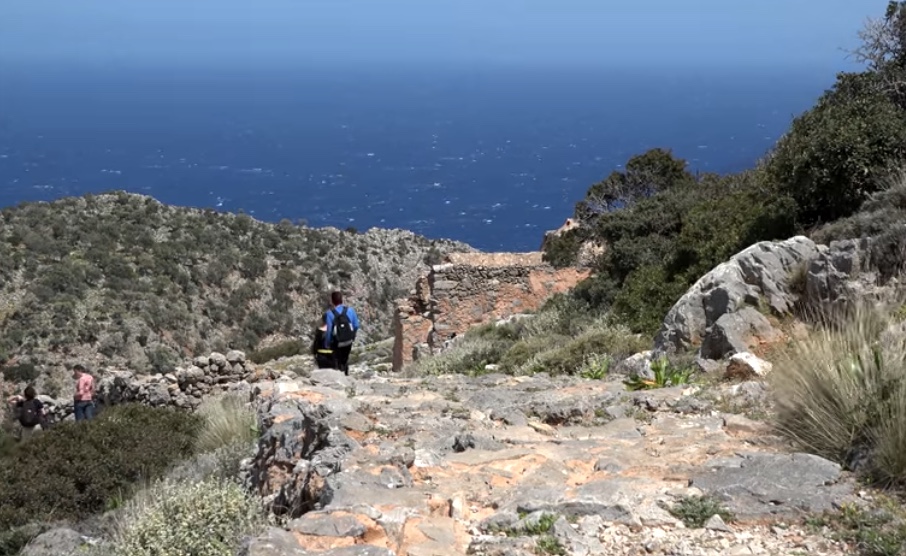
A paved path leads from Gouverneto northwards down into the Avlaki gorge, which opens towards the sea. It is stepped and in places cut out of the rock, and passes a small church of St Anthony on the way. The scent of thyme and sage keeps it company and, the lower one goes, ever higher walls of rock.
The descent is fairly easy, but the way back can be tiring for anyone not used to longer walks, especially on hot summer days: there is hardly any shade, and water has to be carried. It is best to set out early in the morning or late in the afternoon. The path crosses monastery land and is accessible only while Gouverneto is open – it closes in the middle of the day and, officially, on Wednesdays and Fridays; suitable dress is strictly required.
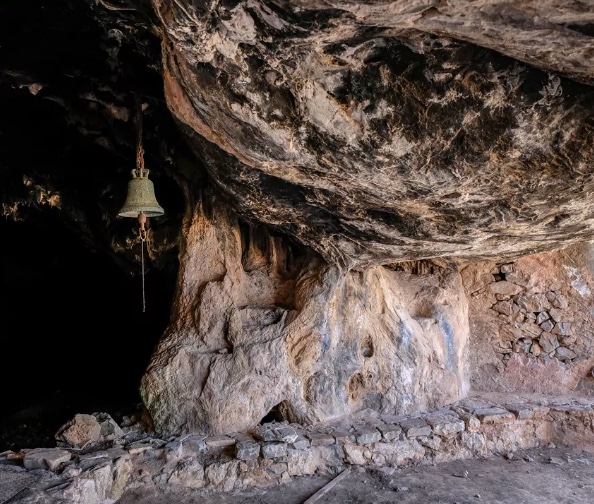
After ten to twenty minutes one reaches the famous Bear Cave, Arkoudospilios, the bed of a vanished underground stream: one large chamber with a smoke-blackened roof and a smaller one behind it, reached through a narrow passage. In the middle stands a large stalagmite in which a she-bear can be made out, stooping to drink from the little pool in front of her – according to legend an animal that drank the monks’ scarce water from the cistern and, at their prayer, was turned to stone by the Mother of God. In antiquity, as finds suggest – among them inscriptions naming Apollo and Artemis – Artemis was worshipped here, the she-bear being one of her sacred animals. At the mouth of the cave stands the little chapel of the Panagia Arkoudiotissa, the “Virgin of the She-Bear”; it keeps its feast on 2 February, the Presentation of the Lord, when local people in large numbers hold a night vigil around fires.
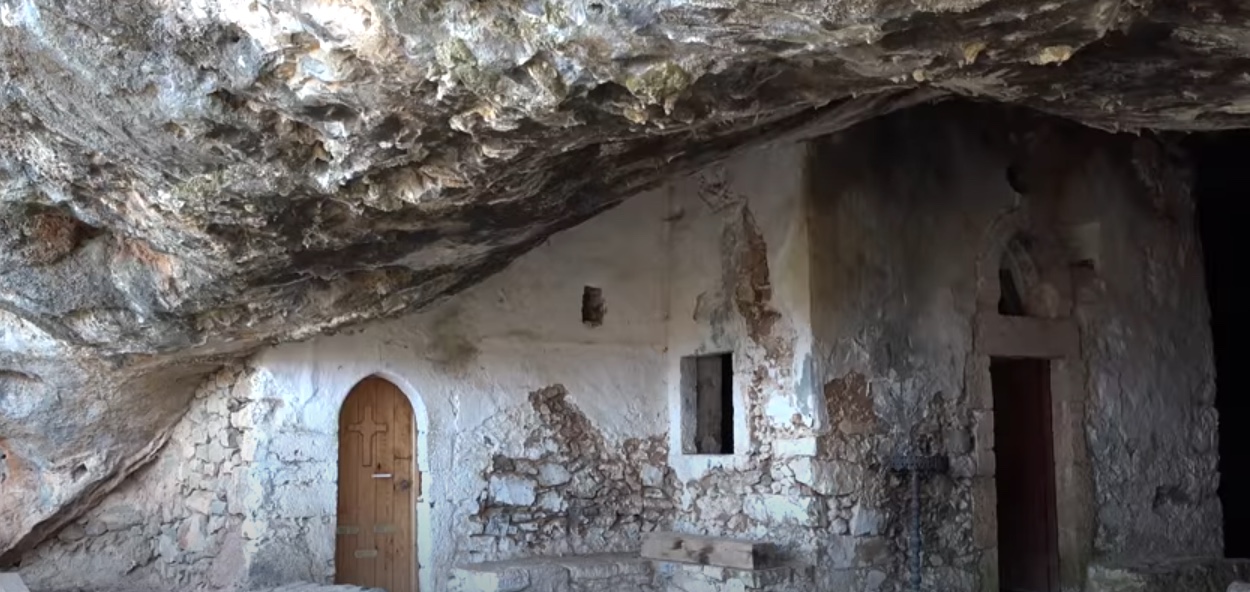
The descent goes on, now by steps hewn in the rock, until one reaches the famous Katholiko monastery with the church of St John the Hermit. The view from the stairway of the bridge, the church façade and the cave mouths of the hermits is among the most striking sights in the monastic landscape of Crete.
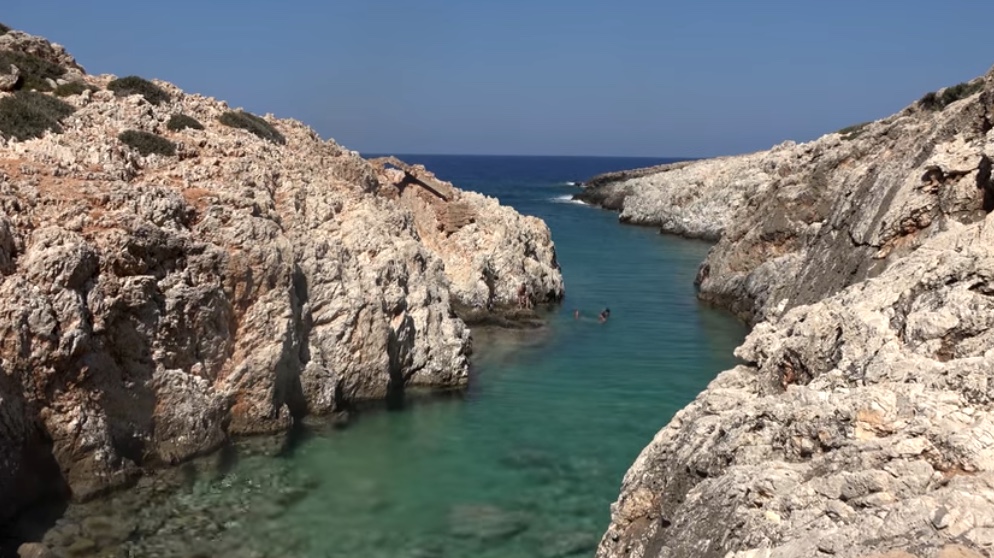
Anyone who walks on for another ten minutes down the dry stream bed comes to a small, fjord-like inlet that once served as a harbour; in the rock one can still see the place where the monks sheltered their boats and quarried stone. A rock here is said to be a pirate ship turned to stone by the curse of an abbot of Katholiko. The water shines blue-green, and a refreshing swim before the walk back to Gouverneto would suggest itself, were it not strictly forbidden by the monks.
The life of St John the Hermit
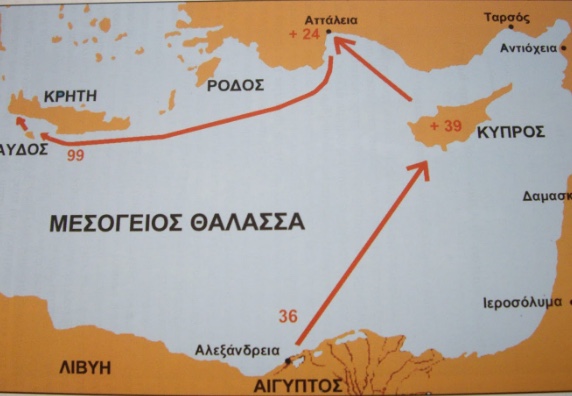
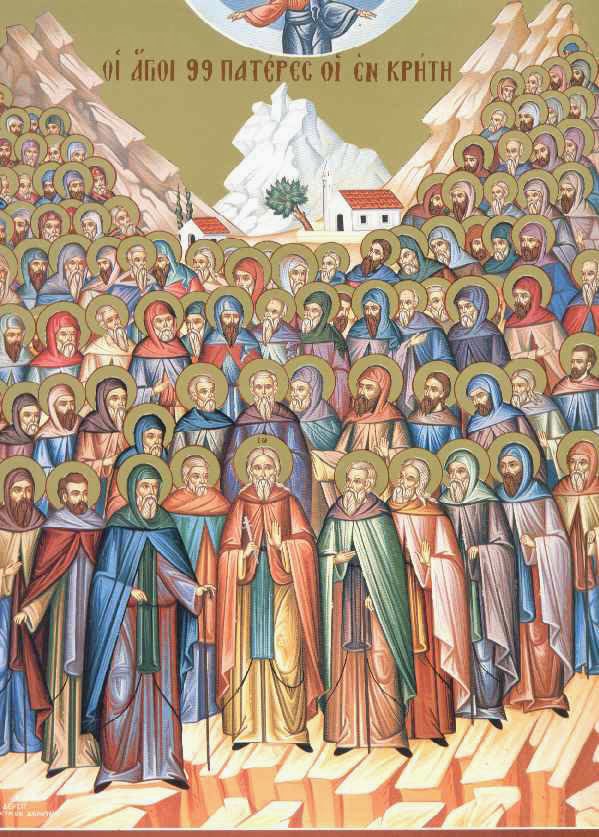
St John the Hermit came from Egypt. The Life places him around 1550, in the time of Venetian rule, whereas the church tradition of the monasteries puts his death in the 11th century – in 1027, by one reckoning. He preached on Cyprus, in Attaleia and on Crete, where he arrived together with ninety-eight holy fathers, so that with John they were ninety-nine saints. Of the community of the ninety-nine holy fathers it is said in their prayers that, with Christ as their head, they made up the full hundred.
According to the account of their lives, it was out of great humility that the saints came to Crete: they were looking for a place for solitary prayer, for their fame followed them wherever they went and drew many people, not a few of whom were healed of their afflictions.
So John and thirty-five other Egyptian ascetics set out from Egypt for Cyprus, following the divine command to the patriarch Abraham: “Get thee out of thy country, and from thy kindred, and from thy father’s house, unto a land that I will shew thee” (Genesis 12:1, King James Version). On Cyprus, too, the report of their holiness soon spread over the whole island. Many came to them because they received benefit of soul and body, and many who were sick were made well. There were, besides, thirty-nine other fathers living as ascetics in various parts of Cyprus. When they heard of the virtue of the saints from Egypt, they came as well and joined them, to lead a common ascetic life from then on.
Since the Cypriots now also wished to leave their homeland, in obedience to the same word of God to Abraham, they all crossed together from Cyprus to the facing coast of Asia Minor, to Attaleia, the present-day Antalya. There they met twenty-four more hermits, who joined them. So the number of the holy fathers rose to ninety-nine; “but as they had Christ for their head, they made up”, as was said above, “the full hundred”. After they had stayed for some time in Attaleia and had come to see that God blessed their desire for a still deeper seclusion, they set out for Crete, the goal of their wandering.
Together they boarded a ship for Crete. But as they drew near the shores of the island a violent head wind took hold of them, so that they could not land and the ship that carried them came close to being wrecked. It is worth remarking that the fathers meant to go ashore at the extreme eastern end of the island, at Sitia, which lies nearest to Asia Minor, the starting point of their voyage. The storm, however, drove them first south and then west, and so they came into one of the little coves of the island of Gavdos – Homer’s famous Ogygia – where they remained for twenty-four days.
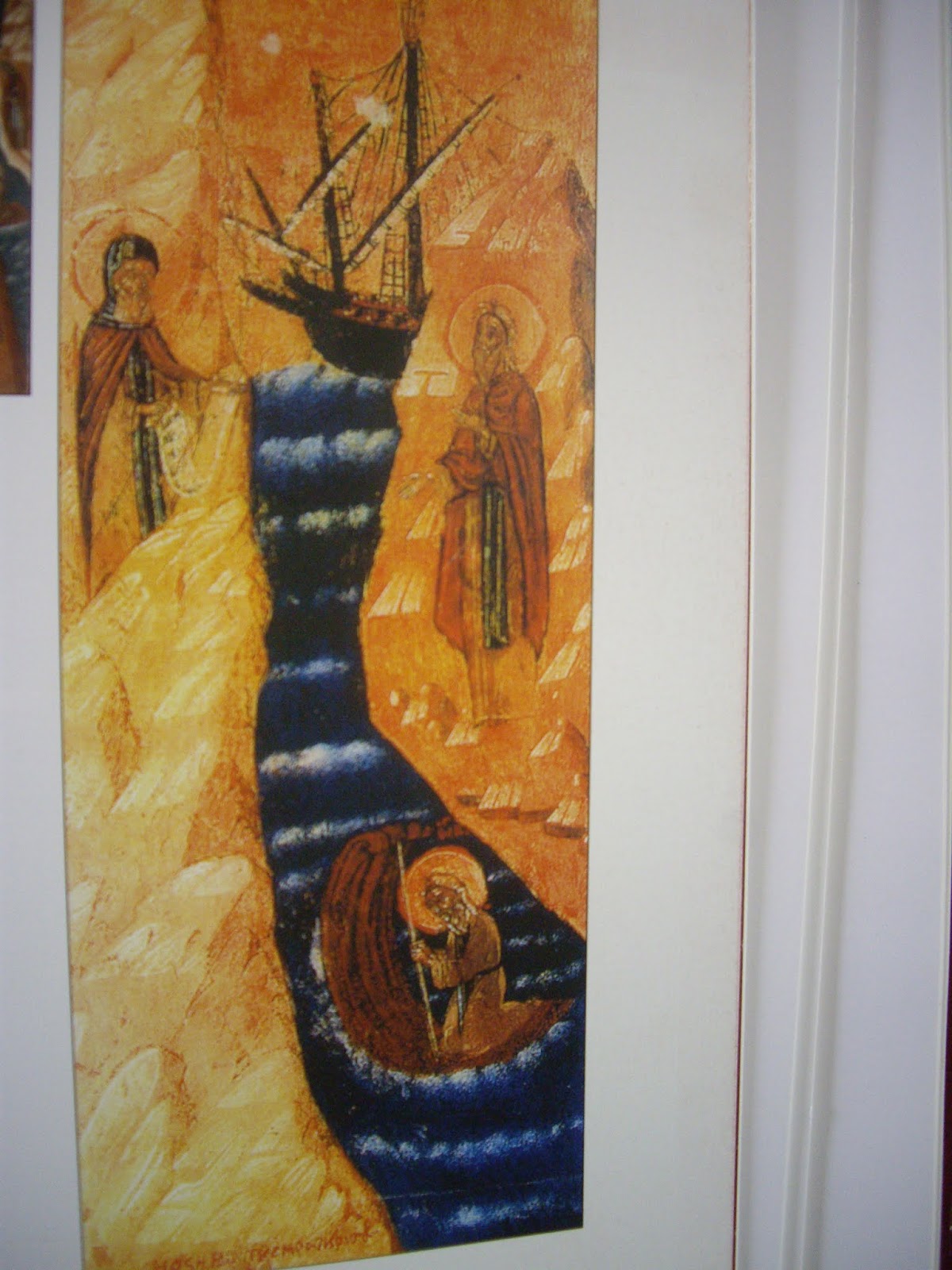
When calm set in they went on board again and crossed over to Crete. But God, who wished to glorify John and to show men his virtue, “hid him” in sleep, and the other ascetics did not notice as they sailed that he was missing; so he was left behind on Gavdos. This came about, as the Life goes on to say, by divine providence and dispensation: God wished to show the Cretans his power and to teach them that with a single staff and a monk’s habit he is able to help his servants more than the Cretans could help themselves with swords and lances against the Venetian tyrants who ruled over them. This he proved to them at once by a miracle.
When John saw that his brethren had left Gavdos, and heard their calls from afar, from the opposite shore of Crete – “Brother John, come to us and do not be afraid” – he stepped down to the water’s edge in firm trust in God, turned to the Lord in prayer, blessed the waters of the sea with the sign of the cross, spread his habit upon them, stepped on to it as on to a boat and began to make for the other shore.
Sailing and singing psalms, he reached Crete unhindered, where the rest of the brethren received him. To the first of them he held out his hand in greeting, and all together, as a sign of the bond of love, struck up a hymn of praise, dedicated themselves to the Lord of all and proclaimed peace to everyone.
They withdrew to a cave near the village of Azogires in the district of Selino; St John Xenos is said to have preached there too. Here they found the place they had longed for, at a spot called the “Great Rock of Charakas”. There they lived in silence and prayer; their food was wild berries, carob pods and the herbs of the earth. But because the cave they lived in was small and could not hold them all at once, they divided into two groups: thirty-six crossed to the other bank of the stream into a second cave, and the rest remained in the first until the end of their days. The Cave of the Holy Fathers above Azogires is visited by pilgrims to this day.
While the other fathers were content with the common life they had established there at Azogires, John, a passionate adherent of the perfect solitary life, felt even the presence of those revered brethren to be a hindrance to complete self-surrender and converse with God; he wished “to pray to God alone”. So he disclosed his longing to the fathers, and as they saw that his resolve was not to be shaken they let him go, and turned to Christ with the following prayer:
“Lord Jesus Christ, our God, since John, our brother, wishes to go from us, lead him through life in peace and stillness, and grant us, Ruler of all, on the day when thy grace resolves to bring our earthly course to its end, that we may all die on one and the same day, and unite us with him in thy heavenly kingdom. Amen.”
So John left the brotherhood at Azogires and came – by way of the cave of Spilia near Kissamos, according to another tradition – to the cape of Kydonia, which in antiquity was called Kyamon and under Venetian rule Melechas, to the neighbourhood of the monastery of Gouverneto, the old Gderneto. There, at the narrowest point of a great, wild stream bed, on whose slopes ancient hermitages lie in tiers like veritable eagles’ nests, from time immemorial the gathering place of the hermits of the Kydonia region, stands the old, original monastery of Gderneto, known today as Katholiko. There too lies the famous cave of St John the Hermit, like the Bear Cave the channel of a river long since dried up: beautiful, with a wealth of mighty stalactites and stalagmites, some 150 metres long, 40 metres wide and between 3 and 20 metres high. Old inscriptions are cut into its walls and even into the stalactites, and icons and lamps stand at its mouth and at its far end. In its depths are shown the rock bed on which the saint died – a stone basin thought by some to be his grave – and a carved cistern of dripping water that is held to be blessed.
This old monastery, the Katholiko, was, according to tradition, later moved to its present site, a little higher up and not far from the old one, into the shelter and clear light of the quiet upland of Akrotiri. Since its foundation it has been wholly bound up with St John the Hermit, whose formal recognition as a saint by the Church in 1632 brought the house a new wave of growth. Although it is dedicated to the Mother of God, the “Lady of the Angels”, it is known to this day as the “Monastery of St John the Hermit”. He is venerated in the left-hand side chapel, where his holy head is kept in an old reliquary; the monastery keeps his feast on 7 October with a procession down to the cave.
Here John, a true hermit in the strict sense of the word and a lover of solitude, lived after parting from his ninety-eight fellow fathers, in complete seclusion, “alone with God” and “in the company of the angels”, in extreme abstinence, in prayer and fasting. In winter he fed on the herbs of the earth, in summer on wild berries and wild carob, true to the saying of the author of the “Ladder of Divine Ascent”: “When the belly is afflicted, the heart is humbled.” From the wasting fast to which he subjected himself the saint grew so weak that all his strength left him and he could no longer stand upright. Bent double, he went like a four-footed creature, and “crawling like a beast and yet leading the life of the angels”, he “moistened the rocks of his cave by night and by day with the tears of repentance”.
The shepherd’s arrow
So the day came – it was the sixth of October – on which God resolved to take John to himself. He went out into the open, as he did every day, to gather his accustomed food. Then a young shepherd, “skilled with the bow”, who was hunting in those parts, took him for a head of game because he went stooping on all fours, and without warning shot an arrow straight into his heart. John understood that his end was near, and begged God to let him, despite the wound, still reach the cave in which he lived.
The hunter ran up at once to fetch what he supposed to be his quarry. He recognised his tragic mistake only when, following the drops of blood, he found the saint lying in the cave, gravely wounded and bleeding, the fatal arrow still in his heart. The Life of St John tells of the hunter’s remorse and of the forgiveness the saint granted him. The shepherd fell at his feet, kissed them and said, weeping and sobbing:
“Woe is me, wretch that I am, what have I done this day! Unhappy man, how blind I have become, and the murderer of a just and holy man! What shall I do now? To whom shall I flee, if not to thee, holy servant of God, that thou mayest forgive me my trespass and pray to God that he lead me to repentance.”
The saint’s reply
But the saint, so the Life relates, answered the terrified shepherd humbly and without the least agitation: “Holy is God, my son, who loves the salvation of men. May he grant thee repentance and forgive thee the sin thou hast committed this day against me, his unworthy servant, and may he count thee worthy of his kingdom. Amen.”
The shepherd had taken the hermit, bent among the rocks gathering herbs, for a head of game and loosed his arrow at him. Tradition reports that this very man later became the first witness to the holiness of the unknown ascetic whom his arrow had killed: in the hour when the saint died he saw a wondrous light break out of the cave – and carried the news of it into the villages of the Akrotiri peninsula.
The ninety-nine fathers depart this life together
The memory of St John the Hermit (Agios Ioannis o Erimitis) and his ninety-eight companions is celebrated on 7 October – not on the 6th, the actual day of their death, because that day already belongs to the Apostle Thomas. According to their Life, John and the ninety-eight fathers all fell asleep on the same 6 October, between the third and the seventh hour of the day. So they had wished it, and had asked it of the Lord in common prayer: that on the day when his grace should will to bring the earthly course of one of them to its end, he might permit all of them at once to pay the common debt of death.
The local people relate that some were found sitting, leaning on their staffs, others at prayer, others again kneeling or as if asleep – and that all, in the same instant, exactly as they had asked, gave up their blessed souls to the Lord. While John died far from the brethren in his cave on Akrotiri, the other fathers, according to tradition, were living in the south-west of the island, in the caves near Azogires in the district of Selino.
In the lives of the saints of the Church this event stands alone. That many should suffer martyrdom together is something hagiography knows in numerous examples; the peaceful, simultaneous death of so many people, on the other hand, is without parallel. It is therefore regarded as the seal of these fathers’ holiness, as a visible sign of their faith and of that “bond of love” which united them. The Church sings of it on this day in a festal hymn:
“The venerable choir of the champions of Christ, united by the bright bond of love, of one heart and one faith on Crete, raised up on a single appointed day to the heights of heaven, entreats Christ, the Lord of the heavens, for mercy and forgiveness for us all.”
From Gouverneto to Lake Kournas
Setting out
From Gouverneto we drive back at first in the direction of Chania and then turn east, into the hill country of Apokoronas. Our first destination is Gavalochori, which lies about three kilometres inland from the coast.
Gavalochori
The village is small: of its 465 inhabitants about a hundred are incomers from other European countries who have bought a house here – a thought that also suggests itself to the visitor on a walk through the lanes. Germans, French and many others, charmed by the character of the old settlement, have preferred these stone houses to the bustle of the coastal strip.
Gavalochori (Γαβαλοχώρι) lies in a fertile hollow among olive groves and vineyards. It takes its name from the Gavalas family, one of those twelve noble Byzantine houses which, according to tradition, were settled on Crete in the late 12th century by the emperor Alexios Komnenos; village lore names the founder as Filippos Gavalas, though most scholars now consider the imperial document on which the story rests to be a forgery. The district was, to be sure, inhabited as early as Minoan times – double axes, vessels and lamps have been found – and excavations attest a flowering in the Roman period. Later centuries were harder: plague struck in 1770, 1797 and 1810, and a flood did great damage in 1862.
Do visit the Historical and Folklore Museum, with its many works by local craftsmen and a number of finds from archaeological sites nearby. It is housed in a two-storeyed building whose ground floor dates from Venetian and whose upper floor from Ottoman times. Seven rooms show the traditional living room with its loom, silk production, pottery, stonemasonry, ecclesiastical woodcarving, weapons and pictures from the Cretan struggles for freedom – and above all kopaneli, the silk bobbin lace for which the women of Gavalochori are known to this day. The craft is not as old as it looks: it reached the village between 1906 and 1908, when a nun, Minodora Athanasaki, taught the technique, and a few women practise it still. The collection has existed since 1968; in its present form it was opened in September 1993.
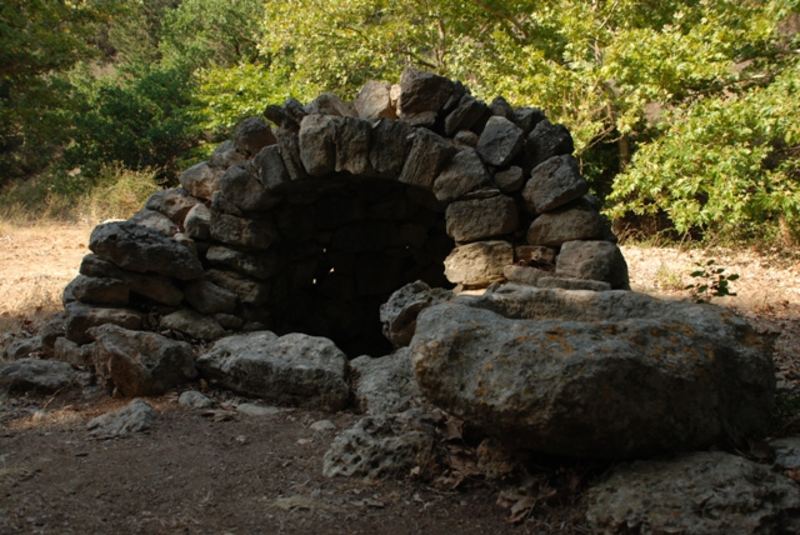
On the edge of the village, about a kilometre outside it, lie the “thirty wells of Gavalochori” (Trianta Gavalochorina Pigadia). Their arched stone vaults are remarkable; they are said to have been built in the time of Nikephoros Phokas, the 10th-century Byzantine emperor who wrested Crete from the Arabs. They supplied the whole neighbourhood with water until the very recent past. The little church of St Paul (Ekklisaki tou Agiou Pavlou), which is traced back to the 6th or 7th century, also deserves attention; it is one of a dozen churches in and around the village, among them a St Catherine dated to about 1200. In the village itself a restored olive mill of the 17th century and the old schoolhouse survive as well.
Vamos and the monastery of St George
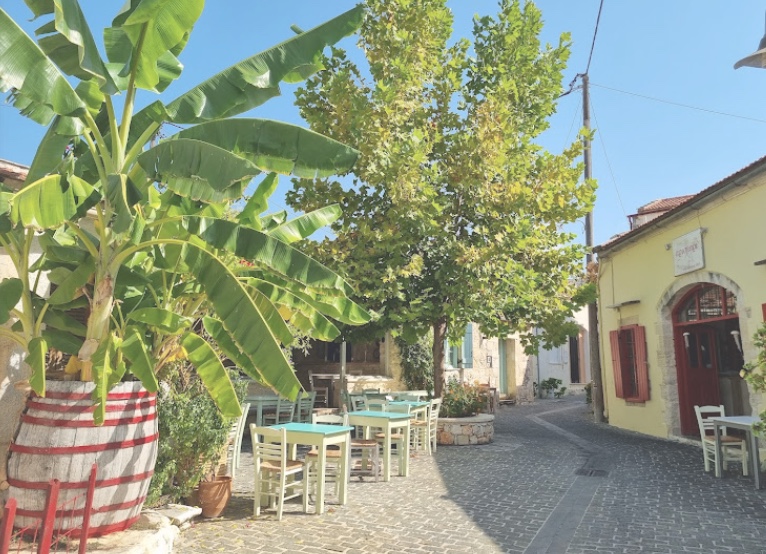
The road goes on to Vamos, the old chief place of the district, which lies wholly in greenery and blossom. In its many coffee houses, in the shade of centuries-old plane trees, one can rest and take refreshment. Vamos owes its importance to the 19th century: in 1863 Savvas Pasha made it the seat of the administrative district of Sfakia, to which Apokoronas and Agios Vasilios also belonged, and had roads, barracks, a mosque and an official residence built. In 1866 there was bloody fighting here; in 1896 some 4,000 insurgents besieged the Ottoman garrison and forced it to withdraw. From that time date the neoclassical houses and the cobbled lanes of the old quarter, in which former wine stores, olive mills and inns have been converted into guesthouses.
South-east of the village, about two kilometres away near the former settlement of Karydi, lies the monastery of St George (Moni Agiou Georgiou).
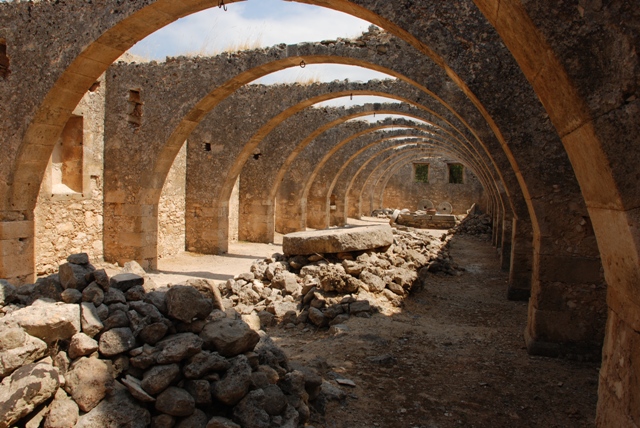
It is widely known for its great olive mill, the roof of which was once carried on a row of twelve stone arches. The roof has fallen in, and so the arches now stand free one behind another like the ribs of some enormous ship. Four presses worked here at once, which occurs nowhere else on Crete and gives an idea of the quantities of olives the monastery handled. Inhabitants of the village went over to Islam in the 18th century; to prevent the church from being turned into a mosque, the village priest made the sanctuary over to the monastery of Agia Triada Tzangarolon on Akrotiri. In the 19th century the complex was enlarged: it was then that the great olive mill and the new church were built. Long abandoned, the monastery was restored in 1996 and has been inhabited again ever since – the only one in the whole of Apokoronas.
Georgioupoli
Beyond Vamos the road runs down through the picturesque villages of Kalamitsi and Exopoli to Georgioupoli, a small coastal town at the mouth of the river Almyros, 39 kilometres east of Chania and some 23 west of Rethymno. Three rivers reach the sea here; the Almyros, the largest, forms a little harbour for fishing boats and excursion craft. The shops are ranged around the central square, and the beaches with their glittering sand stretch for nine kilometres to the east, with a further beach, Kalyvaki, on the far side of the river. All along the coast tavernas, restaurants and hotels follow one another.
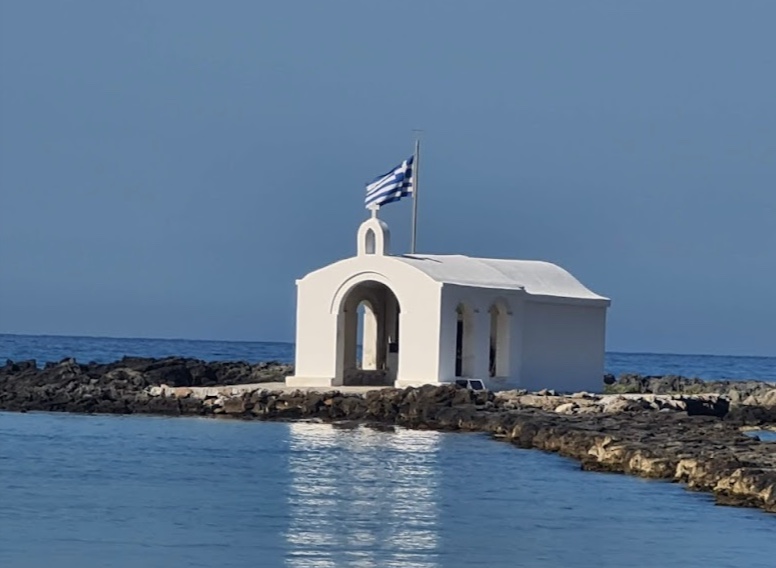
There is romance in a visit to the little white church of St Nicholas (Ekklisaki tou Agiou Nikolaou), which stands on a tiny rocky islet off the river mouth and is reached along a narrow stone causeway. A sailor had it built in fulfilment of a vow, for the protection of all who go to sea. The district, incidentally, was scarcely settled until the late 19th century – for fear of pirate raids, but also because of the marshes at the river mouths. Only when these were drained and the eucalyptus trees planted that still shade the square and line the approach road did settlers move here. The place was called Almyroupoli at first; in 1899, after the visit of the Greek Prince George, who governed autonomous Crete as High Commissioner of the Great Powers, it was given the name Georgioupoli. In antiquity Amphimalla lay on this bay, one of the harbours of the city of Lappa.
Lake Kournas
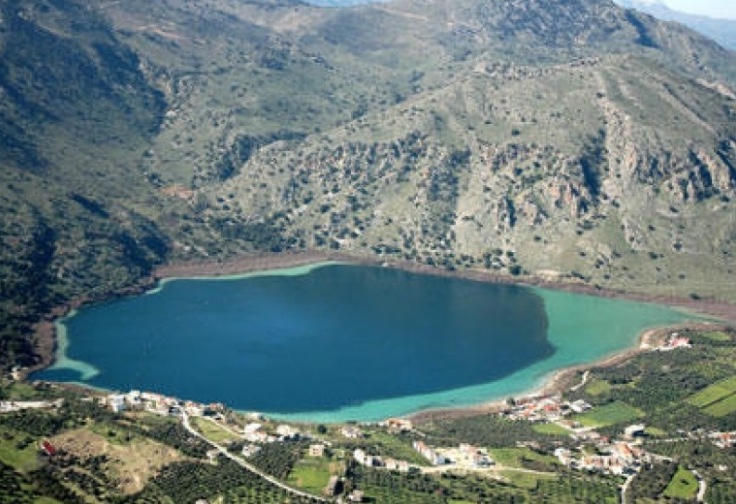
This lake is the only natural freshwater lake on Crete. It lies about four kilometres inland from Georgioupoli and 47 from Chania, set among the foothills of the White Mountains; the sizeable village of Kournas, from which it takes its name, sits on a hill above it.
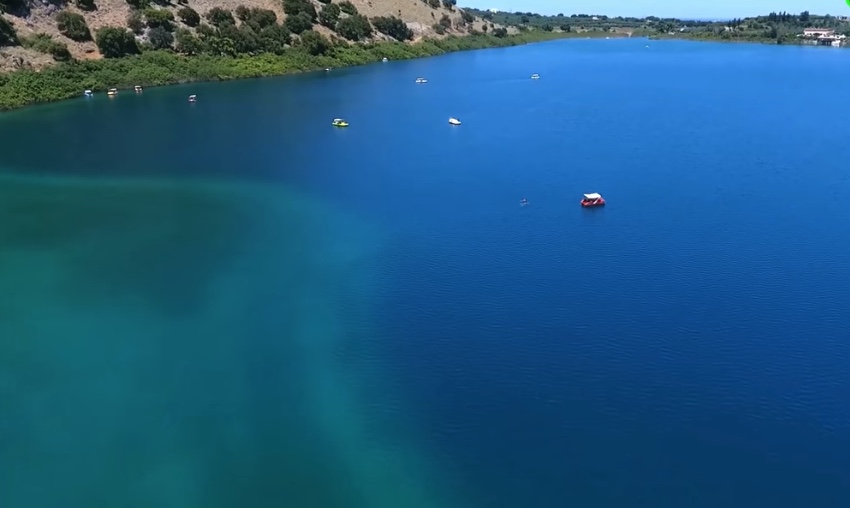
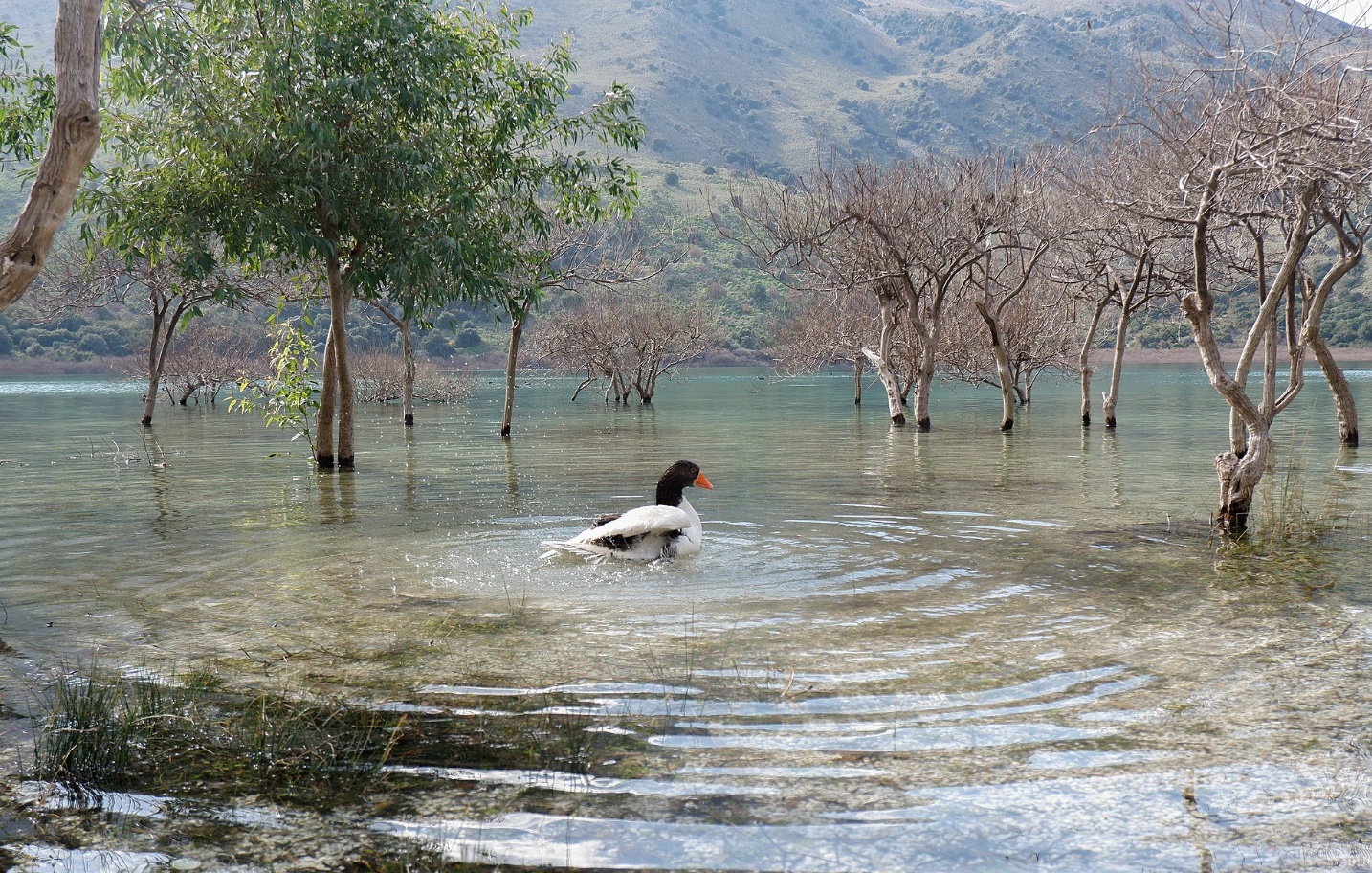
Lake Kournas is comparatively small: it measures at most 1,087 metres in length and 880 metres in breadth, covers an area of about 58 hectares and has a shoreline of some three and a half kilometres. For the most part it is shallow, though 22.5 metres deep at its deepest point; its surface lies roughly twenty metres above the sea. In outline it resembles a pear. When the water level falls in summer, pale sandy shores emerge, and from the hillside rings of colour from turquoise to dark blue can be made out in the water. Tavernas line the shore near the road, and pedal boats are then hired out, in which one glides across to the terrapins on the quiet southern shore; the south-western side is kept as a nature reserve.
A glance at history
The island’s only natural freshwater lake is mentioned as early as antiquity: Stephanus of Byzantium calls it Koresia (Korisia), a name connected with an ancient town, Korion, thought to have stood in the neighbourhood. On its shore there is said to have been a sanctuary of Athena Koresia; possibly Hippos and Kore were worshipped here as well. From these names is derived the old toponym Hippokorona, which later became Apokoronas – the name of the whole district. The lake received its present name in the period of Arab rule over Crete. It is traced either to an Arabic word for “lake” or “basin”, or to an alteration of the Greek “krounos”, a spring.
Popular legend, too, has taken up the lake, which it holds to be bottomless. Once, it is said, a village stood here. A fair-haired girl, pressed by her own father, wished that the ground might sink and that she herself might remain in the lake as a spirit – whereupon the earth shook and the water covered everything. Another version speaks of a deluge as punishment for the sins of the inhabitants; only the priest’s daughter was spared, and she is sometimes seen sitting on a rock in the lake, combing her hair.
Wildlife
The lake owes its existence to the karstification of the limestone mountains. Eels live in its water – once its best-known inhabitants, though it is the terrapins that draw attention now – along with two rarer species of fish, the sand smelt and the freshwater blenny. More recently an introduced species has been added, the goldfish, released by people and not without consequences for the ecological balance. Likewise alien is the mosquitofish (Gambusia), once brought in to combat mosquitoes.
Among the reptiles the Balkan green lizard and other lizards catch the eye, but above all the rare two-coloured stripe-necked terrapin, which on warm days suns itself on stones and branches by the shore. The birdlife includes mallards and moorhens, purple herons and great white egrets, little egrets, red-headed pochards, glossy ibises and cormorants. The flora comprises species that occur only on Crete or in the eastern Mediterranean; the surrounding hills are covered with open growth of oak and maquis.
The lake is fed by two underground springs and by surface run-off from the slopes. The larger spring, Amati or Mati – “the eye” – becomes visible when the water level drops in late summer; the second remains hidden under water. The outflow reaches the sea at Georgioupoli after some five kilometres. As an important staging post for migratory birds, the lake has been included in the Natura 2000 network and is protected.