Elafonisi: from Chania to Chrysoskalitissa Monastery and the island
The most complete guide to Crete: 221 places on the map, 23 routes and 49 articles — with photos, videos and the story behind every place. No sign-up, no trackers.
Routes drawn along real roads
Weather at every stop
Full-text search
“Near me” by geolocation
Create your own printable itinerary
Satellite, terrain, dark mode
Works offline
⌕
Searches 1.7 million characters of descriptions, not just names
—places
4regions
—routes
—with video
Search results
—
Interactive map
Find what is near you
Filters narrow the map and the list at once. Zoom out and pins group together.
Region
Category
Фильтры карты
Landmarks
Featured places
RegionCategory
Routes
Ready-made day trips
Individual places
Articles about landmarks
Anyone setting out from Chania for Elafonisi crosses, in a good seventy kilometres, almost everything that makes up the west of Crete: the densely built-up resort coast on the Gulf of Chania, the quiet olive-clad hills of the district of Kissamos, narrow gorges and chestnut valleys and, at the end, the bright, almost African-looking south-western tip of the island. Along the way lie memorials of the Battle of Crete, Byzantine churches, the rock monastery of Chrysoskalitissa and the protected dunes of Elafonisi.
From Chania to Chrysoskalitissa Monastery
The start of the route
From Chania you drive west towards Kolymvari, at first keeping to the gulf all the way. The journey divides naturally into stages: the coastal stretch, with its long sandy beaches, invites you to stop and swim, whereas the mountain road south is winding, narrow in places and demands time and careful driving. Anyone who tries to do both in one day will see little more than the surface of a great deal.
Agia Marina
Around Stalos there are still comparatively quiet stretches of beach, while Agia Marina is known for its fully equipped bathing coast, its tavernas and its water sports. Traces of Venetian and Ottoman settlement survive round about, along with the church of St Marina to which the place owes its name. In the cave of Nerospilia, the “water cave”, archaeologists came upon evidence of a Minoan cult. Off the coast lies the uninhabited rocky islet of Agii Theodori, where the Cretan wild goat lives under protection.
Platanias lies at the mouth of the river of the same name; from the hill of the old village core a wide view opens over the Gulf of Chania. According to ancient tradition the city of Pergamos lay in this area. Gerani, which follows, has a gently shelving beach and is particularly well suited to a stay with children.
Maleme
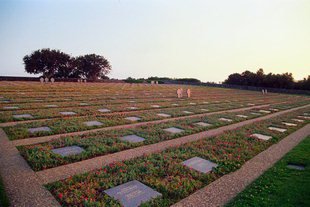
On 20 May 1941 the German airborne landing on Crete began over the airfield of Maleme, 16 kilometres west of Chania; Hill 107 above the runway was the key to the fighting, for once the airstrip was in German hands the reinforcements needed to take the rest of the island could be flown in. On that very hill lies the German war cemetery, inaugurated in 1974 by the German War Graves Commission (Volksbund Deutsche Kriegsgräberfürsorge). Here rest 4,465 German soldiers who lost their lives in the Battle of Crete in May 1941 and in the years of occupation that followed. The flat grave slabs lie among olive trees on the slope, and the view runs across the former battlefield to the sea. Between Maleme and Tavronitis, above the iron bridge over the river, a second memorial commemorates the airmen of 30 and 33 Squadrons of the Royal Air Force who died defending the aerodrome.
The carefully tended cemetery does not justify the occupation. It shows, rather, how a present-day culture of remembrance can preserve the graves of the fallen without blurring the responsibility of those who began the war. Close by, Minoan burials with rich grave goods have been discovered, among them a Late Minoan chamber tomb on Kafkala hill, built in the 14th or 13th century BC, excavated in 1966 and partly restored in 1970, which yielded seal stones among other things – an indication of how old settlement on this coast is.
Kolymvari in the district of Kissamos
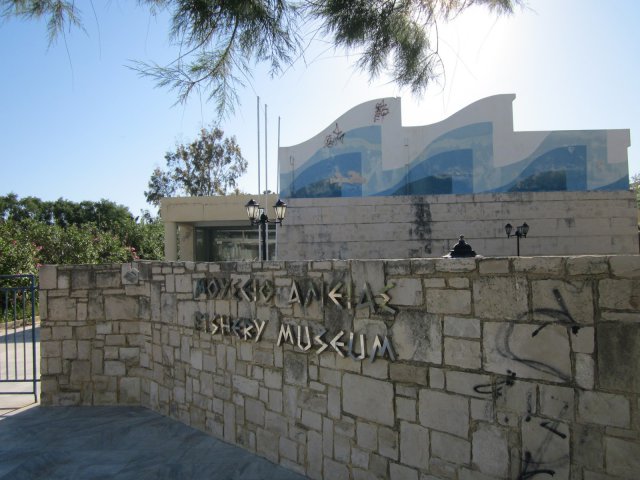
Kolymvari, at the base of the Rodopou peninsula some 26 kilometres from Chania, is known for the wine of the Kissamos district, for its olive oil and for the wine festival in August. A monument commemorates Colonel Timoleon Vassos, who came ashore here in February 1897 with a Greek expeditionary corps of about 1,500 men. The village has a museum of fishing and seafaring traditions, and on its edge, a kilometre to the north and directly above the water, stands the monastery of the Mother of God of Gonia.
The Monastery of Panagia Gonia
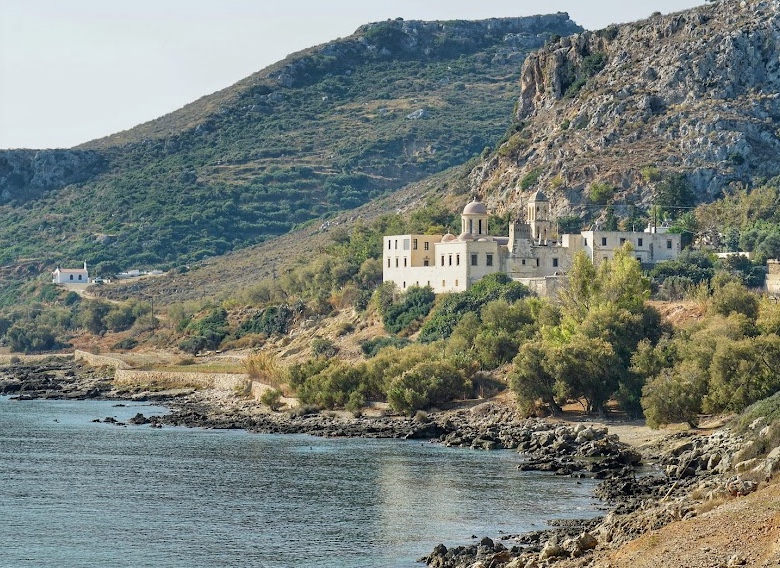
The monastery of Panagia Odigitria Gonia (Moni Gonias) traces its beginnings to the 9th century. At that time a monastery with a church of St George existed further north, at the tip of the peninsula, where the sanctuary of Diktynna had been venerated in antiquity. Because of constant pirate raids it was moved south, into the angle of the bay – “gonia” means corner. Its dedication to the Odigitria, the Virgin “who shows the way”, echoes the Hodegon monastery in Constantinople, home of the icon attributed to St Luke. The present complex, a fortress-like enclosure in a markedly Venetian style, was built from 1618 under the monk Vlasios from Amaseia; Venediktos Tzangarolos continued the work, and an endowment by Georgios Mourmouris made it possible to complete the church in 1634. The date is recorded on the dome.
In June 1645 the Ottoman forces landed right beside the monastery, and in 1652 they destroyed it. A patriarchal sigillion of 1662 granted it stauropegial rank, placing it directly under the Patriarchate of Constantinople. In 1664 a school was opened here. The fountain dates from 1708, and the side chapels were added in 1805. During the rising of 1821 the monastery served as a hospital; Abbot Parthenios Raspanis, a member of the Filiki Eteria, was arrested and, according to church tradition, died in prison. Parthenios Froudakis pressed ahead with rebuilding between 1831 and 1841, but in the rising of 1866 the monastery was damaged once again. A cannonball is still lodged in the east wall, the one facing the sea; a plaque dates the bombardment to 14 June 1867.
In 1897 Timoleon Vassos landed south of the monastery and set up his headquarters in it. The bell tower was built in 1899, and in 1935 the complex was declared a monument. During the German occupation the monks were driven out, the monastery served as a post and store, and part of the library was lost; in 1942 monastic life could be partly resumed. Since 1968 the Orthodox Academy of Crete, a conference and meeting centre of international reputation, has worked on monastery land. Worth seeing are the carved iconostasis of the 17th century and the collection of portable icons of the Cretan School, with works of the 15th to 17th centuries by painters such as Andreas Ritzos, Parthenios and Neilos. Around the courtyard stand the abbot’s lodging, the monks’ cells, the refectory and the storerooms. The main feast is celebrated on 15 August, the Dormition of the Virgin.
The Cave of St John the Hermit
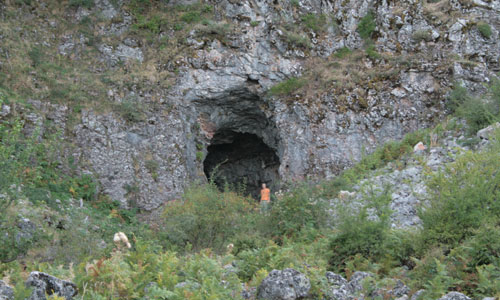
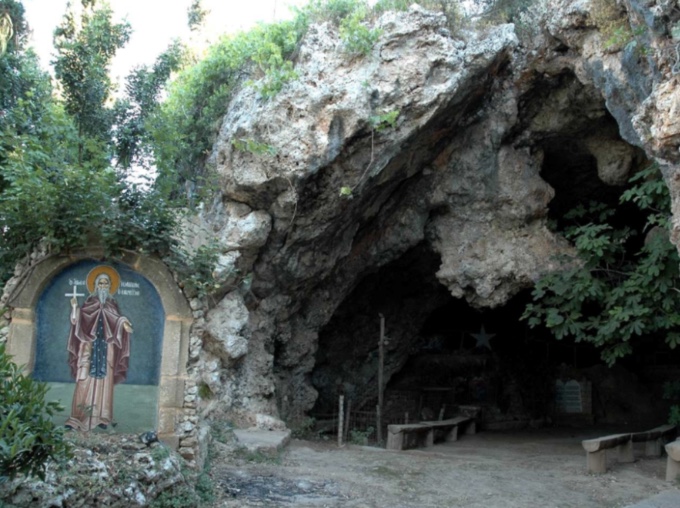
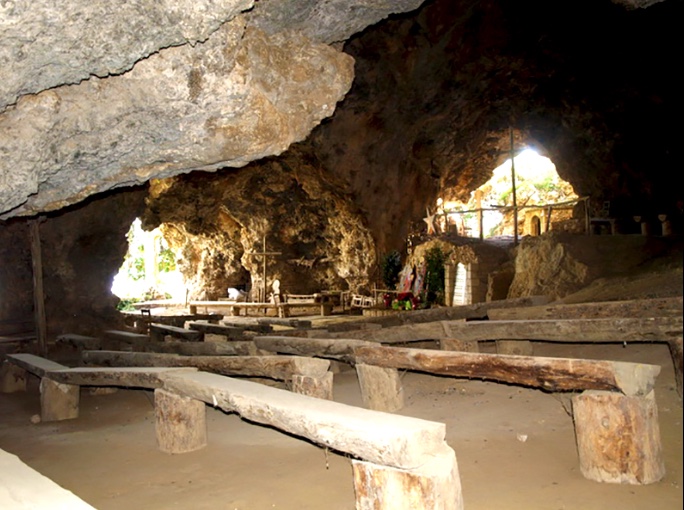
From Kolymvari you turn inland to Marathokefala and the village of Spilia, whose name simply means “cave”. Above the village the cave of St John the Hermit, also called John Xenos, “the Stranger”, opens in the rock. According to tradition the saint came to Crete from Egypt with ninety-eight monks, first lived as an ascetic at Azogires, in the hills behind Paleochora, and then withdrew to this cave to devote himself entirely to prayer. Later he moved on to the Akrotiri peninsula, where he ended his life in the Avlaki gorge; in popular tradition the name of that gorge is also associated with the cave at Spilia.
Legend has it that John struck the rock with a sword or with his staff, whereupon water gushed out. The spring is held to have healing powers, and pilgrims come here to pray, above all on 7 October, the saint’s feast day.
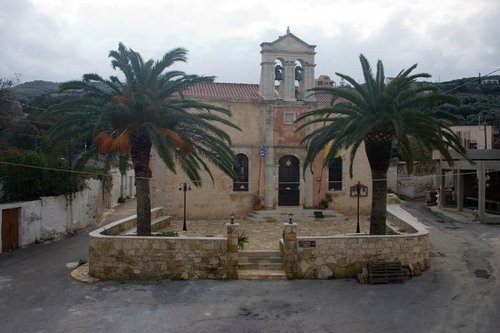
In Spilia itself stands the church of the Panagia Martyriotissa, of the 12th century, with frescoes of the 14th century, Byzantine icons and liturgical vestments. Not far away is the church of the Archangel Michael, of the 18th to 19th century.
The oldest tree on Crete
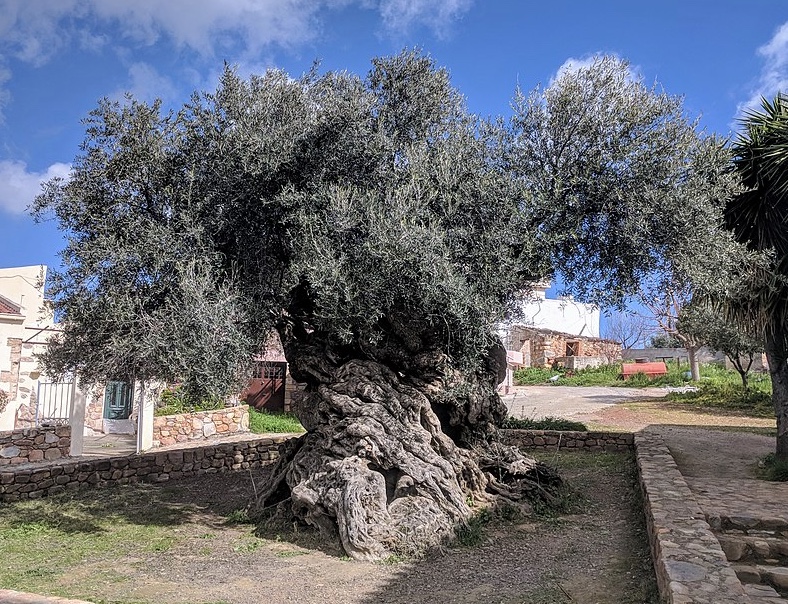
From Spilia it is worth making the detour to Ano Vouves. There grows an ancient olive tree whose age is estimated at three to five thousand years; scientists of the University of Crete have put it at around four thousand. It cannot be established with certainty, because the heartwood has long since rotted away; the annual rings of the surviving wood attest at least two thousand years. The gnarled, hollow trunk measures about 12.5 metres in circumference and 4.6 metres in diameter. The tree, a wild olive grafted with the Tsounati variety, is alive, still bears fruit and has been protected as a natural monument since 1997.
Victors’ wreaths for the 2004 Olympic Games in Athens were woven from its branches, and four years later for Beijing as well. Beside the tree a small olive museum, opened in October 2009 in a restored farmhouse of the 19th century, displays the tools of traditional olive growing and oil-making. Two kilometres away stands the church of St Stephen, of the 14th century.
Episkopi and the Rotunda
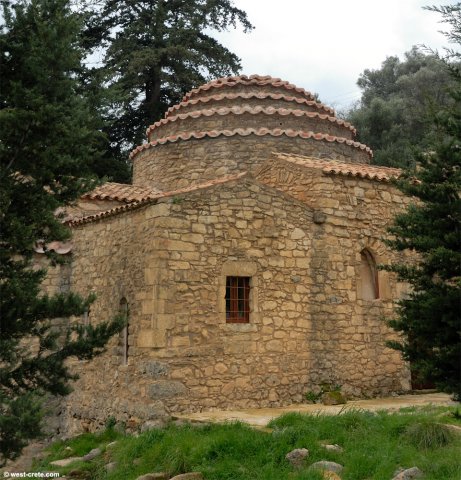
Episkopi lies in the green foothills, and its name gives away its history: for centuries, and still in Venetian times, the bishop of Kissamos resided here – under Venice a Latin bishop, whose see lasted until it was suppressed around 1600. His church, known as the Rotunda (Rotonda), is dedicated to the Archangel Michael and goes back to an Early Christian building; the core is dated to the second half of the 6th century. The dome, built up on the outside in five concentric stepped rings, has no equal on Crete.
Inside, mosaic floors with scale patterns, vine tendrils, ivy leaves and fish survive, together with a baptismal font and several superimposed layers of fresco. Since its restoration the building has been accessible again, as a rule from morning until early afternoon and not on Tuesdays. Near the village rises the spring of Aionero, whose water local tradition regards as holy.
Drapanias
Drapanias lies on the river of the same name amid olive groves, shortly before the road reaches the bay of Kissamos. Here there are quiet beaches, the 19th-century church of St Nicholas, an Ottoman watchtower and the “Long Cave”. At its entrance stands a small church of Christ.
Nopigia
At Nopigia, on the eastern edge of the bay of Kissamos, remains of settlements of the Minoan and the Classical periods survive; scholars look for ancient Methymna here. According to legend, Agamemnon had his ships put in on this coast after the Trojan War and offered sacrifices to the gods. Beside the excavation site stands the church of St George.
Kissamos
Kissamos is the chief town of the district and the westernmost town of Crete, known for its wine and the harvest festival in August. The ancient city of Kissamos, originally one of the ports of Polyrrhenia, grew in Roman times into an independent trading place with its own coinage, baths, a theatre and villas, until the earthquake of AD 365 devastated it. The archaeological layers run from the Minoan through the Graeco-Roman to the Venetian period. The port, a little west of the town, is still a working fishing and ferry port: a regular boat links it with Kythira and the Peloponnese, and the Gramvousa peninsula and its islets belong to the same municipality.
The Venetian fortress – its beginnings are placed in the 13th century, its enlargement in the 15th and 16th – earned the place its second name, Kastelli, which it bore officially until 1966. In 1646 the Ottoman forces took the town. The Archaeological Museum in the old Venetian governor’s residence shows sculpture, pottery, coins and above all the magnificent floor mosaics of Roman town houses. At the cave-like church of St John the Baptist and at the monastery of Zoodochos Pigi, the “Life-giving Spring”, the architecture is as rewarding as the view over the bay.
Polyrrhenia
About seven kilometres south of Kissamos, on a steep hill, lies the village of Polyrrinia, which grew up beside and on top of the ancient city of the same name, traced by Strabo to Achaean settlers. Its name means “rich in sheep”. Strabo places it thirty stadia from the sea and sixty from Falasarna, and notes its temple of Diktynna. The necropolis is dated to the 6th century BC; the city struck coins bearing the image of Zeus, born on Crete, and a bull’s head. In the Hellenistic age Polyrrhenia was one of the leading powers of the west – in the Cretan civil war of 219 BC it broke with Knossos and sided with Lyttos – and because it offered no resistance during the Roman conquest of the island, it was spared destruction.
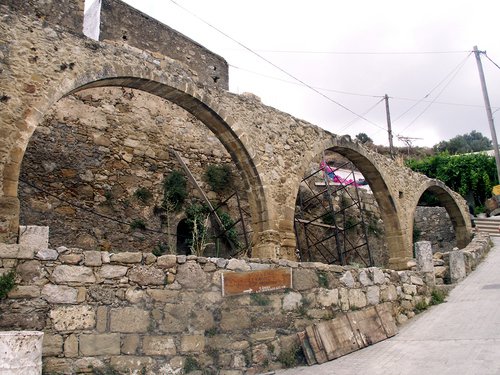
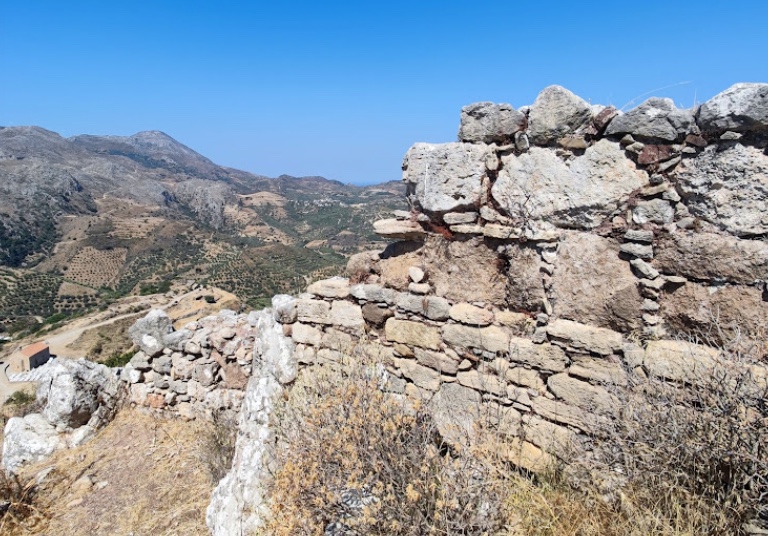
The Roman walls were later strengthened by Byzantines and Venetians. After its devastation by the Saracens the settlement was revived under the emperor Nikephoros Phokas. On the acropolis, from which both seas, to the north and to the west, can be seen, fortifications survive, along with a rock-cut aqueduct of the Roman Imperial period; local tradition ascribes it to Hadrian. Systematic excavation of the site has been under way since 1986. The climb from the village to the summit is steep and stony, so wear proper shoes.
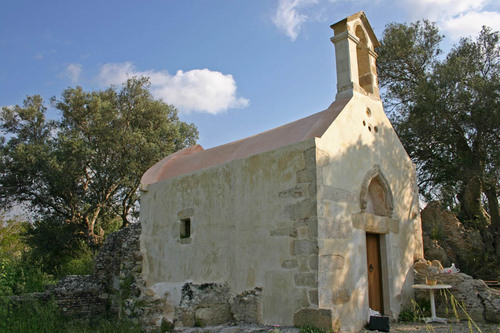
On the site of the ancient temple of Artemis the church of the Holy Fathers was built in 1894, dedicated to the ninety-nine ascetics around John the Hermit, and the ashlar blocks of the ancient building were used for it; inscribed stones can still be made out on the outer walls. Near Polyrrinia begins the gorge of Sirikari, with the churches of the Holy Apostles and of the Mother of God – a shady walk that combines well with a visit to the ruins.
Chrysoskalitissa Monastery
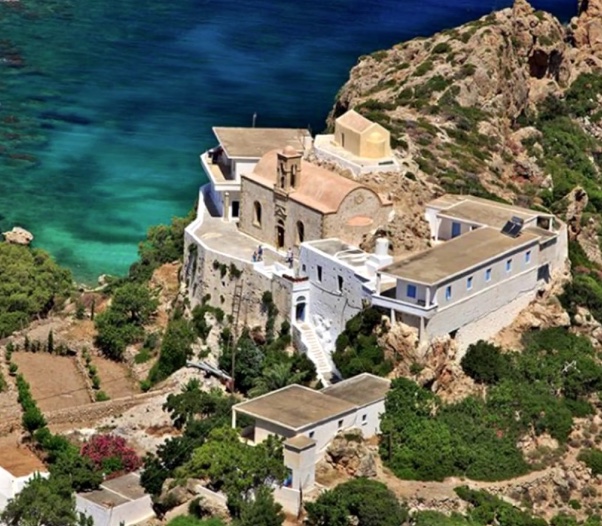
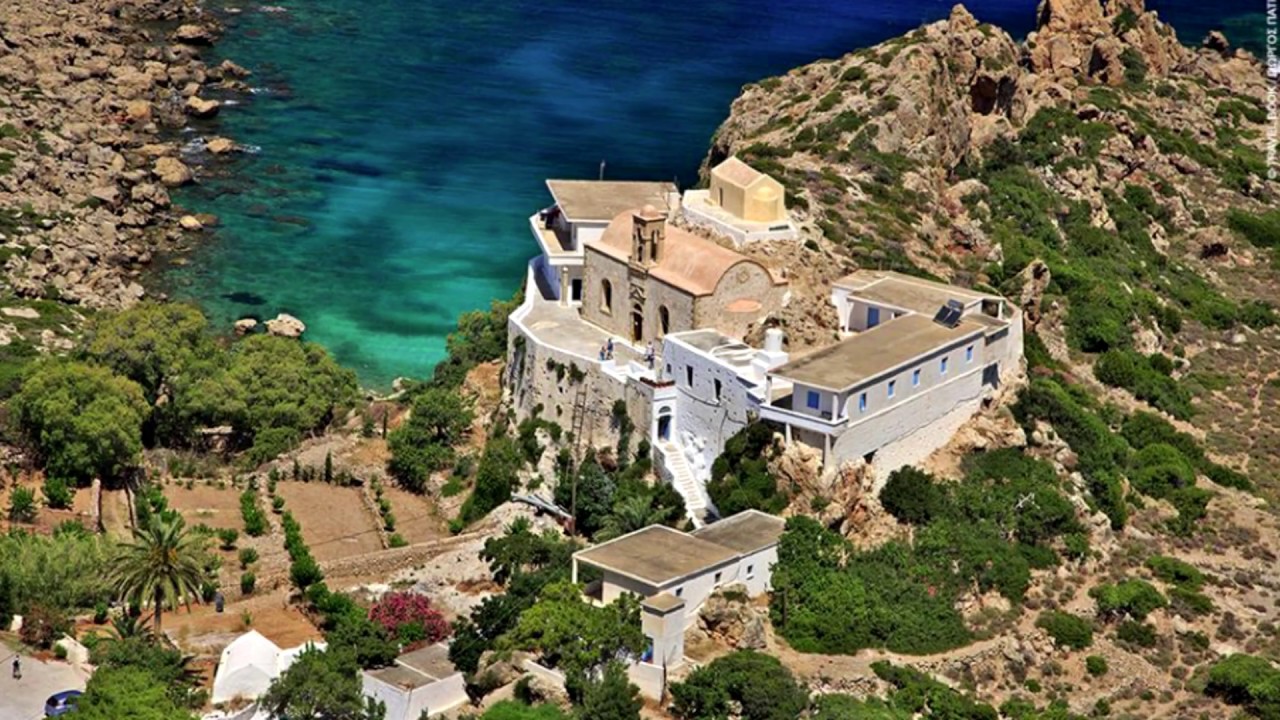
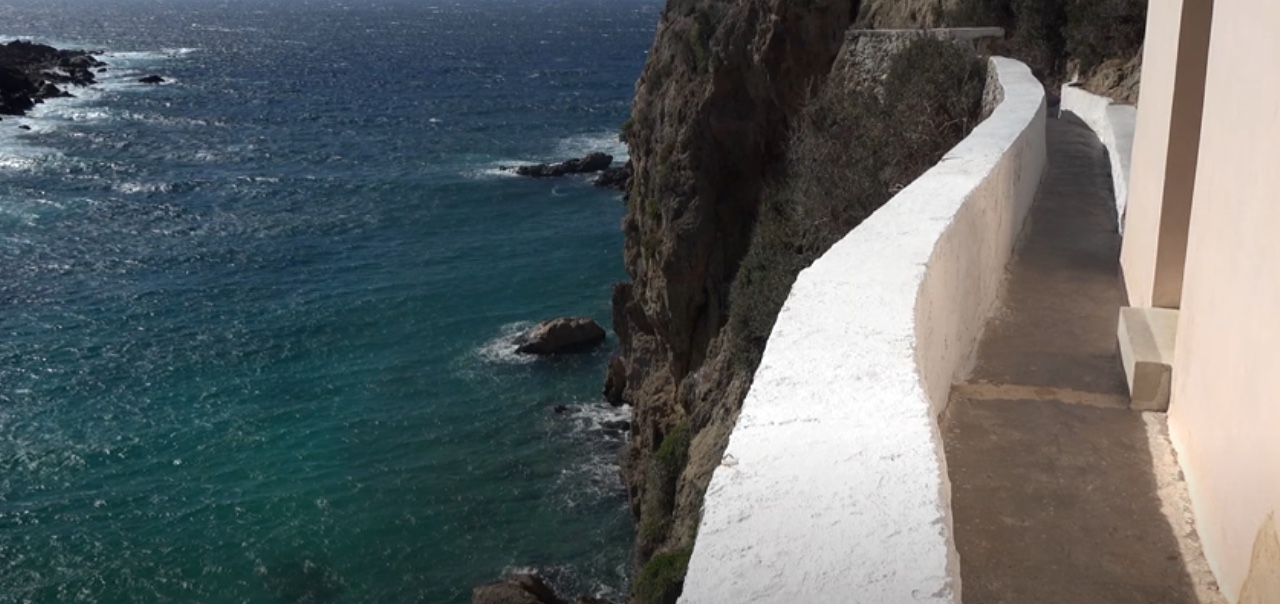
Dazzlingly white, Chrysoskalitissa stands on a high rock rising some 35 metres above the Libyan Sea, about five kilometres short of Elafonisi and roughly 72 kilometres south-west of Chania. The monastery is dedicated to the Dormition of the Mother of God and to the Holy Trinity; its main feast falls on 15 August. The name is translated as “Golden Stair”: tradition has it that one of the steps of the ascent – ninety in all – is of gold and can be seen only by a person pure in heart. Another version tells that the monks hid treasure beneath the steps to save it from the Ottomans; a third, more sober one, that the golden step was sold in Ottoman times to pay the taxes. The coast was inhabited long before any monk arrived: remains of Late Neolithic and Early Minoan settlements have been found close by.
The exact date of foundation is unknown. The Venetian census of 1637 mentions a church of the Panagia Gounoskalitissa; monastic life on the present site took shape only gradually, in the course of the 17th century. Legend links it with a miracle-working image of the Dormition of the Virgin, found in a niche in the rock after an apparition of light – some believe it had been hidden there in the time of the Iconoclast controversy. When attempts were made to take the icon elsewhere, it returned to its place again and again, and this was understood as an instruction to build the church precisely here. The present monastery church was built in 1894, after the monk Manassis had begun to renew the complex around 1855.
In 1824, after the massacre of Elafonisi, Ottoman detachments destroyed the Christian sanctuaries of the area. According to local tradition a swarm of bees protected Chrysoskalitissa: it nested in the niche of the iconostasis and would not let the soldiers come near. In 1900 the brotherhood was dissolved and its land sold, but individual monks went on looking after the monastery; in 1940 it was refounded. During the occupation German soldiers held the rock as an observation post. Today the monastery, which comes under the Patriarchate of Constantinople, is open to pilgrims and visitors.
The beach the colour of blood
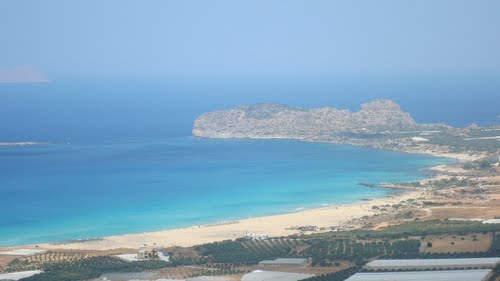
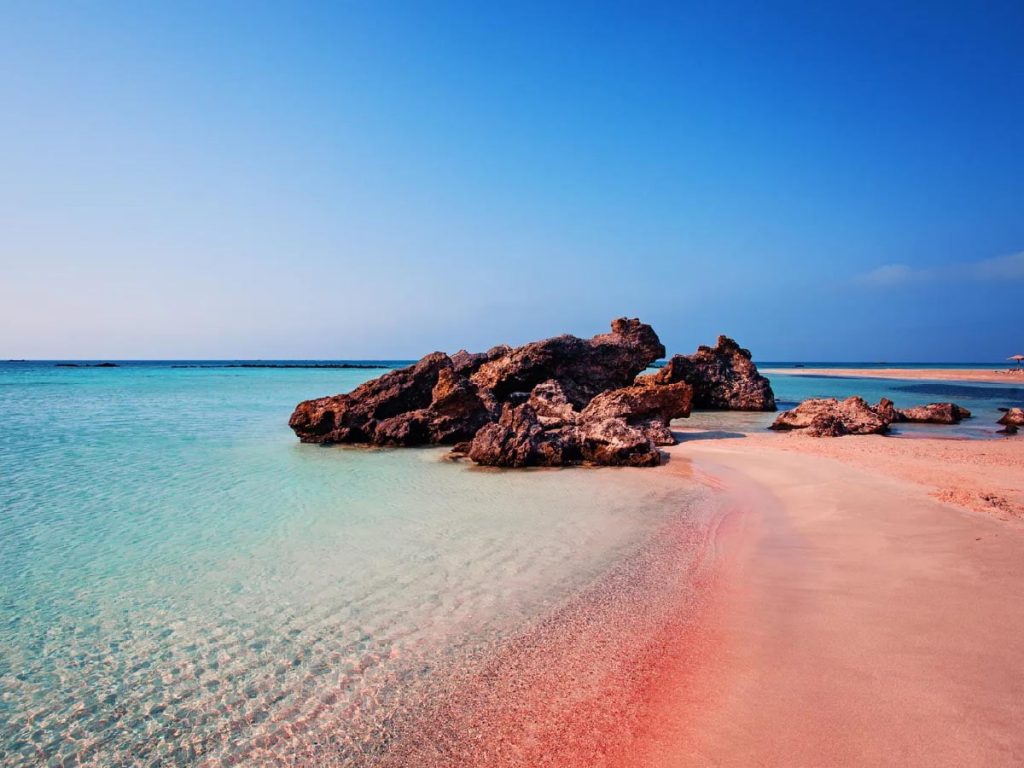
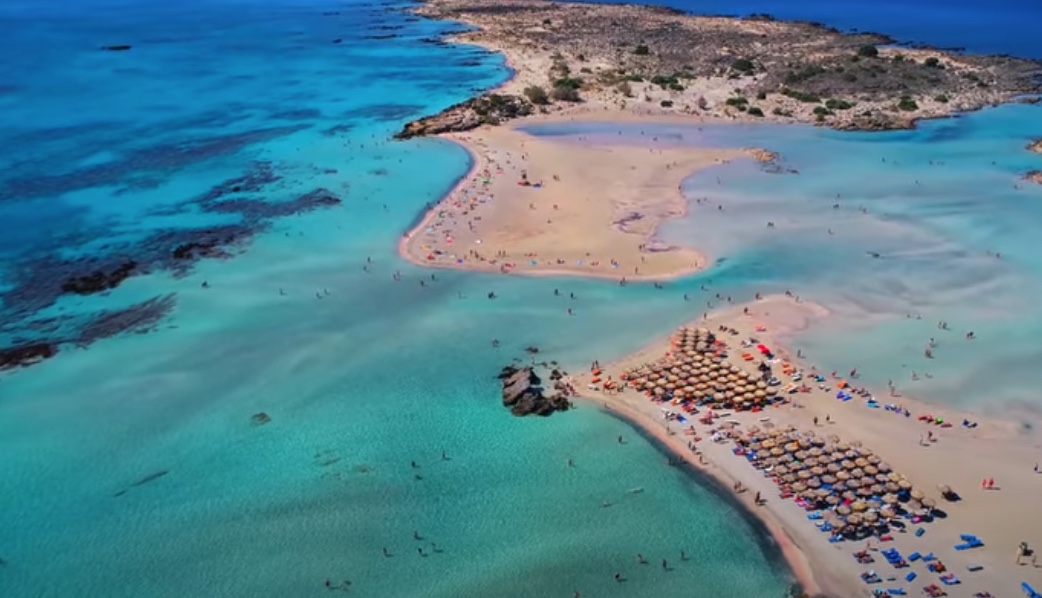
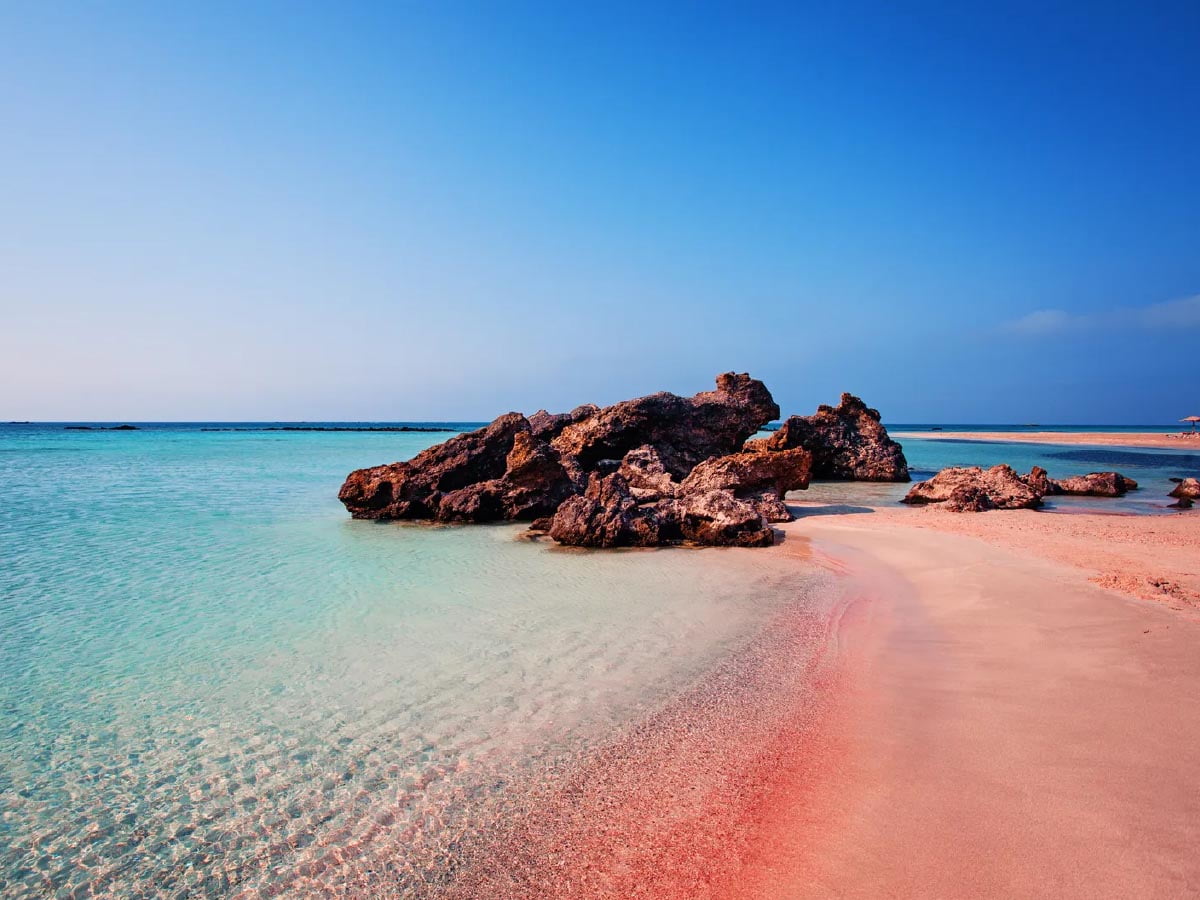
Elafonisi is a low island with a lagoon at the south-western tip of Crete, some 75 kilometres from Chania, in the municipality of Kissamos. Barely half a square kilometre in extent and about thirty metres high at its highest point, it is separated from the mainland only by a shallow ford, which in calm weather can be waded on foot. The pink tinge of the sand comes from ground-up shells and the remains of tiny marine organisms washed in by the waves, not from blood.
Popular memory, however, links the colour with the tragedy of Easter 1824. On 24 April Ottoman soldiers killed hundreds of Greeks who had fled to the island, chiefly women, children and old people, accompanied by a few dozen armed men. There were some 640 people on the island; some of the survivors were sold into slavery in Egypt. A memorial cross and a plaque on the highest point recall what happened.
Plants and wildlife
The dunes of Elafonisi form a fragile coastal ecosystem. Beach grasses grow here, the sea daffodil with its white flowers in late summer, the large-fruited juniper, thyme and several endemic species; the island and the adjoining marine zone belong to the European network of protected areas, Natura 2000. The shore is home to birds, lizards and other species that depend on the sand dunes. Walking through the dunes, picking plants and lighting fires are forbidden.
The wreck of the Imperatrix
On 22 February 1907 – 9 February by the old calendar then in use on Crete – the Austrian steamer “Imperatrix”, a ship of the Österreichischer Lloyd built in 1888 for the service from Trieste to India, ran aground off Elafonisi in a north-westerly gale. Thirty-eight people lost their lives, most of them in a lifeboat that tried to reach the shore; the dead whom the sea gave up were buried on the island, and the hull still lies under water offshore. A large cross commemorates the disaster, and the lighthouse on one of the hills was built as a consequence of the shipwreck; the original structure was destroyed by the occupying German troops in the Second World War and later replaced by a smaller one. According to the tradition of the monastery, the monks of Chrysoskalitissa took part with the villagers in rescuing the passengers.
The way back from Elafonisi to Chania
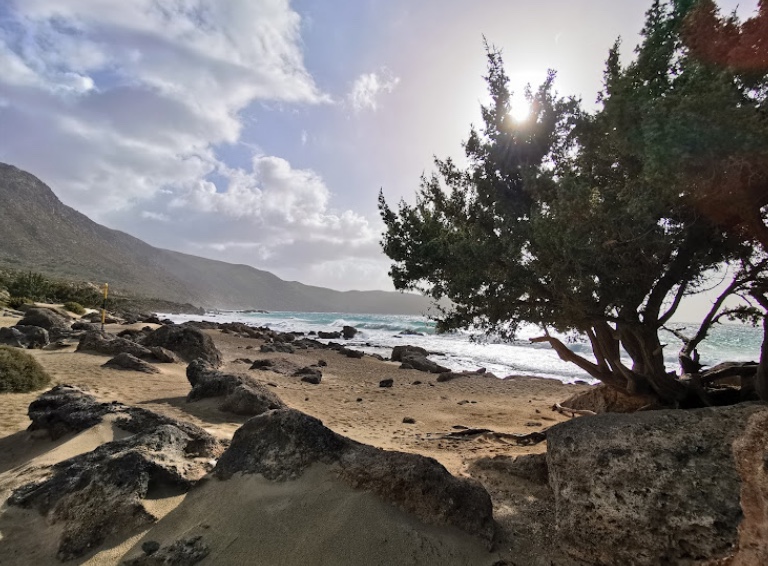
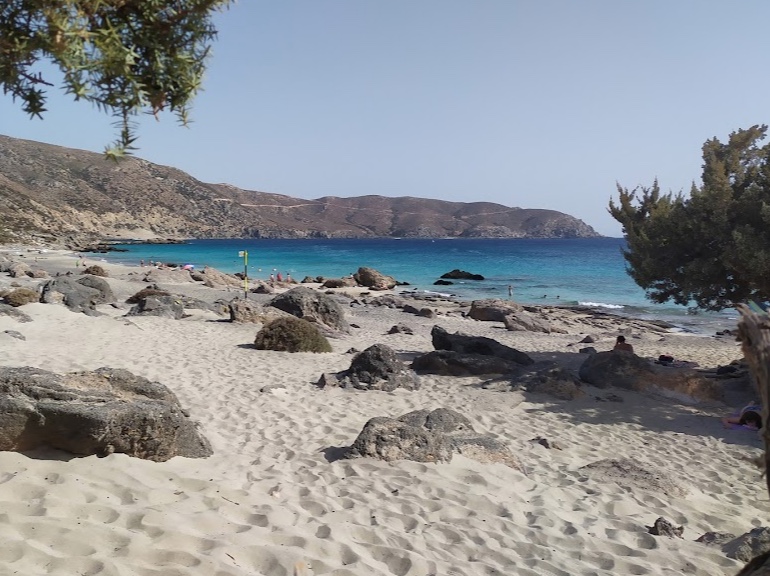
The cedar beach
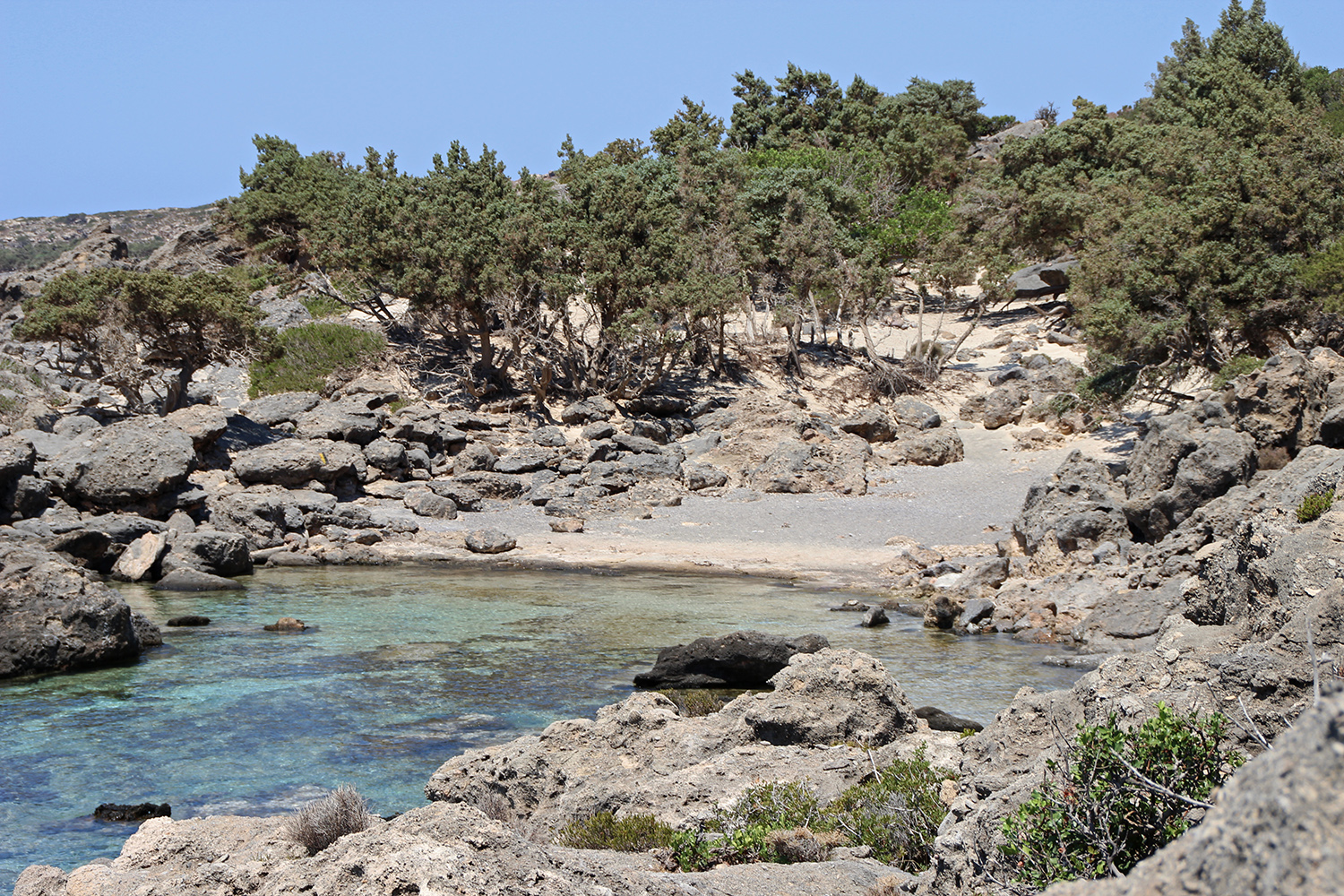
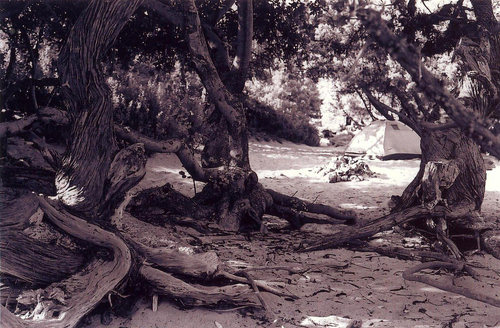
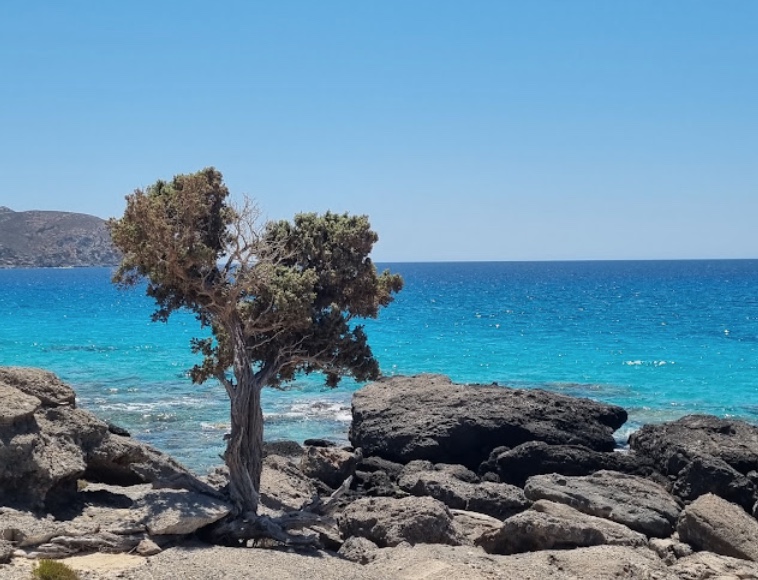
A kilometre and a half east of Elafonisi lies Kedrodasos, the “cedar forest”: a bay with small patches of sand between smooth rocks and an open grove of juniper. The trees are popularly called Cretan cedars, but botanically they are large-fruited juniper. It grows extremely slowly, and its shallow roots often lie exposed in the sand; for that reason you must not break off branches, drive into the dunes or light a fire. The place is popular with swimmers, surfers and campers, but it has neither shade-giving facilities nor water – everything you need has to be brought with you and taken away again.
Elos and Vlatos
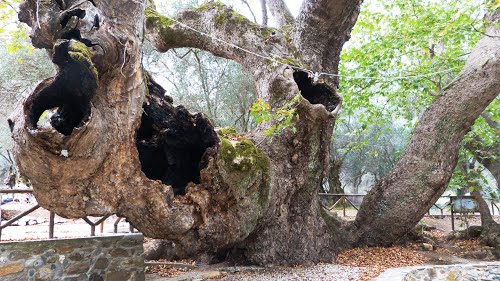
On the way back to Chania you drive by way of Stomio, Plokamiana and Vathi and then turn off to Elos, the chief of the chestnut villages, where a chestnut festival is held every autumn. At Vlatos you are shown an ancient plane tree with a huge cavity in its trunk; village memory has it that people hid inside it from the Ottoman authorities and later from the German occupiers.
Katsomatados
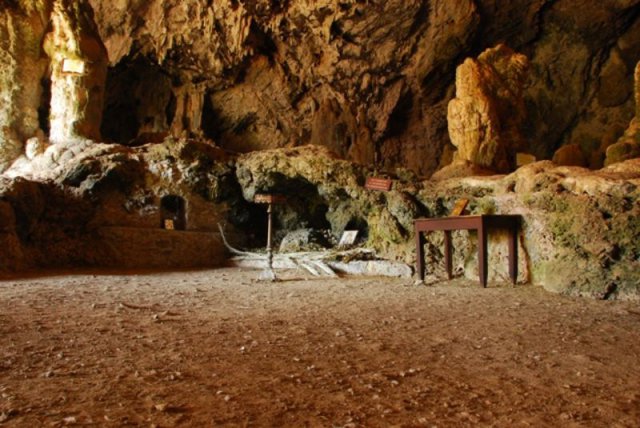
At Katsomatados begins the gorge of Topolia with its caves, through which the road squeezes by way of a short, single-lane tunnel. High above the carriageway, at about 285 metres, opens the cave of St Sophia (Agia Sofia), reached by a long flight of steps. Its vault is some twenty metres high and measures about seventy metres across; stalagmites several metres tall stand like columns in the half-light, and finds go back as far as the Neolithic. A chapel of the same name has been set up in the cave; legend tells that an icon from Constantinople was carried here by the current.
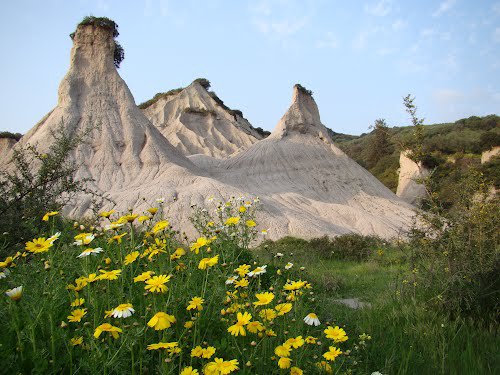
After that the road leads by way of Voulgaro, Potamida and Kaloudiana, past the white marl hills of Potamida, shaped into cones by the rain, back to the north coast and to Chania.
Practical notes
The distances between the individual points are considerable; it is best to spread the route over two days, with a night in Kissamos, say, or on the south-west coast. The visiting hours of Chrysoskalitissa, the state of the roads and the restrictions in the Natura 2000 area should be checked beforehand. At Elafonisi and Kedrodasos you may not leave the marked paths, take away sand or shells, damage the juniper or leave a fire unattended. In high summer the beach at Elafonisi fills up by late morning; those who arrive early or stay until evening see the lagoon in its finest light.