Frangokastello: the road from Chania through Askifou and Sfakia
The most complete guide to Crete: 221 places on the map, 23 routes and 49 articles — with photos, videos and the story behind every place. No sign-up, no trackers.
Routes drawn along real roads
Weather at every stop
Full-text search
“Near me” by geolocation
Create your own printable itinerary
Satellite, terrain, dark mode
Works offline
⌕
Searches 1.7 million characters of descriptions, not just names
—places
4regions
—routes
—with video
Search results
—
Interactive map
Find what is near you
Filters narrow the map and the list at once. Zoom out and pins group together.
Region
Category
Фильтры карты
Landmarks
Featured places
RegionCategory
Routes
Ready-made day trips
Individual places
Articles about landmarks
The route leads from Chania over the Askifou plateau and down through the Imbros Gorge into Sfakia, to the south coast of Crete and on to the fortress of Frangokastello. It links the landscapes of the White Mountains with the history of the Cretan risings, the lore of the Sfakian villages and the monuments of the Venetian period. Anyone hoping to manage it in a day should set off early; it is more rewarding to spend the night in Chora Sfakion, Loutro or Anopoli.
The Askifou plateau
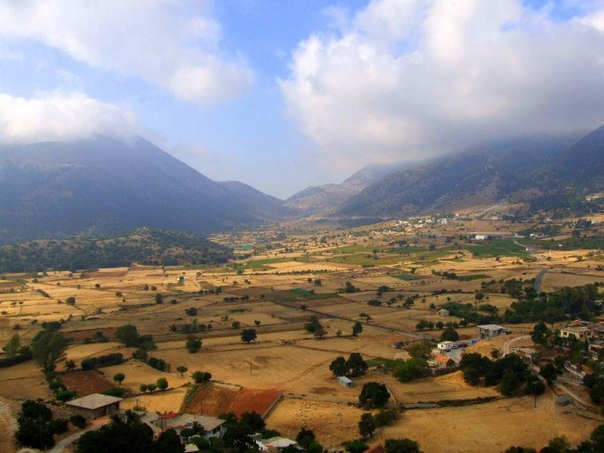
The Askifou plateau (Ασκύφου) is an enclosed mountain basin some fifty kilometres south of Chania and a good 700 metres above the sea, ringed by the ridges of Kastro, Fanari and Choreftes. Snow lies here in winter, in spring the valley floor is covered with flowering herbs, and sheep graze among the small plots of potatoes, vines and walnut trees. The road is surfaced throughout and served by the Chania–Chora Sfakion bus, so the plateau can be reached at any season.
Find on the map
Getting your bearings: an introduction
Askifou consists of the small villages of Kares, Ammoudari, Goni and Petres. The name is usually traced to the ancient Greek word skyphos, a drinking cup, whose shape the plain recalls. The people live by rearing sheep and goats and by cheese-making; anthotyros and mizithra are produced here, along with siglina, the smoked pork of the region, and raki, the spirit distilled from grape pomace. At the chapel on the higher plateau of Tavri the feast of the Holy Trinity is kept at the beginning of June. Because the main route to Chora Sfakion has always run through Askifou, the valley is known as the “Thermopylae of Sfakia”.
The villages of the Askifou plateau
The community of Askifou is made up of the hamlets of Kares, Ammoudari, Goni and Petres; Stravorachi is sometimes counted as a fifth. For travellers Ammoudari matters most, since it has tavernas, a petrol station, a post office and rooms to let. The plain is under snow for almost the whole winter, and in a courtyard in Ammoudari stands what is confidently said to be the only fir tree on Crete. The chief livelihood is the rearing of sheep and goats. Excellent cheeses can therefore be bought in the many dairies, anthotyros and mizithra among them, and in November the famous raki is distilled in many households.
In recent years more and more visitors have been coming up to the plateau, most of them passing through on the way to Chora Sfakion, but also walkers and climbers bound for the mountains; the European long-distance path E4 touches the valley, and from the Tavri plateau with its mountain refuge paths lead on towards the neighbouring plateau of Niato and into the high range. The tavernas serve the specialities of Sfakia: the thin cheese pie cooked in a frying pan and eaten with honey, and siglina, pork with aromatic herbs. The great popular festival of the plateau takes place at Whitsun, in the first week of June, at the chapel of the Trinity on the Tavri plateau, more than 1,000 metres up. After the service all comers are treated, as Sfakian custom requires, to good food and excellent wine.
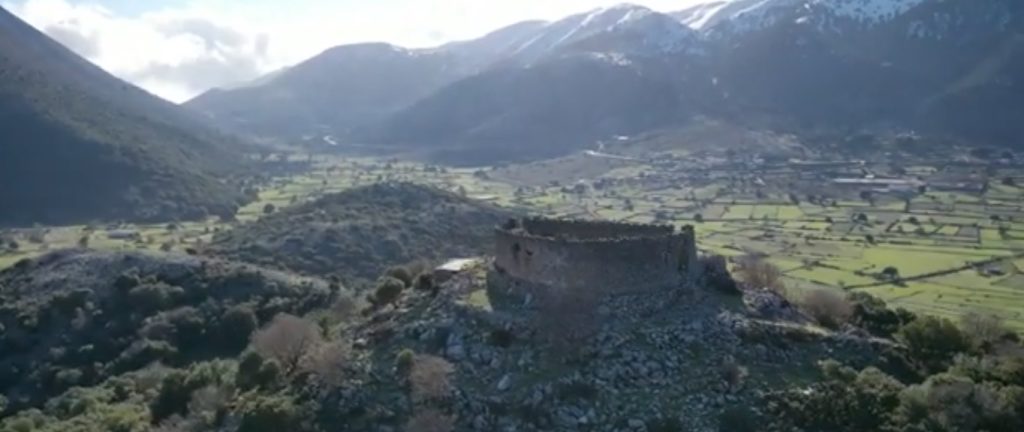
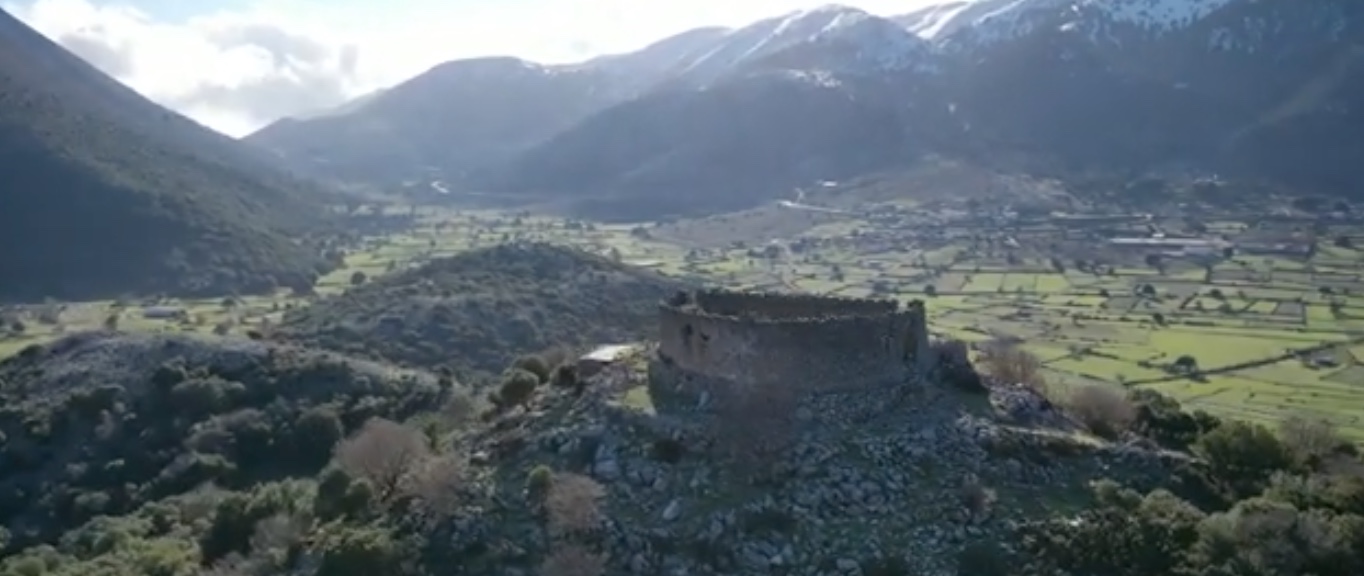
As the gateway to Sfakia, Askifou has been a stage for history time and again. In 1821 the Sfakians threw back an Ottoman army here; two years later, in 1823, the villages were burnt in reprisal. On 21 August 1866 the General Assembly of the Cretans met at Askifou, declared the union of the island with Greece and proclaimed the end of Turkish rule; in the rising that followed the valley lost a large part of its menfolk. After that fighting, in the later 19th century, the Ottomans built two fortified towers on a hill near Goni to control the way down to Sfakia – the Koules of Askifou, whose ruins still watch over the pass. And at the end of May 1941 thousands of British, Australian and New Zealand soldiers crossed the plain in retreat to the south coast. Those days are recalled by the private war museum in Kares, which shows weapons and equipment from 1770 to the Second World War, the latter in great quantity.
The Imbros Gorge
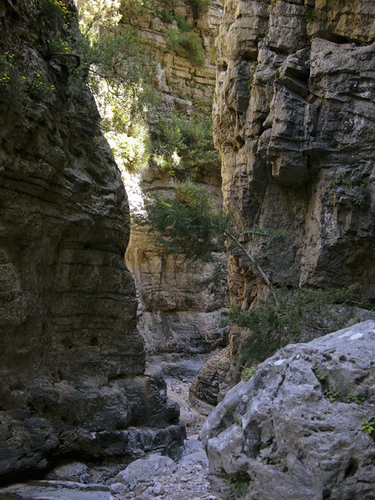
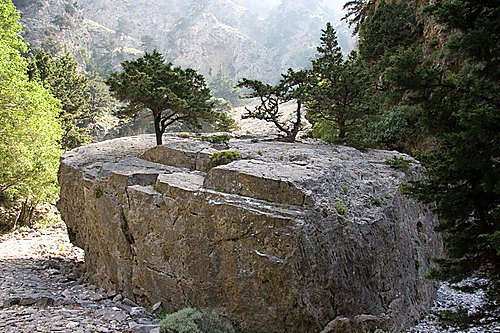
The village of Imbros lies on the southern rim of the plateau at about 780 metres. Here begins the gorge of the same name (Φαράγγι Ίμπρου), a narrow defile that ends at the village of Komitades, not far from the coast. Its length is given as anything from seven to eleven kilometres, depending on where one chooses to mark the beginning and the end – the walk itself is about eight, roughly half the length of the Samaria Gorge – and the descent of some 650 metres takes two to three hours on foot. At the narrowest point, the Stenada, the walls close to 1.6 metres and rise sheer for several hundred metres. Along the way there are old cisterns, a natural rock arch that local people call Xepitira, and cypresses, maples and holm oaks growing out of the cliffs.
About halfway down stands the well-preserved Venetian Cistern (Venetsianiki Sterna). The last stretch is the most picturesque: the path runs through centuries-old stands of cypress, maple and a rare species of oak, the holm oak – a beauty that amply repays the effort. Over long sections the old paving of the mule track can still be made out, for before the motor road was built the gorge was one of the principal ways, and until quite recent times the only one, between Chania and the land of the Sfakians. In 1941 the exhausted Allied troops also came down this way to the coast, several thousand of them, to be taken off to Egypt. The walk is rated easy and suits families, though the bed of the dry stream is loose scree and calls for proper shoes with ankle support; it can be done all year round except in heavy rain or snow. A small entrance fee is charged at the top, and from the bottom taxis carry walkers back up to Imbros.
The unconquered Sfakians
Sfakia had the reputation of never having bowed to any ruler, and its people, perpetual rebels, are regarded by many as the true, unadulterated Cretans.
Find on the map
Getting your bearings: an introduction
Sfakia (Σφακιά) is a historical region in the south-west of Crete, wedged between the summits of the White Mountains and the Libyan Sea. The word chora in the name Chora Sfakion means chief village, not a country of its own. The seclusion of the mountains helped dialect, customs and a stern notion of honour to last longer here than elsewhere. The Sfakians took part in almost every rising against Venetian and Ottoman rule; all the same, the region today is part of Greece and subject to its laws like any other. The romantic tales of “complete independence” and of the ever-present blood feud belong to the popular image of Sfakia – they should be kept apart from the life of the region as it now is.
A living legend: Father Georgios
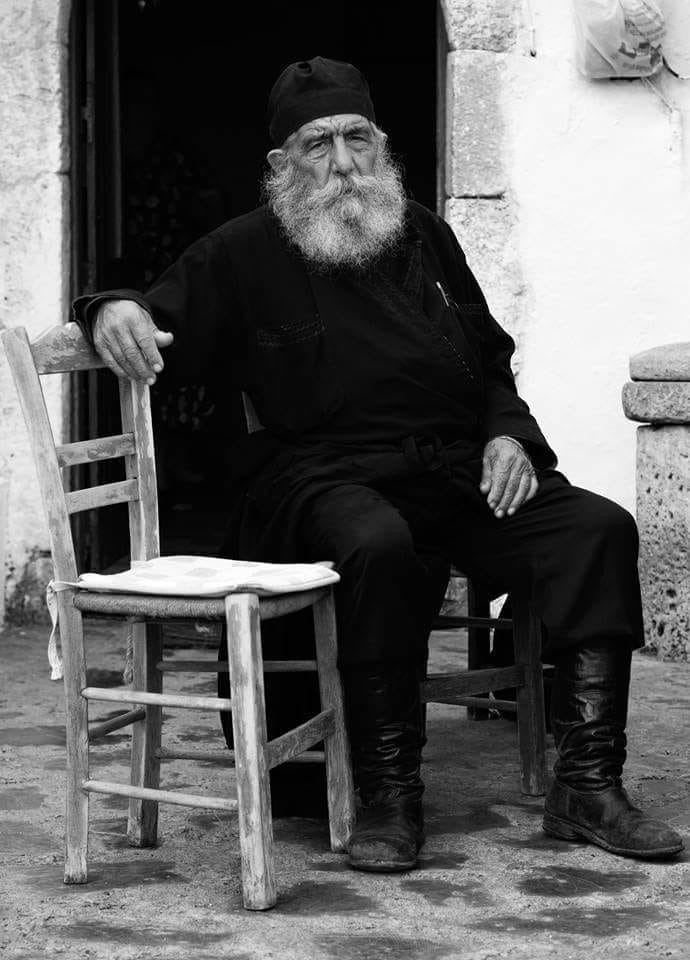
The photograph shows the priest Georgios, who died in 2016 and whom Sfakia revered as a legend in his own lifetime. For decades – tradition has this ministry beginning as early as the years of the German occupation – he alone served the churches of the whole region, climbing to the remotest chapels on beaches, in gorges and on mountain tops so that the candle of prayer should not go out in them. He was also, it may be said in passing, an avowed communist. He was the father of eleven children and spiritual father to dozens more.
When St Porphyrios once came to Sfakia he took Father Georgios to his heart, and the two became friends. One day they wanted to reach the far bank of a river. Father Georgios lifted the aged Porphyrios on to his shoulders and carried him across so that he should not get wet. On the way back he hoisted the elder up again – and suddenly both were standing on the opposite bank, with no idea how it had happened, and perfectly dry. Father Georgios once said:
“All those who enslave society today hold university degrees and take the people for a stupid mass that the current carries wherever it pleases. Progress does not need much; a little is enough. Yet it is just that little which the many lack.”
“There is nothing crooked in Orthodoxy, but there are crooked people. The official Church and the official state are two colleagues who ought to work together to save the country. But …”
“Property and theft are one and the same crime. A man may be a user of the earth, but not its owner.”
Thus Barba Georgios, Father Georgios, reminded people of the Lord’s word in Scripture:
“The land shall not be sold for ever: for the land is mine; for ye are strangers and sojourners with me” (Leviticus 25:23, King James Version).
Father Georgios did much to put an end to the vendetta among the Sfakians and kept more than one man from the sin of blood vengeance. Another priest reports the proposal in these words:
“Father Georgios, let us form a committee. One man from each district, and when we hear that someone here has fallen out, that two brothers, two fellow villagers, a husband and wife are heading towards a killing, then we must step in and go to them, to reconcile them and help them find a common language again.”
On the custom of keeping weapons in the family he gave this judgement:
“To carry weapons is not right; but to learn the art of handling a weapon is a national duty.
He who wants to be sure of victory before he fights is a fool. The moment I take up the fight, I am already the victor.”
Papa-Giorgis Chiotakis of Sfakia
Anopoli and the Russian Count Orlov
The priest Georgios Chiotakis (1928–2016), known to the people as Papa-Giorgis or “the Chiotis”, came from the district of Anopoli – he was born in the village of Nomikiana – and belonged to a family closely bound up with the history of Sfakia. He held services in the churches of remote settlements such as Loutro, Agia Roumeli and Anopoli, for many years celebrated the feast of St Mary in the Samaria Gorge, and remained, despite little schooling, the spiritual counsellor of the local people and an advocate for large families. He died on 21 February 2016 at the age of 88. The story of the miraculous river crossing with St Porphyrios lives on in the oral tradition of Sfakia; it is to be understood as a spiritual legend that speaks of the friendship of two priests.
Anopoli
From Chora Sfakion the road winds in tight hairpins for about twelve kilometres up to Anopoli (Ανώπολη), built at around 600 metres beside the ancient city of the same name. It is a typically Sfakian settlement of barely a dozen loosely scattered hamlets, with a style of house-building all its own, in a landscape of great beauty. The whole upland is richly green, and all round its rim rise the peaks of the White Mountains – an unusual and impressive sight. Ancient Anopolis was an independent city that struck its own coinage and had a harbour on the coast below, which gave it a share in the sea trade between east and west. In the 3rd century BC it was for a time occupied by its neighbour Aradin; between 230 and 210 BC it appears among the cities that sent delegations to Delphi; and in 183 BC it was one of the thirty Cretan cities that concluded an alliance with King Eumenes II of Pergamon. It went on to prosper under Roman and Byzantine rule.
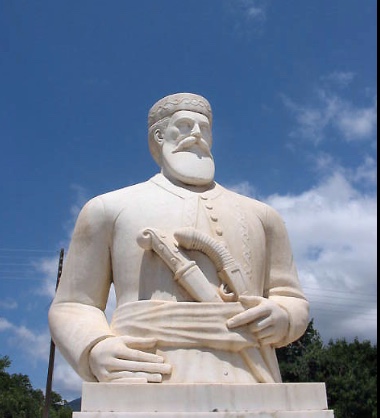
In the village square of Anopoli stands the monument to Daskalogiannis, whose story follows directly. Do visit the church of St Catherine (Ekklisia tis Agias Ekaterinis), about 300 metres outside the village on the hill of the ancient acropolis. West of the church, from the lip of the escarpment – just where the walls of the old city run, standing up to three metres high – a magnificent view opens over the entire south coast of Crete, down on to Loutro and far out across the Libyan Sea. The English traveller Robert Pashley, who came here in the 1830s, paced out the wall for three hundred steps. Foundations of houses and of a temple, a large cistern and cist graves of Roman date have been identified on the hill. And naturally one should try the celebrated Sfakian pita, as well as the sweet paximadi with sesame and coriander, the rusk for which Anopoli is known.
The revolt of Daskalogiannis
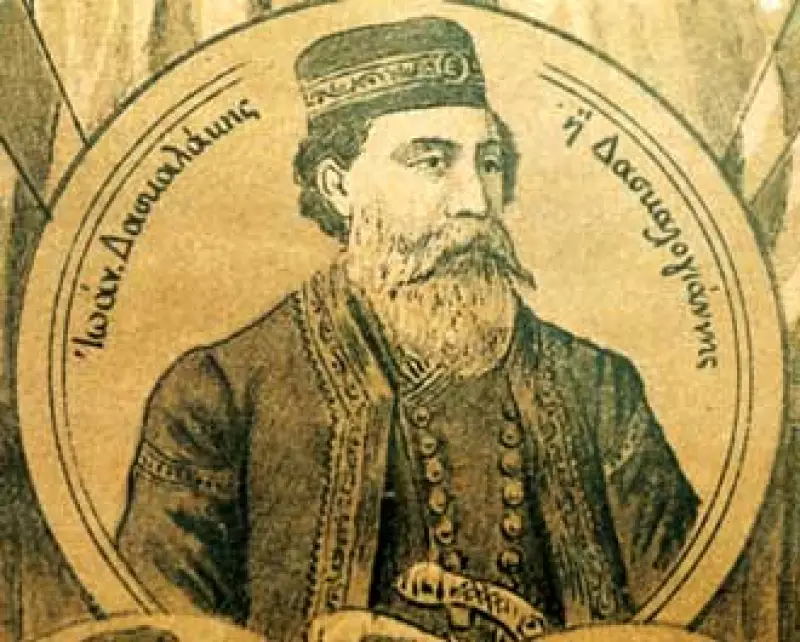
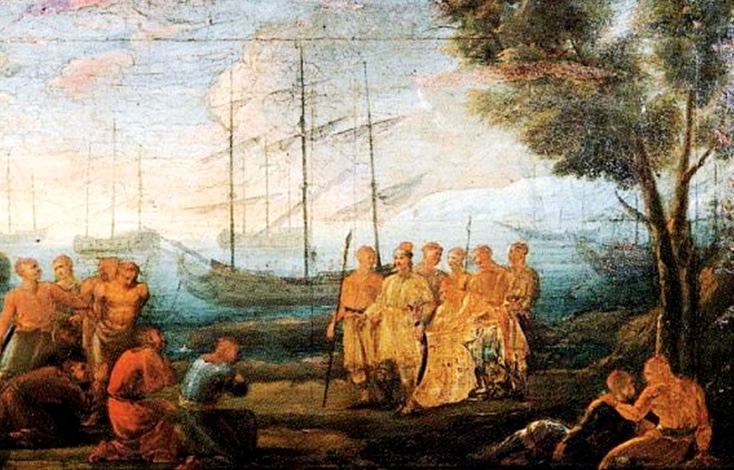
Ioannis Vlachos, known as Daskalogiannis (“Giannis the Teacher”), was born at Anopoli around 1725. He came of a prosperous family engaged in seaborne trade – his father, a shipowner, paid for his schooling – was educated outside Crete, spoke Italian and Russian, and himself owned several merchantmen, four three-masters by the usual count, which sailed from the bay of Loutro to the ports of the Mediterranean and the Black Sea. He was town clerk in 1750 and by 1765 head of the district of Sfakia. In 1770, trusting in the support of the Russo-Greek Orlov Revolt, he put himself at the head of the Sfakians’ rising against Ottoman rule. After its suppression he entered into negotiations, was arrested, and on 17 June 1771 was executed in Chandax, the present Heraklion. His death became one of the great symbols of the Cretan struggle for freedom; Chania airport bears his name.
In February 1770, when Russian troops landed in the Mani in the southern Peloponnese, Daskalogiannis sent hundreds of Sfakians to the aid of the insurgents there. During the Russo-Turkish war Count Orlov had called on the Greeks to rise in the rear of the Ottoman Empire. Daskalogiannis, whom Russian emissaries had approached early that year, was in correspondence with the count; the well-known folk song dedicated to him has the line: “Every year at Christmas he would say: I shall bring the Muscovites here!” In the spring of that year the revolt flared up in Sfakia too, and Daskalogiannis took the lead. After careful preparation – men, muskets, stores and fortified positions – the Sfakians rose on 25 March, in April refused the poll tax, drove off the tax collectors, attacked the Ottomans, seized their property and forced them to take refuge in the fortresses. In the first flush of success they even minted coins of their own. This first assault on the Muslims of Crete marked the opening of the struggle for freedom.
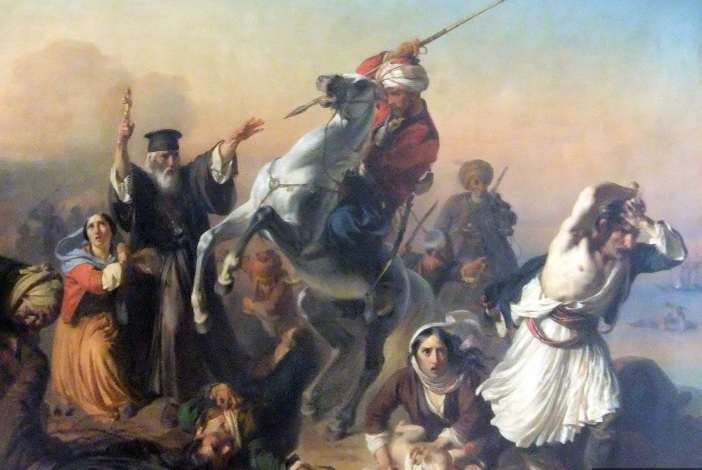
But the Russian fleet they had hoped for did not appear. When the Ottoman authorities, on the sultan’s orders, had gathered an army of 15,000 men to put down the rising, mustering it at Vryses on the northern approach to the mountains, Daskalogiannis rejected the summons to surrender. Thanks to their superior artillery the Ottomans took the key positions and the villages and carried out a massacre there; Anopoli was burnt to the ground, and women and children were carried off into slavery.
The Sfakians then withdrew into the mountains under Daskalogiannis’s leadership and began a guerrilla war. The costly struggle dragged on into the winter, by which time both sides were close to exhaustion. In March 1771 the Sfakians offered a truce in return for immunity. The Ottomans agreed – their terms, issued on 18 March, ran to twelve points – but made it a condition that the authors of the rising be handed over for punishment.
Daskalogiannis resolved to give himself up – knowing that he was going to certain death – and was imprisoned in Chandax. His fate was sealed on 17 June 1771 in a cruel execution: he was flayed alive; his brother Nikolos, it is said, was made to watch and lost his reason. His wife, Sgouromallini, and his daughter Anthousa were killed; another daughter, Maria, was taken as a slave, later married a high Ottoman treasury official in Heraklion, and on inheriting his wealth in 1816 gave it to the cause of Greek independence. Yet his deed and his self-sacrifice have left an indelible mark on the memory of the Cretan people. As early as 1786 the Sfakian cheese-maker Barba-Pantzelios put the events into a song of 1,034 lines, the “Song of Daskalogiannis”, which is still counted among the great works of Cretan folk poetry.
Loutro
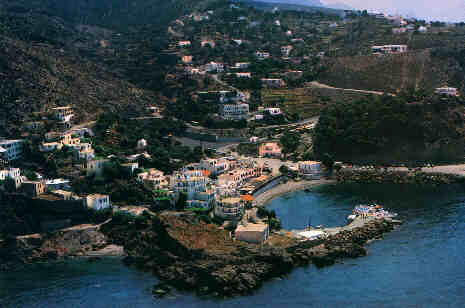
Loutro (Λουτρό) is a small coastal village in a sheltered bay which no road reaches: it can be approached only on foot or from the sea. White houses with blue shutters rise like the tiers of a theatre above the water. Close by lie the remains of the ancient harbour of Phoenix and the church of the Panagia; boats come here from Chora Sfakion, and the same coastal ferry links the village with its neighbours as far as Agia Roumeli, at the mouth of the Samaria Gorge.
It is a picturesque place, its houses painted in the manner of the Cyclades – brilliant white, with blue shutters at the windows – and ranged in a half-circle around a small, windless bay. Loutro is one of the very few settlements in Crete with no motor traffic at all, and it lives, as it always has, from the sea: today from visitors and fishing. A little to the west, beyond the headland that carries the ruins of a Venetian fortress and a rather better preserved round Turkish tower of 1866, lies the chief sight: the remains of ancient Phoenix, the trading harbour of the city of Anopolis on the plateau above, important in Hellenistic and Roman times and mentioned in the Acts of the Apostles. The master of the ship carrying St Paul to Rome hoped to winter there: “And because the haven was not commodious to winter in, the more part advised to depart thence also, if by any means they might attain to Phenice, and there to winter; which is an haven of Crete, and lieth toward the south west and north west.” (Acts 27:12, King James Version). The same natural shelter later made the bay the winter port of Sfakia, and in the Middle Ages a base for Saracen pirates, until the Venetians drove them out and fortified the headland. Loutro owes its present name – the word means “bath” – to the ancient baths found here. Those who would rather not walk – the descent from Anopoli takes a good hour, the coastal path from Chora Sfakion about two – can reach the village by boat from Chora Sfakion in twenty minutes. Do visit the church of the Panagia, remembered as the Monastery of the Virgin (Monastiri tis Panagias): here, in the spring of 1821, the Sfakians set up their “Chancellery”, which served during the rising against the Turks as the seat of the local government, supplied the fighters with ammunition and maintained a field hospital.
Aradena
Aradena (Αράδαινα), three and a half kilometres west of Anopoli at an altitude of some 520 metres on the southern slopes of the White Mountains, is a mountain village and one of the most striking places in Sfakia. An old paved path and a bridge lead to the Aradena Gorge, and the stone church of the Archangel Michael keeps alive the memory of the district’s Byzantine past.
The village is all but uninhabited and its houses stand empty. The reason usually given is a vendetta said to have wiped out the male population; according to local tradition it flared up in the middle of the 20th century, in the 1950s, over a quarrel about a goat’s bell, cost several lives and drove the families away. The place nonetheless repays a visit, if only for the well-preserved ruins of the ancient city of Aradin or Iradin at the spot called Passopetra – an independent community which, like Anopolis, joined the alliance of Cretan cities with Eumenes II of Pergamon in 183 BC. Its name has been derived either from a Phoenician word for a place of refuge or from the Greek arados, a violent surging motion. Aradena saw fighting again in more recent centuries: it suffered after the failure of the Daskalogiannis revolt of 1770, there was a battle here during the revolution of 1821, and another on 11 August 1867 in the course of the great Cretan rising. Particularly appealing is the little church of the Archangel Michael at the edge of the settlement, a domed building of the early 14th century, now restored and decorated with wall paintings; it stands on the site of the central aisle of an early Christian basilica.
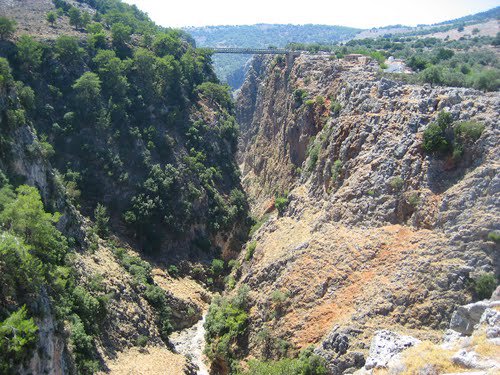
Aradena lies on the western side of a narrow, deep gorge, more a cleft in the rock than a valley, into which only the intrepid venture down by the old zigzag mule path. The far side is reached by a modern iron bridge decked with wooden planks, some 70 metres long, which hangs 138 metres above the bed of the gorge and is regarded as the highest bridge in Greece; in summer the daring throw themselves from a platform on it at the end of a bungee rope. It was built in 1986 by the Vardinogiannis shipping family, who come from the neighbouring village of Agios Ioannis, and presented to their home district – it was inaugurated on 28 December of that year – and it naturally bears the donors’ name. Until then the villages beyond the ravine could be reached only by the mule path down one wall and up the other. A walk of about seven kilometres leads down through the gorge in three to four hours to Marmara, the Marble Bay on the Libyan Sea; it calls for stout footwear and a good supply of water.
Agios Ioannis
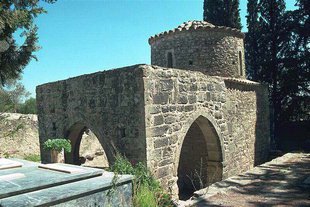
This small village, five kilometres beyond Aradena at around 800 metres, on the edge of one of Crete’s rare forests of pine and cypress, has a good deal to offer. First come the old Byzantine churches with their surviving wall paintings: the church of St John (Ekklisia tou Agiou Ioanni) and the church of the Virgin (Ekklisia tis Panagias), both of the 13th century and painted in the 14th, and the church of St Paul (Ekklisia tou Agiou Pavlou). The last is the most remarkable. It stands not in the village but a good hour’s walk below it, directly on the beach; it is said to have been founded by St John the Stranger, who wandered through western Crete as a hermit in the 11th century. Beside it a spring still flows whose water is held to be holy: it was with the water of this very spring, the story goes, that the Apostle Paul baptised the idolaters during his stay in Crete.
The church faces the sea, and from it the eye ranges over a boundless expanse of water, while behind rise the summits of the White Mountains, snow-covered for much of the year. We return to Chora Sfakion and continue eastwards, where Frangokastello lies only some twelve kilometres away.
Ancient myths of the land of the Sfakians
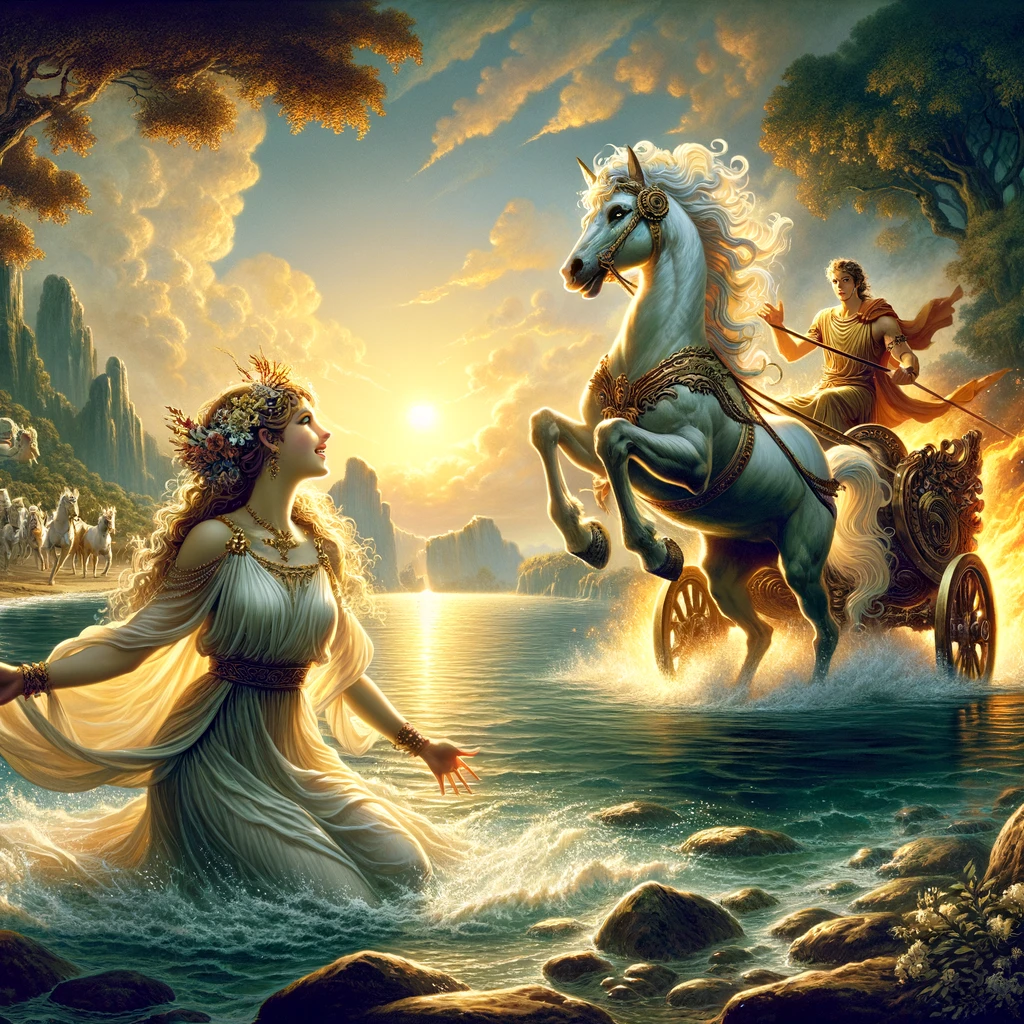
Greek myth mentions the land of the Sfakians in connection with a love story that came within a hair’s breadth of ending in the ruin of the world. In the waters of the bay, it is told, the beautiful nymph Acacallis was bathing without a care – in most traditions a daughter of King Minos and Pasiphae, and so a sister of Ariadne and Phaedra. Apollo, passing overhead in his fiery chariot, caught sight of her and was enchanted. As the day declined the god of light came down, halted his chariot on the shore and withdrew with his chosen one to the sanctuary of Tarra, at the mouth of the Samaria Gorge. The night of passionate love would not end, and over the whole earth morning failed to break; the sun did not rise above the horizon.
Ensnared by Eros and Morpheus, the sun god had lost all sense of time. His chariot stood motionless on the beach, and disaster came upon the world: rivers and lakes froze over, the earth began to shake, men and gods wandered about in panic. At the decisive moment, however, Apollo awoke, leapt into his chariot and lit up the earth – and the world was saved. In another version all this befell not Apollo but Helios. Ancient authors also relate that Apollo came to Tarra to be purified of the killing of the dragon Python in the house of the seer Carmanor, and that Acacallis bore him twins there who were suckled by a goat. Pausanias gives their names as Phylacides and Phylander, and adds that the people of the nearby city of Elyros sent to Delphi a bronze goat giving suck to the two infants. Other traditions make her, by Apollo or by Hermes, the mother of Cydon, the founder of Kydonia on the site of modern Chania, and of Miletus and Naxos. However that may be, the Sfakians are proud that it was their land which gave rise to so fine a myth.
The Castle of Ghosts
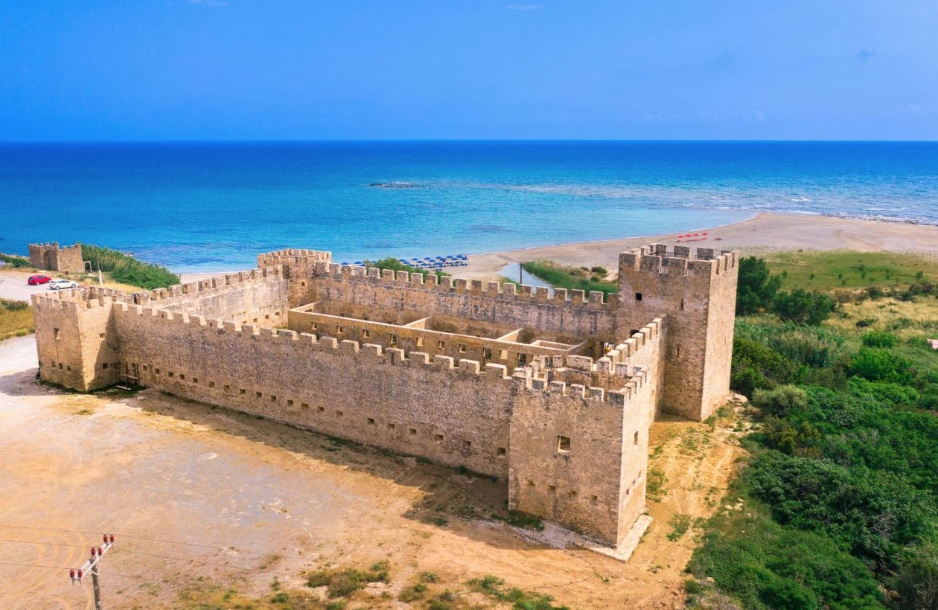
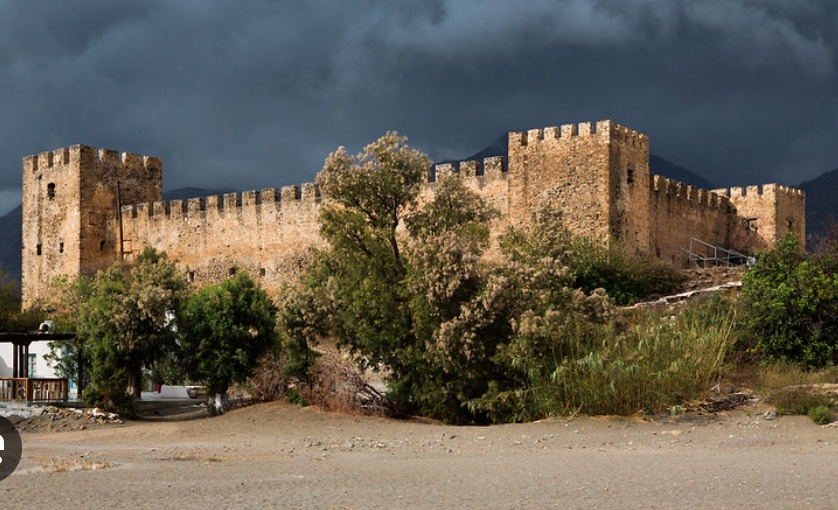
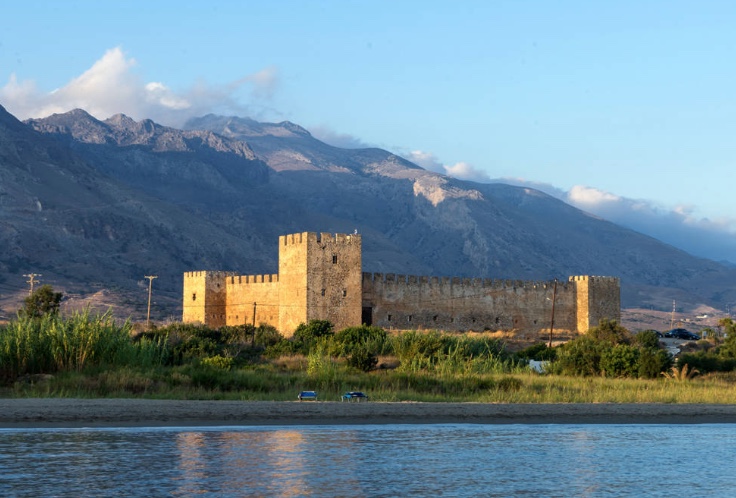
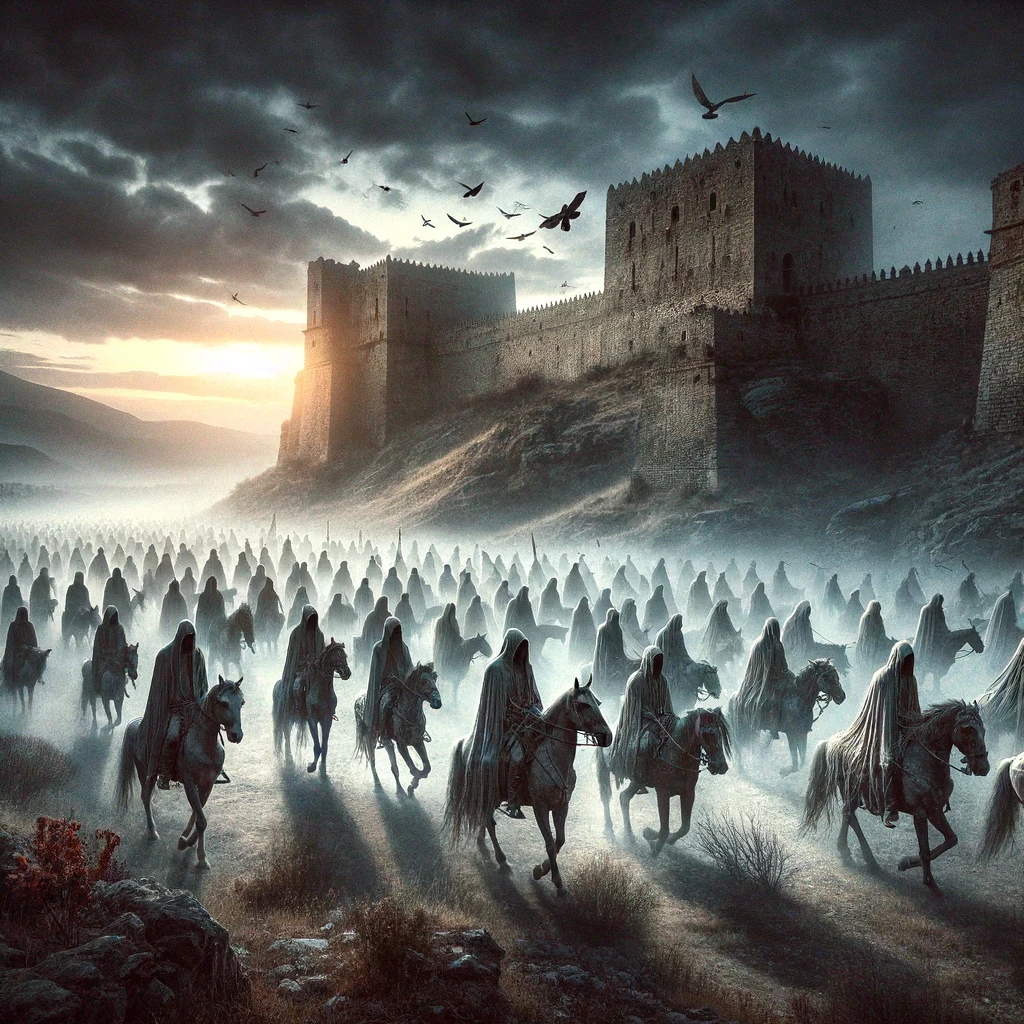
Frangokastello (Φραγκοκάστελλο) rises directly on the shore of the Libyan Sea, on a surprisingly small plain beneath the steep southern flank of the White Mountains, some twelve kilometres east of Chora Sfakion. Around the castle cling tales of fearless fighters and of the mysterious Drosoulites, the shades of the fallen – scarcely another place in Crete binds historical drama and unsolved riddle so closely together.
Find on the map
Introduction
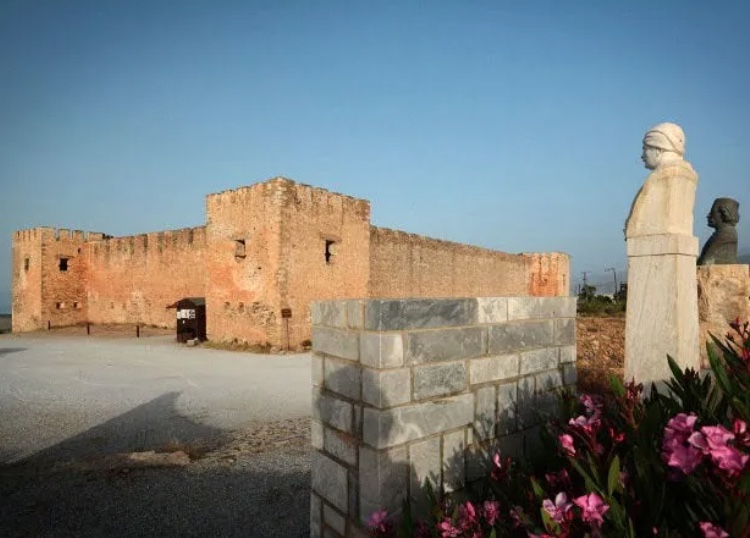
Frangokastello is a fortress on the sand – the only one of its kind in the whole of Crete. It stands not on a rock or a rise but on a flat coastal plain a few paces from the beach, and from a distance its battlemented walls of dressed stone look as if they had never been breached. The Venetians began to build it in 1371, to secure their rule against the unbending and repeatedly rebellious Cretans and to protect the coast from pirates. It passed to the Ottomans with the rest of the island in 1669 and is now a roofless shell in the care of the Greek Ministry of Culture. The drive takes about an hour and a half from Chania and an hour or so from Rethymno.
The fort was originally called the “Castle of St Niketas” (Agios Nikitas) after a nearby church. The local people, however, soon spoke only of the “Castle of the Franks” – the name the Orthodox Greeks gave to the Catholic foreigners from the West – and this name, recorded in Venetian sources also as Castel Franco, eventually prevailed.
A look back at its history
The Senate of the Republic approved the project in February 1371; building went on from 1371 to 1374. Stone from ancient ruins in the neighbourhood is said to have been among the material used. The Venetians regarded the district of Sfakia as almost ungovernable, and local tradition tells how stubbornly the Sfakians resisted the work: whatever the Venetians raised by day, the six Patsos brothers from the nearby village of Patsianos and their companions pulled down again by night. Only when the brothers had been caught and executed could the castle be completed.
The fortress never really fulfilled its purpose – Sfakia remained a land unto itself. In the rising of 1770, set in motion by the Russian fleet of the Orlov brothers, Ioannis Vlachos, known as Daskalogiannis, is said to have held Frangokastello briefly, having wrested it from its Ottoman garrison. When the revolt collapsed, it was here that he gave himself up to the Turks; in June 1771 he was cruelly put to death in Heraklion.
Architecture
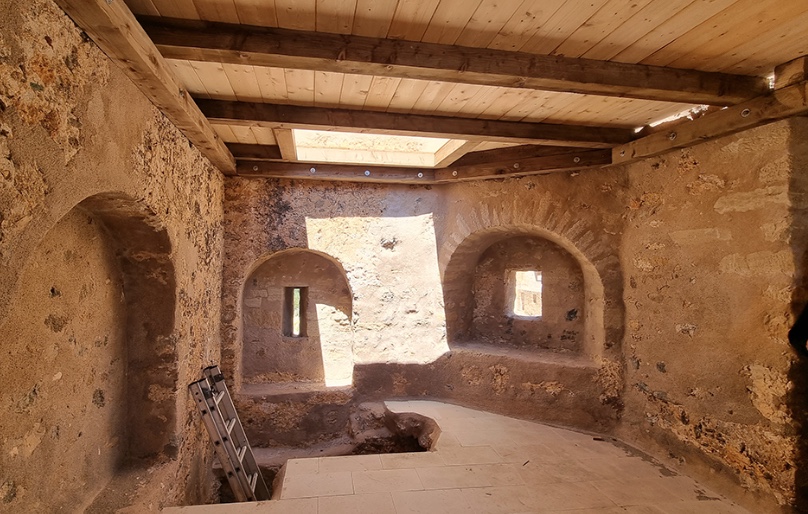
The plan is a plain rectangle: four square corner towers linked by straight, battlemented curtain walls of ashlar masonry. The tower at the south-west corner is larger and taller than the others; it covered the main gate and served as the garrison’s last refuge. This form still belongs to the older, medieval art of fortification, conceived before gunpowder; the bastioned system, designed for war with artillery, spread in Crete only later – one thinks of the 16th-century walls of Heraklion, Chania and Rethymno. Above the south gate the winged lion of St Mark, the emblem of sovereignty of the Republic of Venice, has survived. The buildings inside, once quarters, storerooms and stables ranged along the walls, date in their present form mainly from the Ottoman period, as do the battlements themselves.
The main entrance is on the south side, facing the sea, and in its present form is a 19th-century reconstruction. Above the arch sits the relief of the lion of St Mark, the symbol of the Serenissima; beside it are preserved the carved coats of arms of noble Venetian families, usually ascribed to the houses of Querini and Dolfin. The castle was renewed several times in the course of its history: between 1593 and 1597 under the Provveditore Generale Nicolò Donà, then in 1645, when the war for Crete began, and finally from 1866 to 1869 during the great Cretan rising, when the Ottomans covered the island with a network of forts and watchtowers – so thoroughly that the castle can fairly be called a rebuilding by Mustafa Naili Pasha. What the visitor sees today is thus a Venetian body in Ottoman dress.
The battle of 1828
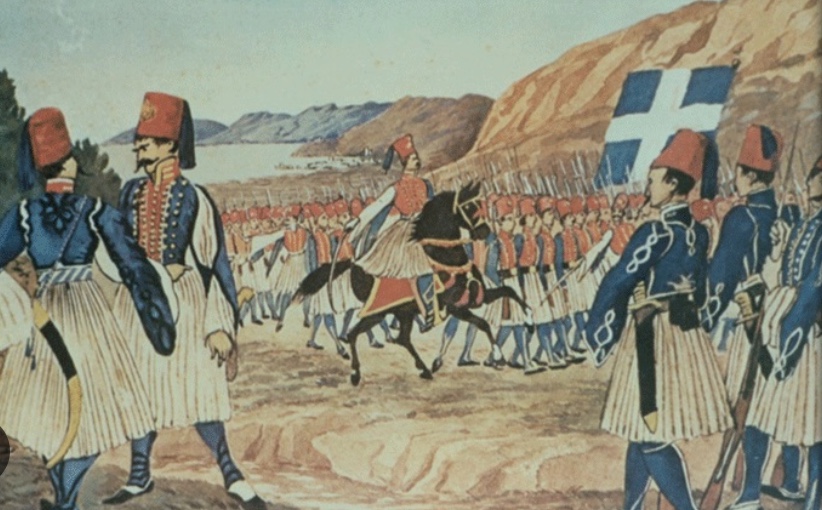
In 1828 the Epirote commander Hatzimichalis Dalianis (Χατζημιχάλης Νταλιάνης) came to Crete with a band of volunteers, hoping to rekindle the rising on the island, and in March occupied Frangokastello. The Sfakians advised him to give battle in the mountains; he chose the plain before the castle, because he trusted in his cavalry. On 18 May the army of Mustafa Pasha attacked; Dalianis and more than three hundred of his men fell. The battle was a defeat for the insurgents, yet the island’s memory preserves it as an example of courage and self-sacrifice. The union of Crete with Greece came only much later, in 1913.
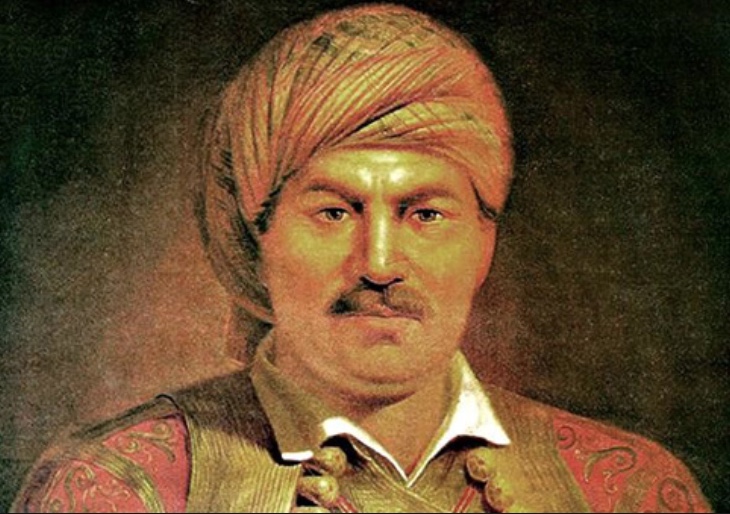
Dalianis, born about 1775 at Delvinaki in Epirus – though other places in the region also claim him – was properly called Michail Christou. He bore the title “Hatzis” after a pilgrimage to Jerusalem. He grew up in Trieste, where his father was in trade, and made his own fortune there as a tobacco merchant; in 1816 he joined the secret society of the Filiki Eteria, and from 1821 he fought in the Greek War of Independence, in which he made his name above all as a leader of cavalry. In March 1826 he even took part in an expedition to Beirut, intended to win the Emir of Lebanon, Bashir Shihab II, for an alliance against the Sultan; the emir proved unwilling to defy the Porte.
On 5 January 1828 Dalianis landed on the island fortress of Gramvousa with some 600 infantry and 100 horsemen. It quickly became clear that his relations with the islanders would remain difficult. The men of Lasithi, Rethymno and Chania argued over where the base of the rising should be. In the end Dalianis carried the day for Sfakia, but the decision had cost precious time. Meanwhile Mustafa Pasha, the governor of Crete, learned of the armed strangers in Sfakia and sent troops into the district – ostensibly to protect the population from brigands.
The first skirmishes began on 8 May 1828. A band under Manouselis, Manousogiannakis and Deligiannakis fell upon a Turkish detachment from Rethymno that was on its way to join Mustafa’s army, killed forty men and took many prisoners, among them the Aga of Rethymno. The enraged pasha wrote to Dalianis and gave him ten days to leave Crete. Hatzimichalis replied:
“Mustafa, I have come to Crete to fight the Turks with my warriors – may God decide the outcome of the battle.”
Mustafa had no doubt of his opponent’s resolve; he knew him well, for both men came from Epirus. He prepared for the decisive assault and at the same time wrote to the notables of Sfakia: he was about to march against the “troublesome foreigners”, and they would do well to keep away, in which case their privileges would be left untouched. The letter had no effect.
Dalianis had in the meantime installed himself in the Venetian castle by the Libyan Sea and, it is reported, strengthened it with outlying earthworks. His dealings with the local people, however, remained strained and were confined to an exchange of letters. The Sfakians, who had thrown up entrenchments of their own at a considerable distance, proposed that he leave only a hundred men in the castle and conduct the battle from the mountain position of Kolokasia: there the insurgents would have the better chance of luring Mustafa’s army into a trap as soon as it attacked Frangokastello. Dalianis insisted on fighting on the plain before the castle, so as to be able to use his horsemen. The Sfakians objected that they were not accustomed to fighting on level ground. Hatzimichalis took them for cowards and answered with contempt:
“Then guard your mountains, lest they run away from you, and watch how we fight down here.”
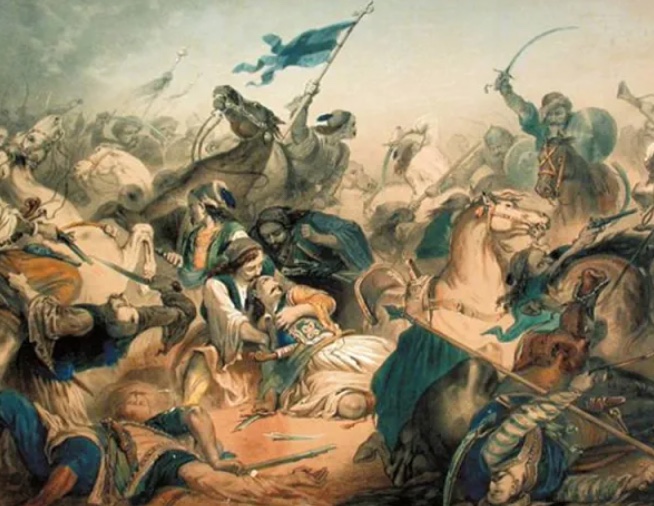
On 18 May 1828 Mustafa advanced on Frangokastello with 8,000 infantry, together with some 300 cavalry and a few guns. The main thrust of the “Turkalbanians” – as the Greeks called the Albanians in Ottoman service – had to be borne by the earthworks in front of the castle and by the fortress itself, whose garrison was far inferior to the enemy in numbers. The defenders of the foremost redoubt fought with unyielding bravery but, after a bitter struggle, were cut down to the last two men. When defeat seemed inevitable, the survivors tried to fall back into the castle under cover of the horsemen. Dalianis, at the head of his men as always, fought until he fell beneath the blades of the enemy cavalry; in all, 338 Greek fighters were left on the field. The retreat nevertheless succeeded, and an unexpected counter-attack by the defenders cost Mustafa’s army heavy losses – about 800 men.
The defeat at the earthworks and the death of their leader did not break the spirit of those shut up inside. For about a week they beat off the successive assaults of the Turkalbanians, although food, drinking water and ammunition were running out; there was not even firewood to cook the meat. Since the Ottoman army too had suffered heavily, Mustafa finally agreed to negotiate. It helped that something close to friendly relations had grown up between besiegers and besieged: most of the men on both sides came from the wider region of Epirus, some knew one another, and many of Dalianis’s people spoke Albanian and could make themselves understood to the attackers without difficulty. So the Greek force was allowed to leave Frangokastello with all its arms and take ship for Greece.
The head of the fallen Dalianis was brought to Mustafa as a trophy. Instead of praising the bearers, he rebuked them for not having brought the man before him alive – the Albanian Mustafa regarded the Epirote Dalianis as his fellow countryman. He had the dead man’s personal belongings gathered up, among them a copy of the New Testament, and sent them to the family. The body, according to local tradition, was recovered by a nun and buried in the little monastery of St Charalambos nearby, a house founded only a few years earlier, about 1821, by the monk Gregorios and the nun Magdalene. As the Turks marched back to their base the Sfakians attacked them once more; Mustafa nevertheless refrained from punishing their land, hoping for pacification and an end to the rising. The castle, however, he is said to have rendered unusable, so that it should never again serve any insurgent as a stronghold; only in the years 1866 to 1869 did the Ottomans rebuild it.
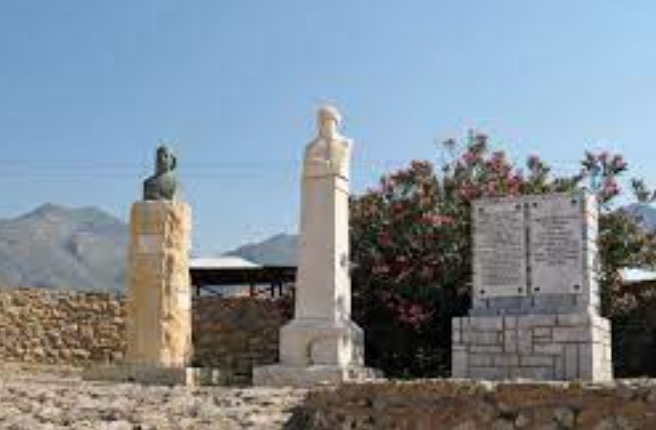
The battle of Frangokastello cost the Greeks 338 dead and brought union no nearer. Crete had to wait until 1913 before it became part of the Greek state. A monument beside the castle commemorates Dalianis and his companions; every year around 18 May the fallen are remembered here. The debt was not forgotten in Crete: during the First Balkan War Cretan volunteers went to fight in the campaigns in Epirus, the homeland of the men who had died at Frangokastello.
Ghosts or Fata Morgana?
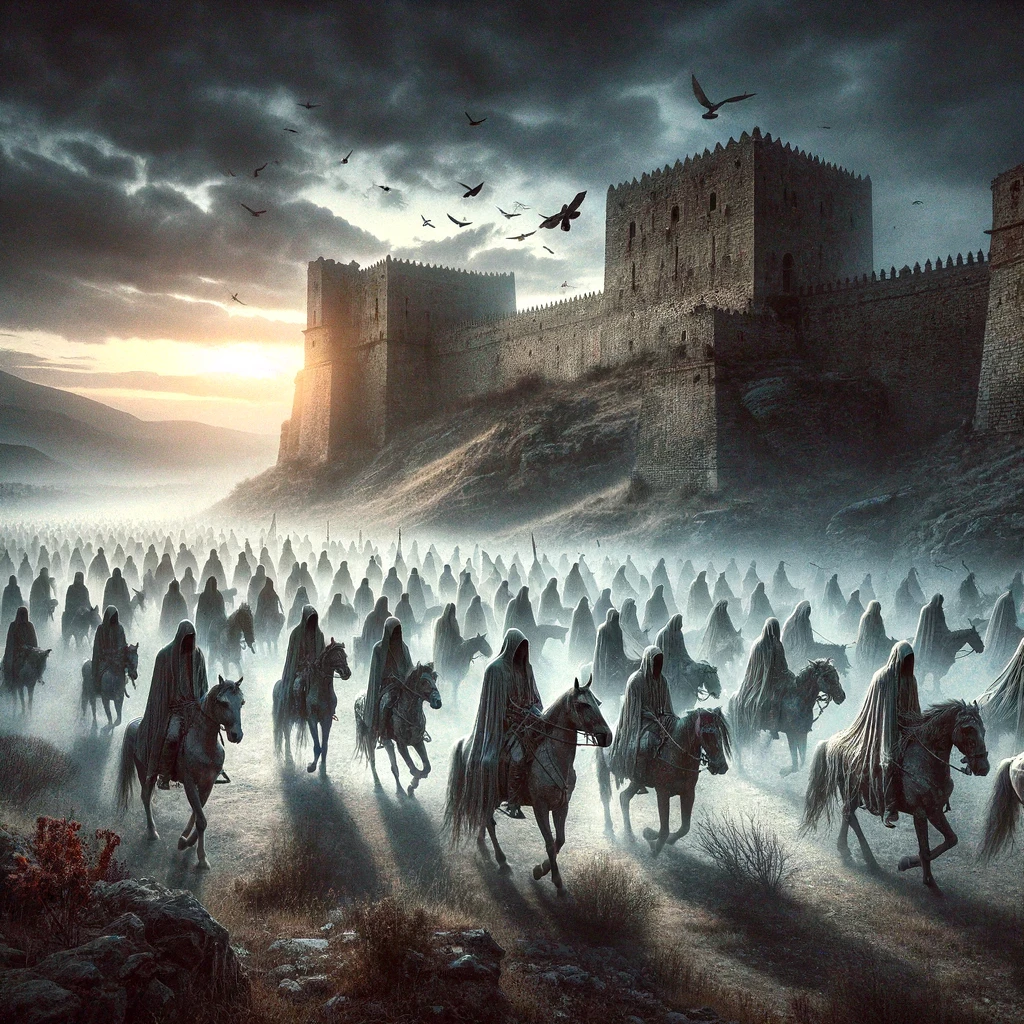
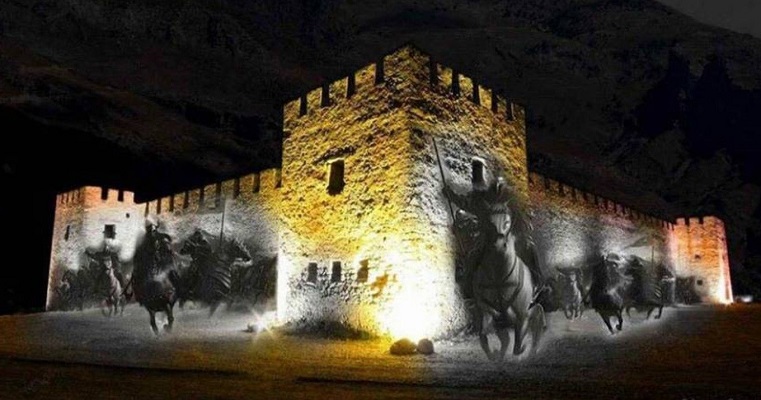
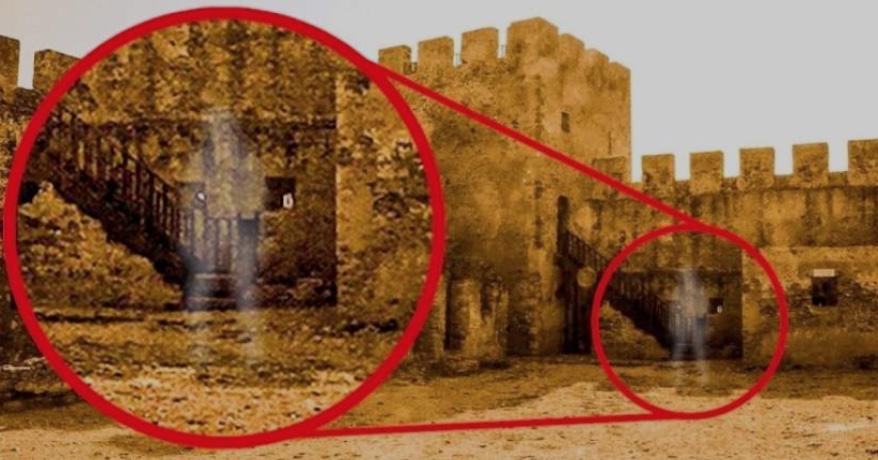
In popular tradition the Drosoulites (Δροσουλίτες) are the shades of the fallen warriors, which appear near Frangokastello at dawn in late May and move off towards the sea. The name is derived from the Greek word drosia, “dew”: the dew-men, the figures of the hour of dew. For the local people the apparition is a remembrance of the dead; for science it is a rare atmospheric and optical phenomenon that can arise from morning haze and mirage.
According to old belief, the souls of those who fell in that battle and were left unburied remain bound to the place of their death. Some years after the terrible fight, shortly after the middle of May, frightened shepherds saw above the ruined monastery of St Charalambos a whole army of armed shadows, infantry and even horsemen, advancing on Frangokastello and from there onwards to the sea, where it vanished. Those who describe the apparition speak of tall figures dressed in dark, black or grey clothing, who stride across the plain in silence and in close order, on foot or mounted, their weapons plain to see. They are watched from the plain at a distance of about a thousand metres. They show themselves only when the sea is dead calm and the air heavy with moisture, last a few minutes, ten at the very most, and dissolve with the first rays of the sun – or as soon as anyone tries to approach them.
The apparition is attested by very different observers. About 1890 a Turkish detachment is said to have taken the shadows for insurgents and, in alarm, formed up for action before falling back. In the Second World War a German patrol opened fire on the figures, which it took for partisans or an enemy landing party, and called by radio for reinforcements from Chania. The phenomenon has indeed been recorded many times.
It also attracted investigators of the paranormal. In 1928 – a hundred years after the battle – the British Society for Psychical Research sent its representative E. Bennett to Frangokastello. The attempt failed: Bennett had miscalculated and arrived fifteen days before the time at which the shadows usually appear.
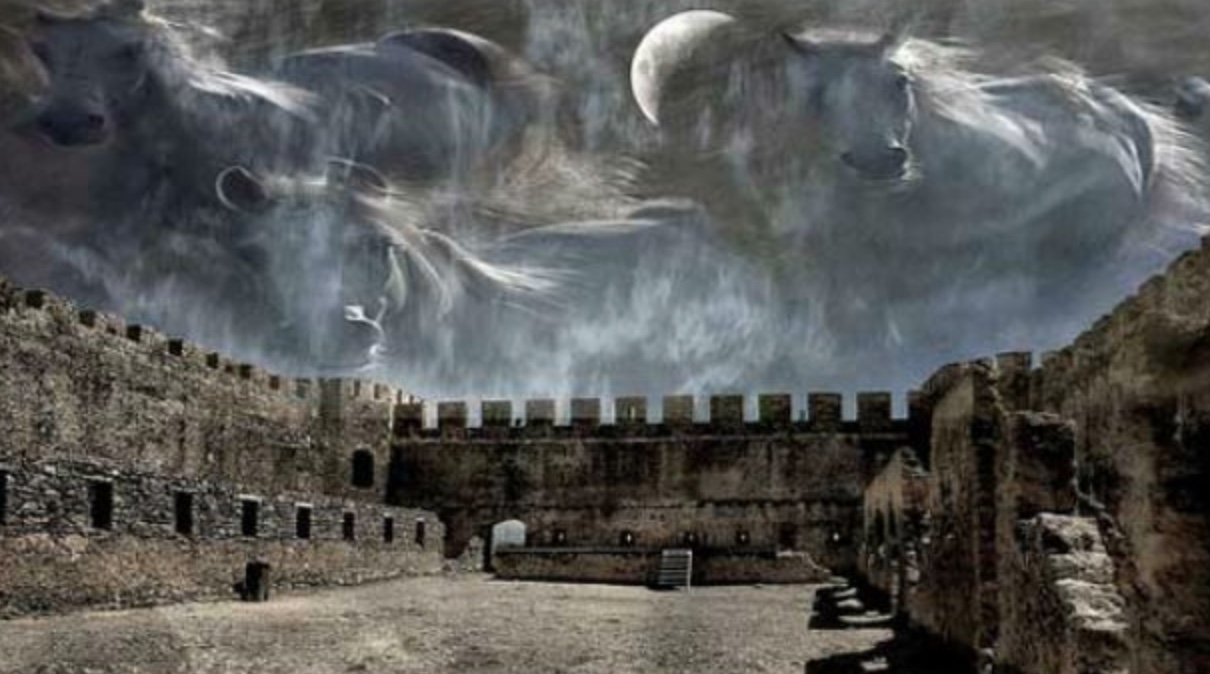
Over the years the most varied explanations have been put forward – from mass suggestion to the far from probable notion that this is the reflection of a caravan or of soldiers on the march on the African coast, in other words a Fata Morgana. Such a mirage occurs when cold air lies directly above the sea with warmer air over it: objects at the surface of the water then appear lifted up, and things far away seem mirrored in the air. But from Africa to the south coast of Crete – across a good three hundred kilometres? The idea has never found general acceptance among scientists.
Another interpretation sees in the Drosoulites an optical illusion produced by the evaporation of the dew in the early morning. The light haze that rises as it does so sometimes takes on shapes in which the eye believes it can make out human figures; some suspect that these are the shadows of the mountains cast upon the water vapour of the coast. In favour of this explanation is the fact that the phenomenon has hardly been observed in recent years, since the plain around the castle has been increasingly built over and planted with olive and citrus groves – man has altered the landscape, and with it the conditions at ground level.
According to a third view, which understands the apparition as a hidden psychic phenomenon, we would be dealing with a kind of clairvoyance – much as with the phantom armies that are reported from other countries too, among them Britain and Germany.