This route bears the name “El Greco” because its goal is the village which tradition honours as the home of the great painter Domenikos Theotokopoulos. On the way we stop at Minoan Tylissos, visit several villages with notable monasteries, and finally reach the green valley of Fodele by way of the bay of Agia Pelagia. It is a journey from the hill country at the foot of Psiloritis down to the sea – and at the same time a walk through three and a half thousand years of Cretan history. Let us set out.
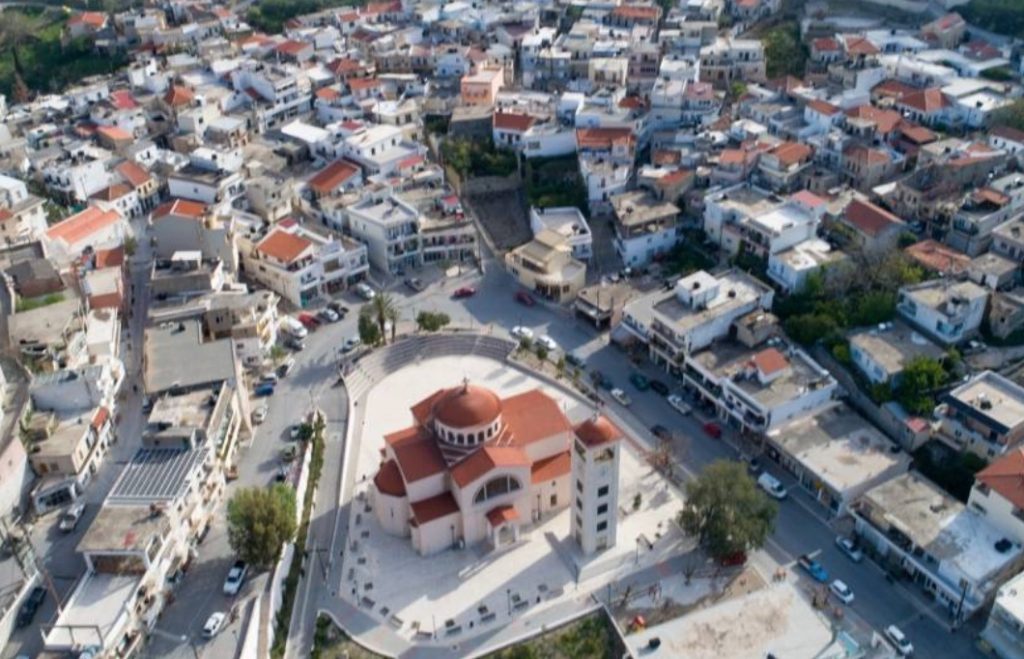
A pirate village in the mountains? – Krousonas
There are several theories about the origin of the name Krousonas (Κρουσώνας). Most scholars take it to be an ancient Greek place name. One local tradition derives it from the booming, crashing noise the Kouretes are said to have made here at their contests and war dances; another reading connects it with the words kouros or krousos, and so with the raids of the corsairs who plagued the district – in one version some of these sea-robbers are even supposed to have settled here. Old villagers also relate that the place was once called “Kyria Gonia” (the Lady’s Corner), from its sheltered, angled situation.
Find on the map
Introduction
Krousonas is one of the largest villages in Crete: some 2,850 people live here permanently, most of them by farming and stock-raising, and the village is known for its cheeses and for its orchard fruit – apples, pears, walnuts and plums. It lies about 21 kilometres south-west of Heraklion at a height of 460 metres on the eastern foothills of Psiloritis, and spreads like an amphitheatre over three hills; the turning for it leaves the old road west out of Heraklion at the seventh kilometre. The view down into the green, fertile valley is impressive; above the village, at around 920 metres, extends the upland plain of Livadi, rich in groundwater and planted with pear and apple trees, and a gorge climbs from the neighbouring hamlet of Kitharida towards the high pastures of Psiloritis. On the hill south of the village – called Kounos – investigations by the archaeologist Stefanos Xanthoudidis brought to light as early as 1906 the wall remains of a large settlement, buildings and numerous finds. Systematic excavation has been in progress there since 1980, uncovering an important settlement which flourished for about a thousand years, from c. 1100 to 100 BC. Even a coin with the legend “Koursiaio Philonida” is said to have been found there. The history of the village itself, however, is bound up above all with the Middle Ages – and with an unbending will to freedom that runs through the centuries.
The Venetian period
An early mention of the village occurs as far back as 1280, in a notarial deed that names one “Iohannes Armachy habitor in Casali Cunsiona”. Krousonas is securely attested from 1341, when it was a fief of the Venetian nobleman Marco Giustiniani. In 1577 the scholar Francesco Barozzi lists the place as “Chrussona”, and the Venetian register of Castrofilaca of 1583 enters “Crussona” with 262 inhabitants. In medieval texts we meet the names of villagers who worked for the lords or owed them labour service; wine presses, fortifications and manor farms from the time of Venetian rule confirm that the village was already a place of some consequence in that period at least.
Unbowed before the Ottomans
In the years 1645 and 1646, when the Ottomans were attempting to conquer the island, a great massacre took place in the locality of Karamera near Krousonas. It provoked among the inhabitants fierce resistance to every demand of the conquerors and culminated in a refusal to pay the oppressive taxes. To collect what in their view the village owed, the Turks sent troops – but the attempt failed completely: the inhabitants learned of the advance in good time, laid an ambush and put the soldiers to flight. When the Ottomans saw that force achieved nothing, they turned to diplomacy and asked what the villagers’ demands were. These required that they should pay no taxes and should not have to tolerate Turkish settlers in the village. The conditions were not only accepted but sealed in 1647 by an official firman: Krousonas was declared a vakuf village, that is, a pious endowment, whose sole obligation was to maintain the mosque of Sultan Ibrahim.
The rising of 1777 and the burning of Agios Charalambos
During one of the risings some 300 Turks, fleeing from the pursuing insurgents, took refuge in the principal church of the village, the church of St Charalambos. To escape annihilation they seized as a hostage the young son of the local prokritos, the village elder – a novice – and threatened to kill him unless they were allowed to go free. The insurgents resolved not to let the trapped men leave. What decided the matter was the consent of the father himself, who agreed with the telling words: “If it is his lot to die for his country, then let him die.” The fighters thereupon knocked a hole in the roof, threw in combustible material, set the church alight and burned all those who could not get out into the open. Anyone who managed to escape from the building ran straight into the arms of the insurgents outside and was killed on the spot. The elder’s small son – remembered under the name of Tsounias or Kritsotakis – was found beheaded on the holy altar. At that time some 300 armed men gathered in the village under leaders such as Makatinomanolis and Giorgos Giamalis, and Krousonas became known as a village of Chainides, the mountain irregulars of the Cretan resistance.
The battle of 1822 and the murder of the monks
In the wake of these events, and as part of the Greek Revolution, the insurgents fought a great battle against the troops of Hassan Pasha in the gorge of Krousonas in July 1822. Around four hundred Turks fell; the victory raised morale throughout the district and carried the rising further east. The pasha, however, took his revenge: he had the village burned down and the monks of the monastery of St Irene, which had served the rebels as a base, put to death.
Resistance to the German occupation
In the years of the German occupation, too, the people of Krousonas remained true to their tradition and went into the resistance. Some 45 men from the village, led by the Tzoulias family, joined the resistance formation known as the “Hunters” (Somatia Kynigon). People here are particularly proud of an exploit which local memory dates to 7 December 1943: on that day a German commander and seven high-ranking Italian officers are said to have been captured and smuggled out to Egypt. The organisers of this daring operation are held to be Xylouris, the doctor Alekos Ieronymidis and the priest Papa-Giorgis Vergetakis, who are honoured in Greece as national heroes. The episode is a fixed part of the way the village sees itself.
Krousonas today and what to see
Today Krousonas is quiet, with no rising in sight. There are no fewer than nine churches in the village, among them the church of the patron saint Agios Charalambos, the Panagia Kera, Agios Georgios and Agia Triada. Particular attention is due to the church of St John the Theologian and the church of the Archangel Michael (Ekklisia tou Michail Archangelou), with its highly individual architecture. Three old stone fountains survive from before 1900. The museum of traditional musical instruments, “Thyrathen”, is a reminder of how deeply music is rooted in the life of this mountain village. The cultural association “Nea Genia”, founded in 1975, holds an apple festival every September, and in 1999 “I Krousaniotissa” became the first women’s agricultural cooperative in the Heraklion district. The principal sight of the area, however, lies above the village, three kilometres to the west on the asphalt road that climbs to the Livadi plateau: the monastery of St Irene.
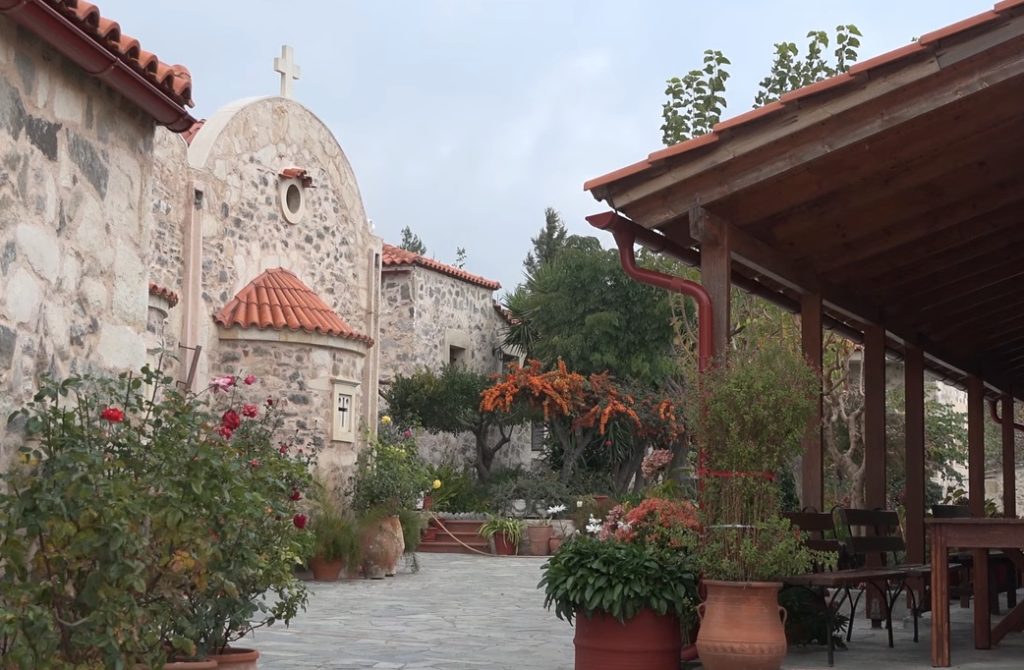
The monastery of St Irene
The monastery of St Irene (Moni Agias Irinis) stands at a height of 650 metres on the eastern slopes of Gournos, above Krousonas and in the shadow of Psiloritis. No exact date of foundation is known; it is usually placed in the 14th or 15th century, which makes this one of the older monastic houses of Crete. The first certain written mention is in a Venetian power of attorney of 1589. At that time the monastery was among the possessions of the Catholic feudal family of Mudatsos (Moatsos); as late as 1635 an ecclesiastical register names one Andreas Modatsos as lord of the establishment.
Find on the map
Before the beginning of Ottoman rule the monastery was counted among the richest on the island and was known for its spiritual life and its educational work: it was here that the children of the neighbourhood received their first schooling. After the Turkish conquest its inaccessible, defensible position made it a refuge for insurgents. In 1822 that proved its undoing. After the destruction of Krousonas the Turks plundered the monastery, burned it down and pulled down the monks’ cells; the monks – so oral tradition has it – were killed at a place called Trochalakas for having sheltered the rebels. Seventy monks are spoken of, whose bodies were covered with stones. After that the monastery lay deserted for some 122 years, the main church serving for a time as a sheepfold, while its extensive landed property passed to the monastery of the Panagia Kera or was confiscated by the Ottoman authorities. The parish priest of Krousonas made a first attempt at restoration, with four nuns, as early as 1936; the revival proper began in December 1944, when that priest, Dimitrios Fasolakis, supported by the resistance groups of Krousonas, drew up a memorandum for its refoundation as a convent. The first cells were built in 1947, the second part of the church was completed in 1949, and 1951 is regarded as the year of the official refoundation; a bust of Father Fasolakis now stands in front of the abbess’s lodging. Since then a small community of nuns has lived here, most recently about eight sisters, who keep the buildings and gardens in immaculate order. The monastery has been considered wonder-working since an event which popular tradition places in 1928: a figure in a religious habit is said to have appeared, blessed the abbess, produced a key exactly like the one the abbess alone possessed, and then vanished in a white cloud – the abbess recognised in her St Irene.
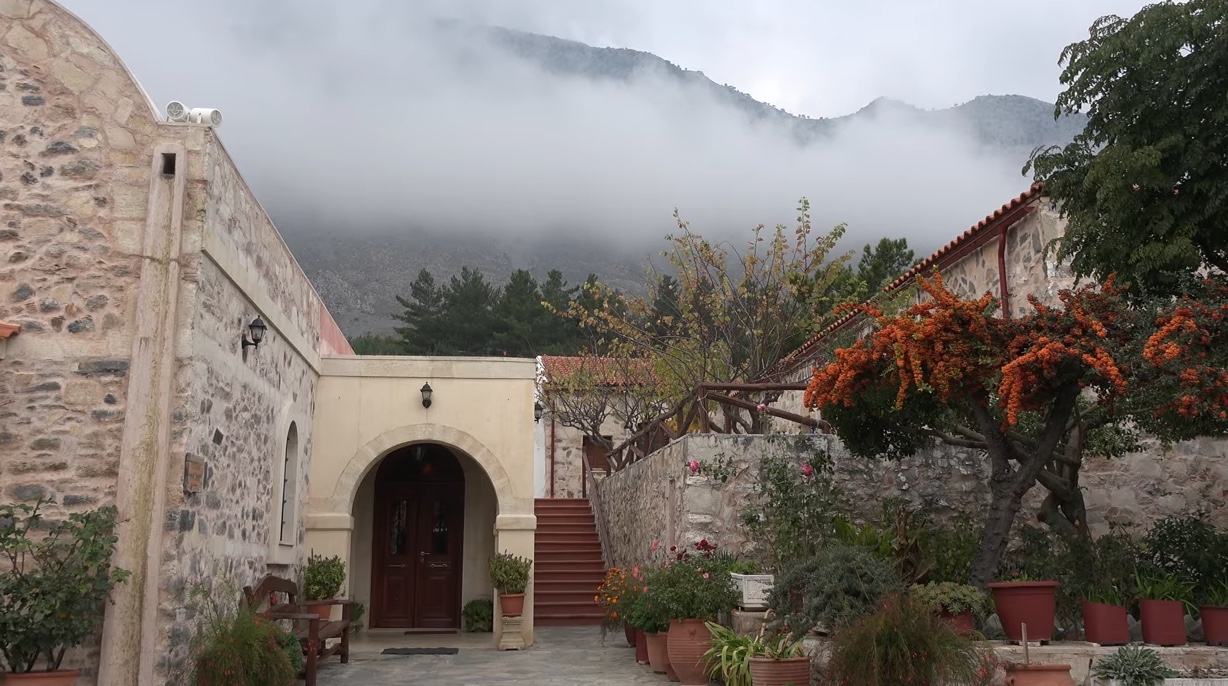
The monastery church, in two parts set side by side, is dedicated to St Irene (feast on 5 May) and to the Dormition of the Mother of God (15 August). Its wall paintings were executed by nuns from a convent near Chania; also venerated here is an icon of the Panagia Gorgoepikoos, “she who is quick to hear”. Round about stand modern buildings in which the nuns live. In the western part of the main church an underground burial crypt of the Venetian period has survived, unique for the refinement of its construction. Flowering gardens, cypresses, pines and eucalyptus trees form a small wood around the monastery – a place of deep stillness with a wide view over the valley. For the saint’s feast at the beginning of May, numerous pilgrims come up from all over the region.
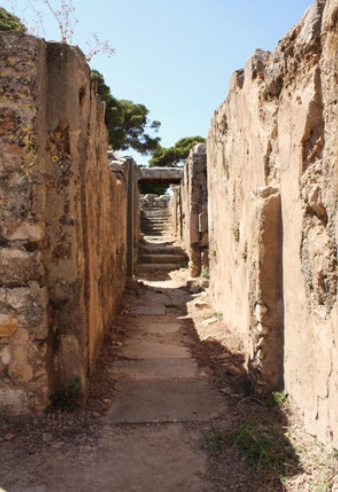
Tylissos – the Minoan mansions
Tylissos was a Minoan town of which three large mansions survive, conventionally designated by the letters A, B and C. They were uncovered at the beginning of the 20th century by the archaeologist Iosif Chatzidakis. In the houses were found courts, staircases, storerooms, a water conduit of clay pipes, and objects that testify to trading connections and highly developed craftsmanship. The settlement lived on into historical times, and its ancient name has been preserved in the modern place name – for some 3,400 years: the Linear B tablets from Knossos already name the place as tu-ri-so, a word older than the Greek language on the island. The village lies only about 15 kilometres west of Heraklion, at around 200 metres above sea level.
One of the most significant archaeological discoveries in Crete began with an accident: a farmer’s mattock struck an enormous bronze cauldron weighing some 50 kilograms.
Find on the map
Introduction
The discovery of Tylissos began in 1906 with an unexpected find: a villager working his field near the monastery of Chalepa came upon four large bronze cauldrons. At first he had no inkling of their historical importance and meant to use them as a source of copper – presumably to melt them down and sell them, or to put the metal to his own use. Some of the vessels had already been sold in the village before the archaeologists were able to secure them for the museum in Heraklion. The spot proved to lie within what would later be called House A; cauldrons of this size imply ready access to copper and a household feeding a great many people.
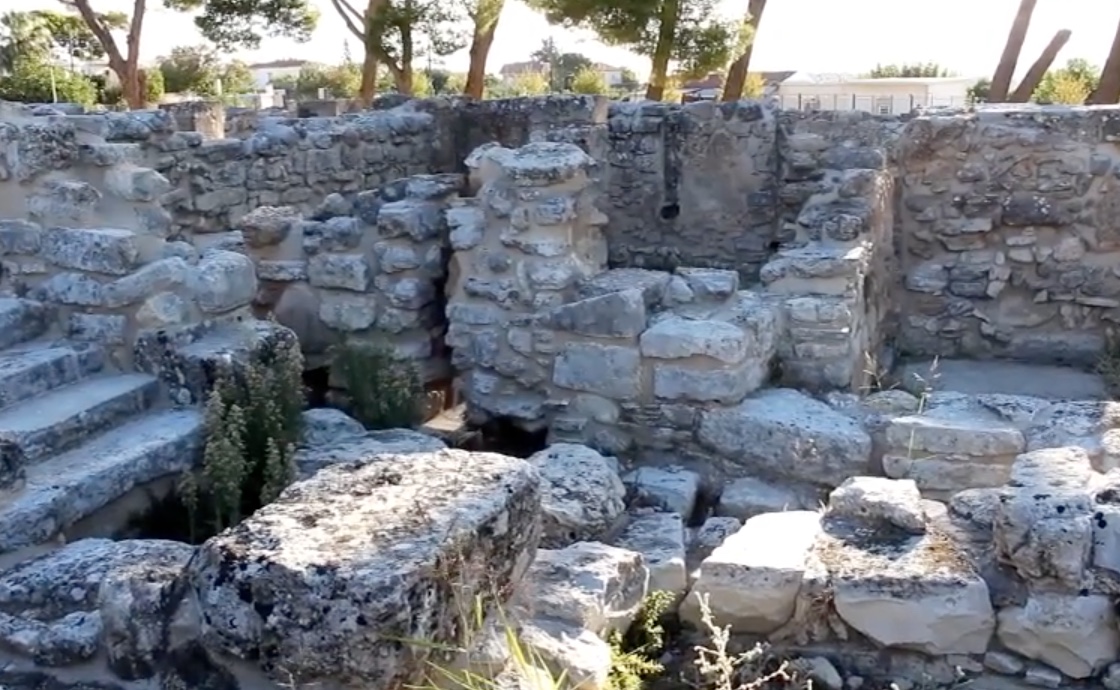
Matters changed when Iosif Chatzidakis, physician and passionate archaeologist, one of the fathers of the care of antiquities in Crete, heard of the find. He recognised at once the importance of the cauldrons as testimony of antiquity and saw to their preservation. Chatzidakis applied to the Greek Archaeological Service and, once permission had been granted, began regular excavations. They started in 1909 and continued until 1913. It led quickly to the discovery of the ancient town of Tylissos and confirmed its rank as an important centre of Minoan civilisation. The finds include bronze vessels, clay tablets in Linear A script, stone offering tables, pottery, and the cast bronze figure of a worshipper – today showpieces of the Heraklion Archaeological Museum. A large storage jar inscribed in Linear A and fragments of miniature frescoes, one of the largest groups of such paintings known from Minoan Crete, belong to the same harvest. Nikolaos Platon returned to the site between 1953 and 1955, directing the consolidation and restoration that had begun in the 1940s; Athanasia Kanta dug here in 1971, and further conservation followed from 1990 to 1994. On the hill of Pyrgos nearby, Stylianos Alexiou excavated in 1963 the peak sanctuary of the Minoan town, which yielded clay figurines of people and animals.
Earthquake-resistant building
One of the key elements in the earthquake resistance of the buildings of Tylissos was their structural elasticity. The Minoan builders set timber frames into the stone walls, which allowed the buildings to give under tremors and adapt to the movements of the ground; this considerably reduced the danger of collapse. Between the courses of stone blocks, moreover, they laid joints or layers of yielding materials,
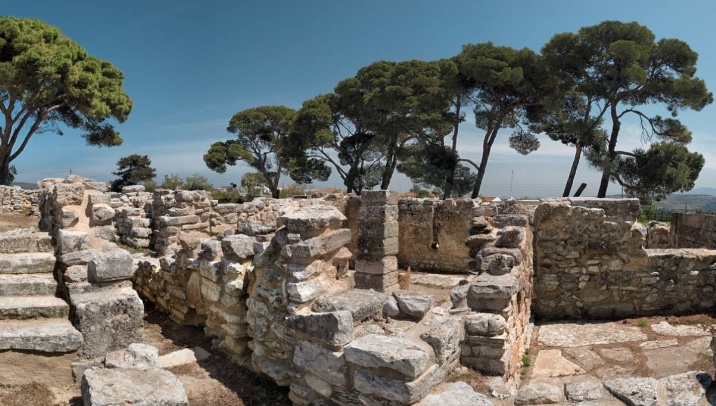
such as wood. These layers acted like shock absorbers: they took up the seismic energy and prevented the vibrations from being transmitted unchecked to the masonry. To this was added the technique of megalithic masonry, in which huge blocks of stone were fitted to one another carefully and without mortar; the fine squared ashlar of House A is the best example on the site. It produced buildings of great stability, which survived even violent shocks without appreciable damage. The ground plan and arrangement of the houses also took account of the danger of earthquakes: the buildings were so placed that the risk of collapse remained as small as possible, while the exits could be reached quickly in an emergency. In a region where the earth trembles again and again, this engineering is impressive to this day. What finally destroyed the mansions was not an earthquake but fire, in the general catastrophe that overtook Minoan Crete around 1450 BC.
The mansions of Tylissos
The mansions of Tylissos open a window onto the world of Minoan civilisation. They bear witness to a highly developed social order, to economic strength and to the technical genius of the Minoans. The place was already inhabited around 2000 BC, and scattered traces of still earlier houses go back into the 3rd millennium; it had its heyday in the Neopalatial period (c. 1650–1450 BC) and in the Postpalatial period that followed, down to about 1200 BC. All three houses have open courts, staircases to the upper floors, rooms for servants, storerooms, paved areas and well-considered water systems; one of them may even have had a third storey.
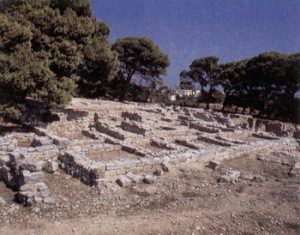
House A, with its storerooms, underlines the economic activity of Tylissos. It measured about 35 by 18 metres and comprised some two dozen rooms on the ground floor; a bronze axe and gold leaf were among the things found here. The house was entered from the east through a court with pillars. Its northern part was given over to two large magazines, and more than fifty great storage jars, or pithoi, were recovered from the building; the southern part was residential, arranged around a typical Minoan hall with its screen of piers and doors, a light well with a small columned portico, and a sunken lustral basin. A staircase led to the upper floor. In the magazines a wide range of goods could be stored, from foodstuffs to the products of craftsmen – evidence of well-organised logistics and the husbanding of supplies. This order allowed Tylissos not only to secure stability and prosperity at home but also to take an active part in trade with other centres of the Minoan world and beyond. In House B, the plainest of the three and perhaps a storage annexe of its neighbour, painted pottery and fragments of fresco came to light. The cistern
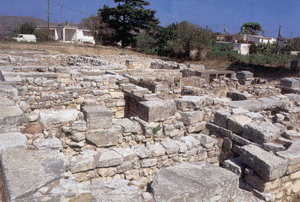
beside House C illustrates the advanced management of water. Since fresh water was scarce, such an installation was indispensable to the life of the settlement: systems for collecting and storing rainwater and spring water supplied the inhabitants not only with drinking water but also served agriculture – testimony to engineering that planned ahead. The cistern, a work of the Postpalatial centuries, is entered by a flight of steps, and remains of the conduit of clay pipes that brought the water to it also survive. House C itself, in which four corridors link the shrine, the stores and the living quarters and three staircases climbed to the upper floor, shows two successive building phases, one Neopalatial and one later; a Greek sanctuary was afterwards raised over its ruins. Tylissos remained inhabited even after the end of the Minoan palaces: in the 5th century BC the city was party to a famous treaty with Knossos, brokered by Argos, the inscription of which survives. A practical note: the site is generally open on Mondays and from Wednesday to Sunday, 8.30 am to 3.30 pm, and closed on Tuesdays; admission costs about 5 euros, and those under 18 are admitted free. The three houses lie on the edge of the modern village.
Savvathiana Monastery
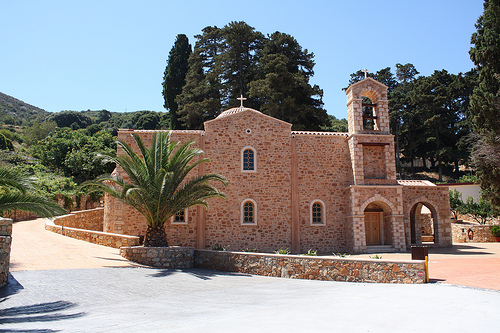
History and layout of Savvathiana Monastery: Savvathiana (Moni Savvathianon) is counted among the old monasteries of Crete. The exact date of its foundation is not known, but the written record reaches back at least to the Venetian period. Three churches survive: the two-aisled church of the Nativity of the Virgin and the Forty Martyrs, with an inscription of 1635; the church of St Antony; and the two-aisled cave church of St Antony and St Savvas. A stone bridge bearing the date 1535 crosses the seasonal stream and links the monastic buildings with the cave church and the cemetery. The complex has been a protected monument since 1935.
Local tradition places Savvathiana among the very oldest monasteries on the island, and even names AD 417 as the year of its foundation, though no document supports this. The monastery lies 440 metres above sea level, above the village of Rogdia, some 14 kilometres north-west of Gazi and about 20 kilometres from Heraklion, in a small valley thick with greenery and closed in by rock – a naturally defended position. The approach is by way of Rogdia, which can be reached from Heraklion, Ammoudara or Agia Pelagia; there is a car park at the entrance.
Find on the map
Introduction
The monastery’s roots are traditionally pushed back to the year 417. It is more likely that it was founded by monks from monasteries on the coast who were looking for a refuge from pirate raids; the foundation is sometimes placed in the second Byzantine period, between 961 and 1204, and attributed to a monk called Savvatios. The first mention under the name Savvathiana occurs in a Venetian document of 1549, which calls it the “monastery of St Antony, of the lord Savvatios”. The name is connected both with St Savvas, patron of the monastery at Almyros, and with its first owner or benefactor, a certain Savvatios. The Venetian archives refer to the house repeatedly: in those years it was one of the most powerful monastic communities of the district. In 1635 an inscription was set above the lintel of the church door with the date in Greek numerals, ΑΧΛΕ, which confirms that the monastery was standing and active at that time.
The architectural heritage
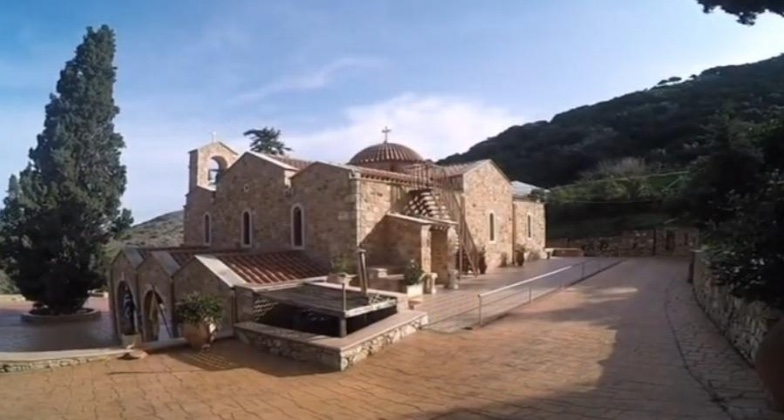
What strikes the visitor first about Savvathiana is its setting among high crags, which lend the place both calm and a certain grandeur. At its heart stands the katholikon, a two-aisled church without a dome, dedicated to the Nativity of the Virgin and to the Forty Martyrs – the aisle of the Forty Martyrs was added to the older church in 1950 – where a carved wooden iconostasis divides the nave from the sanctuary. An important part of the complex is the 15th-century cave church of St Antony and St Savvas, some 200 metres from the main buildings: this was the first church of the monastery, cut into an overhanging rock, and it may once have belonged to a separate small monastery, which makes it a unique witness to the early history of the site. The Ottoman authorities gave permission for it to be repaired in 1745. The aisle of St Savvas, added around 1954–55, and the church of St Antony in the traditional Cretan manner, built out of the need to provide space for worship quickly, show how the monastery adapted to the changing needs of those who lived in it.
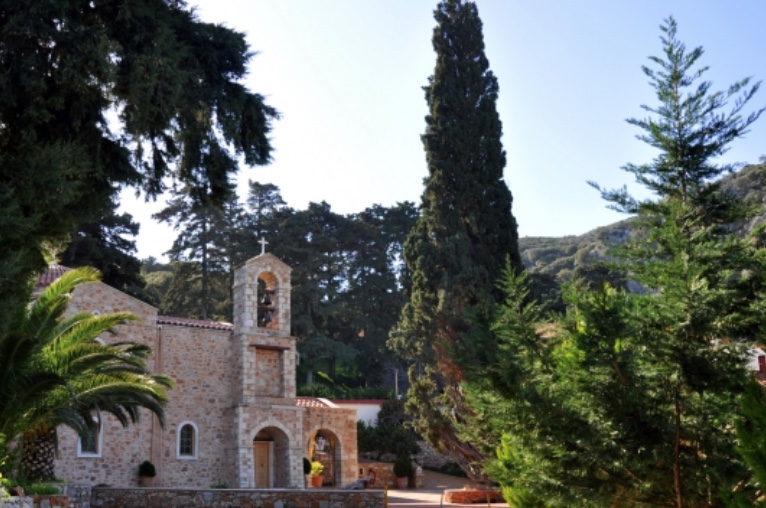
Equally impressive is the way the monastery fits into the terrain. Because the slope around the cave church falls away steeply, the cells and outbuildings were put up on the more level ground, producing the traditional arrangement of an Orthodox monastery with the katholikon in the middle. An aqueduct of 1799, renewed in 1843, supplied the community with water. The ossuary with its brick vault, added in 2002, and the old watermill preserved beside the stone bridge of 1535 – from which a path about 200 metres long leads to the ossuary and the cemetery – speak of a living tradition and of respect for the past. After the Ottoman conquest in the middle of the 17th century the monastery was laid waste: it was sacked in 1648, during the long siege of Candia, and the monks who resisted were enslaved, regaining their freedom only through the mediation of the Ecumenical Patriarchate, after which they rebuilt the house from its ruins. It was the only monastery in the district of Almyros and Rogdia to survive the Cretan War of 1645 to 1669; its monks took part in the rising of 1821, and as late as the German occupation of 1941–44 it sheltered people who were being hunted. By the end of the war the brotherhood had dwindled to almost nothing, and in 1946 nine nuns arrived from the Peloponnese. Savvathiana has been a convent ever since: the sisters paint icons, make mosaics, weave vestments on old looms, work traditional Cretan lace and tend gardens that flower abundantly. Callers are usually offered a glass of water and a piece of loukoumi. The feasts kept here include St Antony on 17 January, the Forty Martyrs on 9 March and the Nativity of the Virgin on 8 September.
Historical figures of the monastery
The foundation of the monastery in its present form is attributed to its first abbot, Nathanael, who survived a pirate raid and the destruction of the monastery of St Savvas – tradition speaks of three hundred monks killed there – and went on to build a new house in honour of St Antony. In doing so he not only kept the monastic tradition of the district alive but laid the foundation for the generations of monks and pilgrims who would later seek refuge and spiritual consolation within the walls of Savvathiana. The same name recurs after the catastrophe of 1648, when a monk Nathanael is remembered as the sole survivor who began the rebuilding.
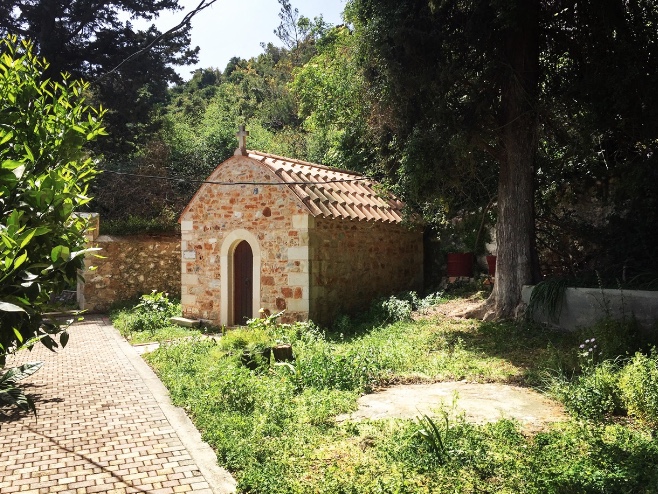
Maximos Margounios, too, left his mark on the history of the monastery, of which he is remembered as abbot. Born in Candia in 1549, he became a scholar and defender of Orthodoxy who spent his working life in Venice, where he taught at the Greek school – the future patriarch Cyril Loukaris was among his pupils – and where he died in 1602. He was Bishop of Kythira, published early editions of Greek and Byzantine texts, among them works of St John Chrysostom, wrote poetry and theology, and corresponded with humanists across western Europe. His writings and his pastoral work did much to preserve and spread the Orthodox faith in Crete through the hard years of Venetian and then Ottoman rule.
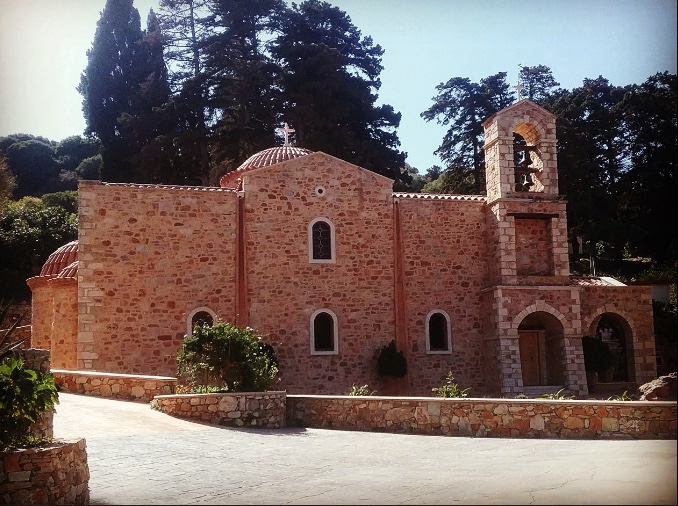
No less significant is Ioannis Kornaros, an icon painter who spent his youth at Savvathiana. He painted the well-known icon “Great art Thou, O Lord” (Megas ei Kyrie), a densely peopled composition long believed lost until it was rediscovered and restored in 1991; since then it has taken its place again among the treasures of the monastery and is venerated by the faithful. His most famous version of the same subject, dated 1770, is kept at Toplou Monastery in eastern Crete.
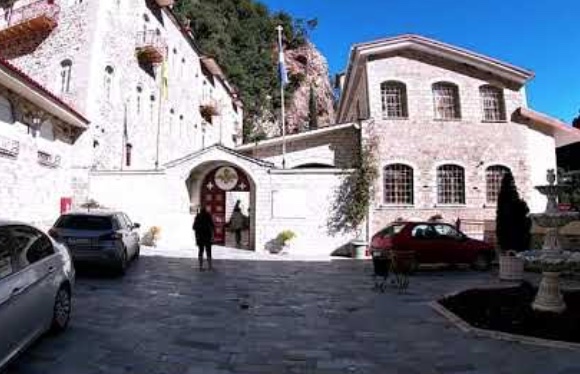
Evmenios Vourexakis, a learned monk and defender of the monastery, is remembered for his unbending will; he devoted his life to serving the community and protecting its sacred objects, and is held up as a model of steadfast faith and loyalty to spiritual ideals. His tomb is in the monastery, beside that of another fighter in the Cretan risings, Iraklis Kokkinidis. That such figures are bound up with it shows that Savvathiana is not only a place of prayer but also a centre of the cultural and spiritual heritage of Crete.
Agia Pelagia
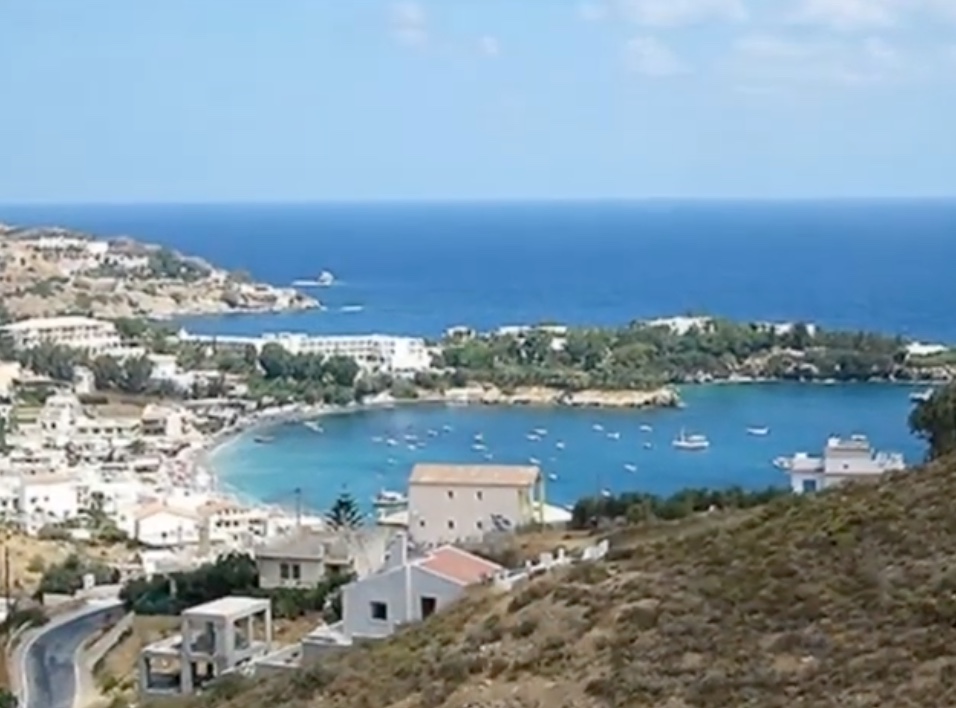
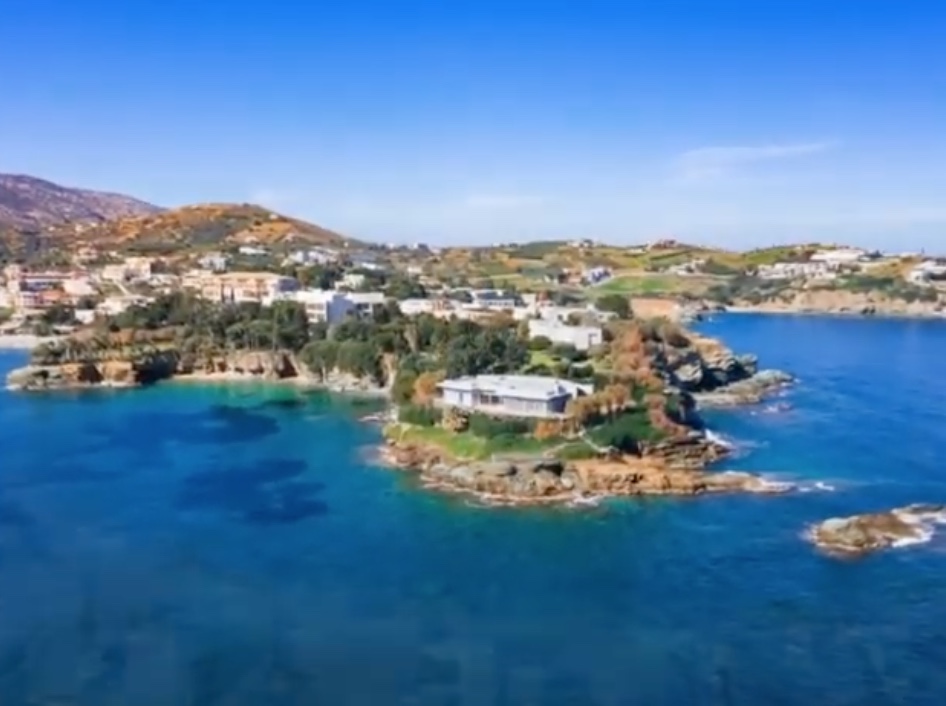
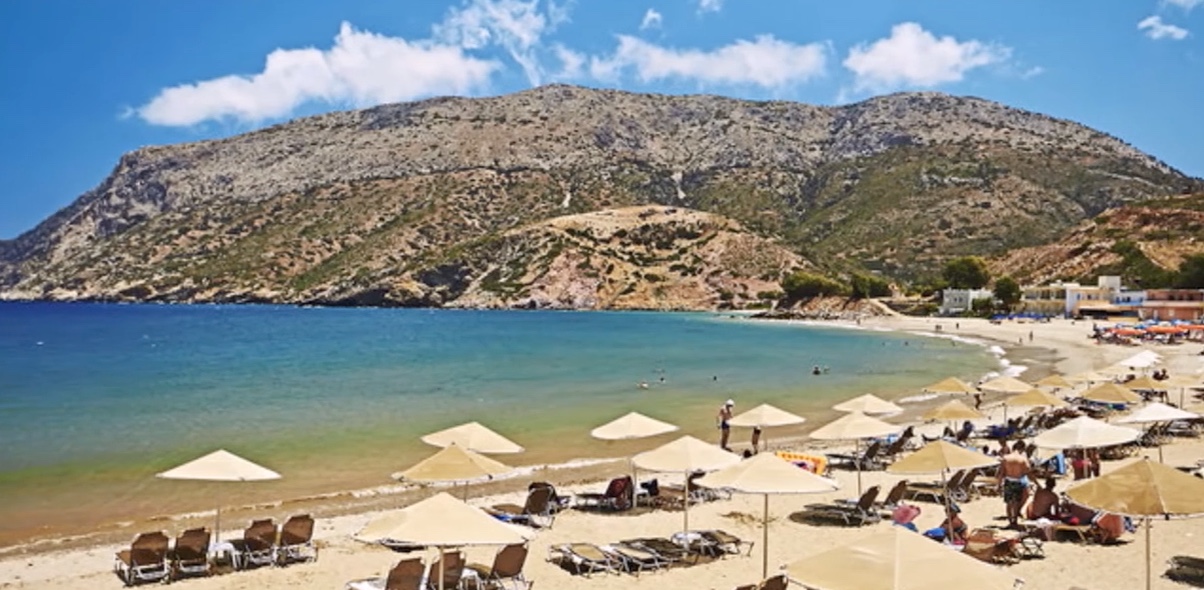
Agia Pelagia and ancient Apollonia: the modern seaside resort of Agia Pelagia, a little over 20 kilometres north-west of Heraklion, grew up on a bay that is associated with the ancient city of Apollonia, whose Hellenistic remains lie at the northern end of the bay. The coast has also been linked with a sanctuary of Eileithyia, goddess of childbirth – though the celebrated Cave of Eileithyia is at Amnissos, east of Heraklion. On nearby Cape Stavros, the ancient Cape Dion, stood a sanctuary of Zeus Soter, the Saviour; the lonely chapel of Agios Sozon now rises in its place, and opposite lies the island of Dia, which owes its very name to Zeus. Ancient history, Christian tradition and the harbour and beach facilities of a modern resort thus meet in a single holiday landscape.
It is a particular kind of place, where fine scenery, a long past and present-day comfort come together. Until a few decades ago it was no more than a tiny fishing hamlet and the farmland of the people of Achlada, the village on the hill above.
Find on the map
Introduction
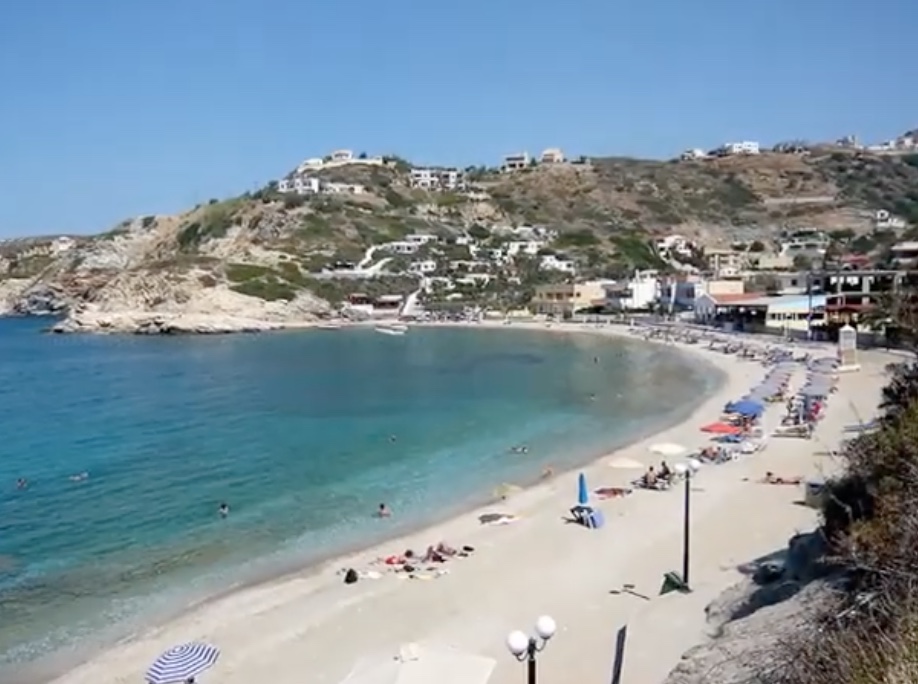
The resort is known for its calm water, its sandy beaches and a bay so nearly encircled by rocky headlands that it stays sheltered when the north wind is whipping up the open coast. It offers not only restful days by the sea but also the chance to absorb something of the atmosphere of history without giving up modern conveniences. It is this combination of natural beauty and historical heritage that makes Agia Pelagia attractive to travellers who want more from a holiday than sun and sea. A coastal footpath also starts from the bay, leading past small rocky coves to the neighbouring beaches.
The Church of St Pelagia
The little church, all that remains of a metochi – a dependent farmstead – of Savvathiana Monastery, stands right on the bay and gives the place much of its charm. It recalls the centuries-old history and religious life of the district, and the fact that the resort takes its name from this saint. Local legend adds that the icon of St Pelagia was found by the inhabitants in a cave on the shore, known for that reason as Evresi, “the Finding”.
Archaeological finds
The finds made at the locality of Kladotos – among them Minoan chamber tombs, buildings of the 4th century BC and public buildings that probably belonged to ancient Apollonia – reveal how much history this stretch of coast holds. Arthur Evans was the first to investigate here, examining Late Minoan chamber tombs at Kladotos that contained pottery and a fine sealstone showing a deity as mistress of wild animals; John Pendlebury later recorded traces of a Late Minoan settlement. The Minoans also quarried the local blue-green schist, which was used in building the palaces. In 1971 Stylianos Alexiou and Athanasia Kanta uncovered buildings ranging from the Middle Minoan to the Roman period, including a prytaneion of the 4th century BC measuring 15 by 6.30 metres – the official building in which the sacred fire of the city was kept, where the council and magistrates met and where foreign envoys were entertained. Potters’ workshops and private houses underline the importance of the area as a cultural and economic centre in antiquity. Around 171 BC Apollonia was suddenly destroyed by the people of Kydonia; afterwards the Knossians laid claim to the territory and occupied it.
Panigyri – the patronal festival
The annual panigyri in honour of St Pelagia and St Marina on 17 July is a colourful occasion that draws local people and visitors alike. After the service there is eating, drinking, music and dancing – a good opportunity to see Greek hospitality, its customs and its popular culture at close quarters.
Fodele – the home of El Greco
Domenikos Theotokopoulos and Fodele: Domenikos Theotokopoulos, known in Italy and Spain as El Greco (“the Greek”), was born in Crete in 1541. The year is deduced from a note in his own hand of 1606, in which he describes himself as sixty-five years old. His father, Georgios, was a merchant and tax collector, and his elder brother Manoussos a prosperous merchant. The Historical Museum of Crete – which holds the only two original paintings by him on the island – traces his early artistic formation to the Cretan School of icon painting; afterwards the painter worked in Venice, Rome and Toledo. Fodele has a museum devoted to him and a local tradition that ties the village to the master’s name – though scholars still debate whether he was born in Fodele or in Candia, the present-day Heraklion.
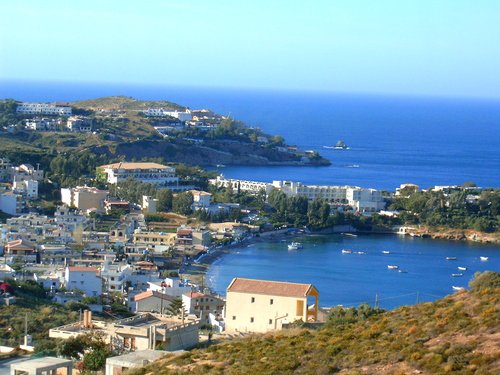
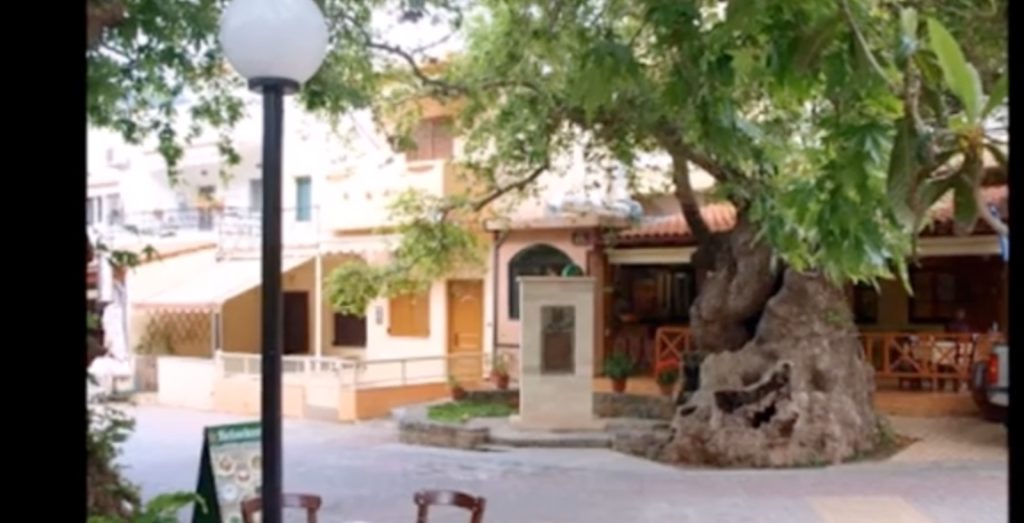
The village of Fodele, set among plane trees and fragrant citrus groves, is one of the most picturesque places in Crete. It lies about 30 kilometres west of Heraklion in a fertile valley, only some 60 metres above sea level and three kilometres from the coast; about 550 people live here all year round. According to the local explanation it owes its name to an early settler called Fodele: “Fodelle” appears in Venetian documents as early as the 13th century, and the census of 1577 records the place as “Fodhele”.
Find on the map
Introduction
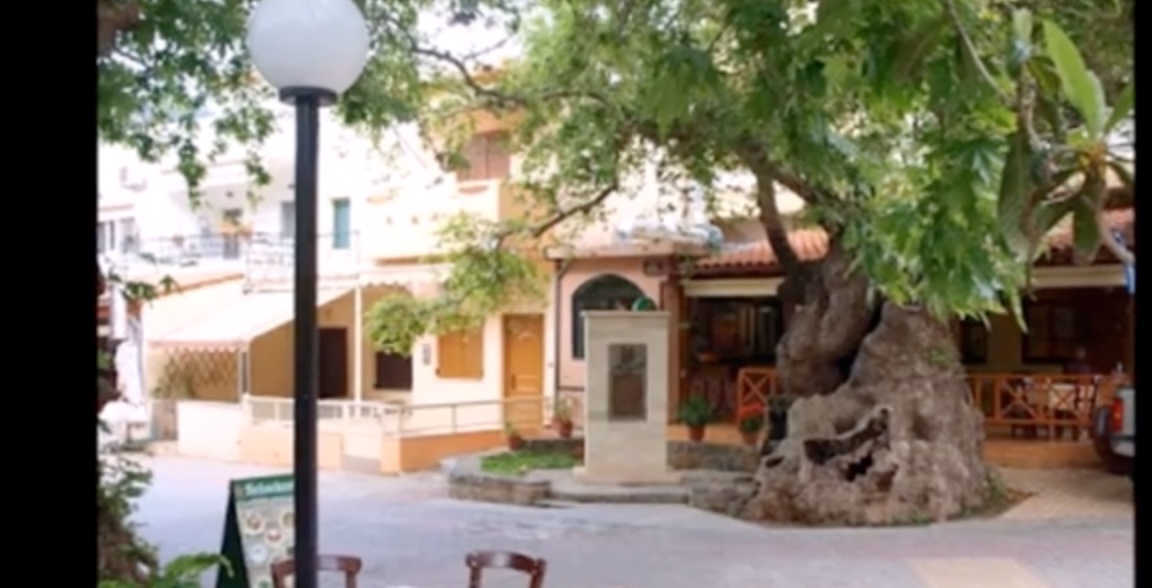
The lanes are filled with the rustle of leaves and the sound of the river Pantomantris, which runs through the village and reaches the sea in an attractive bay. Tradition has it that this quiet bay once served as the trading harbour of the ancient city of Axos, and that a settlement called Pantomatrion stood here in antiquity. To this day the inhabitants live from oranges and lemons, olives, vegetables and livestock; in spring the whole valley smells of orange blossom. Paths follow the river to small caves and waterfalls, and a few fortified towers, the so-called koules, still stand from Ottoman times. In the surrounding hills is the 17th-century monastery of Agios Panteleimon, which played a part in the Cretan revolt of 1866 to 1869.
A church as an introduction to art
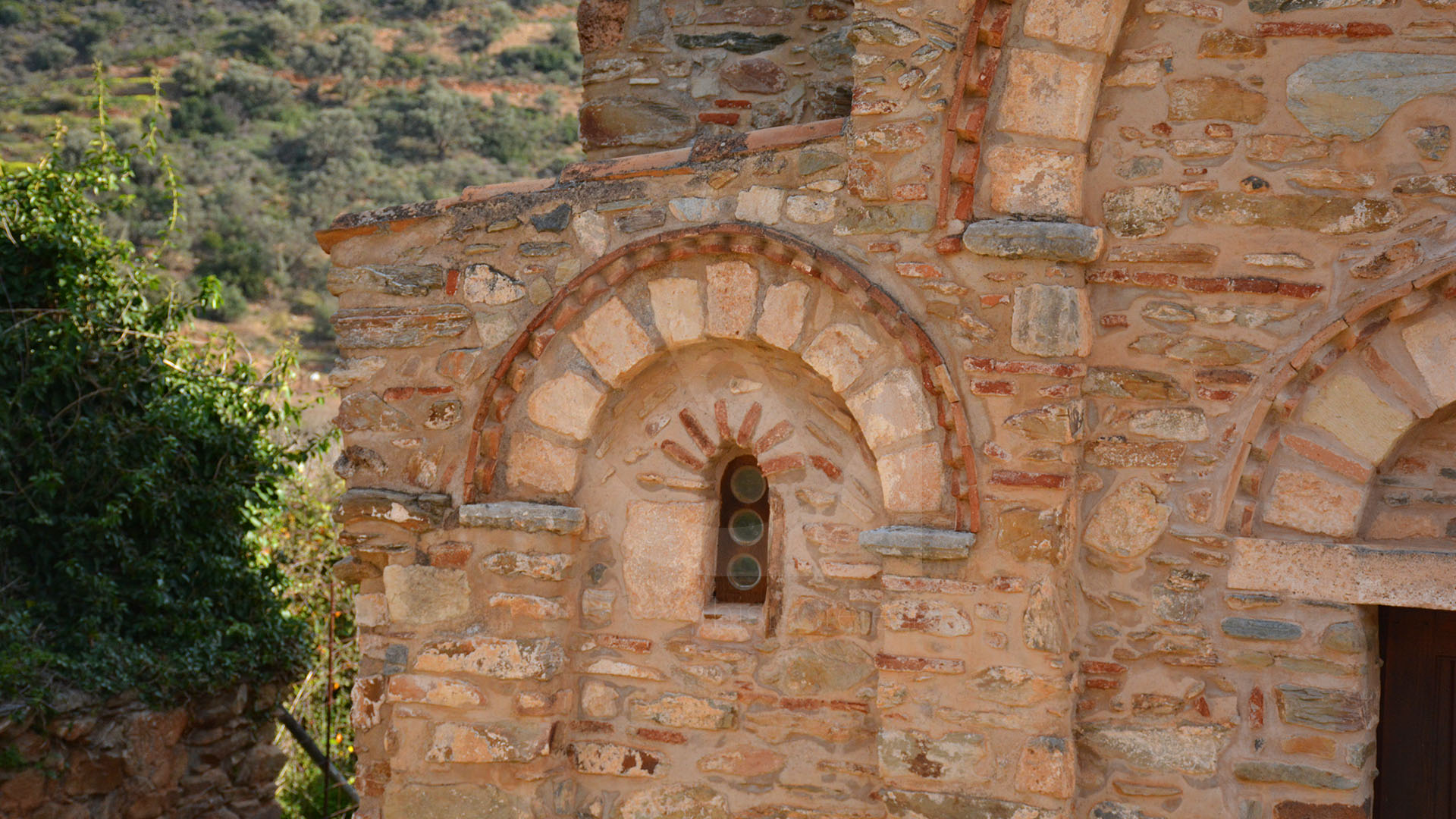
Next to the Museum of Domenikos Theotokopoulos, on the edge of the village about a kilometre from its centre, in the old locality of Skotini, stands one of Fodele’s treasures: the Church of the Presentation of the Virgin (Εκκλησία των Εισοδίων της Θεοτόκου), of the 11th century. The museum itself occupies a house traditionally held to be the painter’s childhood home; it was restored from 1982 with funds from the Greek Ministry of Culture, has been open since 1998, and shows reproductions of his works, material on his family and a room fitted out as a painter’s workshop. The small church, almost a thousand years old, is beautiful and has an atmosphere of quiet devotion. It was built over the eastern part of a three-aisled Early Christian basilica of the 6th century, of which stretches of wall, a baptistery with marble revetment and two columns built into the walls still survive.
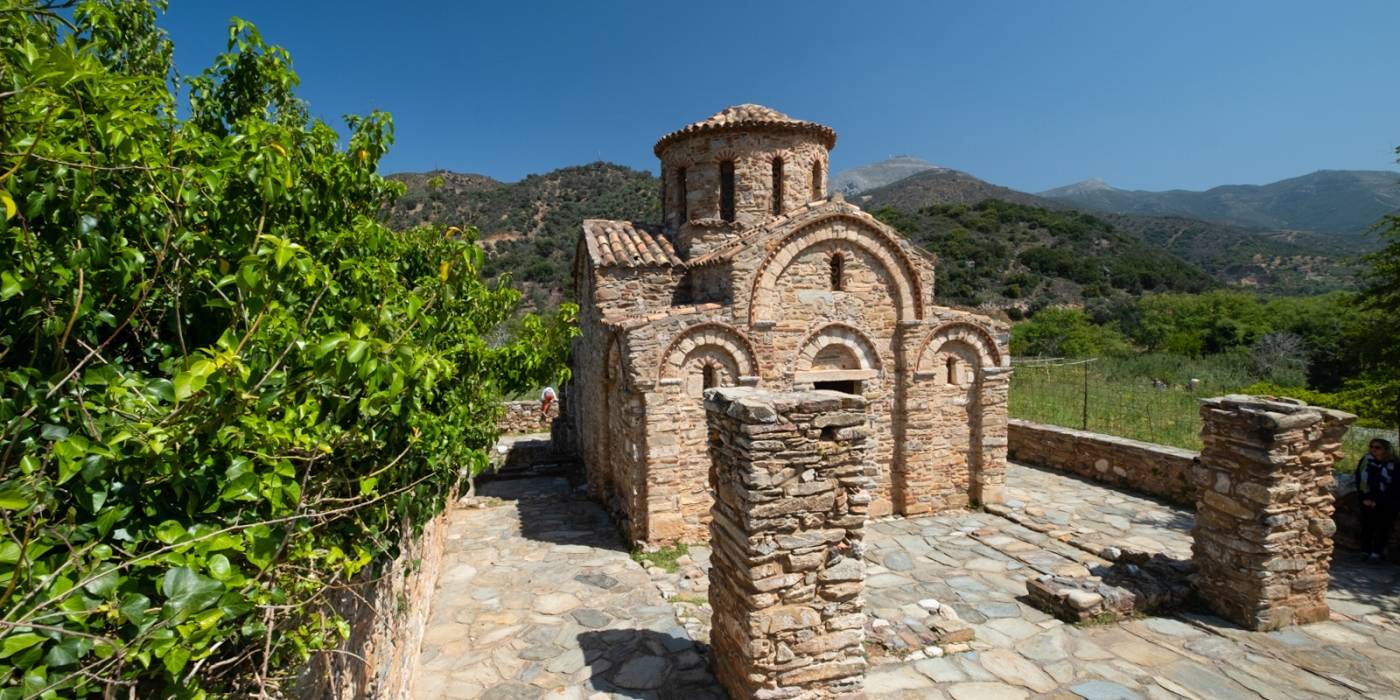
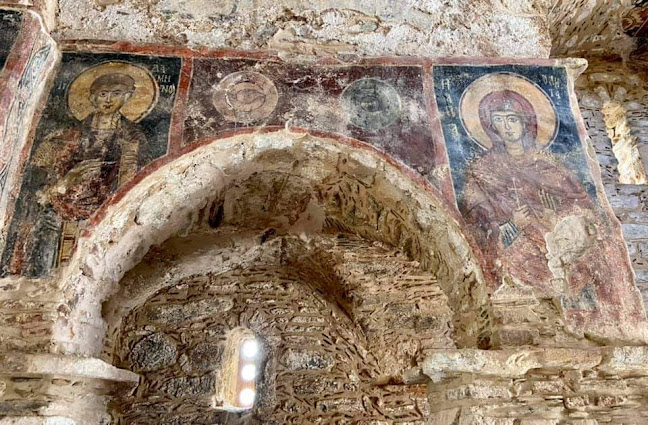
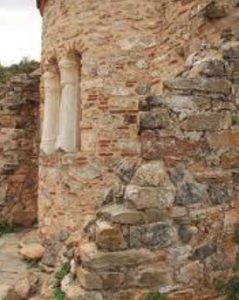
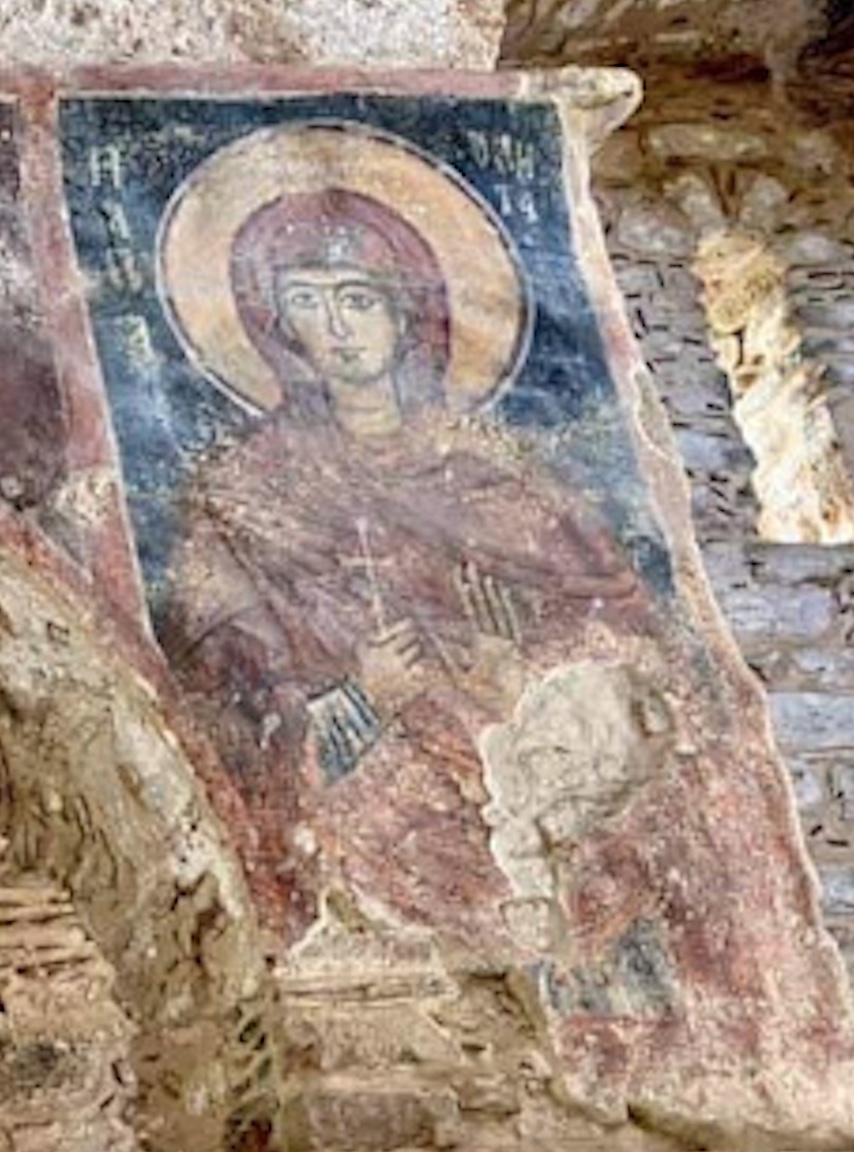
Its architecture embodies the classic features of the Byzantine style as they appear in the Orthodox churches of Crete: it is a cross-in-square church on four columns, without a narthex; the cylindrical dome has eight narrow windows with brick arches and the conical roof typical of the island, and blind arcading on the walls betrays the influence of the school of Constantinople. The walls carry three layers of frescoes, which tell of the rich spiritual life and deep faith of the inhabitants: a layer of high quality from the middle of the 11th century, which draws directly on Constantinopolitan models; a second of the 13th century with single figures such as the Virgin and Child and St Anne; and a third of 1323, paid for by a man named Melissourgos, with bishops and Gospel scenes in an expressive, popular manner. A marble chancel screen also survives. The church is open on Saturdays and Sundays from 8.30 am to 3.30 pm between May and October, and on Sundays from 8.30 am to 3.30 pm between November and April; its patronal feast falls on 21 November.
Tradition holds that it was this very church that inspired the young Domenikos Theotokopoulos to take up icon painting. It may be objected that great artists belong less to the countries where they were born than to the peoples among whom they worked – just as Maximus the Greek, who accomplished his life’s work in Russia, became wholly one of its own. All the same, the Byzantine roots of El Greco’s aesthetic are unmistakable – he went on signing his pictures in Greek letters to the end, often adding the word “Cretan” – above all in his singular play of light
and in his particular way of looking at the world, which seems to point beyond earthly things. Both are undoubtedly connected with his early years of work in Crete.
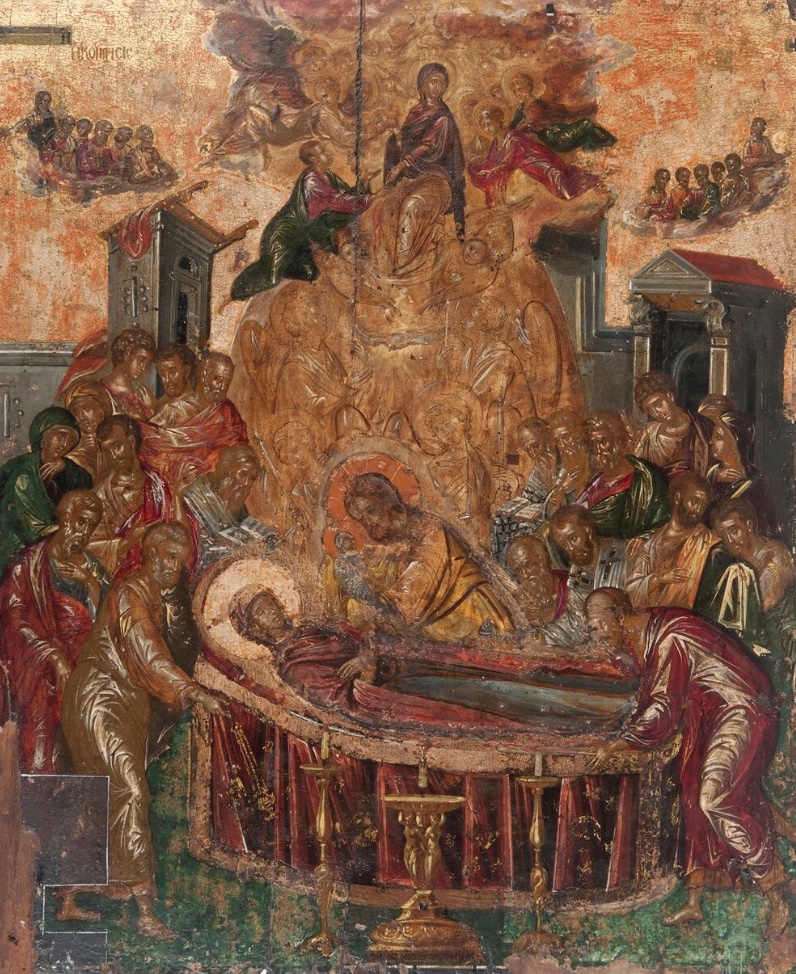
On this foundation he developed his unmistakable style, carrying the Byzantine inheritance over into the European culture of the Renaissance. Although El Greco made a major contribution to Spanish and European art, his work remains inseparable from its Cretan and Byzantine roots. Below is one of his icons from the Cretan period: the “Dormition of the Virgin”, painted before 1567, signed “Domenikos Theotokopoulos o deixas” and now kept in the Church of the Koimisis at Ermoupolis on Syros, where it was identified as his work only in 1983.
It is precisely these roots in icon painting that would distinguish the works of this Greek who was later to become a great Spanish and European painter, above all in his Toledo period. In this sense the building is not only the church of the “Presentation of the Virgin in the Temple” but also an entrance into the temple of art – for the small Greek boy who was to become the great El Greco.
The life of El Greco
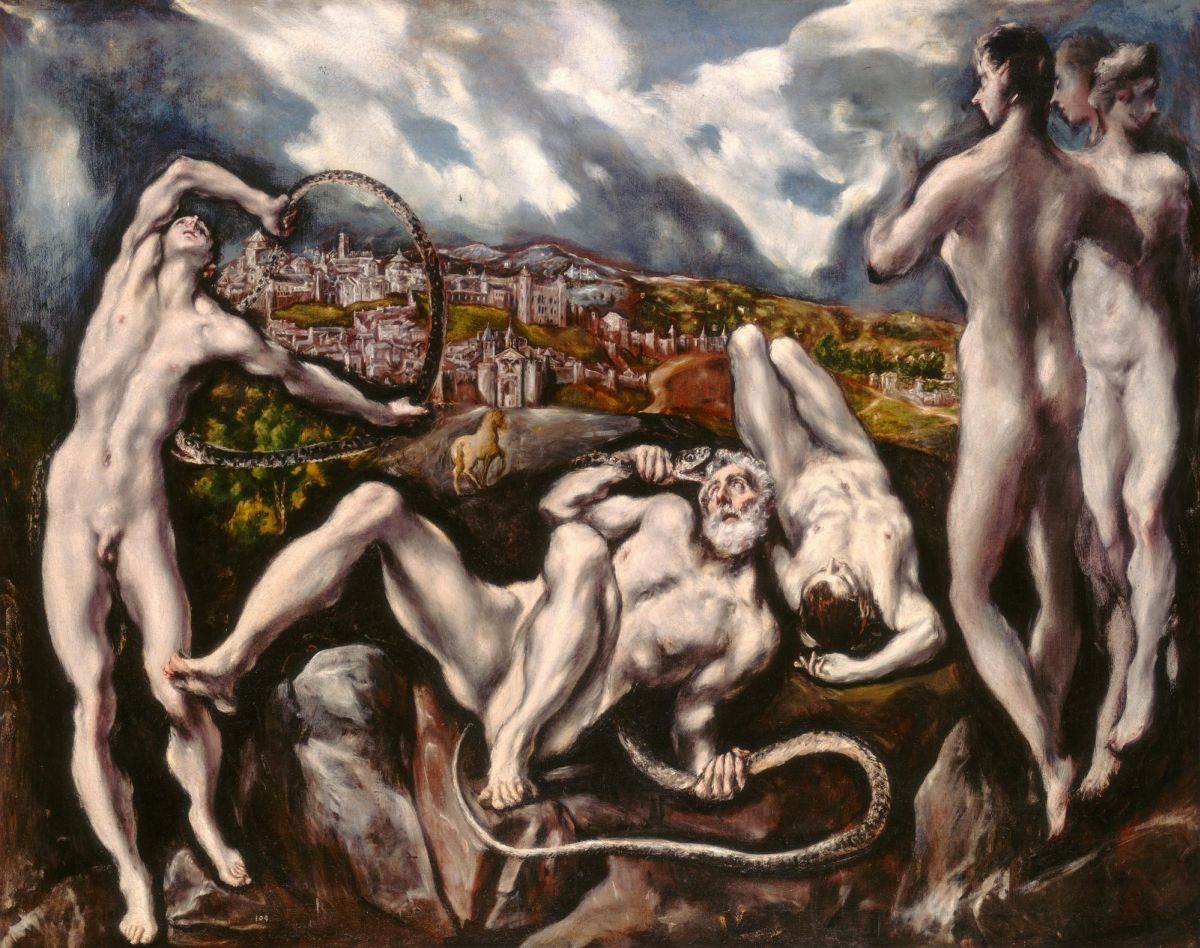
The painter said to have been born here in 1541 left a lasting mark on the art of the Renaissance. He made his name with unmistakable religious pictures and portraits, charged with deep spiritual content and painted in a highly expressive manner.
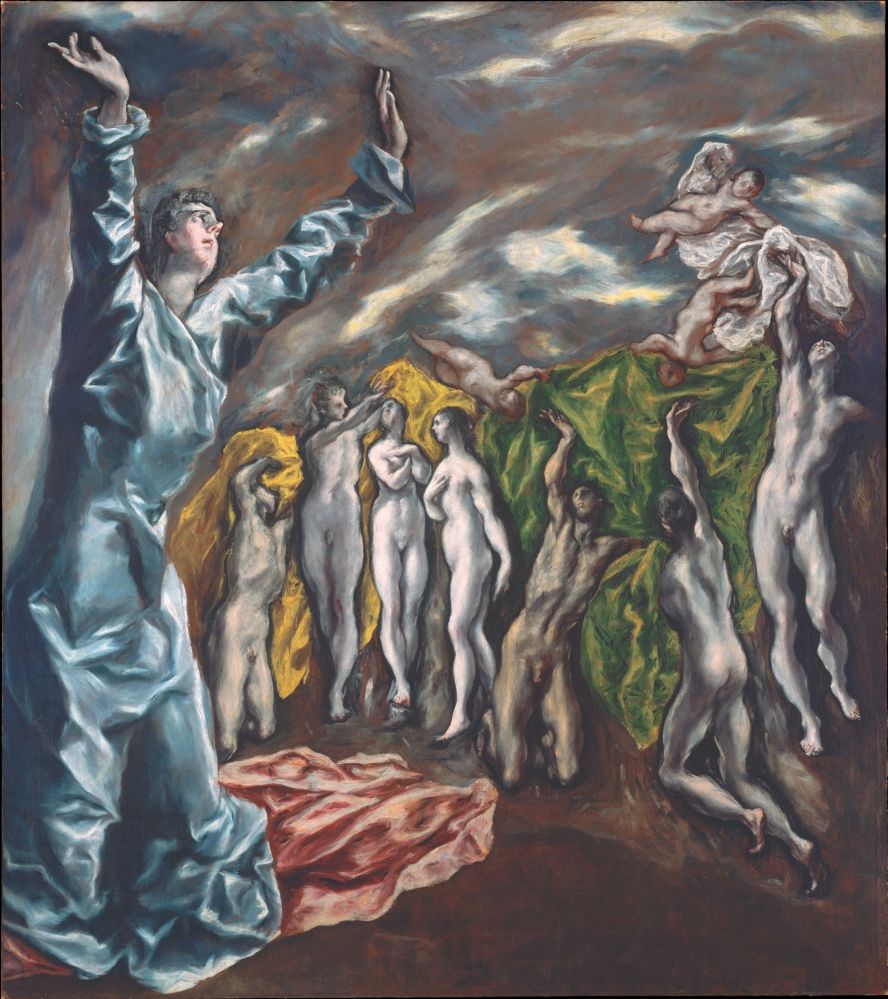
The young Domenikos began his career as an icon painter in Candia, the present-day Heraklion and then the capital of Crete, where his talent showed itself early: a document of 1563 already calls him “maestro Domenigo”, that is, a master of his guild, and in June 1566 he signed a contract as a master painter. But the wish to develop his art took him around 1567 to Venice, the cultural metropolis of the age, where he could study the works of great Renaissance masters such as Titian and Tintoretto. The Venetian years shaped his style decisively; the traits of Mannerism now came to the fore. Around 1570 he moved on to Rome, where the miniaturist Giulio Clovio recommended him to Cardinal Alessandro Farnese and he was given lodging in the Palazzo Farnese; in September 1572 he was admitted to the painters’ Guild of St Luke. Of Michelangelo he is reported to have said that he was a good man, but did not know how to paint.
The search for new horizons finally led Theotokopoulos to Spain. In 1576–77 he settled for good in Toledo, where he is recorded from July 1577 and which became his second home; here he lived with Jerónima de las Cuevas, whom he never married and who in 1578 bore him a son, Jorge Manuel, later a painter himself. In Toledo El Greco produced most of his famous works, among them
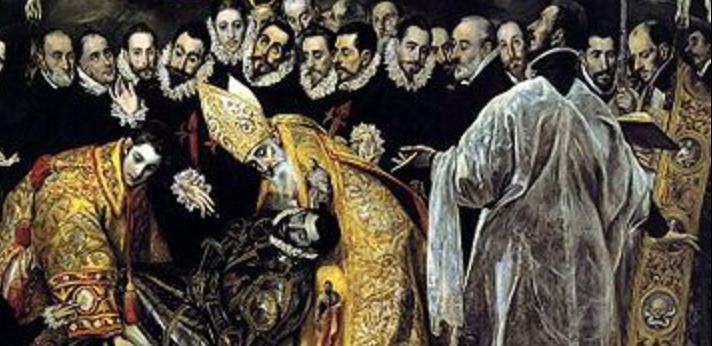
“The Burial of the Count of Orgaz”, painted between 1586 and 1588 for the church of Santo Tomé – a canvas 4.80 metres high and 3.60 metres wide, commissioned by the parish priest Andrés Núñez, which shows St Stephen and St Augustine coming down from heaven to lay Don Gonzalo Ruiz de Toledo, who died in 1323, in his tomb with their own hands; the boy in the foreground is the painter’s son, and one of the mourners is El Greco himself,
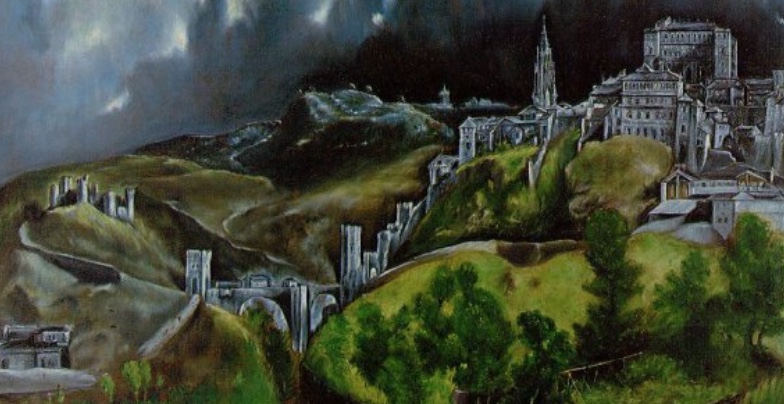
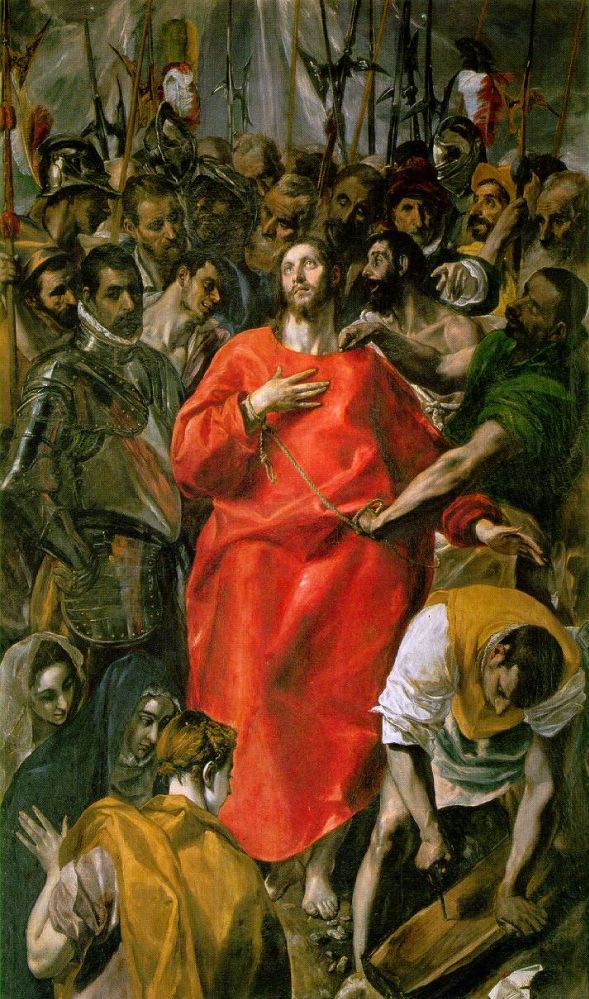
the “View of Toledo” of the late 1590s, and numerous portraits and religious compositions such as the “Disrobing of Christ” (El Expolio) for the cathedral, contracted in 1577, the “Assumption of the Virgin”, painted in 1577–79 for Santo Domingo el Antiguo and now in Chicago, and the “Martyrdom of St Maurice”, which Philip II rejected. His works are marked by elongated figures, an intense use of colour and light and a deep spiritual content – qualities that make his style unique and instantly recognisable.
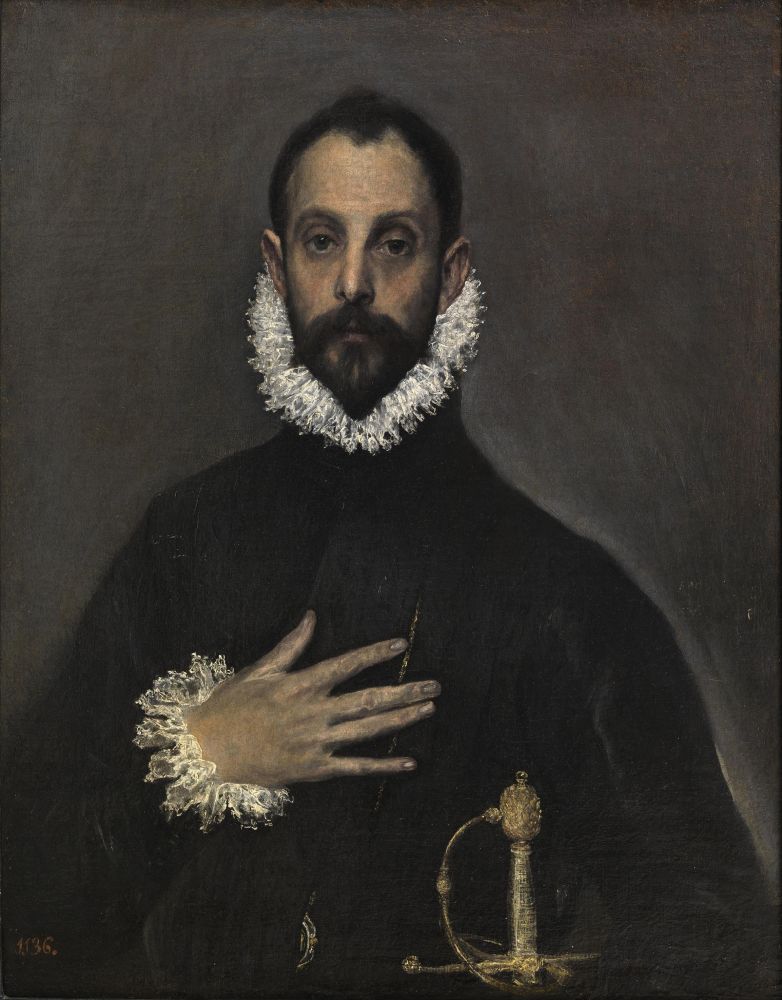
Although El Greco was never fully recognised in Spain during his lifetime, after his death in Toledo on 7 April 1614 – he was buried in Santo Domingo el Antiguo – his work began to exert a lasting influence on the course of European art; it was above all the painters of modernism who rediscovered him in the 19th and 20th centuries, Picasso among them, helped by Manuel Cossío’s catalogue of 1908 and Julius Meier-Graefe’s “Spanish Journey” of 1910. Today he is regarded as one of the greatest masters of his age, and his works hang in the most important museums of the world.
A birthplace with a question mark
The question mark over the birthplace of Domenikos is not there by chance: no document records exactly where he came into the world, and all we have are indirect indications. Candia, where his father and brother did business and where he is first recorded as a painter, has its advocates too.
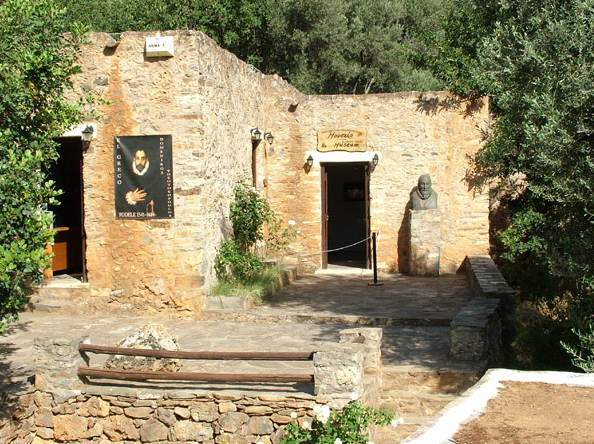
Even so, Spanish professors and students, after long research carried out in cooperation with the Spanish consulate in Greece and led by Tormo, professor of archaeology at the University of Valladolid, endorsed the local tradition that Fodele is the birthplace of Domenikos Theotokopoulos. On 27 July 1934 the scholars travelled to the “charming little village of Fodele” to pay their respects to the great painter and to the place of his birth. They brought a commemorative plaque with them – a bronze plate set into a block of rock from Toledo – and set it up in the village. Its inscription reads, in substance: “The Faculty of History of the University of Valladolid, beating heart of Castile, dedicates to Fodele this tablet, hewn from the rock of Toledo, in memory of the glory of Domenikos Theotokopoulos. July 1934.” The museum itself, about a kilometre from the village centre, is a stone house of the post-Byzantine period; its restoration began in 1982 with a grant from the Greek Ministry of Culture and was carried out with care under the ministry’s supervision, and it has been receiving visitors since 1998.
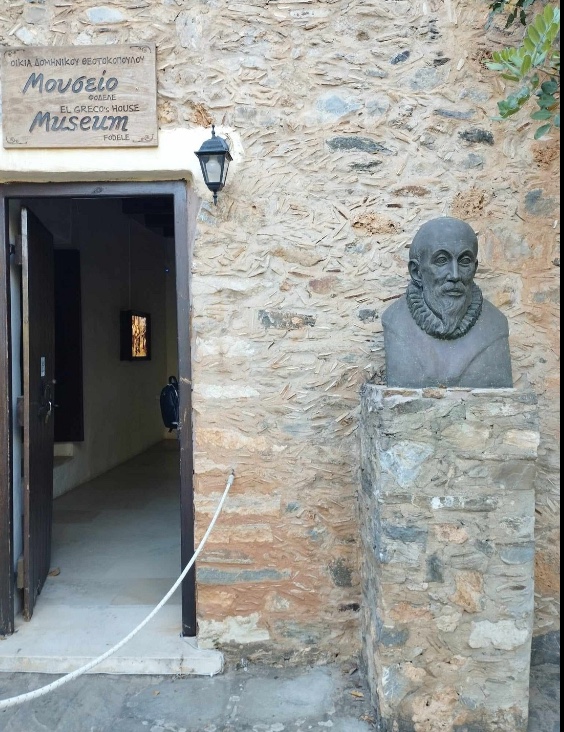
At the entrance to the museum stands a bust of El Greco, the work of the sculptor Aparti, presented to the village in 1964, the 350th anniversary of the painter’s death – an emblem of the lasting bond between the artist and his homeland.
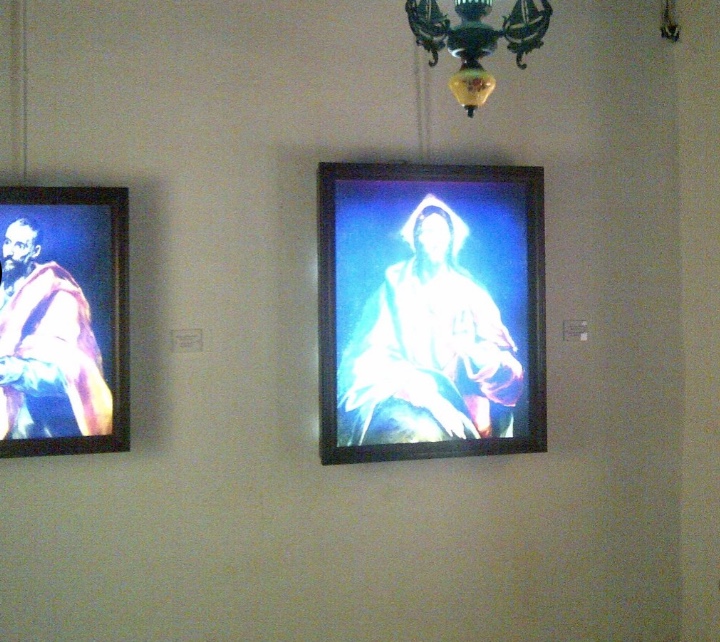
The museum shows reproductions of El Greco’s works, among them a copy of the “Christ Carrying the Cross” whose original hangs in the Prado in Madrid. Originals by Domenikos Theotokopoulos can be seen in Crete only at the Historical Museum in Heraklion, which owns the “View of Mount Sinai and the Monastery of St Catherine”, painted around 1570–72, and the “Baptism of Christ” of about 1567–69 – both from his Italian years, and the only originals by the painter on the island. But one does not go to Fodele to look at originals; one goes to absorb the setting from which the artist came.
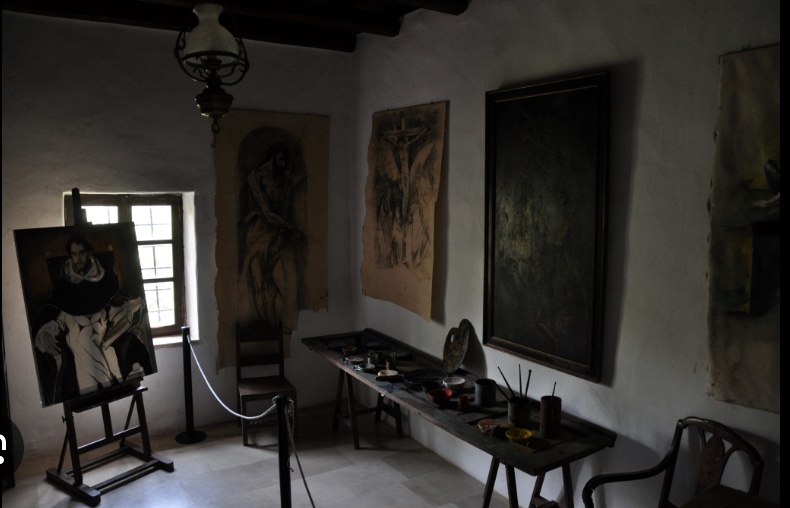
One of the rooms is fitted out as a workshop and invites visitors to imagine themselves in the painter’s working surroundings. Also on show are rare photographs and documents relating to the history of the village and to the cultural events held in El Greco’s honour, including pictures of the visit by the professors from Valladolid. The well-lit reproductions offer the chance to see in one place what is otherwise scattered through the museums of Europe and beyond – Toledo, Madrid, New York, Chicago. There is also a good deal to learn about El Greco’s family and forebears: his father Georgios, a merchant and tax collector who died in 1556, and his elder brother Manoussos. And directly opposite stands the venerable thousand-year-old church of the Virgin, which according to tradition was the font in which the great master’s aesthetic was born.
Notes on the route
The route “El Greco. Heraklion – Fodele” leads through the western suburbs of Heraklion to Tylissos, to Savvathiana Monastery, to Agia Pelagia and finally to Fodele. It brings together Minoan monuments, Orthodox monasteries, archaeological sites on the coast and the life story of Domenikos Theotokopoulos, who became known as El Greco. All the stops lie within the municipality of Malevizi, and the roads are paved throughout. Allow a full day for the whole stretch with all the visits.
Tylissos and the Minoan mansions
Tylissos was a Minoan settlement with large residential complexes, waterworks and traces of a busy economic life, occupied from the Early Minoan to the Late Minoan period. It was first excavated by Joseph Hatzidakis between 1909 and 1913, with further campaigns by Nikolaos Platon in 1953–55 and Athanasia Kanta in 1971; a cistern and an aqueduct with clay pipes came to light, along with a storage jar inscribed in Linear A, stone horns of consecration and clay figurines of people and animals. The archaeological material shows its links with Knossos and other centres of Crete. This is not a “palace” in its own right but an urban quarter, which makes the everyday side of Minoan civilisation visible.
Savvathiana Monastery
Savvathiana is an old Orthodox monastery in a naturally protected mountain setting, 440 metres up above Rogdia. Its ensemble includes three churches, among them the cave church of St Antony and St Savvas, the bridge of 1535, the cemetery and the ossuary. The monastery survived Ottoman attacks – it was sacked in 1648 and rebuilt – and was later given new life by a community of women: nine nuns came from the Peloponnese in 1946, and it has been a convent ever since.
The monastery is associated with the names of two fighters for the liberation of Crete, Evmenios Vourexakis and Iraklis Kokkinidis, both of whom are buried here.
Agia Pelagia and ancient Apollonia
The present-day resort has grown up beside the ancient harbour of Apollonia. Archaeological finds – buildings, amphorae and cult objects, studied first by Arthur Evans and then, more extensively, by Stylianos Alexiou and Athanasia Kanta – show that the bay was bound up with seaborne trade and mattered long before modern tourism.
Fodele and El Greco
Fodele is traditionally regarded as the birthplace of Domenikos Theotokopoulos (1541–1614), who entered the history of art under the name El Greco. The painter began in the Cretan tradition of icon painting, a master in Candia by 1563; he then worked in Venice from about 1567 and in Rome from 1570, and produced his mature works in Spain, where he lived in Toledo from 1577 until his death. That is why his style unites Byzantine spirituality, Italian painterly culture and Spanish expressive force.
On the name “El Greco”
El Greco is the painter’s Spanish nickname and means literally “the Greek”. In the Greek tradition he is Domenikos Theotokopoulos; throughout his life he signed his pictures with his name in Greek letters, often adding Kres, “the Cretan”. This double name reflects his Cretan origin and his long artistic life far from Crete.