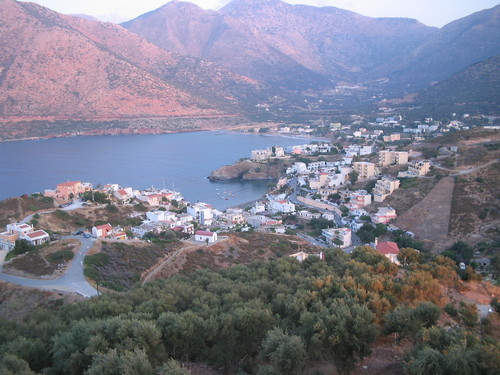
Bali – bay, beaches and resort on the north coast of Rethymno
The most complete guide to Crete: 221 places on the map, 23 routes and 49 articles — with photos, videos and the story behind every place. Everything is open and free: no sign-up, no paid sections and no advertising, open or hidden. You can install the guide on your smartphone as an app.
Routes drawn along real roads
Weather at every stop
Full-text search
“Near me” by geolocation
Create your own printable itinerary
Satellite, terrain, dark mode
Works offline
⌕
Searches 1.7 million characters of descriptions, not just names
—places
4regions
—routes
—with video
Search results
—
Interactive map
Find what is near you
Filters narrow the map and the list at once. Zoom out and pins group together.
Region
Category
Фильтры карты
Landmarks
Featured places
RegionCategory
Routes
Ready-made day trips
Individual places
Articles about landmarks
Bali: the bay, its beaches and an old harbour village
Bali (Μπαλί) is a quiet coastal village set deep inside the bay of the same name on the north coast of Crete, roughly halfway between Rethymno and Heraklion – about 30 kilometres east of the one and 43 kilometres west of the other – and only a short distance off the national road, which makes it easy to reach from any part of the island. The bay opens towards the west rather than the north, so it is sheltered from the prevailing summer winds and the sea is usually calmer here than on the open coast; fresh-water springs fed from the Psiloritis range seep into the sea along the shore, which is why the water often feels noticeably cool. The shoreline is broken into a series of small coves, one behind the other, and the village itself is hilly, with the beaches strung along successive bays – walking from one end of the resort to the other takes about half an hour. The best-known beaches are Livadi, Limani and Karavostasi. Livadi, the first and largest, takes its name from the meadows (livadia) of the little valley behind it; it lies in the most open of the bays and so is the one most exposed to the wind, and it is also the busiest and has the most parking. Beyond it come the two quieter, undeveloped coves of Kouskouras at Livadi’s eastern end, then Varkotopos with its shallow water and rocky edges that suit snorkelling, the beach beside the fishing harbour (Limani, the “old port”), enclosed by steep slopes, and finally Karavostasi, a small cove framed by rocks and sea caves which many consider the loveliest of all. A further beach, Agios Nikolaos, lies a little under two kilometres away. Sand, a gently shelving entry into the water, sunbeds and parasols make the beaches pleasant for families with children, and all of them have lifeguards in season; most are narrow, however, and fill up in July and August. Tavernas and cafés line the shore, serving Cretan cooking, and the harbour quay is the place for an evening meal with the boats at your feet.
From ancient Astale to modern Bali
The present-day resort has grown up on a site associated with ancient Astale (Astali), the harbour of the city of Axos in the mountains inland. Venetian charts render the name as Porto de Atali, from which the medieval form Atali derives. The ancient settlement has not yet been securely located by archaeologists, so it is wiser to speak of the presumed site of old Astale than of a proven identity with the modern village. Myth has its place here too: the mountains south of the village are called the Talaia Mountains after Talos, the bronze giant who guarded Crete and who, according to legend, paused here on his circuits of the island. Old paths survive in the surrounding country, leading into these hills and on to the villages of the Cretan interior; the cave of Melidoni, one of the most important caves of the island, is only about six kilometres away.
The monastery of Atali and the shrines round about
Above the bay stands the monastery of St John the Baptist (Moni Timiou Prodromou), known as the monastery of Atali (Attali) or the monastery of Bali. It lies some 800 metres off the national road, on the eastern slope of the hill of Agia Ypakoi, about 1.3 kilometres from the beaches and reached by a surfaced road, and from its terraces there is a wide view over the sea. It is a community of monks. Its principal feast is kept on 29 August, the day of the Beheading of John the Baptist; 24 June, the feast of his Nativity, is celebrated as well. In the village itself the church of the Holy Trinity is honoured, and about three kilometres away stands the church of the Panagia Charakiani, whose feast falls on 15 August. These sanctuaries bind the holiday shore to the monastic and farming life of Mylopotamos.
The history of the monastery can be traced in some detail, and local tradition takes its origins back to the 14th century. It is first mentioned in 1628, in a lease; around 1635 there stood here only a small chapel and a few modest cells. Between 1635 and 1640 came the great building campaign: the imposing gatehouse, mill, olive press and cheese dairy were built, in 1638 the cells west of the church were given an upper storey, and by about 1640 the refectory was finished, preserving rare 17th-century wall paintings. The complex is laid out on two levels because of the sloping ground, with stables near the entrance, and the old mill, pottery workshop and bakehouse further in; unusually for Crete, the church does not stand in the middle of the courtyard but on the north-eastern side, on its own level, and a heavy door once cut off the stair to the church as a precaution against pirate raids. The church has two aisles: the small Byzantine core in the north-east, a single-room chapel of the late 15th century with frescoes of good quality, was later extended to the south and west, and the south façade carries rich relief decoration with Mannerist details. Fountains were added between 1761 and 1791, and the carved wooden iconostasis dates from 1837. During the Cretan War, between 1646 and 1669, the monks sent their icon of the Virgin to Sifnos for safekeeping; in the revolution of 1821, and again in 1866–69, the bay below served as a landing place for supplies to the insurgents, and the monastery suffered for it. In the uprising of 1866 it was desecrated and looted by Ottoman troops; in 1900, with only two monks remaining, it was declared dissolved and placed under the monastery of Vosakos. It was listed as a protected monument in 1979, and in April 1983 monks returned and began the restoration. Today a small community lives here under the coenobitic rule, and visitors are welcome to look round the courtyards and the church.
Sea and paths
Excursion boats leave the little harbour and run along the coast with its sea caves and rocky headlands; a diving school is based here as well, and watersports operators work from the beaches. On land, Bali makes a convenient starting point for trips to the monastery of Atali, to the cave of Melidoni, to ancient Axos and to the mountain villages on the slopes of Psiloritis. Regular buses on the Rethymno–Heraklion line stop near the village roughly every hour in each direction, and Heraklion airport is about fifty minutes away by car. The combination of a sheltered bay, tavernas, short walks and historic sites explains why Bali suits leisurely holidays as well as the exploration of the central part of the district of Rethymno.
Before the coming of tourism Bali was a small fishing settlement with a landing stage and a handful of houses. The present resort took shape essentially from the late 1970s and through the 1980s, when roads, hotels, tavernas and regular excursion boats were added; today there are shops, bars and a medical practice, and parking is limited except at Livadi. The bay has nonetheless kept its sheltered character: its four small beaches lie in successive indentations of the coast and differ in sand, shingle and the degree to which they open towards the open sea.