The most complete guide to Crete: 221 places on the map, 23 routes and 49 articles — with photos, videos and the story behind every place. Everything is open and free: no sign-up, no paid sections and no advertising, open or hidden. You can install the guide on your smartphone as an app.
Routes drawn along real roads
Weather at every stop
Full-text search
“Near me” by geolocation
Create your own printable itinerary
Satellite, terrain, dark mode
Works offline
⌕
Searches 1.7 million characters of descriptions, not just names
—places
4regions
—routes
—with video
Search results
—
Interactive map
Find what is near you
Filters narrow the map and the list at once. Zoom out and pins group together.
Region
Category
Фильтры карты
Landmarks
Featured places
RegionCategory
Routes
Ready-made day trips
Individual places
Articles about landmarks
Faneromeni: a monastery before the cave
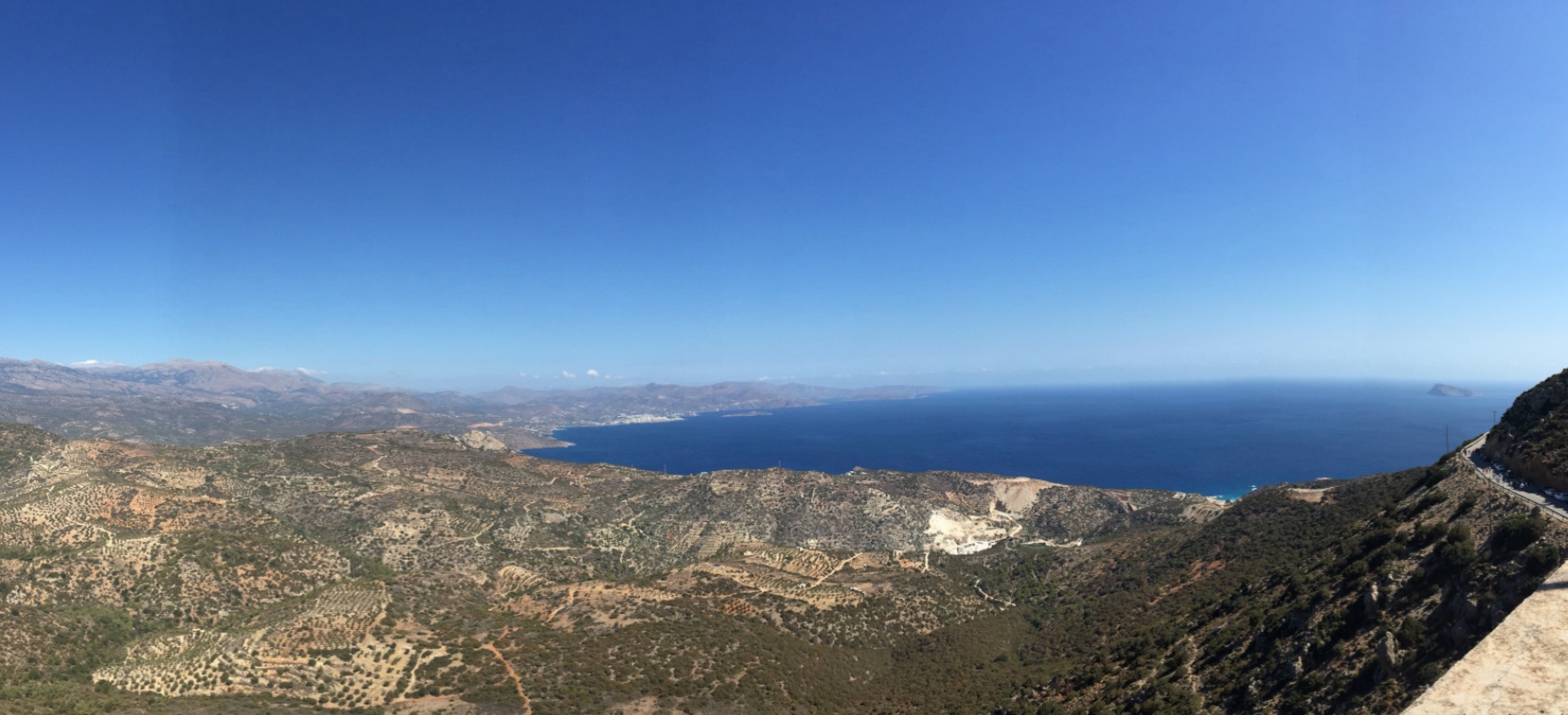
The monastery of the Panagia Faneromeni (Ιερά Μονή Παναγίας Φανερωμένης) is a remarkable complex that has grown up in front of caves in a vertical rock face, amid scenery that is rugged and yet beautiful. It stands at an altitude of 540 metres on a slope of Mount Stavros, one of the outliers of the Dikti Mountains, in the hills west of Pachia Ammos and high above the Minoan town of Gournia – which is why local people also speak of the “Panagia of Gournia” – and about 24 kilometres from Agios Nikolaos; Ierapetra, to whose municipality it belongs, is much the same distance away. From the coast road a narrow, winding asphalt road climbs for some six kilometres; at the top the view takes in the whole of Mirabello Bay as far as Agios Nikolaos. It is a working monastery for men under the Metropolis of Ierapytna and Sitia, where services are still held daily, and it is regarded as the greatest place of pilgrimage in eastern Crete.
No exact year of foundation has come down to us, and the buildings carry no founder’s inscription. The monastery was, however, already in existence in the middle Byzantine period, for according to tradition the leaders of the Cretans gathered here during the years of the great revolt that began in 1282, to deliberate on how to carry on the struggle against the Venetian conquerors. The complex acquired its defensive form in post-Byzantine times, above all under Ottoman rule, when a “secret school” was also kept here, the room of which survives to this day. In the judgement of the conservation authorities, the fabric now visible belongs for the most part to the 19th and 20th centuries.
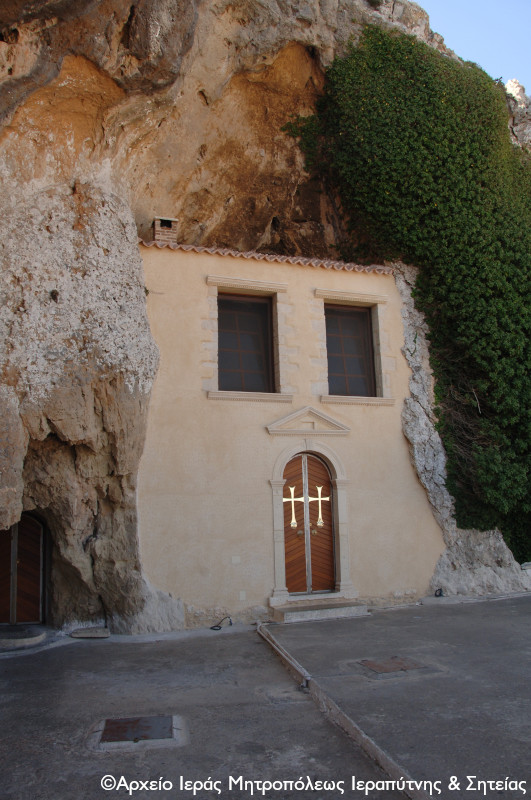
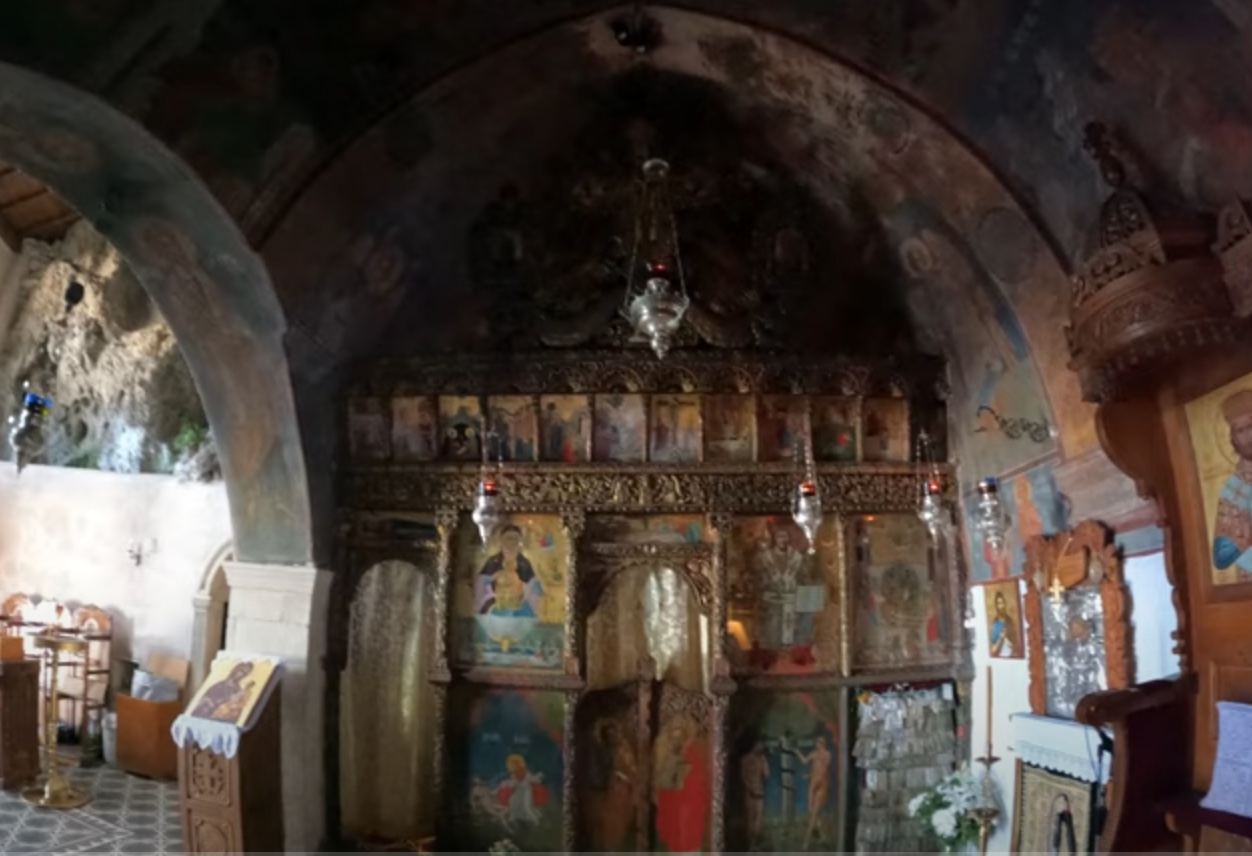
The complex has a rectangular plan measuring about 49.5 by 24.5 metres. It stands on steeply falling, rocky ground in front of a perpendicular cliff containing the cave in which the monastery church is housed. The restored katholikon carries a double dedication: it is consecrated to the Mother of God – the Faneromeni, “she who was revealed” – under the titles of her Dormition and of the Life-giving Spring. The cave, with its devotional atmosphere, was the nucleus around which the monastery grew. Four ranges of buildings, two and three storeys high and stepped over two levels, are grouped round a narrow inner courtyard; outside the main complex lie farm buildings and the monastery’s most recent guest house. In spite of the interventions of recent decades, which in places have led to considerable alterations, Faneromeni is without question an important witness to Cretan monastic architecture of the 19th century; a comprehensive restoration intended to safeguard that character is being funded by the Region of Crete under an agreement with the Metropolis.
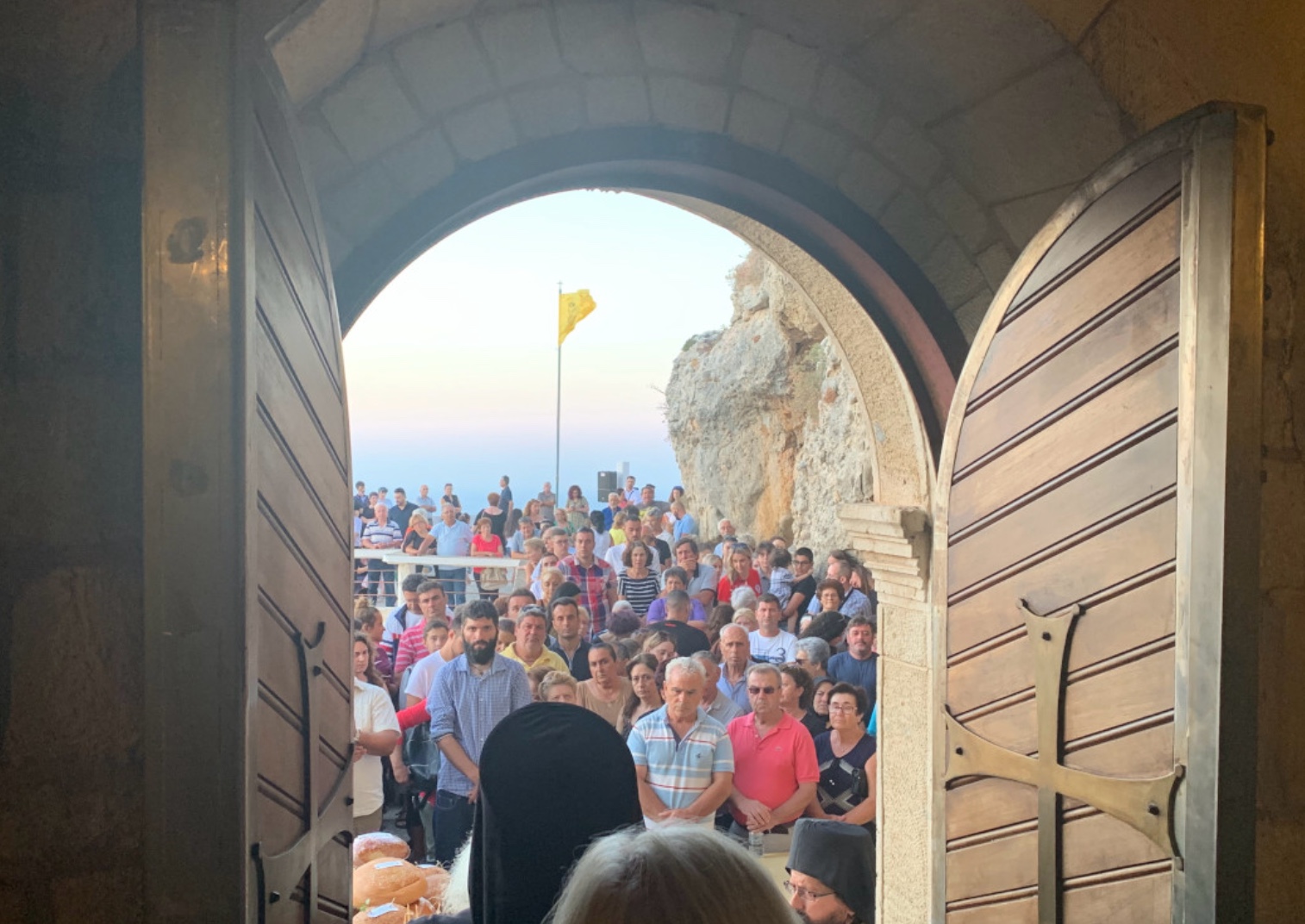
The monastery keeps its principal feast on 15 August, the day of the Dormition of the Mother of God. The Panagia Faneromeni is held to work miracles and is therefore known throughout Crete, above all in the regional unit of Lasithi and in the districts of Pediada and Viannos in the Heraklion region. Year after year the faithful pour in, especially on the eve of the feast. The celebration here has a character of its own: on each of the fifteen days of August leading up to the feast people arrive in great numbers, some of them staying for several days in the monastery’s hospice to fast and pray, and many – young people especially, and mothers with their children – make the ascent on foot, following the custom of many generations, some of them barefoot, to fulfil a vow, to thank the Mother of God for help received and to pray before the Lady Faneromeni in reverence, humility and faith.
History, architecture and tradition
The chronicles are silent about the year in which the monastery was built; the stones themselves bear only the traces of later times, pointing to building work in the 19th century. Judged by its architectural features, the present form of the complex nevertheless goes back to the 16th and 17th centuries – the age in which raids by corsairs and Turkish fleets on the north coast of the island became frequent and many Cretan monasteries turned themselves into small fortresses. A renewal of the monastery is recorded for the year 1624. The foundation itself is placed in the second Byzantine period of Crete (961–1204), that is, before the Venetian rule which took firm hold of the island from 1211.
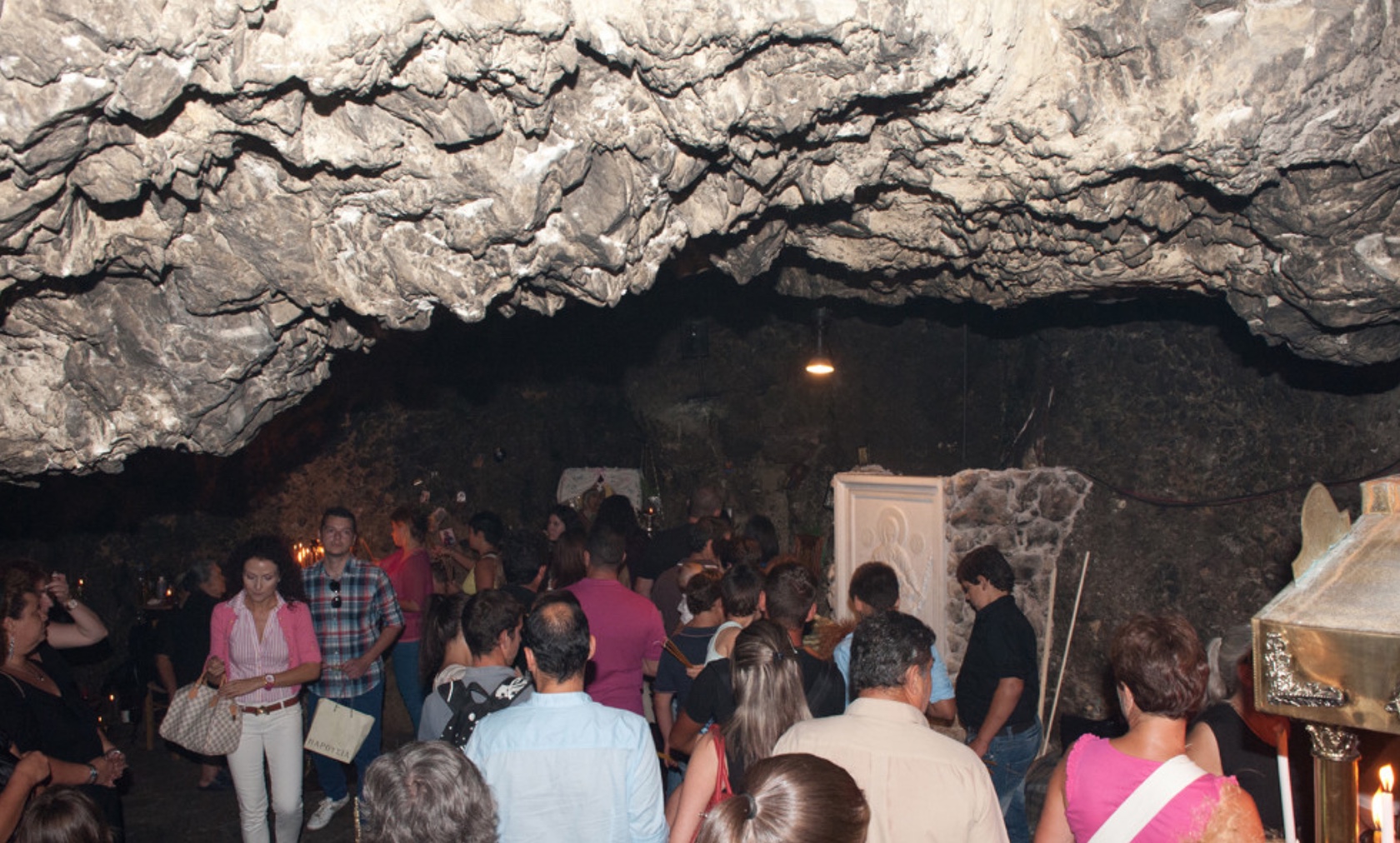
The katholikon is built into a cave that runs deep into the massive rock, beneath a far-projecting roof of stone; a stone staircase leads up to it from the courtyard. It is the oldest part of the monastery. The two-aisled church is dedicated to the Dormition of the Mother of God and to the Zoodochos Pigi. The wall paintings on the sides of the cave are heavily blackened – by a fire that is put down to Turkish raids. The church communicates with a second cavern, reached by steps, in which water collects as it seeps from the fine pores of the rock; the faithful regard it as holy water.
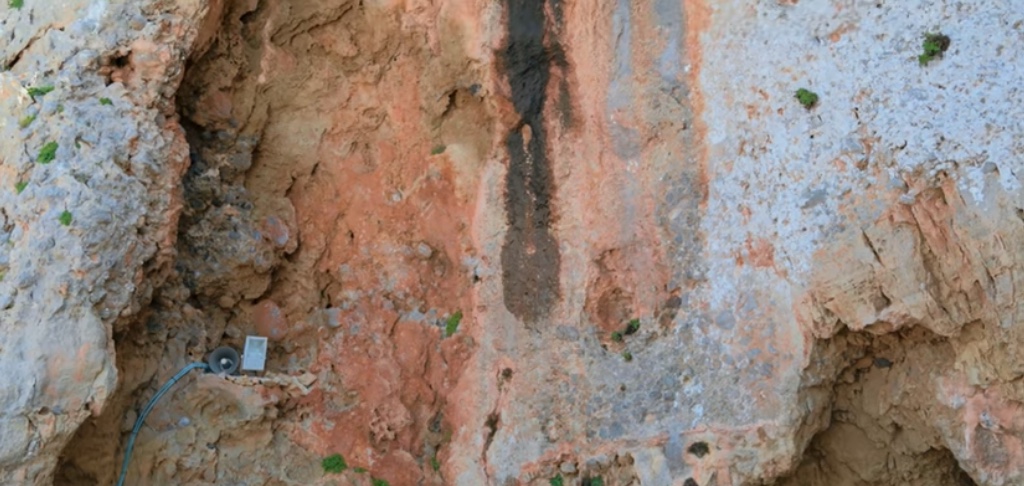
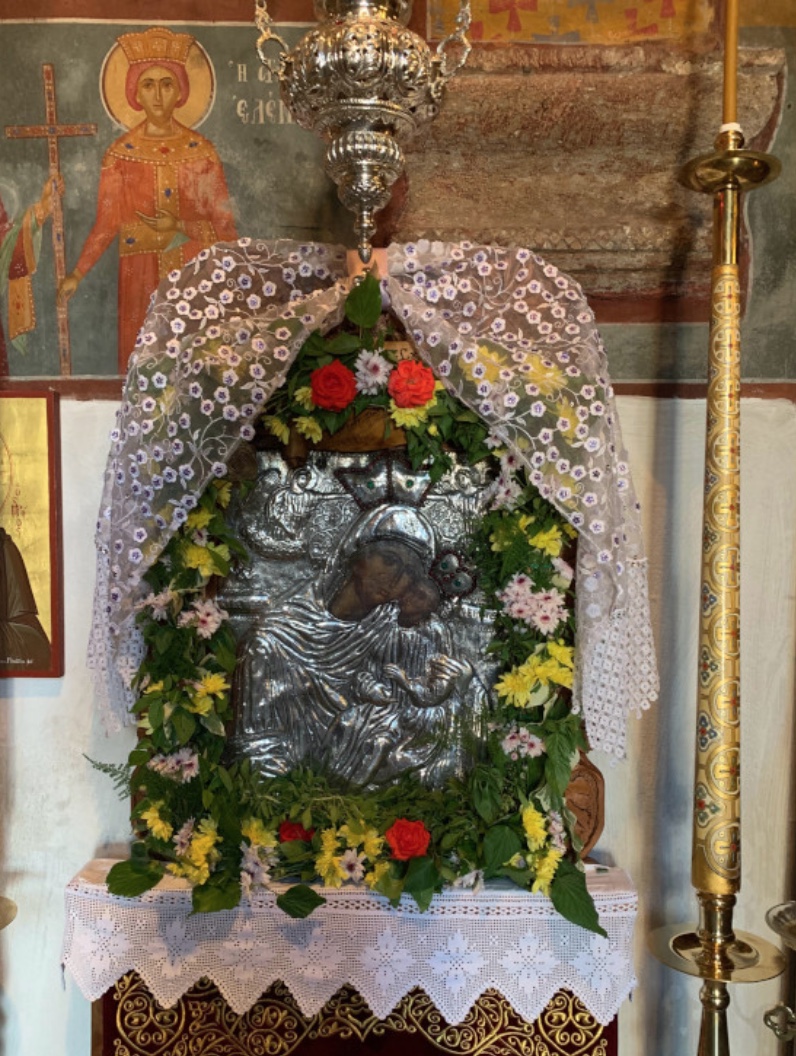
According to legend, it was in this cave that the icon of the Mother of God was revealed to a shepherd, and that is the origin of the name Panagia Faneromeni. The shepherd had noticed that the lead ram of his flock vanished every day around noon. One day he followed the animal to an almost inaccessible rock from which water trickled, and there he caught sight of the icon. He took it back with him to his hut, but every attempt to move the sacred object elsewhere was in vain – the next morning the image had disappeared and was found again in the cave.
So it went on until the shepherd understood that the icon wished to remain in this place, where the people of the district later built the monastery. In the belief of the pilgrims the holy image still shows itself: especially on the day of the Dormition, 15 August, and on the other feasts of the Virgin, it appears to the faithful and then, mysteriously, withdraws from their sight again.
The monastery as refuge and fortress
Faneromeni is not only a hallowed place of pilgrimage and the spiritual pride of eastern Crete, however. It is also a historic refuge in which Cretan insurgents sought shelter and consolation during the troubled years of Venetian and Turkish rule. Its fortified position and castle-like appearance bear witness to its defensive character: as in many monasteries built in the same period, the outer walls of the buildings double as the curtain wall, pierced only by very small windows that served as loopholes, and battlements and embrasures survive to this day. Inside there was everything an enclosed community needed – a bakehouse, storerooms and the cells of the monks.
Faneromeni and the struggle for the freedom of Crete
After the Fourth Crusade of 1204 Crete changed masters: the island was sold to Venice, for a time the Genoese contested it with the Venetians, and from 1211 systematic Venetian colonisation began. In 1282 the Cretans rose against the Republic under Alexios Kallergis. When the Genoese, through their admiral Doria, offered Kallergis help without asking for anything in return, he declined. This led to quarrels among the leaders and weakened their unity: some favoured making common cause with Genoa, others stood by Kallergis, and even some of his closest companions turned away from him.
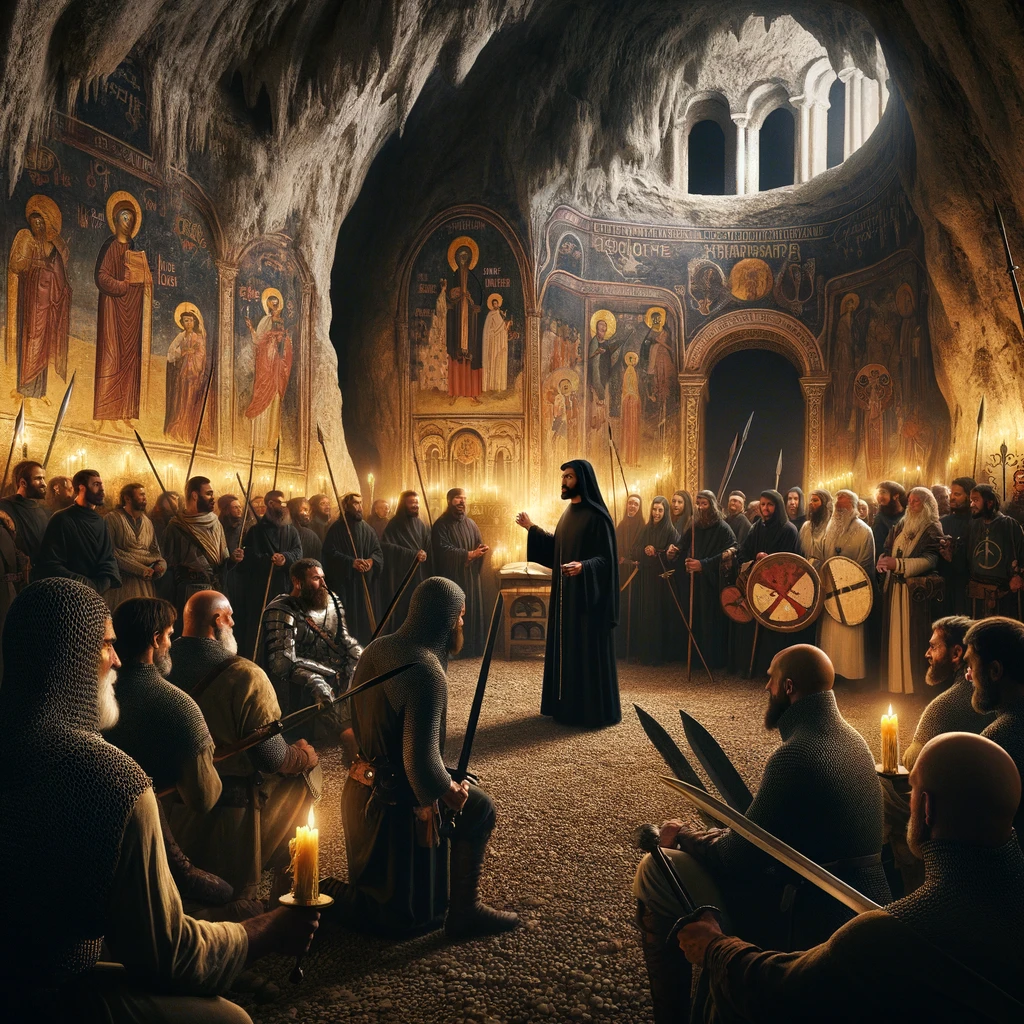
In this tense situation the abbot of the monastery of Faneromeni of Ierapetra summoned the leaders to the monastery church on Palm Sunday 1293. After communion he locked them inside and presided over the assembly himself, so that the house of God became a council chamber – a parliament, as the monastery’s own account has it. The dispute was bitter, and when an excited crowd burst into the church carrying the banner of the Byzantine emperor Andronikos Palaiologos, the leaders dispersed; only seven men from the country districts held out to the end. Singing hymns of victory, they stepped out into the open and swore allegiance to Andronikos. The abbot blessed the banner and set it up beside the crucifix. The insurgents did remain split into five factions, but the episode shows what standing the monastery enjoyed as the oldest in eastern Crete and what a mediating role fell to it at decisive moments.
During the period of Turkish rule the monastery – thanks to its strategic position on a slope that is hard to climb, and at a height from which it commanded the entire surrounding country – became an impregnable stronghold and the hub of the Christian insurgents in a struggle that dragged on over many decades. It was a refuge and a base for the leaders of the risings, a place where men assembled and took decisions of great consequence.
The defensive character is confirmed by the “zematistra” (ζεματίστρα), literally the “scalder”, an opening above the main entrance through which boiling oil – or, according to other accounts, molten lead – was poured on attackers trying to force their way in. During sieges a small cave to the south-west of the cave church, dedicated to the Transfiguration of the Saviour and used by the monastery as its burial place, served for provisioning the fighters and as a concealed exit through which they could come and go unobserved.
Beyond this the monastery, like many others in Crete, supported the risings against Ottoman rule with money. Respected men who believed in the aims of the Greek uprising and sought the protection of the Mother of God often found asylum here – among them the freedom fighter Frangios Tsantirakis from Kato Chorio near Ierapetra, who even bequeathed his lands to the monastery in order to further the struggle. Many Christians made over their property to the Panagia in those years, partly to save it from confiscation, partly in memory of their dead parents. A letter written in 1878 by Abbot Neofytos to the leader Emmanouil Lakerdas of Anatoli, asking him to protect the monastery from Turkish raiders, testifies to the invisible but deep bond between monastery and insurgents. Considerable sums also went to charitable purposes, to schooling and to the support of various institutions. The tradition of sanctuary lasted into the 20th century: during the German and Italian occupation of the Second World War the fathers and the shepherds of Faneromeni hid Allied soldiers and resistance fighters in the caves and helped them to get away to Egypt.
A new chapter opened in 1839, when Gerasimos – known after his pilgrimage to the Holy Land as Chatzi-Gerasimos – became abbot: the monastery was repaired, given an ordered form and became widely known. Gerasimos renewed the cave church, gave it essentially its present appearance and furnished it with an iconostasis, icons and liturgical vessels. His work attracted large numbers of pilgrims, who endowed the monastery with valuables and plots of land. The purchase of further estates and their energetic management laid the foundation for economic prosperity and consolidated the role of Faneromeni both as a spiritual centre and as a stronghold in the resistance to Turkish rule.
The secret school and the memory of Crete
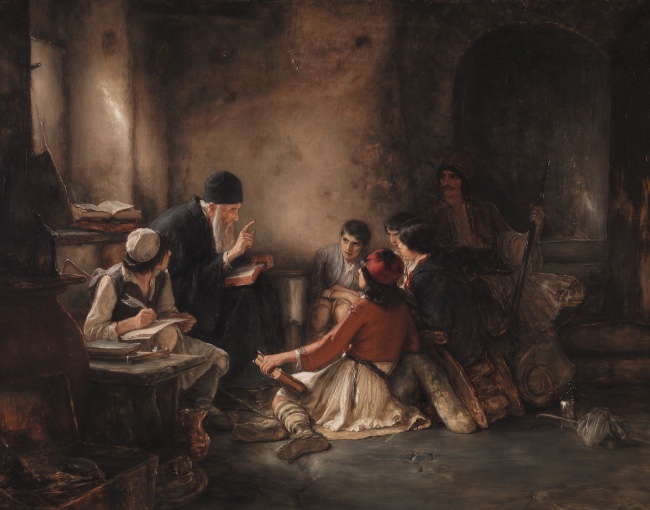
Under Ottoman rule Faneromeni became an important pillar of education in the region. Reading and writing were learnt here not only by the young people who had found refuge within its walls but also by children from the surrounding villages. According to monastic tradition, in defiance of the ban by which the Turkish authorities meant to stifle the will to revolt, one of the first secret schools of Crete was kept here – some call it the very first. The teaching was not merely scholarly in character: it strengthened in the children their faith and the awareness of their origins, fed the longing for freedom and stiffened the spirit of resistance. They were taught the history of Greece, the fundamentals of religion and love of their homeland.
Lessons were held in a hall in the south-west of the complex, to the right of the main entrance. It was adapted to the demands of the time: the walls are reinforced and the windows kept as small as loopholes, so that nothing could be noticed from outside; an underground passage with a trapdoor is said to have given the pupils a safe way in.
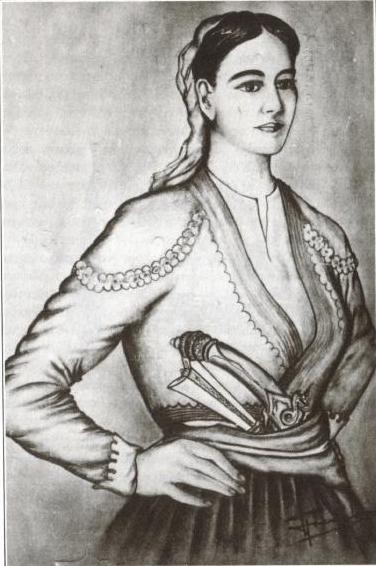
Among the pupils was Rodanthi Kritsotopoula, who is said to have come here at the age of only five, sent by her father, who meant her to become a teacher.
Rodanthi Kritsotopoula: the story of a heroine
Rodanthi was the daughter of the protopapas, the senior priest, of Kritsa; her byname Kritsotopoula means “the girl from Kritsa”. In 1817, so the story goes, the Turkish aga Hursit, who had asked for her hand and been refused by her parents, killed her mother, carried the girl off by force to his harem and intended to marry her. She escaped him, however, killing him on the bridal bed – with his own knife, it is said, and, according to local tradition, in the village of Choumeriakos, where he had his seat.
Her path then took her far from home. Disguised as a man, Rodanthi joined the insurgents of the Lasithi Plateau commanded by Kapetan Manolis Kazanis. Under the assumed name “Spanomanolis” – “spanos” means “beardless”, and Manolis is one of the commonest names in Crete – she fought with fearless determination and showed no mercy to the enemy, among whom was the murderer of her mother. In one of the decisive engagements of the period she was mortally wounded: this was the battle of Kontaratos near Kritsa, fought over two days in January 1823 on the ground between the village and ancient Lato against the troops of Hassan Pasha.
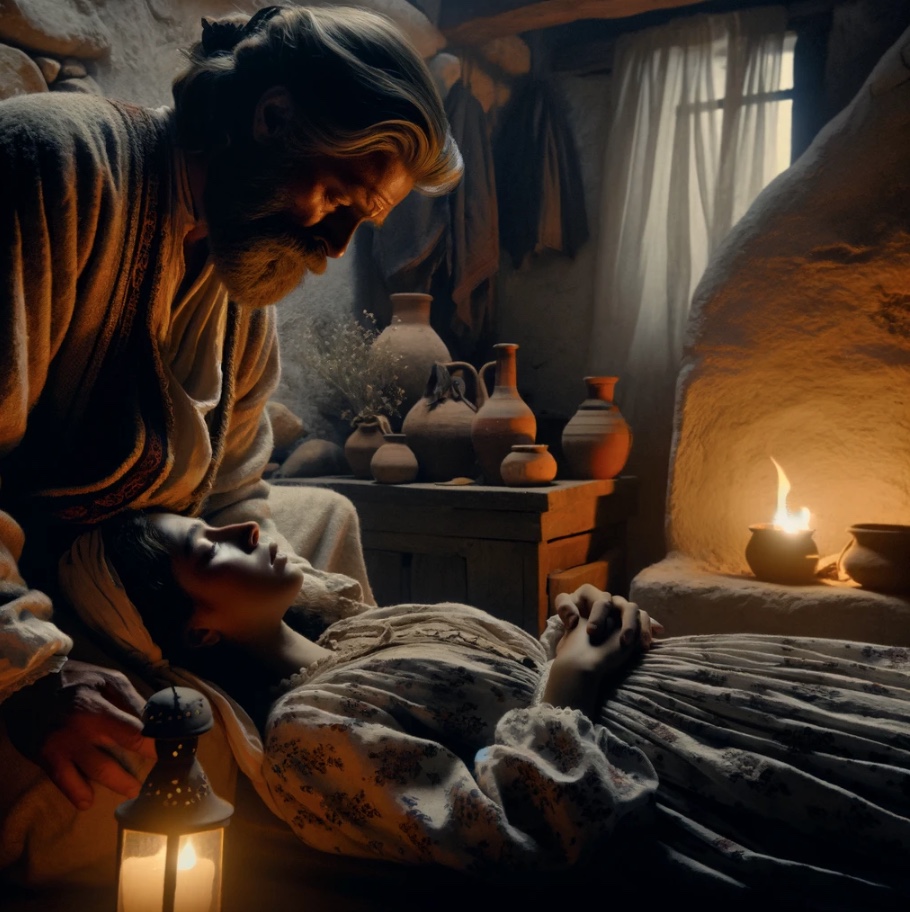
With this wound she returned to her native Kritsa, where she was taken to her father’s house to be nursed. There, on the threshold of death, it came to light who the beardless fighter really was. The father recognised his daughter and, as the tale has it, the two died in each other’s arms. So her life closed with a chapter at once heroic and tragic in the history of the Cretan struggle for freedom; in Kritsa the memory of the Kritsotopoula is alive to this day. A street bears her name, and two works by the British sculptor Nigel Ratcliffe commemorate her: a monument on the main street of the village, and a stone relief on the battlefield below Lato showing the wounded Rodanthi cradled in the arms of a comrade.
Estates, economy and charity
Through endowments the monastery acquired extensive farmland during the Turkish period and absorbed the smaller monasteries of Armos, Exakousti and Karydiani in the Ierapetra district as metochia, or dependencies. Wealth led to conflict with the agas of Ierapetra: when the Turkish aga Tsangalidis, whose property adjoined it, tried to appropriate the lands bordering on the monastery, the brotherhood found itself obliged to fight in court for the return of its possessions. After the survey of 1893 the estates stretched northwards to the sea and southwards to the plateau of Asari and the monastery of Vryomeni; they comprised four metochia – Pyrovolos, Asari, Achlada and Vryomeni – and scattered holdings in 239 separate places in the provinces of Ierapetra, Mirabello and Sitia.
In 1925, under Law 3345, three fifths of the monastery’s property were transferred to the Cretan fund for reservists in order to provide for veterans of the Asia Minor campaign and their families; further plots were disposed of through the Organisation for the Administration of Monastic Property (O.D.M.P.) of Lasithi.
In 1881 seven monks lived in the monastery. By 1901 their number had risen to nineteen, after the monasteries of Exakousti and Karydiani near Ierapetra and Agios Ioannis Theologos near Kritsa had been dissolved and attached to Faneromeni. Twice, in 1900 and in 1930, the monastery itself was declared dissolved for a time; as early as 1903, however, and again in 1935, it was reinstated, and in 1961 a law finally recognised it as a permanent, functioning monastery. And so it continues its long history – today with a very small brotherhood, no more than the abbot, Archimandrite Paisios Dermitzakis, and a deacon.
The monastery in the years of occupation
During the German and Italian occupation of the Second World War the monastery became a refuge for the hunted and for the patriots who refused to submit to the occupiers. It was a part the house had played before: under both Venetian and Ottoman rule its fortified walls, 540 metres up on the slopes of the Dikti range, had sheltered Cretan rebels, and a cave on the south-west side, leading through to the monastic cemetery, had long served for bringing in supplies and slipping fugitives out. The monks of Faneromeni now hid Allied soldiers in the caves of the surrounding mountainside and helped them on their way to Egypt.
The fifteen days of August
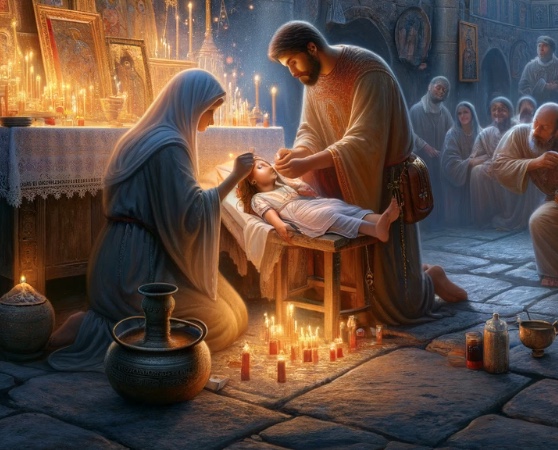
Pilgrims come all year round, from every part of the island, to venerate the wonder-working icon in its remote and hallowed cave church, which is dedicated both to the Dormition of the Virgin and to the Life-Giving Spring. In the days before 15 August they are joined by the faithful of every age. Following a custom held sacred here, they spend the first two weeks of the month – the “Dekapentari”, the fifteen days of fasting that lead up to the feast – in the monastery’s renovated guest house, giving themselves over to fasting and prayer and attending the daily round of services: the Liturgy, Vespers, the supplicatory canon to the Mother of God and Compline. The miracles said to have been worked here are beyond counting; time and again people have testified that the grace of God healed sufferings of body and of soul, and the thousands of votive offerings hung in the church tell the same story.
The feast of the Dormition of the Mother of God has an atmosphere at Faneromeni that is entirely its own, solemn and intent, and it draws pilgrims from across the island, some of them arriving on foot in fulfilment of a vow. In reverence and humility, and with deep faith, the faithful carry on a tradition centuries old and climb to the All-Holy One, “She who was revealed”, in search of a real encounter with God. The Mother of God, as the pilgrims feel it, gives them blessing, consolation and peace in abundance, and fills their hearts with strength and hope for the road ahead. To her they address their prayers and entrust themselves; they ask for her powerful protection and sing: “All my hope I place in thee, pure Mother of God; keep me under thy holy protection.”
Miracles associated with the icon of the Mother of God
The stories that follow belong to the living lore of the monastery, whose icon is known as miraculous throughout Lasithi and well beyond it. They are handed on by the monks and by the pilgrims themselves, and are set down here as they are told at Faneromeni – as testimonies of faith, not as verified reports.
Notes for visitors
The turning for the monastery is on the coast road between Agios Nikolaos and Pachia Ammos, not far from the Minoan excavation of Gournia, which lies directly below it, so the two can comfortably be combined in a single morning; the monastery is about 24 kilometres from Agios Nikolaos. The mountain road is asphalted throughout but narrow and exposed, climbing from the shore to 540 metres; drive it slowly and expect oncoming traffic, above all in the first half of August, when the pilgrims of the Dekapentari are staying. Faneromeni is a working monastery – a small community of monks under an abbot, within the Metropolis of Ierapetra and Sitia. The compound itself is compact, a fortress-like rectangle of roughly 50 by 25 metres whose ranges of buildings close in a narrow courtyard; over the entrance look for the opening through which boiling liquid could once be poured on attackers. Anyone climbing the stone stairway from the courtyard to the cave church should allow themselves a moment: for the half-light beneath the roof of rock, the soot-blackened walls, the dripping of water in the neighbouring cave, where it is collected as holy water – and, on stepping out again, for the view, which reaches from Mirabello Bay to the mountains of Sitia.