The most complete guide to Crete: 221 places on the map, 23 routes and 49 articles — with photos, videos and the story behind every place. No sign-up, no trackers.
Routes drawn along real roads
Weather at every stop
Full-text search
“Near me” by geolocation
Create your own printable itinerary
Satellite, terrain, dark mode
Works offline
⌕
Searches 1.7 million characters of descriptions, not just names
—places
4regions
—routes
—with video
Search results
—
Interactive map
Find what is near you
Filters narrow the map and the list at once. Zoom out and pins group together.
Region
Category
Фильтры карты
Landmarks
Featured places
RegionCategory
Routes
Ready-made day trips
Individual places
Articles about landmarks
The castle of Frangokastello, rising on the shore of the Libyan Sea, is wrapped in legend: of brave fighters and of the mysterious Drosoulites. Few places on the island embody so completely the historical drama and the enduring riddle of Crete.
Find on the map
Introduction
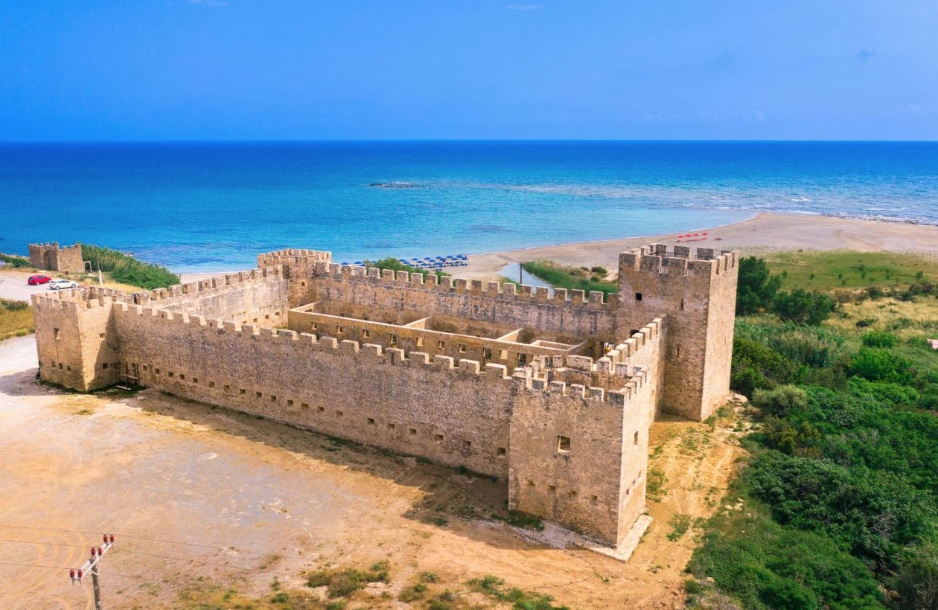
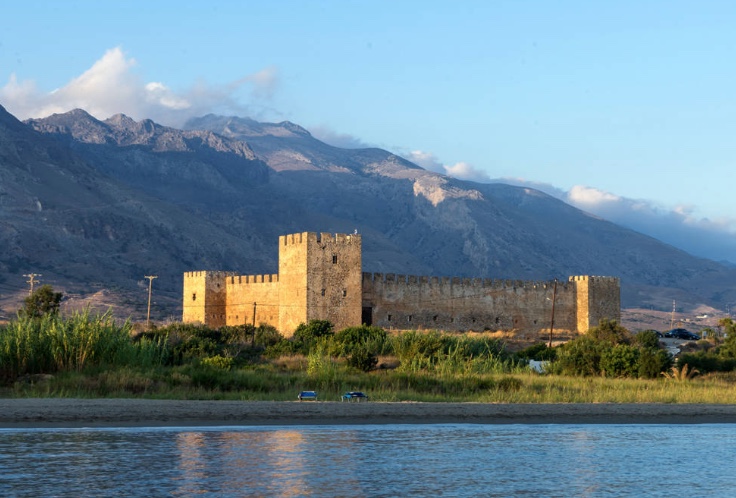
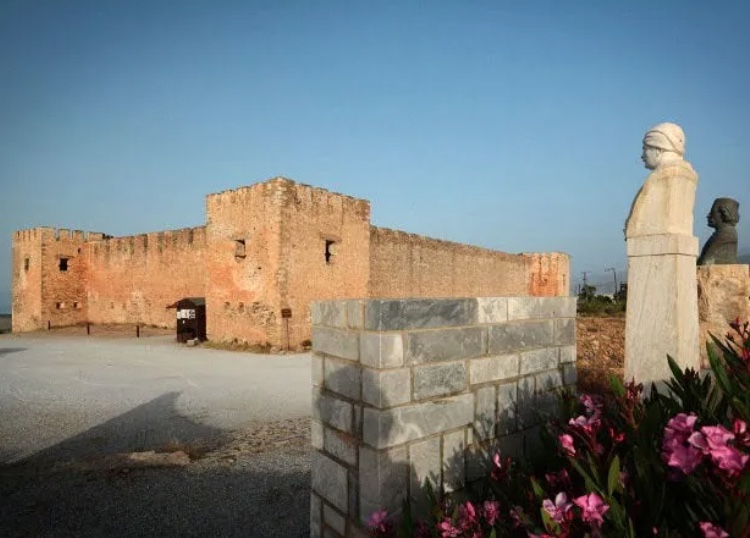
Frangokastello (Φραγκοκάστελλο) stands on a sandy coastal plain beside the Libyan Sea, about twelve kilometres east of Chora Sfakion, at the point where the White Mountains drop almost without warning to the water. The fortress is an example, rare in Crete, of a defensive work that has clearly kept its original form – and it lies, unusually enough for the mountainous south coast, on perfectly level ground. The Venetians began building in 1371, to protect the coast from pirates, to safeguard the property of their own nobles and to keep unruly Sfakia under watch. Today the ruin belongs to the Greek Ministry of Culture and is open to visitors.
A look at the history
According to the Venetian archives the castle was built between 1371 and 1374; the Senate of the Republic, which then ruled Crete, had approved the work on 10 February 1371 at the request of the feudal lords of the district. It was meant as a defence against pirates, but just as much against the Sfakians, who rose in revolt again and again. Local tradition relates that by day the Venetian soldiers laid their courses of stone, and by night the Sfakians, led by the six Patsos brothers from the nearby village of Patsianos, pulled down whatever had gone up since morning. In the end the Venetians caught the brothers, put them to death and were able to finish the castle.
The Venetians called the fortress Castel San Nichita, after the nearby church of St Niketas (Agios Nikitas). The local name Frangokastello – “Castle of the Franks” – nevertheless gradually won the day. In Crete “Franks” meant the Catholics of the West and, more generally, foreigners of Latin stamp. The place fulfilled its purpose only imperfectly: the garrison was usually weak and at times absent altogether, and for the three centuries until Venice lost the island in 1669 Sfakia remained what it had always been – a country that would not be governed.
In the rising of 1770 the castle stepped back into history. The Cretan leader Ioannis Vlachos, known as Daskalogiannis – the man after whom Chania’s airport is now named – is said to have occupied it with his Sfakians; after the revolt had failed he gave himself up to the Ottomans here, was taken to Heraklion and executed there in 1771 after cruel torture – flayed alive, according to tradition.
Architecture
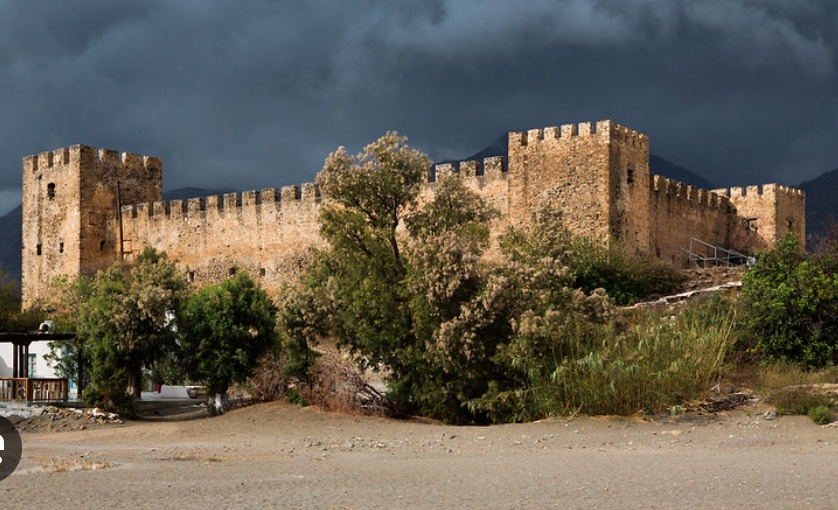
The castle has a plain rectangular plan, built of dressed stone, with a square tower at each corner; the south-western one is markedly larger than the others and served as the last refuge. The walls stand vertical and are comparatively thin – entirely in keeping with the principles of military architecture as they held from antiquity until the invention of gunpowder, before the “bastioned system” came in with its massive ramparts and sloping outer faces, designed to withstand artillery fire. The Venetians introduced that system to Crete in the first half of the 16th century, but applied it chiefly to the large, strategically important fortresses of the north coast, such as the Fortezza of Rethymno or the Koules of Heraklion.
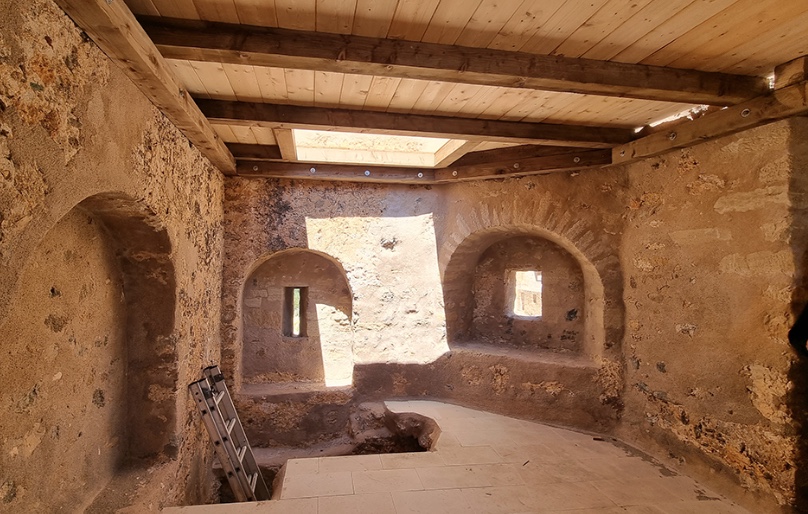
The main entrance is on the south, facing the sea; its present appearance goes back to the rebuilding of the 19th century. A second, smaller gate opens to the east. Above the main doorway the relief of the winged lion of St Mark survives, the emblem of the Venetian Republic, and beneath it the arms of noble Venetian families: of four shields that were once there two remain, those of the Querini and the Dolfin. The buildings inside – quarters, storerooms, kitchens, leaning against the curtain walls – were largely renewed under the Ottomans; the battlements and the upper storeys of the towers likewise date from several later phases of building, whereas the barrel-vaulted ground floors of the three smaller towers are old.
The fortress was put in order in the years 1593 to 1597 under the direction of Nicolò Donà, then in 1645, when Venice, faced with the Turkish war, voted money for it once more, and finally during the rising of 1866 to 1869. A church dedicated to St Mark, which appears on Venetian plans, stood outside the walls on the south side and was lost in the works of the 19th century. During clearance work Venetian pottery, mainly of the 16th century, came to light, together with coins and lead seals.
The battle of 1828
At the end of 1827, as the independence of Greece moved towards international recognition, it was decided on the mainland to rekindle the revolt in Crete. The calculation was that a liberated island might, in the spirit of the Treaty of London of 6 July 1827, be included in the new Greek state.
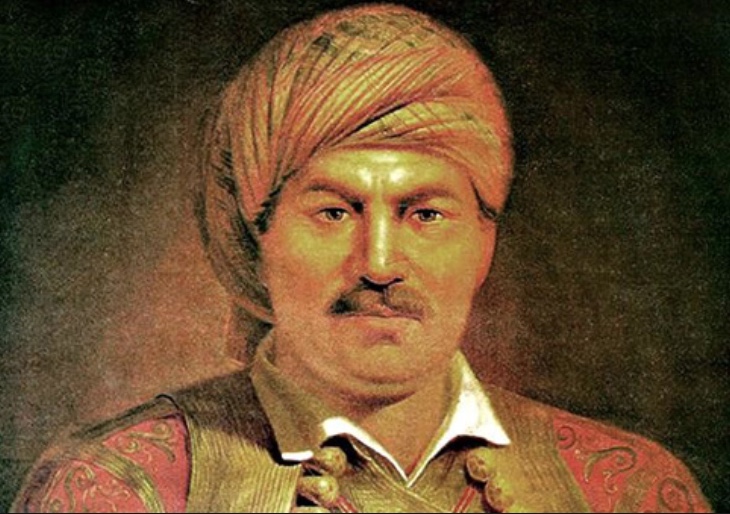
These attempts miscarried – because of the superior strength of the Ottomans on the island, and still more because of the quarrels in the Greek camp, which made concerted action impossible. Yet there are defeats that leave behind such a legacy of courage that they weigh more than many victories. The command of the Greek forces in Crete was entrusted to the Epirot captain Chatzimichalis Dalianis, a native of Delvinaki who had distinguished himself in the war of liberation since 1821. Born about 1775, he had grown up in Trieste, where his father was a merchant, had joined the secret patriotic society Filiki Etaireia in 1816 and had fought at Phaleron in 1827. Epirus is the region in the north-west of Greece on the border with Albania.
Dalianis landed on Gramvousa on 5 January 1828, with a detachment of some five hundred infantry and a hundred horsemen. It soon became clear that his relations with the islanders would be difficult. The men from Lasithi, Rethymno and Chania argued over where the base of the rising should be. In the end Dalianis got his way and chose Sfakia, but the decision was reached only after a great loss of time; it was March before he was established at Frangokastello.
In the meantime Mustafa Naili, the Pasha of Crete, had learnt of the presence of armed strangers in Sfakia and sent troops into the area – ostensibly to protect the population from brigands.
The first skirmishes began on 8 May 1828. A band under Manouselis, Manousogiannakis and Deligiannakis fell upon a Turkish detachment from Rethymno that was on its way to join Mustafa’s army; forty men were killed and many taken prisoner, among them the Aga of Rethymno. The enraged Mustafa had a letter delivered to Dalianis, giving him ten days to leave Crete. Chatzimichalis replied:
“Mustafa, I have come to Crete with my warriors to fight the Turks, and may God decide the outcome of the battle.”
Mustafa, who had no doubts about Dalianis’s intentions and knew him well – both men came from the Epirus region – prepared the decisive attack. At the same time he wrote to the notables of Sfakia that he was going to move against the “troublesome foreigners”; let them keep out of it, and their privileges would remain intact. The calculation did not work.
Dalianis had by now occupied the Venetian castle by the Libyan Sea and had it strengthened with outlying earthworks. His dealings with the local men remained strained, however; the two sides communicated almost entirely by letter.
The Sfakians, who had thrown up entrenchments of their own at a considerable distance from Frangokastello, proposed to Chatzimichalis that he leave a hundred men in the castle and fight the battle from the high position of Kolokasia: there the insurgents would have a better chance of luring Mustafa’s army into a trap as soon as it attacked the castle. Dalianis insisted on fighting in the plain in front of the fortress, so as to be able to use his cavalry. The Sfakians objected that they were not used to fighting on open, level ground. Chatzimichalis, who saw cowardice in this, retorted with contempt:
“Then guard your mountains, lest they run away from you, and watch from up there how we fight down here.”
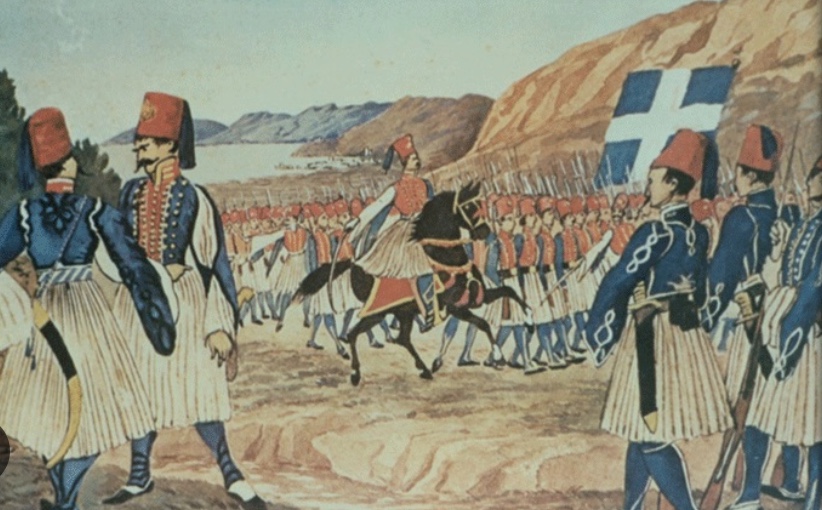
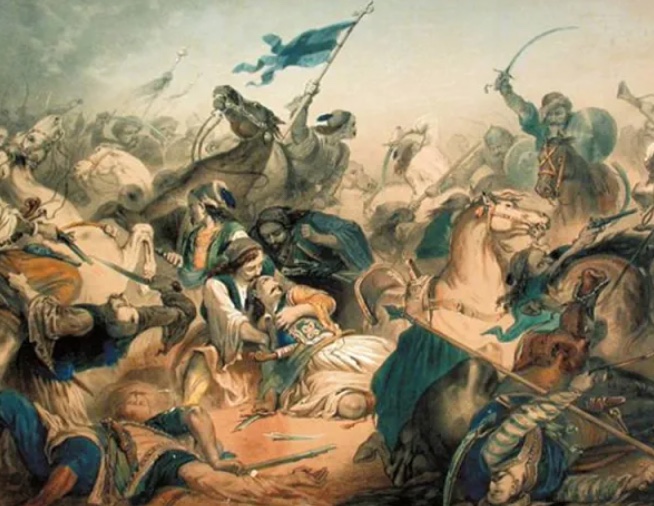
On 18 May 1828 Mustafa advanced on Frangokastello with 8,000 infantry, some three hundred horsemen and a few guns. The brunt of the assault by the “Turcalbanians”, as the Greeks called the Albanians in Ottoman service, fell on the earthworks in front of the castle, whose defenders were vastly outnumbered.
The defenders fought with unbending courage, but after a bitter struggle almost all had fallen; only two are said to have escaped death. When defeat became inevitable the survivors tried to fall back on the castle under cover of the cavalry. Dalianis, leading his men in person as he always did, fought until he fell beneath the enemy’s blades; with him died 338 Greek fighters in all. The retreat of the remainder succeeded nonetheless: the attackers found themselves facing an unexpected counter-thrust by the castle garrison, and Mustafa’s army lost some 800 men.
The defeat at the earthworks and the death of their leader did not break the defenders’ spirit; wave after wave, they beat off the assaults. Their position grew visibly worse, however, for food and ammunition were running short. But the Ottoman army too had suffered enormous losses. And so Mustafa finally agreed to negotiate with the insurgents.
The end of the siege, which lasted about a week, was eased by the almost friendly relationship that grew up between besiegers and besieged. Most of the men on both sides came from greater Epirus, and some knew each other. Many of Dalianis’s men, moreover, spoke Albanian and could talk to their attackers without difficulty. In the end the Greeks were allowed to leave Frangokastello fully armed and to take ship for Greece.
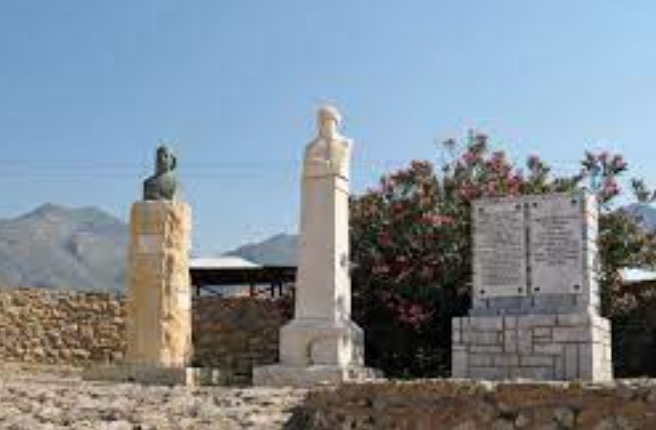
The head of the fallen Dalianis was brought to Mustafa as a trophy. Instead of praising the bearers, he rebuked them for not having brought the man before him alive: Mustafa the Albanian regarded Dalianis the Epirot as a fellow countryman. The body, it is said, was buried by a nun at the nearby monastery of St Charalambos.
He had the dead man’s personal belongings gathered up, among them a copy of the New Testament, and sent them to the family. As the Ottomans marched back to their stations, Sfakian fighters attacked the column once more in the mountains and inflicted heavy losses on it – by some reckonings as many again as had fallen before the castle. Mustafa Pasha nevertheless refrained from punishing Sfakia; he sought a peaceful settlement and an end to the rising. The castle, though, he had dismantled, so that it could never again serve a revolt as a base – and the same Mustafa had it rebuilt during the great rising of 1866 to 1869, this time as an Ottoman post.
The battle of Frangokastello cost the Greeks 338 dead and did not bring union. Crete had to wait until 1913 before it became part of the Greek state.
Ghosts or mirage?
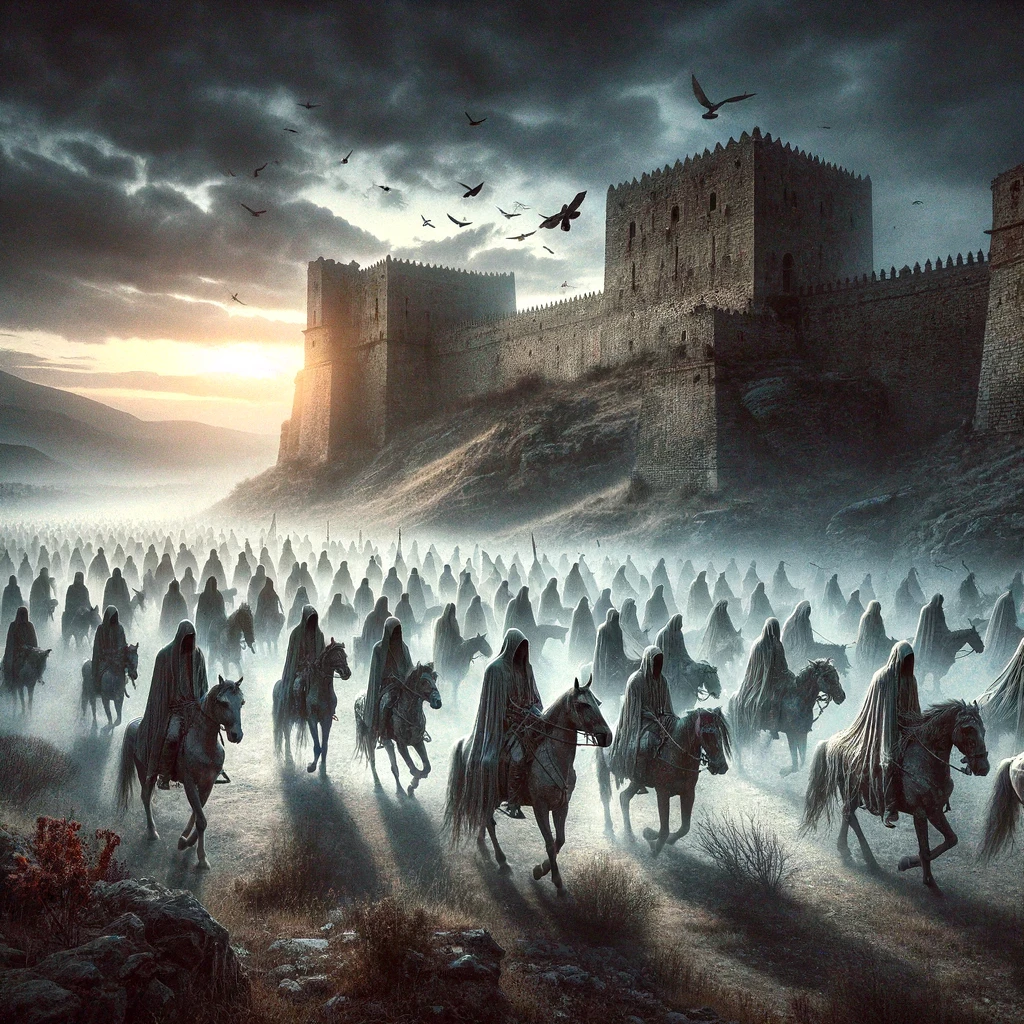
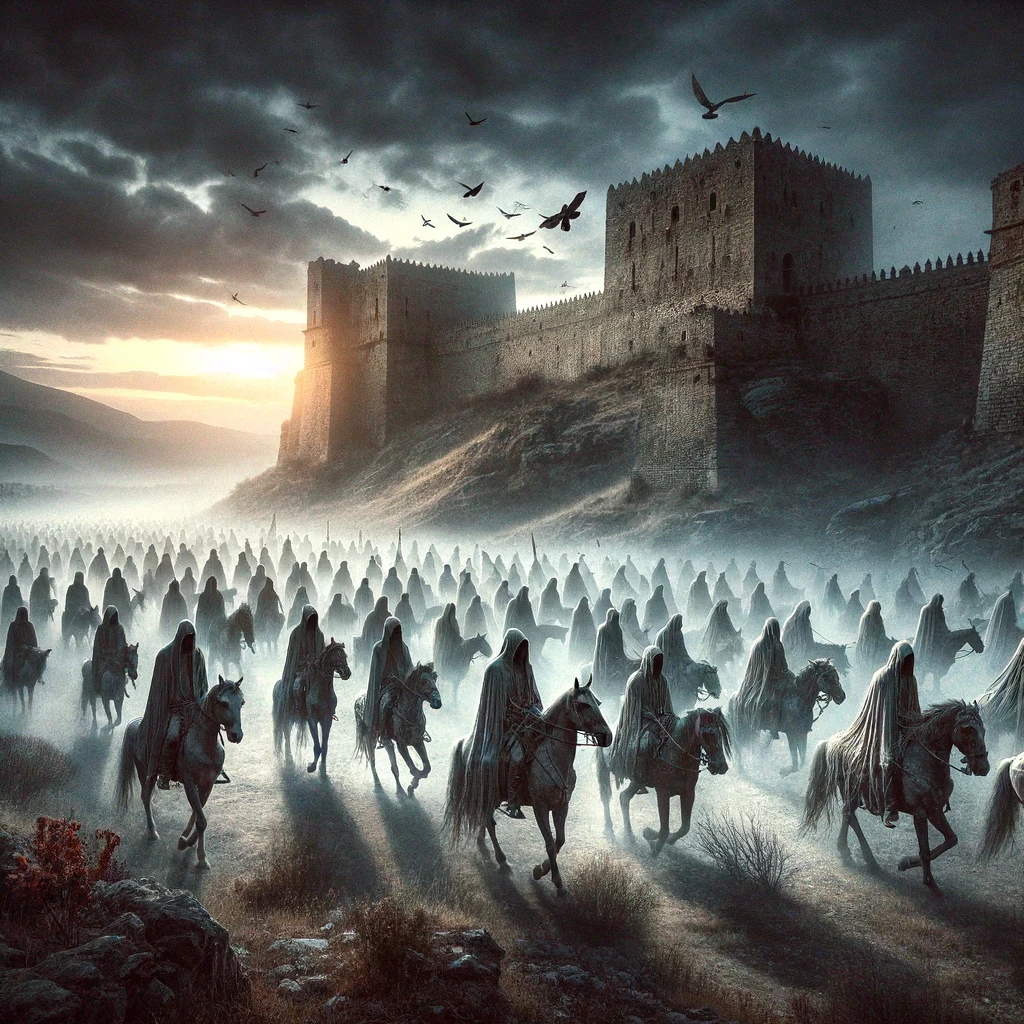
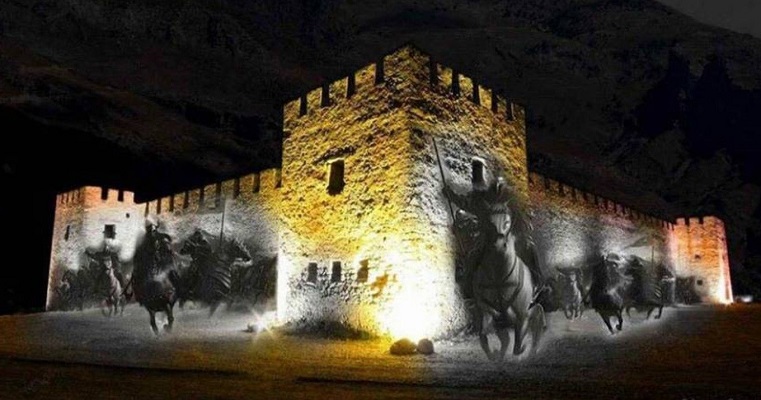
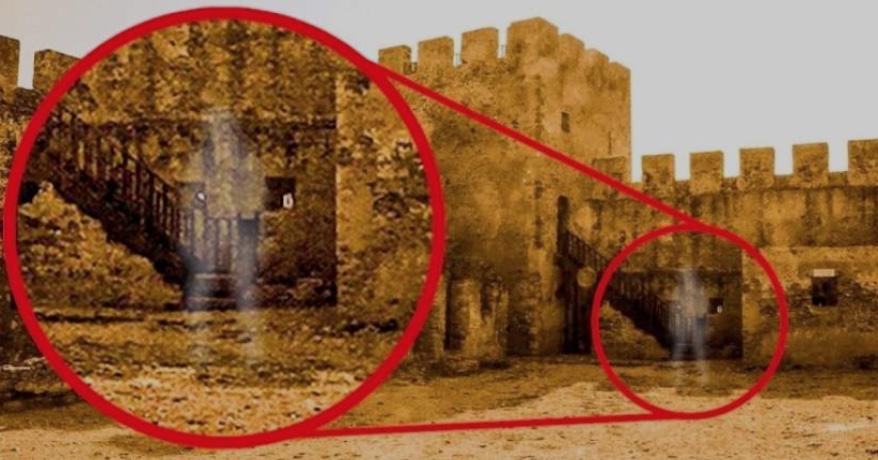
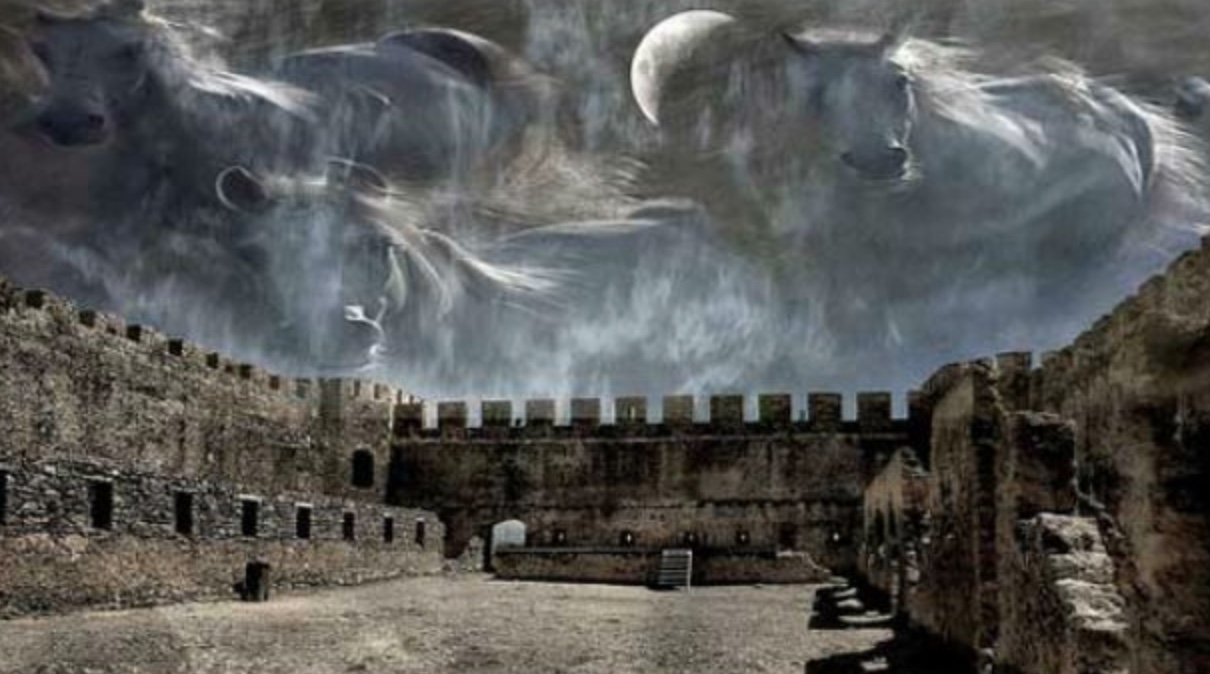
In popular tradition the defeat at Frangokastello is inseparable from the Drosoulites (Δροσουλίτες). This is the name given to shadowy figures that appear at the end of May, sometimes as late as early June, and resemble a column of armed men. The name is derived from the Greek δρόσος, “dew”: the “dew-men” appear in the damp hour around sunrise, when there is no wind and the sea is smooth, and after a few minutes – eight to ten, people say – it is all over. Those who report them have watched from the plain, at a distance of something like a thousand metres. For the Cretans these figures became the image of the fallen and unburied warriors.
According to tradition the souls of those who fell in that battle and found no grave remain at the place of their death. So it was that a few years after the terrible engagement, shortly after the middle of May, dismayed shepherds saw above the ruined monastery of St Charalambos (Agios Charalambos) a whole army of armed shadows, mounted men among them, moving towards Frangokastello and from there to the sea, where it vanished. Dressed in dark clothes, on foot or on horseback, with muskets and sabres: that is how the figures have been described ever since.
Local lore also includes the story that in the Second World War a German patrol opened fire on the shadows, taking them for partisans, and radioed to Chania for reinforcements. As early as about 1890 an Ottoman detachment is said to have taken up battle positions at the sight of the apparition, believing it to be a band of rebels. The observations have been described repeatedly by eyewitnesses and investigators: travellers of the 19th century reported the “ghost soldiers”, and in 1928, on the hundredth anniversary of the battle, a descendant of the commander, General Christos Dalianis, is said to have approached a society for psychical research. The commonest sober explanation speaks of a mirage which, under particular conditions of temperature and humidity, carries the movements of people far away – on the coast of Libya, some think – across the sea. It, too, remains unproven, and no explanation has won general assent.
Visitors to the castle find a quiet stretch of the south coast, far removed from mass tourism, with no more than scattered places to stay. The interior of the fortress can be entered; immediately at its foot lies a broad, sheltered sandy beach that shelves gently and is well suited to children, and a little to the east the high dune of Orthi Ammos. The walls are at their most impressive in the slanting light of early morning – at the very hour when people here wait for the Drosoulites.