Chrysoskalitissa Monastery: Our Lady of the Golden Step
The most complete guide to Crete: 221 places on the map, 23 routes and 49 articles — with photos, videos and the story behind every place. Everything is open and free: no sign-up, no paid sections and no advertising, open or hidden. You can install the guide on your smartphone as an app.
Routes drawn along real roads
Weather at every stop
Full-text search
“Near me” by geolocation
Create your own printable itinerary
Satellite, terrain, dark mode
Works offline
⌕
Searches 1.7 million characters of descriptions, not just names
—places
4regions
—routes
—with video
Search results
—
Interactive map
Find what is near you
Filters narrow the map and the list at once. Zoom out and pins group together.
Region
Category
Фильтры карты
Landmarks
Featured places
RegionCategory
Routes
Ready-made day trips
Individual places
Articles about landmarks
Chrysoskalitissa Monastery
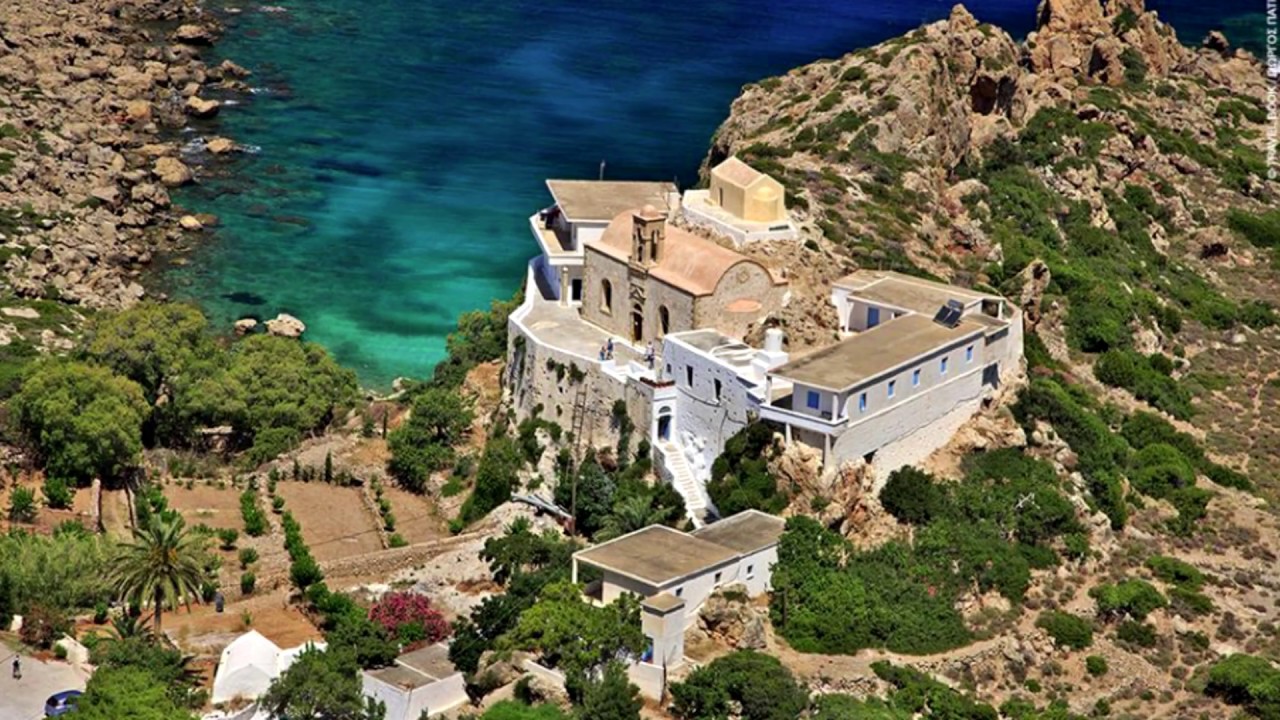
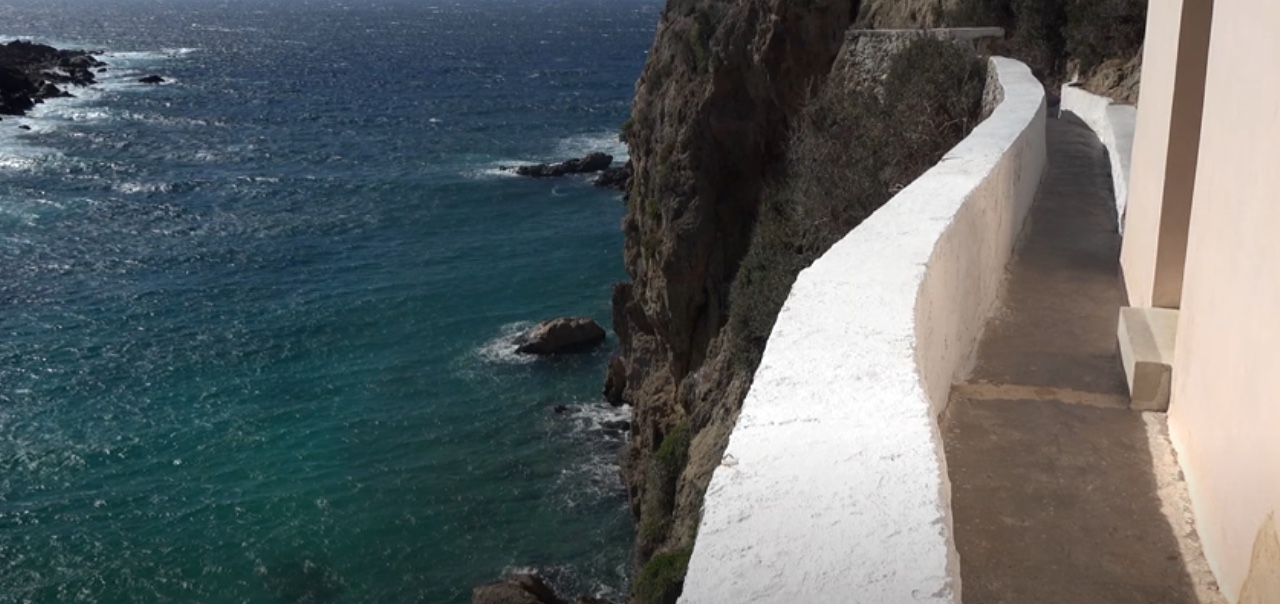
The name Chrysoskalitissa goes back to the legend of a golden step – the last of the ninety-eight that climb to the monastery. The buildings stand on the far south-western coast of Crete, some 72 kilometres from Chania, on a rock about 35 metres high with the surf breaking directly beneath it. A paved road runs all the way to the foot of the rock, so the only climb is the staircase itself. From a distance the monastery shows white above a bare stretch of coast, more like a small fortress than a house of prayer, and from its terrace the view runs far out across the Libyan Sea.
Taken literally, the monastery’s name means “golden stair”. Tradition has it that one of the ninety-eight steps of the staircase leading up to the monastery is made of gold – but that only those on whom the Holy Spirit descends can see it; from sinners it stays hidden. Another version says that the monks walled up the monastery’s gold beneath one of the steps so that it should not fall into Turkish hands. A third, more sober account relates that the golden step was sold, together with the monastery’s lands, in the first decades of Ottoman rule to raise the crushing dues owed to the Sultan; some tell it that the Patriarchate itself arranged the sale to rescue the house from its debts. There are even those who claim to know that a corsair once presented it.
The history of the monastery
When the monastery was built is not known for certain; the 15th or 16th century is the usual estimate. The earliest surviving written mention dates from 1637, when a census carried out by the Venetians lists it, in Italianised spelling, as “Madonna Ghunoskaletessa”, the Mother of God of the Golden Step. It remained Orthodox, of course, under the rule of the Republic of Venice. Older reports speak of a monastery dedicated to St Nicholas that stood nearby before it and was still functioning in Turkish times, and finds of pottery show that this strip of coast was inhabited in Minoan and Roman times; a fishing settlement of the Middle Minoan period has been identified on the beach next to the rock, and remains of Late Neolithic and Early Minoan habitation are known along the shore.
At Easter 1824, after the massacre on Elafonisi – a reprisal for the Greek uprising in which several hundred refugees, most of them women and children, were killed by the troops of the Egyptian commander Ibrahim Pasha – the Turkish-Egyptian soldiers set about destroying every church in their path; ten churches of the district are said to have fallen to them. Chrysoskalitissa, tradition says, they could not harm: a swarm of wild bees nesting in the rock niche of the icon threw itself on the attackers and drove them off.
The monastery then lay desolate for years. An abbot named Ioannikios put up new monastic buildings between 1831 and 1840, but the real revival began in 1855, when the monk Manassis set about restoring the place, adding a guesthouse, cells and storerooms; after his death in 1866 his successor Meletios carried the work on. The present church was built between 9 May and 10 August 1894 and consecrated for the feast of the Dormition on 15 August. It replaced a smaller church built into the rock, which was pulled down to make way for it, and beside which, on top of the rock, had stood a chapel of the Holy Trinity; the church has two aisles and remains dedicated to both, the Virgin and the Trinity.
In 1900 the community of monks was dissolved, as happened to a number of Cretan monasteries at the time; Chrysoskalitissa was attached to the monastery of Odigitria Gonia and its landholdings were sold. Individual monks nonetheless went on living here and kept the old building in repair. They were on hand in February 1907 when the Austrian steamer Imperatrix was wrecked off Elafonisi: 38 people drowned, but the monks helped to bring 102 passengers to safety. Today the monastery is open to visitors. They may look round it – a small museum shows icons, liturgical vessels and folk objects – or, if cells are free, spend a few days there. The principal feast is 15 August, when pilgrims come up from all over western Crete.
The finding of the icon
The origins of the icon of Chrysoskalitissa reach far back through the centuries and are wrapped in legend. According to one story, everything began with a strange apparition that came to a local farmer who worked his land in the neighbourhood of the future monastery. At night a light appeared to him, like the flame of a candle, pointing out a particular spot among the rocks. That light, tradition says, led to an icon of the Dormition of the All-Holy Mother of God which had been concealed in a hidden niche of the rock – in the time of the persecutions by the iconoclasts, which shook the Byzantine Empire from AD 726 to 842.
The icon is thought to have been carried to safety from the destructive zeal of the iconoclasts, who wished to root out the veneration of images from Christianity. The farmer followed the mysterious gleam and discovered the holy image in the rock. With that find begins the sacred history of the place where the monastery of Chrysoskalitissa later arose – first as a small church set against the cave in the rock.
Other legends have gathered round this icon in the course of time. One of them tells that whenever attempts were made to transfer the image to a new church, it returned again and again to its original niche. This was taken as a plain sign from the All-Holy Mother of God that the church was to be built on that very spot. And so it was, and the icon became the central treasure of the monastery. The icon of the Dormition venerated in the church today dates from the 17th century.