Knossos: the Minoan palace and the myth of the Labyrinth
The most complete guide to Crete: 221 places on the map, 23 routes and 49 articles — with photos, videos and the story behind every place. No sign-up, no trackers.
Routes drawn along real roads
Weather at every stop
Full-text search
“Near me” by geolocation
Create your own printable itinerary
Satellite, terrain, dark mode
Works offline
⌕
Searches 1.7 million characters of descriptions, not just names
—places
4regions
—routes
—with video
Search results
—
Interactive map
Find what is near you
Filters narrow the map and the list at once. Zoom out and pins group together.
Region
Category
Фильтры карты
Landmarks
Featured places
RegionCategory
Routes
Ready-made day trips
Individual places
Articles about landmarks
The Palace of Knossos
Europe’s first advanced civilisation. The first European palace. The beginning of it all.
Find on the map
Introduction
Knossos (Κνωσός) lies about five kilometres south-east of the centre of Heraklion on the hill of Kephala, above the valley of the little River Kairatos, which once provided the link both to the sea and to the interior of the island. After the Acropolis of Athens it is the most visited archaeological site in Greece, and since 2025 it has been inscribed on the UNESCO World Heritage List as one of the Minoan Palatial Centres. Anyone who wanders through its courts, staircases and corridors is moving through almost nine thousand years of settlement – and through a landscape of myth which the Greeks themselves had already placed here in antiquity.
Setting the scene: the periods of Knossos
The site of Knossos has been inhabited since the Neolithic, from about 7000 BC; the Neolithic village is regarded as one of the oldest farming communities in Greece. The first palace went up around 1900 BC, in the period between the 19th and 17th centuries. After its destruction in about 1700 BC a new and still more splendid complex was built, and it is essentially this second palace, of c. 1700 to 1450 BC, that the visitor sees. After a partial destruction around 1450 BC, in which all the other palaces of Crete perished, Mycenaeans established themselves at Knossos; the palace remained in use into the 14th century BC, until a fire finally destroyed it in about 1350. The town itself lived on into the first millennium AD: in the Classical and Hellenistic periods Knossos was among the most powerful cities of Crete, and under the Romans it was refounded as Colonia Iulia Nobilis Cnossus, while its rival Gortyn rose to be capital of the province. To this late period belongs, for example, the Villa of Dionysos with its fine mosaic floors of the 2nd century AD.
Setting the scene: what “palace” means
A Minoan palace was far more than a ruler’s residence. It was an administrative, economic and religious centre in one, with storerooms, workshops, archives, shrines, living quarters and spaces for ceremonies. The word “palace” therefore denotes a whole system of government and supply, not merely a royal house. The eighteen magazines of the west wing alone – long, narrow storerooms opening off a single corridor – had room for hundreds of the great storage jars known as pithoi; according to one estimate the grain kept here could have fed some 2,600 people for half a year.
Setting the scene: Knossos and Arthur Evans’s reconstructions
The first excavations were undertaken by Minos Kalokairinos (1843–1907), a merchant and antiquarian of Heraklion, who began probing the hill of Kephala in 1877 and dug in earnest in 1878. With about twenty workmen he uncovered parts of the western magazines, together with a corner of what would later be recognised as the throne room, and found large storage jars, some of which he gave to European museums, among them the Louvre and the British Museum. After only three weeks the Ottoman authorities put a stop to the work, apparently fearing that the finds might strengthen the Cretans’ struggle for independence. What he had found was nevertheless enough to draw the American journalist W. J. Stillman, Heinrich Schliemann and eventually Arthur Evans to the site. In the massacre of Heraklion on 25 August 1898 his brother and his son were killed, and his house went up in flames with most of his collection. Only since 2019 has a bronze bust at the entrance to the site commemorated the long-forgotten first excavator.
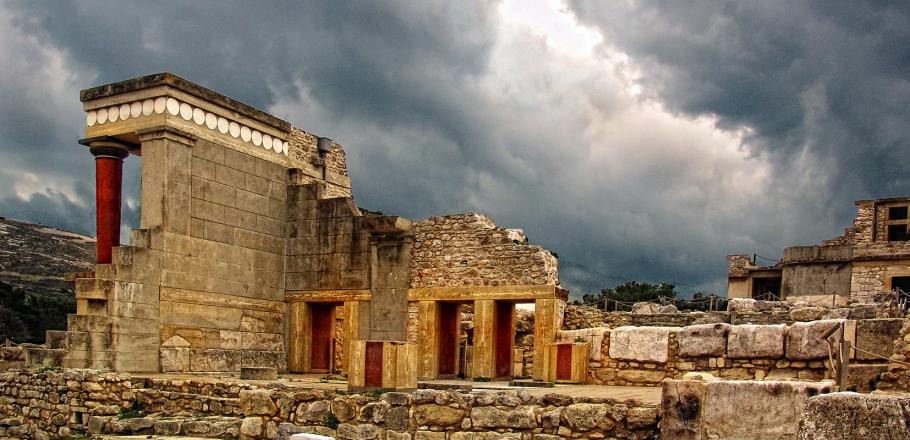
The Englishman Arthur Evans (1851–1941), Keeper of the Ashmolean Museum in Oxford from 1884, first came to Crete in 1894 on the trail of engraved seal stones bearing an unknown script. He acquired the land through the Cretan Exploration Fund and on 23 March 1900, shortly after the liberation of Crete from Ottoman rule, began systematic excavations; in only six years, by 1905, he had uncovered the greater part of the palace. At his side were the Scottish archaeologist Duncan Mackenzie, who directed the work in the trenches and carefully recorded the sequence of layers, and the architect Theodore Fyfe. It was Evans who coined the term “Minoan” for the civilisation he had found, and he set out his results in the volumes of The Palace of Minos, published between 1921 and 1936; he was knighted in 1911. Evans had the ruins consolidated and in part rebuilt with concrete and modern materials, above all in the years after 1925, while the Swiss artists Émile Gilliéron, father and son, restored and repainted the frescoes. The columns and fresco copies visible today help the visitor to picture the complex, but they are not to be taken for an ancient state preserved intact; among specialists these reconstructions remain controversial to this day. In 1926 Evans made the property over to the British School at Athens, which passed it to the Greek state in 1952.
Setting the scene: the eruption of Thera
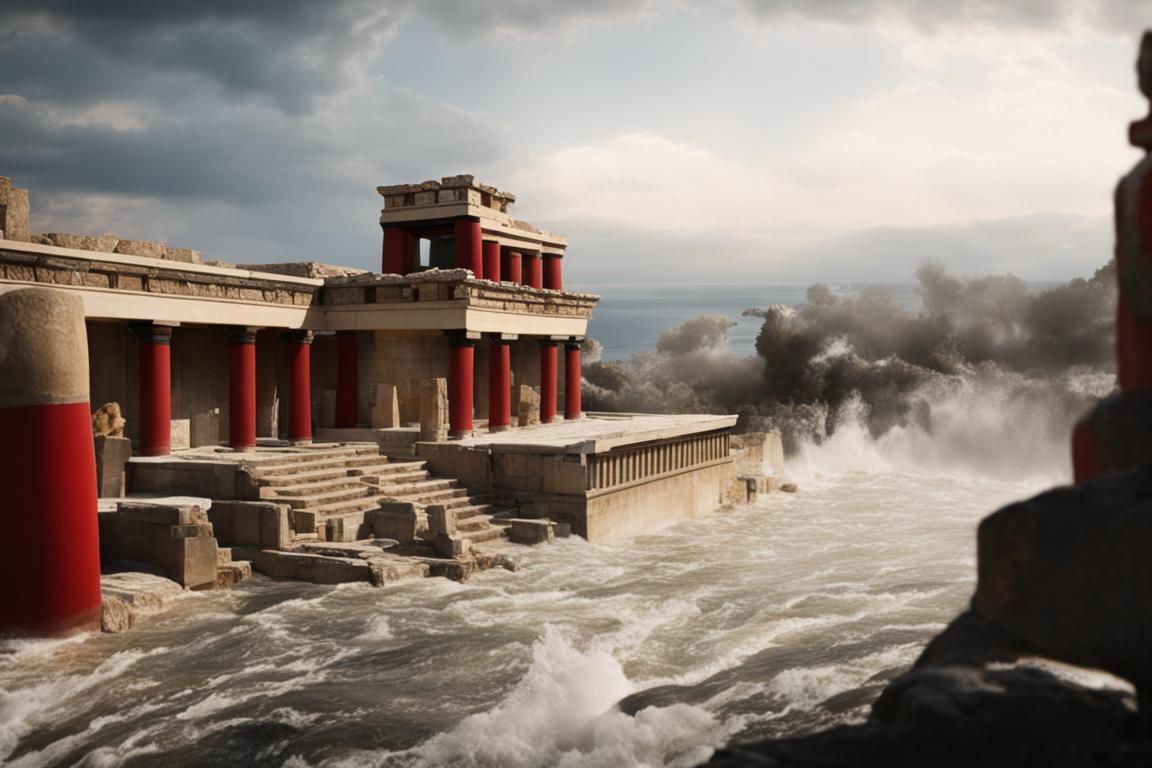
The eruption of the volcano on the island of Thera (Santorini) took place in the 17th or 16th century BC – radiocarbon dates and archaeological dating diverge here – and was accompanied by earthquakes and tsunamis throughout the Aegean. It was one of the largest volcanic events in human history, throwing out an estimated 28 to 41 cubic kilometres of material and burying the town of Akrotiri on Santorini under pumice and ash. The Greek archaeologist Spyridon Marinatos was the first, in 1939, to connect the catastrophe with the decline of Minoan civilisation. It undoubtedly struck Crete as well: ash fell across the island, and waves some nine metres high swept over coastal sites such as Palaikastro in the far east. Yet Minoan Crete recovered and went on to what many regard as its cultural zenith, and the destruction of Knossos around 1450 BC cannot be explained by a single event: scholars also take into account earthquakes, fires and political upheaval, not least the advance of the Mycenaeans.
Setting the scene: the scripts of Knossos
The Minoans’ Linear A script has not been deciphered to this day, and nor has the still older Cretan hieroglyphic script. Linear B, on the other hand – both names are Evans’s – was read in 1952 by the English architect Michael Ventris, building on the groundwork of the American classicist Alice Kober and supported by the Cambridge philologist John Chadwick, as an early form of Greek; it belongs to the Mycenaean phase of Knossos. It is a syllabic script of some 87 signs, supplemented by more than a hundred ideograms standing for commodities. Evans came upon the first substantial cache on 5 April 1900, in what is known as the Room of the Chariot Tablets, whose contents, dating from the second half of the 15th century BC, are probably the oldest Linear B documents of all. In the end Knossos yielded well over 3,500 clay tablets, pieced together from some 5,500 fragments – the largest body of such texts in the Aegean. They record harvests, levies, offerings to sanctuaries, raw materials and equipment, wool, grain and livestock; the handwriting of dozens of individual scribes can be told apart, sixty-six of them by one count. Frescoes and architecture thus tell us about the culture, the Linear B tablets about language and economic administration. One of these tablets, incidentally, lists an offering of honey for the “Mistress of the Labyrinth” – a rare case in which the word labyrinth is attested as early as the Bronze Age.
Setting the scene: myth and archaeology
Minos, Europa, Daedalus, Icarus, Ariadne and Theseus belong to the tradition of Greek legend. There is no evidence that Minos was a real person, and archaeological Knossos does not prove that these figures are literally historical; but it does show why later Greeks associated the island with stories of royal power, of a labyrinth and of voyages by sea. Arthur Evans himself suspected that the word labyrinth was connected with the labrys, the Cretan double axe, whose sign is scratched again and again into the walls of the palace – an interpretation that is still debated.
Rise and heyday
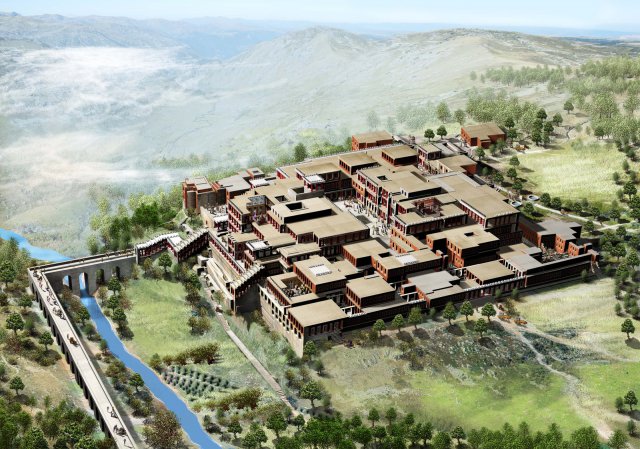
The ground on which the palace precinct of Knossos stands had been lived on since the Neolithic. Archaeologists record a phase of vigorous development from the 19th to the 17th century BC. Around 1700 BC there was widespread destruction, probably caused by a severe earthquake; there followed a phase of rebuilding lasting some two hundred years, and in the 15th and 14th centuries BC the culture of Knossos reached its height. Historians call it Minoan, after King Minos. It is expressed in the building of several palaces on the island – Phaistos, Malia and Kato Zakros among them – of which Knossos was the largest. At the time of its greatest extent the town surrounding the palace is estimated to have had about 25,000 inhabitants; modern survey has traced its remains over an area of roughly eleven square kilometres. Above is a video of the palace as it is today and below it a reconstruction; a fuller account follows further down.
Layout and architecture of the complex
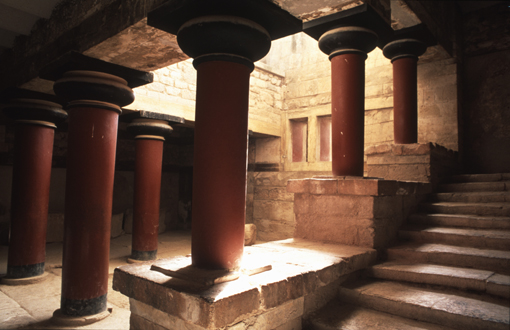
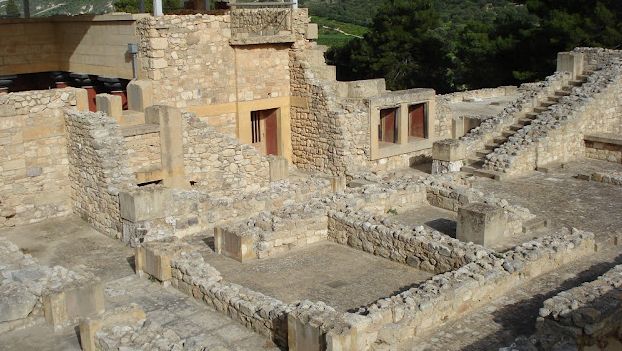
Knossos is a complex of buildings with some 1,200 rooms grouped around two paved courts – the great rectangular Central Court and the West Court. The rooms are arranged in idiosyncratic fashion on different levels and are linked by stairs and passages, some of which lead underground. A veritable labyrinth. The total area of the palace is considerable: around 20,000 square metres or a little more. The complex rose through several storeys, in some parts as many as five, and contained magnificent royal apartments, private dwellings, administrative buildings, shrines, craftsmen’s workshops and storerooms. Its most recognisable feature is the Minoan column, which, unlike the Greek, tapers downwards from a rounded capital to a stone base.
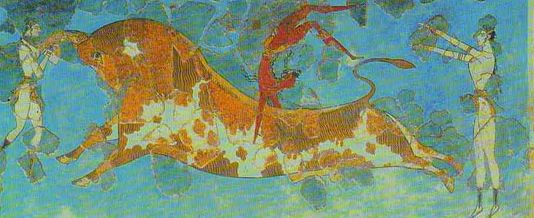
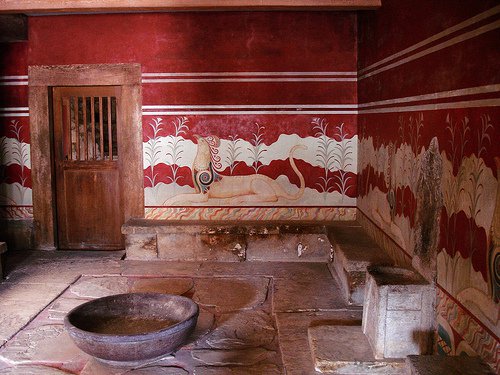
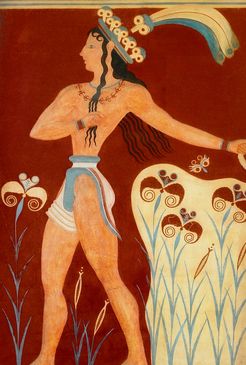
In the west wing lie the Tripartite Shrine, the temple repositories, the pillar crypts and the famous Throne Room, unearthed by Evans in 1900 in his first season, with its alabaster throne against the north wall, flanked by painted griffins and surrounded by gypsum benches and a sunken lustral basin – it is regarded as the oldest surviving throne in Europe. The suite, with its anteroom, could hold about thirty people. Evans took it for the seat of a priest-king; later scholars, among them Helga Reusch and Friedrich Matz, saw in it rather the sanctuary of a goddess, whose priestess sat here as her embodiment, and in its present form the room is now generally assigned to the Mycenaean period after 1450 BC. In the east wing the impressive Grand Staircase leads down to the residential and reception rooms, among them the Hall of the Double Axes and the so-called Queen’s Megaron. The south entrance was decorated with the fresco of the Prince of the Lilies, the west hall of the north entrance with the bull fresco. From the Little Palace and the town the paved Royal Road led to the north-west corner of the palace, where there is a theatre-like area with tiers of steps.
Engineering and painting
The whole complex was equipped with a carefully thought-out system of water pipes and drains. The pipes of fired clay were tapered at one end so that they could be slotted into one another. Light wells brought daylight and fresh air into the depths of the building; walls pierced by several doorways could be opened or closed according to the season; timber beams set into the masonry made the structures more resistant to earthquakes. All this bears witness to a high standard of engineering, which kept the rooms cool in summer and warm in winter.
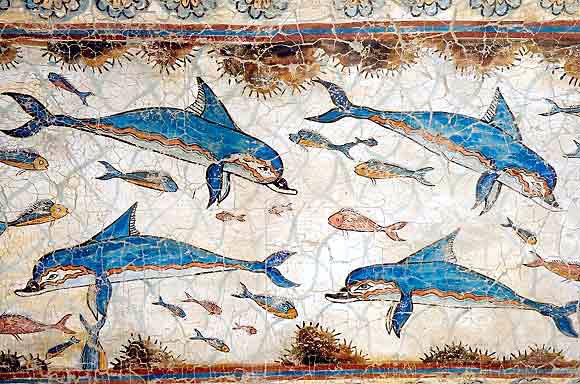
The walls of most rooms were painted with frescoes. They are the most important source of information about the social order and cultural level of the Minoan age, since the Minoan script has not yet been deciphered. Among the well-known pictures are processions of life-size gift-bearers, the bull-leaping scenes, the dolphins in the Queen’s Megaron and the Prince of the Lilies. Beneath some frescoes older layers of painting were discovered – the rooms were redecorated again and again over the centuries. What survived was for the most part fragmentary, and how much of the completed pictures is ancient and how much is owed to the Gilliérons’ restoration is a question worth keeping in mind. The originals are now shown in the Archaeological Museum of Heraklion; at the palace itself one sees copies.
Minoan culture and society
Archaeological investigation has shown that the town was not surrounded by fortification walls – a sign of long, peaceful development and economic prosperity. The state of Knossos had a strong merchant fleet and maintained close trading relations with the inhabitants of the Greek mainland, with the islands of the Mediterranean and with Egypt. The Greeks later remembered this age as a “thalassocracy”, a rule of the sea under Minos, of which the historian Thucydides already speaks: for him Minos was the earliest man known to have built a navy.
A meeting of cultures
Egyptian influence can be felt in the wall painting and the reliefs. Scenes of lion hunting, such as are known from Mycenae, cats stalking birds, and acrobatic leaps over the bull vividly recall similar motifs on Egyptian reliefs and wall paintings. Conversely, frescoes in the Minoan style have been found in Egypt, along with depictions of envoys from the land of “Keftiu”, as the Egyptians probably called Crete.
“La Parisienne” and the “Ladies in Blue”
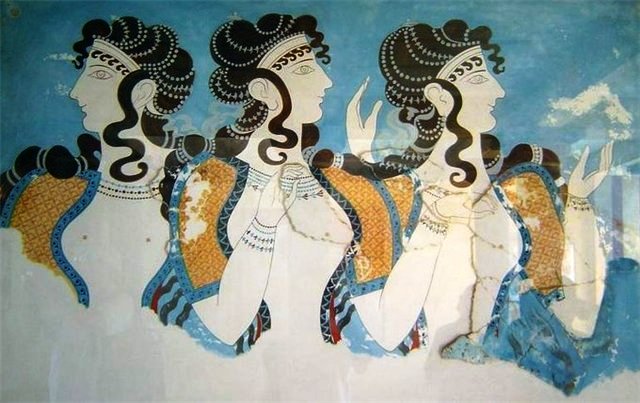
In the wall painting and small-scale sculpture of Knossos one very often meets female figures, to which scholars have given nicknames such as “La Parisienne” and the “Ladies in Blue”. “La Parisienne”, found by Evans in 1901 and painted around 1400 BC, is a fragment of the so-called Camp Stool Fresco, a scene of a ritual banquet; she owes her name – bestowed by the French archaeologist Edmond Pottier – to the large eyes outlined in black, the reddened lips and the pert lock of hair, which reminded the excavators of the ladies of Parisian society around 1900. At the nape of her neck she wears a looped “sacral knot”, and she is larger than the figures around her, which suggests a priestess or a goddess. There is no agreed view of the religious ideas of the Minoans: many scholars see goddesses or priestesses in the frequent depictions of women, while others warn against reading too much into the pictures.
The eruption of Thera and its consequences for Knossos
The volcanic eruption on Santorini and the mighty tsunami that followed it are held to mark the beginning of the decline of Knossos – though, as explained above, not its only cause. In the centuries that followed the palace was gradually abandoned, but its archaeological treasures remain an eloquent testimony to Minoan civilisation.
Myths and legends of the palace of Knossos
Europa, mother of Cretan civilisation
In the distant past, when the gods still walked among mortals and the sky brushed the earth with its clouds, there lived a beautiful princess named Europa. She was the daughter of the Phoenician king Agenor and the lovely Telephassa. So graceful was Europa that even the flowers bent towards her, as if they wished to touch her beauty.
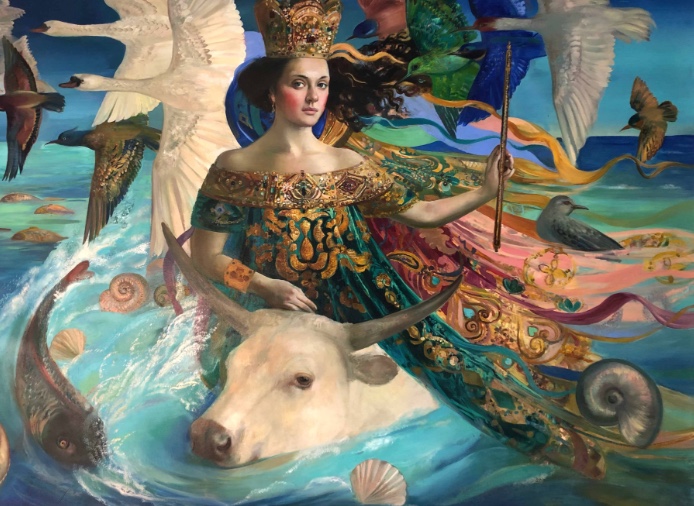
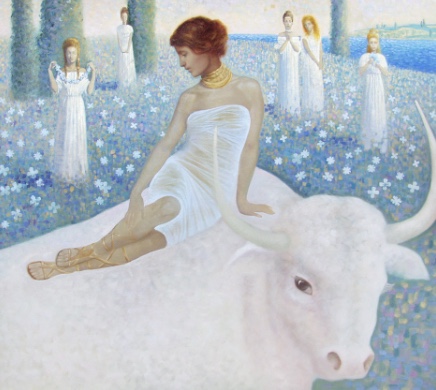
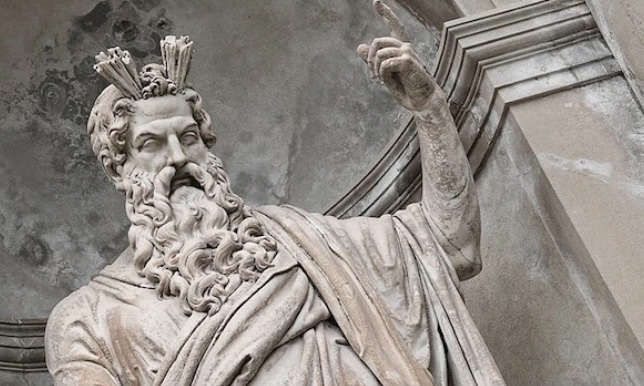
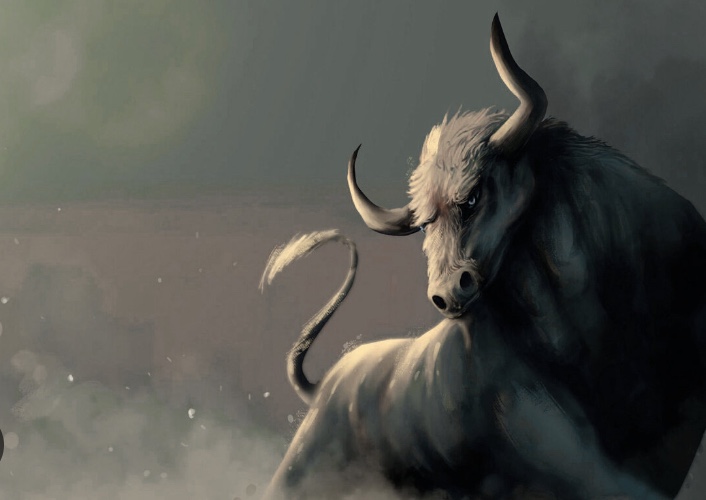
One day, as Europa was gathering flowers on the seashore with her companions, her eye fell on an unusually beautiful white bull. He was like no other: his coat gleamed in the sun like the snow on the mountain tops, and his eyes were full of kindness and gentleness. Yet this bull was none other than Zeus, greatest of the gods, who had fallen in love with Europa at first sight.
Zeus had taken the form of a bull in order to approach Europa and win her trust. Fearlessly she went up to him and at last even seated herself on his back. At that moment Zeus rose gently and carried her away from the shore through the waves. Across the sea he brought Europa to Crete, where he resumed his true form and made himself known to her. Europa was frightened and enchanted at once. Zeus made her queen of the island and promised her eternal love and protection. According to Cretan tradition their union took place in the shade of a plane tree near Gortyn, which has never since shed its leaves; later Europa married the Cretan king Asterion, who adopted her sons. From the union of Zeus and Europa three sons were born: Minos,
who became a great king of Crete;
Rhadamanthys, who became a judge in the underworld;
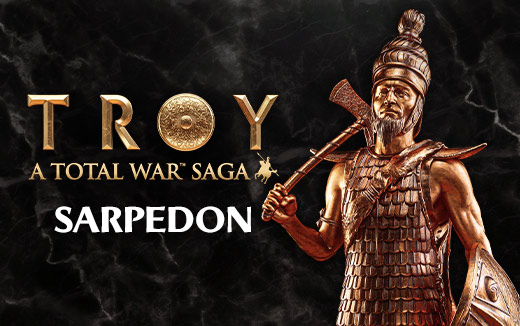
and Sarpedon, who according to one tradition went to Lycia in Asia Minor. In Homer’s Iliad a Lycian king named Sarpedon fights in the Trojan War on the side of Troy; the ancient authors linked the two figures in various ways. Today he even turns up in the computer game “A Total War Saga: Troy”. All three brothers were held to be blessed with wisdom and strength, the inheritance of their divine father.
King Minos, the first European
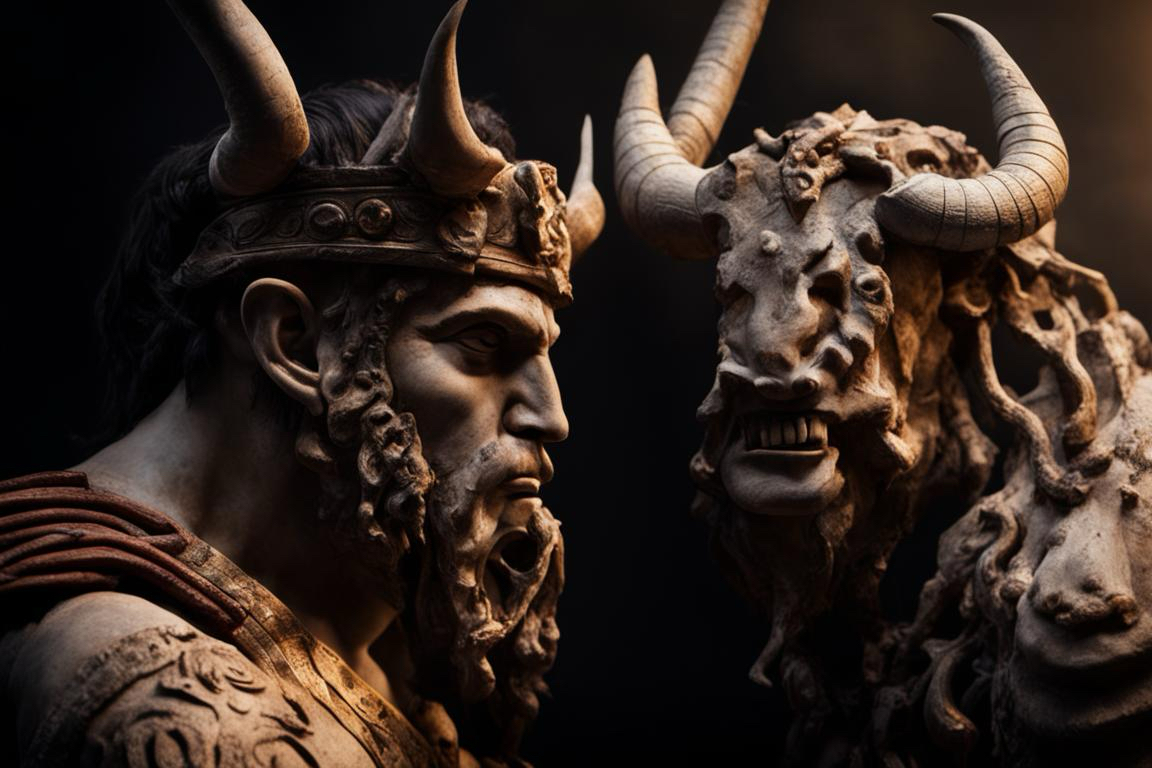
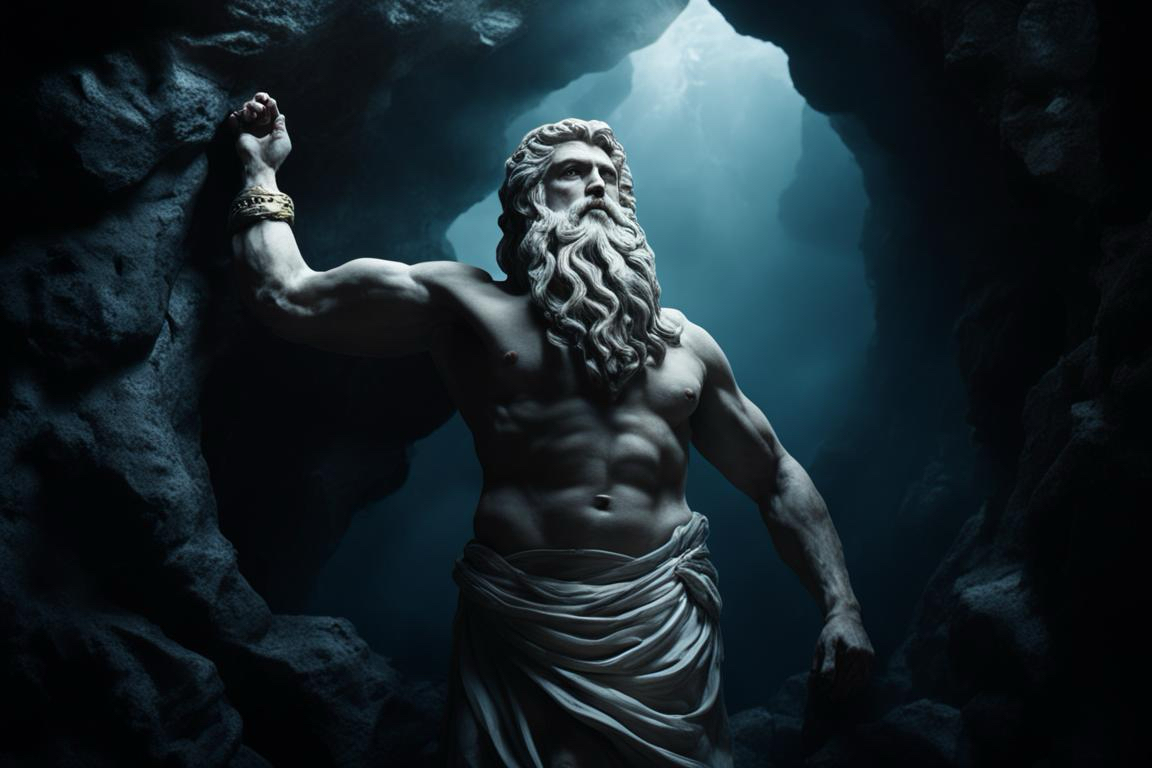
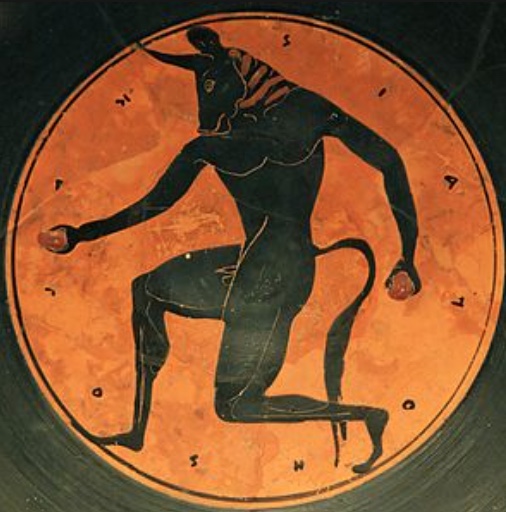
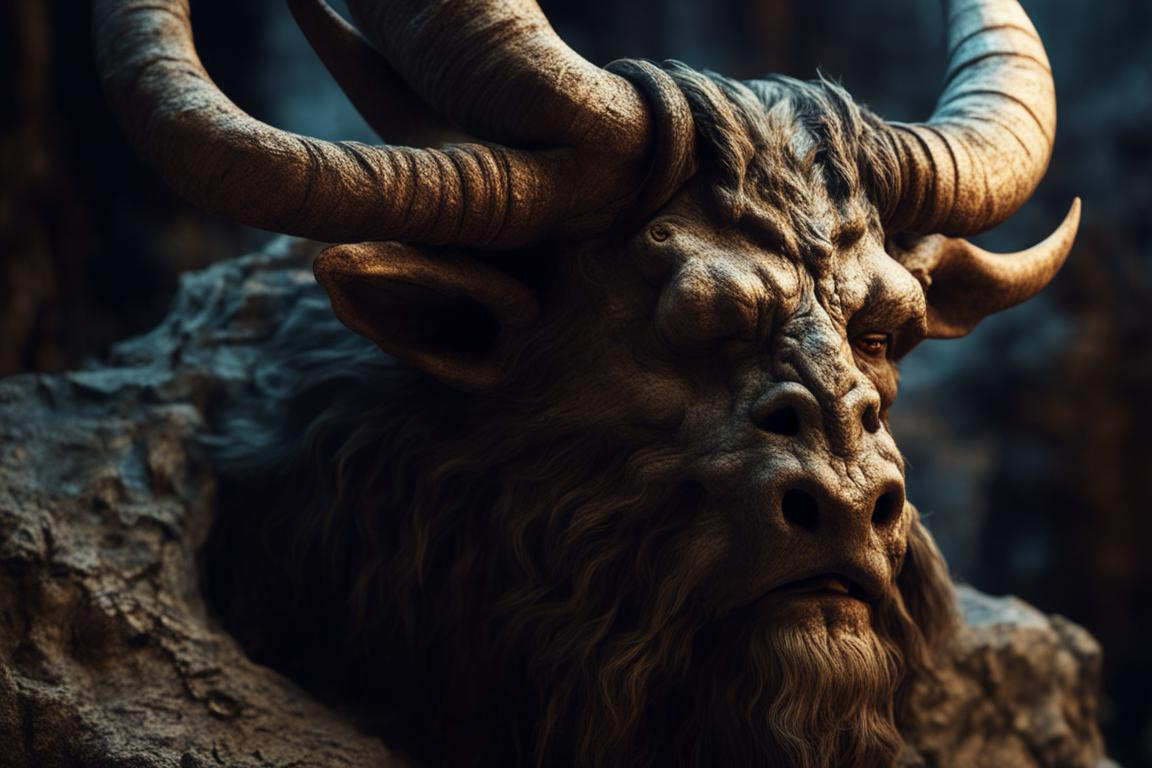
Minos, son of Zeus and Europa, is, in mythological terms, the first European. He was not merely a king but the emblem of divinely sanctioned rule, the link between gods and men. According to the legend he had disputed the throne with his brothers and, as a sign of divine favour, had asked Poseidon for a magnificent bull from the sea, which he was meant to sacrifice. Because he kept it, the god punished him: his wife Pasiphaë fell in love with the bull and gave birth to the Minotaur, a creature half man, half bull, which was shut up in the Labyrinth. Athens, it is said, had to send seven youths and seven maidens to Crete as tribute at regular intervals – every nine years, in the usual telling, on the orders Minos gave to King Aegeus – and they fell victim to the monster. On the Athenian stage Minos accordingly appeared as a harsh tyrant, elsewhere as a wise lawgiver; to reconcile the two, later writers such as Diodorus Siculus supposed that there had been two kings of the name.
According to the legends, Minos went down every nine years into a cave, where Zeus gave him the laws – Homer already calls him the confidant of great Zeus; the place was thought to be one of the caves of the Ida or the Dikti Mountains. This direct converse with the highest god not only consolidated his rule over Crete but made his destiny unique and underlined his special role as mediator between heaven and earth. Like his life, his death is wrapped in myth. Some versions relate that he perished in Sicily while pursuing the fugitive Daedalus – the daughters of King Kokalos are said to have killed him in his bath – and others that he became a judge in the underworld with his brother Rhadamanthys and with Aeacus, an office in which Virgil shows him in the Aeneid and Dante at the entrance to Hell in the Inferno. However he may have ended, the figure of Minos embodies an age in which myth and reality were interwoven and in which the foundations were laid of that culture and those values on which European civilisation is built.
Minos and his age stand for the golden age of Crete, for peace, prosperity and cultural flowering. At the same time they are a reminder that power and greatness are often accompanied by tragedy and trial. The myth of Minos teaches us to value wisdom and justice and to understand that every decision has consequences and every deed its price.
Daedalus and Icarus – the price of overreaching
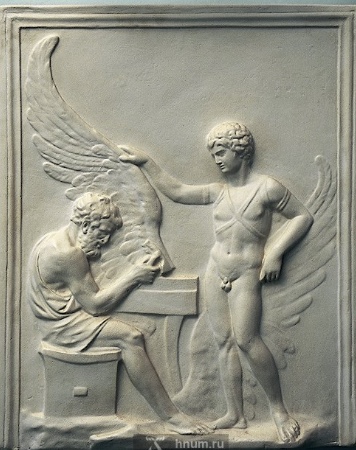
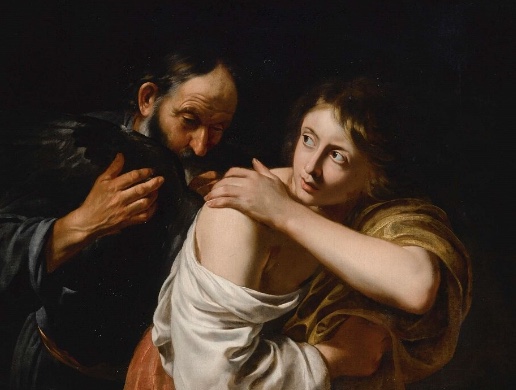
Daedalus, who was held to be the greatest builder and inventor of his time, became famous because, at the behest of King Minos, he created the Labyrinth on Crete to keep the Minotaur imprisoned in it. But the greatness of Daedalus aroused the jealousy of Minos, who wanted to prevent so gifted a man from leaving Crete and serving another master. Other versions of the legend give as the reason that Daedalus had helped Queen Pasiphaë and had given Ariadne the saving advice about the thread. And so Daedalus and his young son Icarus were shut up in the very Labyrinth that Daedalus himself had built.
In order to escape, Daedalus made wings for himself and Icarus out of birds’ feathers, which he joined together with wax. He warned Icarus to fly neither too low, lest the sea water make the wings heavy, nor too high, lest the sun melt the wax.
But in flight Icarus, intoxicated by the sensation of flying, climbed too high. The wax melted, the wings fell apart, and Icarus plunged into the sea and drowned. The island of Ikaria and the Icarian Sea in the eastern Aegean are said to be named after him. The myth is an image of the limits of human striving and of the danger of hubris.
Ariadne and Theseus – the saving thread
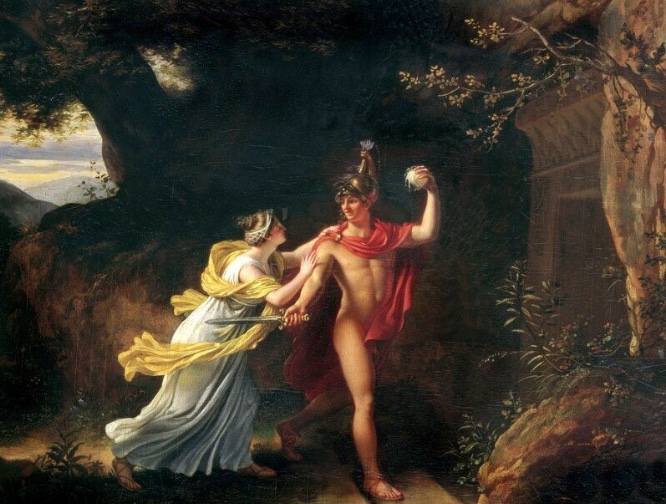
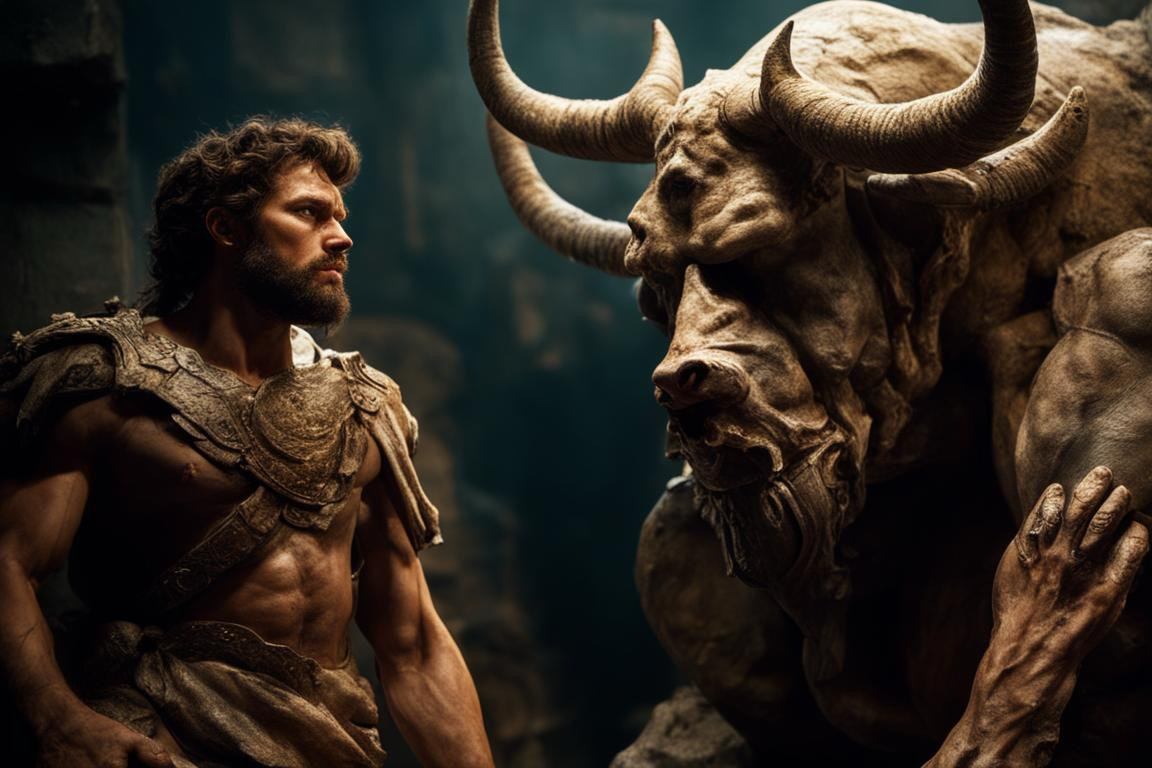
Ariadne, the Cretan princess, embodies feminine strength and self-sacrifice in Greek mythology. As the daughter of Minos and Pasiphaë she grew up in the shadow of the mysterious Labyrinth, which hid the terrible Minotaur in its depths. Her life changed utterly with the arrival of Theseus, the Athenian hero who had come to Crete among the hostages in order to kill the monster. Ariadne fell in love with Theseus at first sight and resolved to help him.
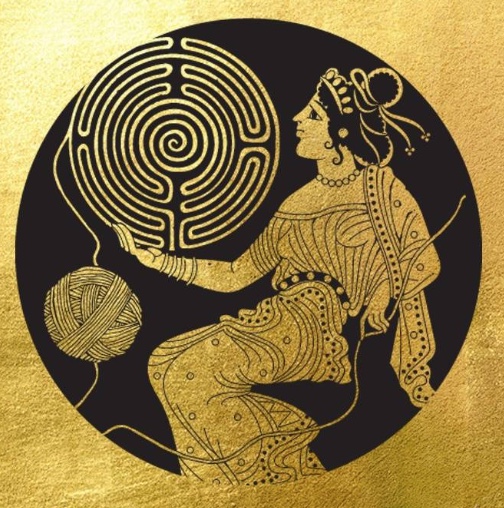
That she gave Theseus the ball of thread – and, some say, a sword as well – was an act not only of love but of courage, for she was risking her life: her father’s punishment would have been certain. In Greek the phrase Ariadne’s thread (ο μίτος της Αριάδνης) is proverbial to this day. Thanks to the thread, Theseus found his way out of the Labyrinth after the fight with the Minotaur and took Ariadne away with him. Here the story might have ended happily, but it turned out otherwise.
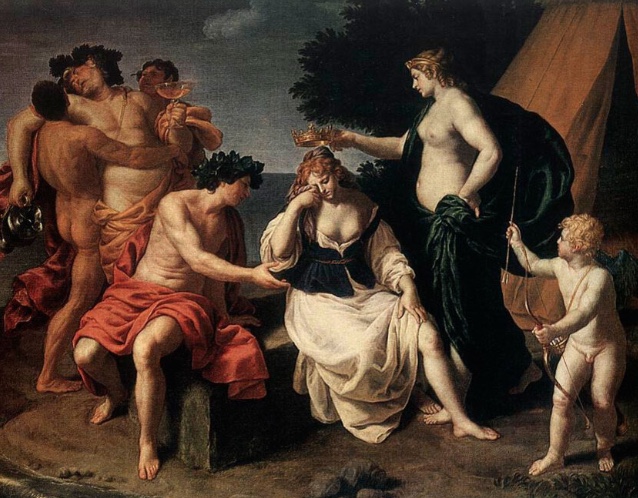
Ariadne’s misfortune ran its course on the island of Naxos, where Theseus abandoned her – driven by his ambition and unmindful of the promise he had given her. Alone and in deep grief, asleep on the shore in the usual telling, Ariadne was found by Dionysus, the god of wine and joy, who recognised in her not only a beautiful soul but an extraordinary strength. Dionysus fell in love with Ariadne and took her as his wife, and she bore him sons, among them Oenopion and Staphylus; in doing so he raised her to the rank of a goddess, and her bridal wreath, so the legend goes, was set in the sky as the constellation Corona Borealis, the Northern Crown. Some scholars suspect that she had been a great goddess of Crete all along, and point to the “Mistress of the Labyrinth” of the Knossos tablets. This union stands for Ariadne’s transformation from a victim of circumstance into a being of divine destiny, and shows that even in the deepest despair fate can open a new path and the possibility of a fresh beginning.