Odigitria Monastery and Agiofarango: the Cretan Athos
The most complete guide to Crete: 221 places on the map, 23 routes and 49 articles — with photos, videos and the story behind every place. No sign-up, no trackers.
Routes drawn along real roads
Weather at every stop
Full-text search
“Near me” by geolocation
Create your own printable itinerary
Satellite, terrain, dark mode
Works offline
⌕
Searches 1.7 million characters of descriptions, not just names
—places
4regions
—routes
—with video
Search results
—
Interactive map
Find what is near you
Filters narrow the map and the list at once. Zoom out and pins group together.
Region
Category
Фильтры карты
Landmarks
Featured places
RegionCategory
Routes
Ready-made day trips
Individual places
Articles about landmarks
The Cretan Athos
At the entrance to a gorge whose rock walls are pitted with countless caves – once the refuges of ascetic monks – rises the celebrated monastery of the Panagia Odigitria. Close by, the gorge opens on to one of the loveliest beaches in Crete. Those who make the journey find, within a small compass, everything that defines the south of the island: solitude, history, bare mountains and the deep blue of the Libyan Sea. The mountains in question are the Asterousia, the range that walls off the south coast and culminates far to the east in the peak of Kofinas, 1,231 metres high.
Introduction
The district is called the “Cretan Athos” because the Gorge of the Saints – Agiofarango (Αγιοφάραγγο), the holy gorge – has been a landscape of asceticism since early Christian times. It is only about a kilometre and a half long and can be walked in something like an hour. Its crown is one of the oldest monasteries in Crete, the Panagia Odigitria, whose beginnings go back to the 14th century and which stands some 250 metres above the sea. Many visitors come chiefly for the beach at the end of the gorge, which is counted among the most beautiful on the island. But first things first.
Why the Asterousia are called the “Cretan Athos”
The phrase “Cretan Athos” does not denote a self-governing monastic republic like the one in Chalkidiki. It refers to the Asterousia Mountains (Αστερούσια) in the south of the prefecture of Heraklion, which rise between the fertile Messara Plain and the Libyan Sea; the Minoan palace of Phaistos, on its ridge to the north, looks across the plain towards them. In their gorges, caves and barely accessible corners of the coast a dense network of hermitages, cells and monasteries grew up from Byzantine times onwards. After the liberation of Crete from the Arabs in 961 a new spiritual and economic revival set in here; the remoteness and the stony, fissured terrain favoured the life of the hermits. Among the best-known figures of that age is St John the Stranger (Ioannis Xenos), who founded numerous churches and monasteries in Crete in the 11th century.
Odigitria Monastery and the Agiofarango gorge
Odigitria Monastery became the centre of this monastic landscape. Here begins the way into Agiofarango, the “Gorge of the Saints”, where according to tradition some three hundred hermits once lived. Monastery, caves and beaches on the Libyan Sea therefore belong together: they form a single historical route and not a chance collection of sights. The monastery’s land extends as far as the coast at Kali Limenes (Καλοί Λιμένες), the bay in which, according to the Acts of the Apostles, the ship carrying the Apostle Paul to Rome lay at anchor. St Luke’s account says that the vessel, “hardly passing it, came unto a place which is called The fair havens; nigh whereunto was the city of Lasea” (Acts 27:8, King James Version) – and the Greek name of the bay means exactly that.
Agiofarango, the holy gorge
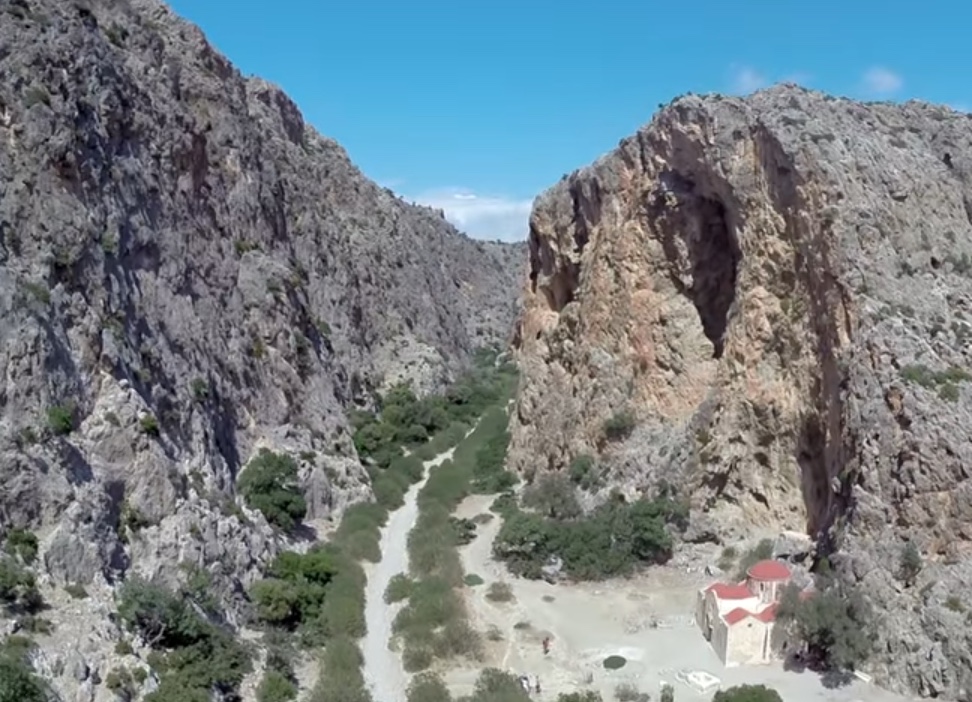
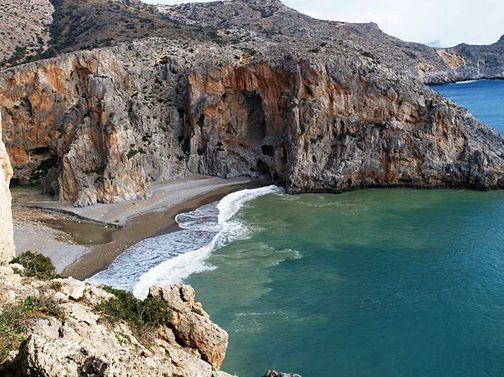
Agiofarango lies south of Odigitria Monastery and is formed by two stream beds: one comes from the north-north-east, from the hamlet of Gialomonochoro, the other from the north-east of the monastery. The two meet at the church of Agia Kyriaki – a chapel belonging to the monastery, which keeps its feast on 7 July – flow past it to west and south in a comparatively gentle course, and then enter the gorge proper, which runs down to the Libyan Sea. There lies a small but magnificent bay of fine pebbles, with clear, turquoise water that deepens quickly and high cliffs closing it in on either hand.
For most of its length the gorge is hemmed in by tremendous vertical walls of rock in which innumerable caves open. Agiofarango is uncommonly picturesque, its beauty wild and austere; wild goats pick their way along the ledges overhead. Today it attracts climbers as well as walkers, for numerous routes have been equipped on the limestone walls.
All this – together with the great distance from any human settlement – made Agiofarango, as early as the first Christian centuries, the earliest centre of the ascetic life, not only of the region but of the whole of Crete. The very name of the gorge expresses the holiness of the place most aptly. In summer the path is sunny and hot; stout footwear, a hat and plenty of water are indispensable, for there are no springs here, and the beach itself has neither shade to speak of nor any facilities. Out of respect for a place that is still monastery ground, nude bathing is not appropriate.
The church of St Anthony
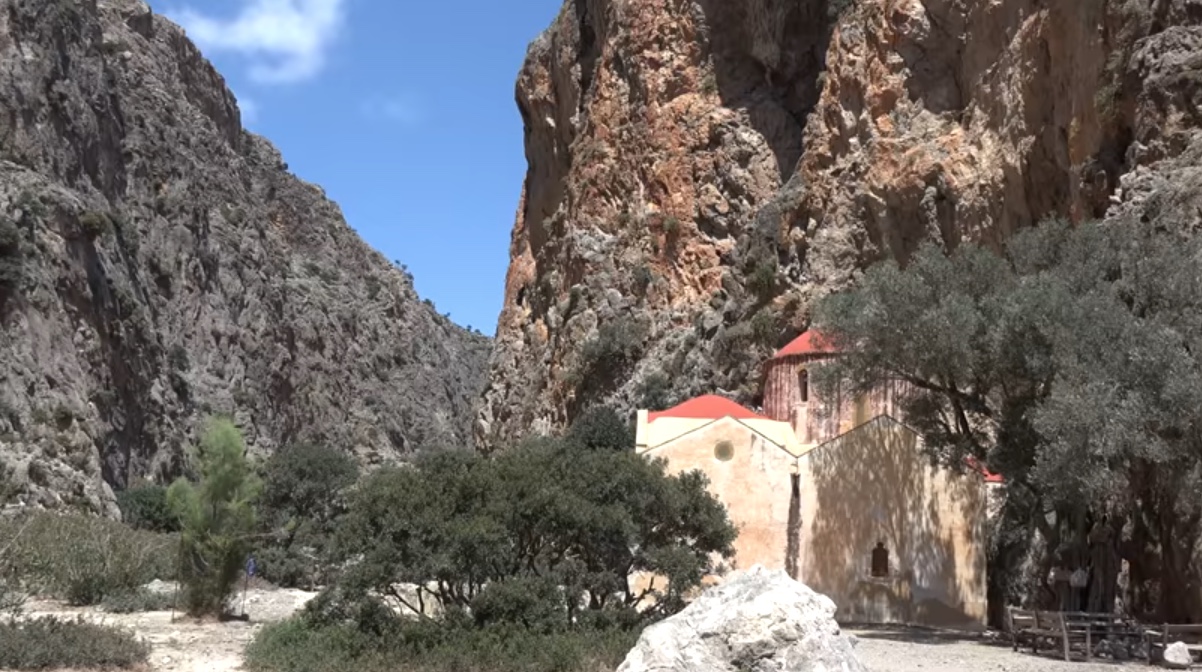
Descending the gorge, about 250 metres before the beach you come to the church of St Anthony (Agios Antonios). It was the heart of the ascetic life in this district, for it was probably here that all the common services of the hermits were celebrated. The church is thought to have been renewed three times before it took on its present form. Originally it was a tiny chapel in a small rock cave; as the number of ascetics grew, a larger space was needed and it was extended. It was rebuilt or enlarged for the third and last time in the 14th or 15th century, and in that form it survives to this day. The building follows a severe Byzantine style; it was once painted throughout, but the proximity of the sea has destroyed the frescoes. In front of the church is a well from which the hermits drew their water, for there is no spring anywhere in the surroundings.
South of the church, on a low rise, a buried Minoan circular tomb with a vault (a tholos tomb) was discovered – evidence that people were already living here in Minoan times.
The Goumenospilio
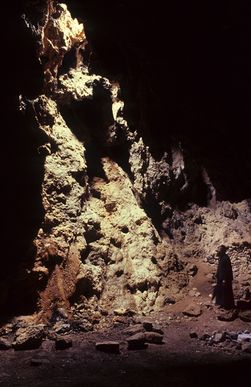
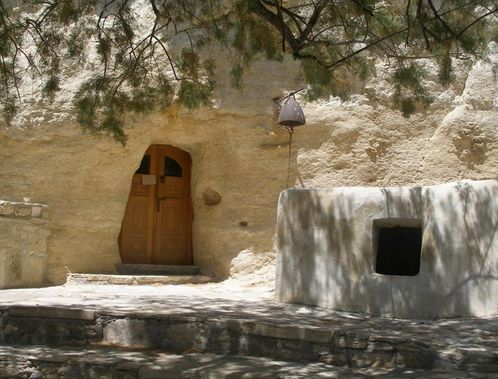
Continuing from the church of St Anthony down towards the sea, you soon come, on the left, to the Goumenospilio (Γουμενόσπηλιο), the “Abbot’s Cave”: its entrance is very low, but the interior is a spacious cavern, lit from above through an opening in the roof. According to popular tradition the monks of Agios Antonios lived and prayed here for as long as their church was being built. Later the hermits, who lived scattered through the gorge, are said to have gathered here once or twice a year for common worship. Beyond the beach to the south-east, reached only by a rough and awkward footpath, is a curiosity of another kind: Vourvoulitis, a sinkhole filled with sea water that enters through passages below the surface and is in places more than ten metres deep.
Odigitria – the founding of the monastery
The monastery lies in the south-western part of the Asterousia, between the village of Listaros and the little port of Kali Limenes; with its high walls it looks from a distance like a fortress. According to tradition it was founded by a woman who lived in the district of Livadiotis, near the village of Pompia. She came of a wealthy family and had one daughter. After the death of her husband the daughter died too – suddenly, on the day of her betrothal. The mother then left her house and implored the All-Holy Mother of God to show her the way. The Virgin pointed out to her the place where she was to rebuild a ruined monastery and herself become a nun. And so she did: she gave up her entire fortune and raised a large convent, which she named Odigitria – after the Mother of God “who shows the way”.
Her estates in Livadiotis she presented to the monastery, which she herself entered under the name of Martha. The name of the nun Martha is recited in the services of the monastery to this day as that of its founder.
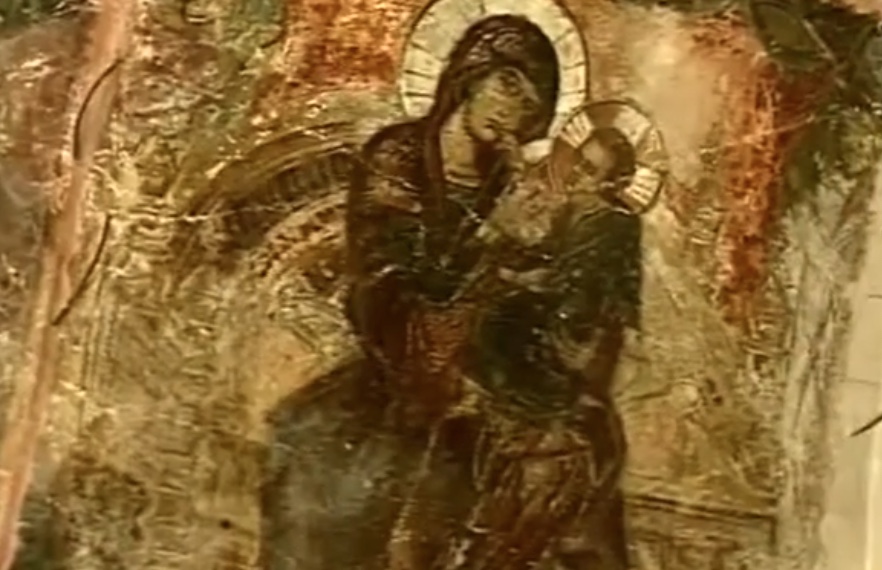
According to another, historically grounded explanation, the name Odigitria goes back to a copy of the famous icon from the Hodegon Monastery in Constantinople. That icon was attributed to the Evangelist Luke and was one of the best-loved and most wonder-working images of Byzantium. Historical sources also connect the monastery with the distinguished Cretan-Byzantine family of Kallergis, in whose possession it once was. The frescoes in the katholikon – the main church, dedicated to the Dormition of the Virgin and to the Apostles Peter and Paul – prove that services were being held here as early as the 14th century, whereas the first written records in the monastery’s own story date only from the 16th.
The monastery’s heyday (the Venetian period)
Masterpieces of 15th-century Cretan painting were created at Odigitria Monastery, among them works by the painter Angelos (Akotantos), a leading master of the Cretan School, who made the iconostasis of the church. Four of his icons have survived in the monastery: Christ the Vine, the Mother of God as the Life-giving Spring, the Meeting of Peter and Paul, and St John the Baptist. Of particular significance is the embrace of the two princes of the Apostles – an image which, at the time of the Council of Florence, was understood as an emblem of reconciliation between the Eastern and the Western Church.
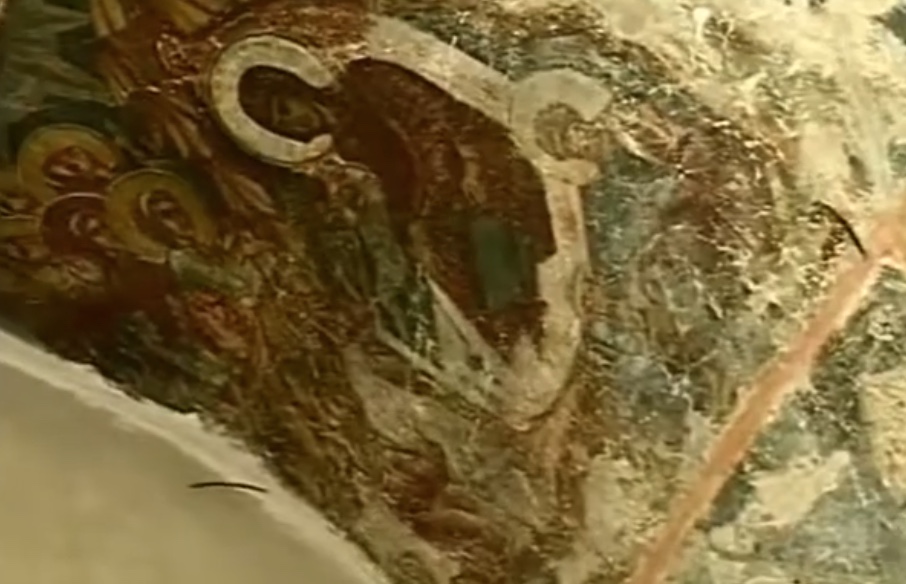
Among the important works of that epoch are also the frescoes in the chapels of St Andrew and St John the Baptist in the deep valley of Vathy Lagkos, which belong to the monastery and keep their feasts on 30 November and 29 August respectively. They date from the early phase of the brilliant Palaiologan art. The katholikon itself is a two-aisled church that grew out of several alterations to a single-aisled church of the 14th century: the south aisle is dedicated to St Phanourios, the north aisle to the Apostles Peter and Paul. In the cross-vaulted narthex frescoes of high artistic quality from the middle of the 14th century have been preserved – scenes from the lives of St Paul of Thebes and St Anthony, sixteen stanzas of the Akathist Hymn, and a picture of the founder-monk Gregorios, who is being blessed with other monks by Christ Pantokrator.
The latest dated frescoes belong to the third decade of the 14th century. Odigitria Monastery also possessed a large library, in which many learned monks and copyists of manuscripts worked. Numerous documents in the State Archives of Venice – above all contracts of purchase and sale – show that in the Venetian period the monastery was among the largest and richest in Crete. Above the central gate of the enclosure wall the date 1568 can still be read, the year in which the complex was rebuilt in the fortified form it has today.
Under Ottoman rule
Odigitria Monastery stood up resolutely for the Orthodox faith and for the population that suffered under the violence of the Ottoman rulers. It shared its modest stores with the peasants and supported the Chainides (Χαΐνηδες) – irregulars who took to the mountains to resist Ottoman oppression.
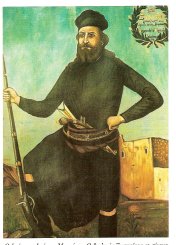
Outstanding among the Chainides was Xopateras, a monk of the monastery, who became in Crete the very image of heroic courage. Through him and other fighting monks the monastery took an active part in the island’s struggle for freedom, and paid for it in the risings of 1821 and 1866. Other well-known fighters of the time were Michalis Kourmoulis, Michalis Korakas, Malikoutis and Tsakiris.
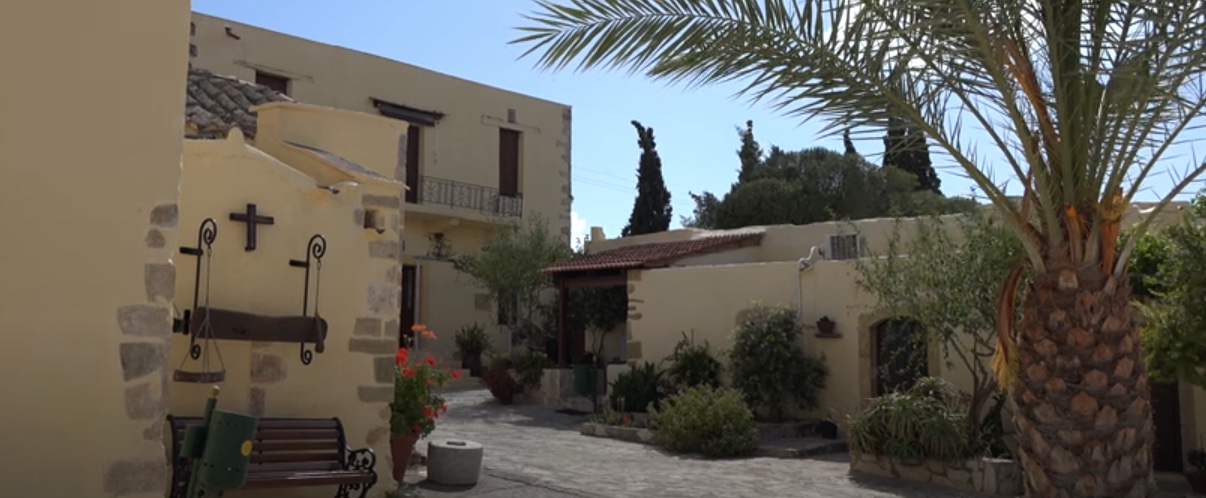
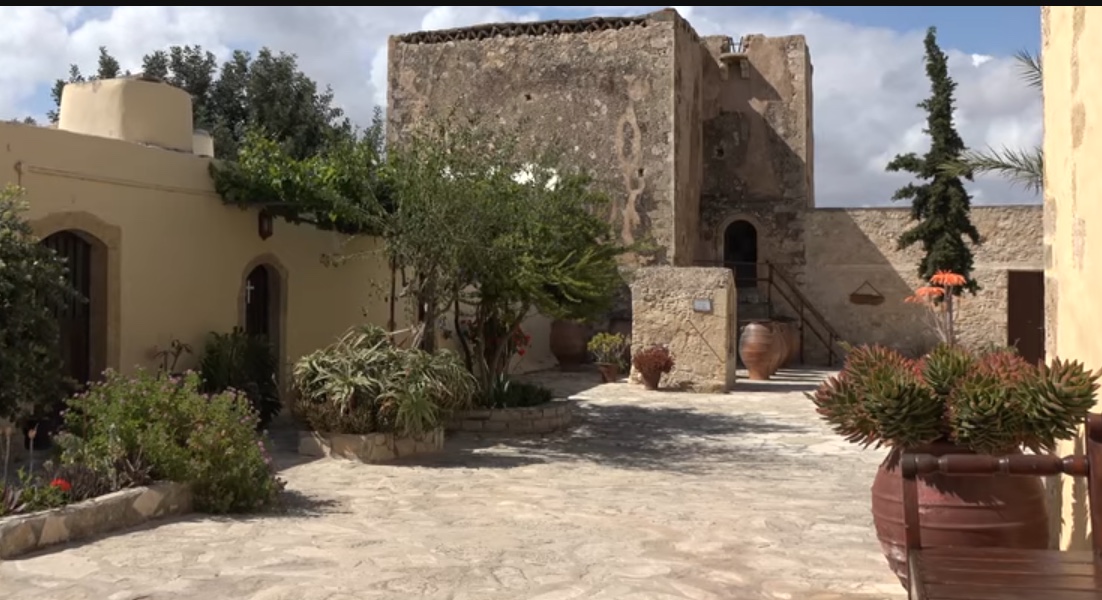
After the death of Xopateras the Ottomans laid waste the monastery, destroying buildings and sacred objects; in 1866 it was plundered again. In 1841 the Holy Synod of Crete resolved on its rebuilding, and in 1844 the Ecumenical Patriarchate confirmed the step by granting the monastery stauropegial status – since then it has been directly subject to the Patriarch. This protected its landed property at the same time and contributed to a new flowering. From these centuries come the refectory (built in 1782 and later renewed), the buildings added in the early 20th century such as the bakehouse and the abbot’s quarters, and an olive mill of the 17th or 18th century whose equipment is preserved complete. Around the courtyard are also storerooms, a cheese cellar, a well, a guest house, the monks’ cells and the graves of former abbots. A small museum shows millstones, a wine press, farming implements and everyday objects from various periods.
The legendary Xopateras
Anyone catching a first distant sight of Odigitria Monastery might take it for an old castle. It lay, it is true, away from the coasts where pirates landed in the 16th century, but the country was as lonely then as it is now. Against enemies of every kind – robbers, Ottomans and others – there was the protection of high walls, a defensive tower and monks who knew how to fight.
Among these monks the legendary Xopateras stood out, also called Xepapas or Xopapas; his name in the world was Ioannis Markakis, his monastic name Ioasaf. Ioannis, born in 1788, wished to marry a girl of whom his father did not approve. In protest he entered Odigitria Monastery as a monk and received the name Ioasaf. Before long he joined the Cretan insurgents who were fighting Ottoman rule, using the monastery as his base.
From about 1810 his exploits became widely known, and the Ottomans called him “Chaini”, from the Arabic-Turkish word chain, “traitor, renegade”. The Cretans also knew the Chainides as Kalisperides, because they preferred to fall upon the Turks by night – kalispera means “good evening”. They became the emblem of resistance. Ioasaf was also called the “Deli Papas”, the “mad priest”.
Ioasaf’s reputation as a protector of the Christians spread quickly and so alarmed the Ottomans of the district and in Heraklion that they called upon the Metropolitan to bring him to heel. Under threats and pressure the Metropolitan stripped him of his priestly office and made him an “ex-papas”, a priest “outside” the priesthood – hence the nickname Xopateras. According to another tradition Ioasaf was suspended because he had killed a janissary who had insulted his sister.
After Xopateras had killed the cruel and tyrannical janissary Argolidas, the Ottomans resolved to attack Odigitria Monastery in February 1828 with 3,000 men. Xopateras was warned and called on other kapetans of the Messara for help, but they could not come to his aid because the river Geropotamos was in flood. In the monastery at that moment were five monks and five laymen, among them Xopateras’s sister; one tradition has it that he managed to smuggle her to safety on the day before the final assault.
From the tower that still stands within the monastery walls, Xopateras and his companions gave the besiegers an unequal fight that lasted three days and three nights. On the third day all his companions had fallen; Xopateras fought on alone, although he was wounded in the hand.
His heroic end came when the Ottomans set fire to the tower. With his gun in one hand and his sabre in the other he strode out in a last sortie. After his death the Ottomans struck off his head, fixed it on a lance and carried it about the district as a sign of their “triumph” – a triumph that bore witness to the unbending spirit of Crete rather than to any victory of the conquerors. Cretan folk songs celebrate Xopateras to this day, and the tower has borne his name ever since; it now houses a small collection of folk objects and implements of old Cretan daily life.
The cave church of Martsalo
About five kilometres from Odigitria Monastery, at the place called Martsalo (Μάρτσαλο), at the entrance to a gorge that runs parallel to Agiofarango and reaches the sea roughly a kilometre north of it, is a church of the Panagia. The two gorges together form the “Valley of the Hermits”.
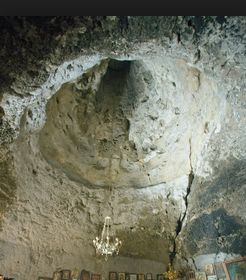
This cave church, the Panagia Martsaliani, is dedicated to the Annunciation of the Mother of God – after an icon that was found in it. It is of particular interest because it was hewn out of the rock in the form of a cone, rather like a bread oven; its depth is eight metres, its height to the crown of the dome ten. On account of the domed shape some scholars suppose that it arose on the site of a Minoan tomb. Beside the church, cells cut in the rock survive in which, towards the end of the 19th century, the monks Parthenios and Evmenios lived as ascetics – the same brothers who later rebuilt Koudouma Monastery on the south coast and are now honoured as saints. In the little bay of Martsalo Cretan date palms (Phoenix theophrasti) grow, and on the western shore traces of a Bronze Age settlement were found.
Between 1866 and 1869 the Ottomans raided Martsalo in order to seize the abbot of the monastery of Agios Georgios Gorgolaini, from the province of Malevizi, and in doing so destroyed all the icons of the church. Two of the most important icons of the Virgin from Martsalo – “In Thee Rejoiceth” (Epi si chairei) and the “Annunciation to the Mother of God” – were painted by Ioannis Stathakis around 1867; they are now kept in the main church of Odigitria Monastery.
The church of Saints Eftychios and Eftychianos
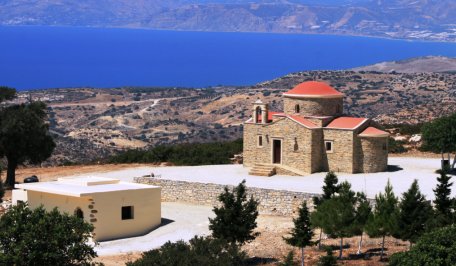
West of Odigitria Monastery stands the splendid church of Saints Eftychios and Eftychianos and of St Kassiani, whose feast the monastery keeps on 17 August. It was built on the ruins of an older church dedicated to the same saints, which belonged to a monastery whose foundation is ascribed to St John the Stranger in the 11th century. The new building was completed in 2011 and is now regarded as a classic example of neo-Byzantine architecture in the region. Relics of the two saints are kept at Odigitria Monastery.