The most complete guide to Crete: 221 places on the map, 23 routes and 49 articles — with photos, videos and the story behind every place. Everything is open and free: no sign-up, no paid sections and no advertising, open or hidden. You can install the guide on your smartphone as an app.
Routes drawn along real roads
Weather at every stop
Full-text search
“Near me” by geolocation
Create your own printable itinerary
Satellite, terrain, dark mode
Works offline
⌕
Searches 1.7 million characters of descriptions, not just names
—places
4regions
—routes
—with video
Search results
—
Interactive map
Find what is near you
Filters narrow the map and the list at once. Zoom out and pins group together.
Region
Category
Фильтры карты
Landmarks
Featured places
RegionCategory
Routes
Ready-made day trips
Individual places
Articles about landmarks
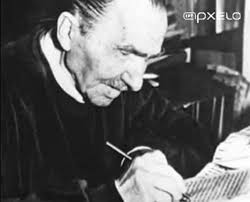
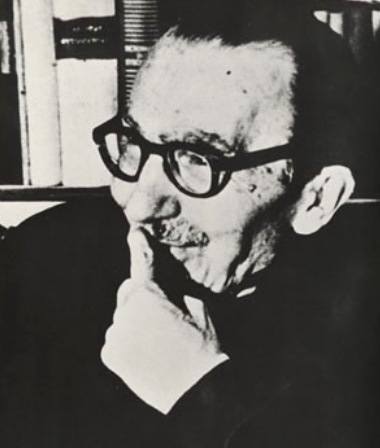
Nikos Kazantzakis
The village of Myrtia (Μυρτιά) is especially dear to every Greek, for it is here that the family of Nikos Kazantzakis has its roots – the world-famous Greek writer and thinker of the 20th century who is sometimes called the “Greek Nietzsche”. The village lies some 15 to 20 kilometres south of Heraklion, and about 11 kilometres beyond Knossos, at an altitude of roughly 365 metres among vineyards and olive groves, and today belongs to the municipality of Archanes-Asterousia. Kazantzakis himself wrote that his father’s family came from a village two hours from Megalo Kastro, as Heraklion was then called, and that this village was named Varvari.
Find on the map
Life and work
The works of Kazantzakis have been translated into more than forty languages. In 1956 he received the International Peace Prize, and he was put forward for the Nobel Prize in Literature nine times; in 1957 he lost by a single vote to Albert Camus, who later said that Kazantzakis had deserved it a hundred times more than he had. His greatest fame came from the novels “Zorba the Greek” (in Greek “Life and Times of Alexis Zorbas”, 1946), “Christ Recrucified” (1948), “The Last Temptation” (1951) and his novel on St Francis of Assisi (1956). He also wrote plays, philosophical works and the vast epic “Odyssey”, begun in 1924 and published in 1938 after fourteen years of work, whose 33,333 lines in 24 rhapsodies carry Homer’s tale forward into a modern wandering of the spirit. As a translator he rendered Dante’s “Divine Comedy” and Goethe’s “Faust” into modern Greek.
Kazantzakis engaged with the most varied intellectual and religious traditions, from Buddhism to Marxism. He travelled incessantly – through Europe, Egypt and Asia – lived for a time in Russia and wrote a series of travel books; in 1914 he met the poet Angelos Sikelianos, with whom he journeyed through the old centres of Orthodox Christianity. The film versions of his works – “He Who Must Die” (1957) by Jules Dassin, “Zorba the Greek” (1964) by Michael Cacoyannis with its famous music by Mikis Theodorakis, and “The Last Temptation of Christ” (1988) by Martin Scorsese – made his writing known all over the world. The writer died on 26 October 1957 in Freiburg im Breisgau, aged seventy-four, of the complications of an influenza caught on a journey to China; his body was brought back to Crete and buried on the Martinengo Bastion of the Venetian walls of Heraklion. On the plain grave stands the inscription he chose himself: “I hope for nothing, I fear nothing, I am free.”
Myrtia and the Kazantzakis Museum
The museum was founded by Giorgos Anemogiannis, a distinguished stage and costume designer whose father Antonis had been a close friend of Kazantzakis’s father and whose own family came from the village. It stands on the central square, on the spot once occupied by the Anemogiannis family house and a small dwelling that belonged to relatives of Kazantzakis. It was opened on 27 June 1983 by Melina Mercouri, then Minister of Culture. From 2009 the museum was completely redesigned with funds from the European Union and the Greek state, and reopened on 3 July 2010. The complex comprises the archive, exhibition rooms, a screening room and a hall for events, named after the founder, with around 150 seats.
Myrtia, the former Varvari, is the ancestral village of Nikos Kazantzakis. The museum, opened in 1983, preserves personal belongings, manuscripts, letters, photographs and first editions of his works. In all the collection comprises more than 50,000 objects in ten groups – letters, autographs, editions and translations, press reports, photographs, sound and film documents, theatrical material such as costumes and stage-set models from the Anemogiannis collection, works of art portraying the author, and personal possessions. Around 500 pieces can be seen in the permanent exhibition, arranged in five sections: the course of his life, the “Odyssey”, formative influences with his correspondence and friendships, the early and theatrical works, and the novels and travel books. A documentary film of about 20 minutes is shown in twelve languages, and a wireless audio tour accompanies the visit. In 2016 the hitherto unpublished manuscript “O Anifóros” (The Ascent) was identified in the archive; it appeared in print in 2022.
A note on his biography
Kazantzakis was born on 2 March 1883 in Heraklion, which then still belonged to the Ottoman Empire. He studied law in Athens from 1902 to 1906 and continued his studies in Paris, travelled widely and was active as a writer, translator, dramatist and thinker; after the Second World War he briefly served as a minister without portfolio and then headed the translations office of UNESCO. He received the International Peace Prize in 1956; he died in Germany in 1957 and rests in Heraklion on the Martinengo Bastion, from which there is a wide view over the city as far as Mount Juktas.
The literary legacy
“Zorba the Greek”, “The Last Temptation”, “Christ Recrucified” and the “Odyssey” reflect an unceasing search for freedom, responsibility and spiritual choice. The epitaph – “I hope for nothing, I fear nothing, I am free” – became the most concise formula of his view of the world. Anyone returning to Heraklion after the museum should therefore also seek out the grave on the city wall: only there does the circle close between the family’s ancestral village and the city in which the writer was born.