Fodele: the El Greco Museum and the Church of the Panagia
The most complete guide to Crete: 221 places on the map, 23 routes and 49 articles — with photos, videos and the story behind every place. No sign-up, no trackers.
Routes drawn along real roads
Weather at every stop
Full-text search
“Near me” by geolocation
Create your own printable itinerary
Satellite, terrain, dark mode
Works offline
⌕
Searches 1.7 million characters of descriptions, not just names
—places
4regions
—routes
—with video
Search results
—
Interactive map
Find what is near you
Filters narrow the map and the list at once. Zoom out and pins group together.
Region
Category
Фильтры карты
Landmarks
Featured places
RegionCategory
Routes
Ready-made day trips
Individual places
Articles about landmarks
Fodele – the home of El Greco?
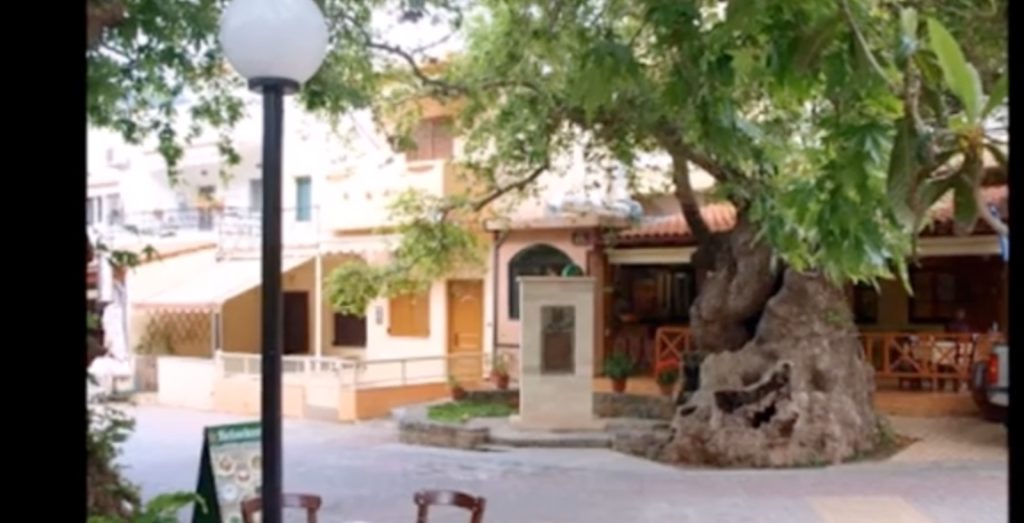
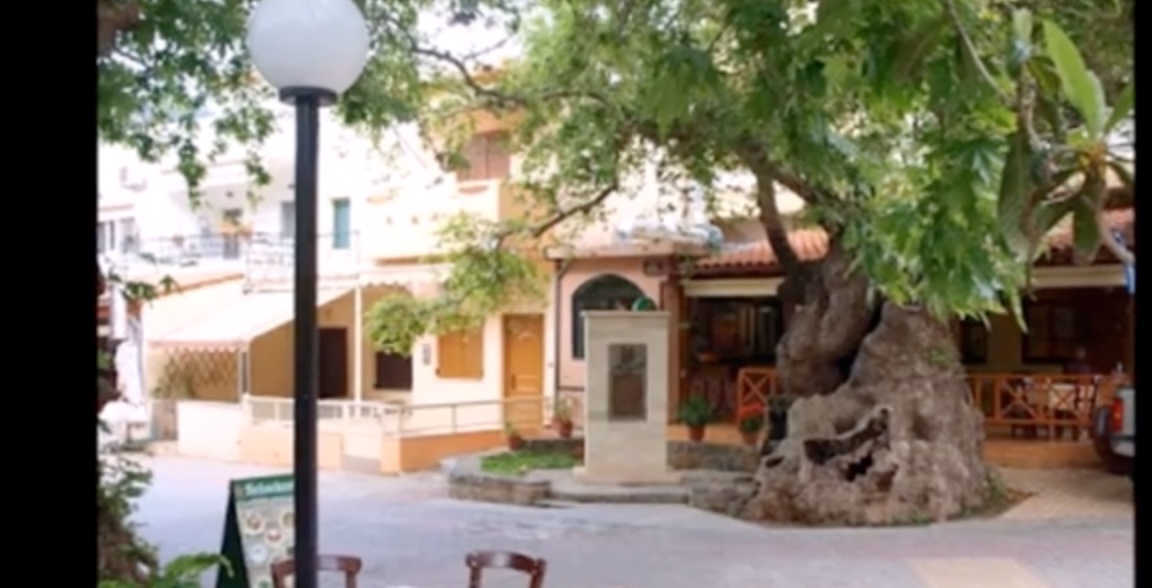
Fodele (Φόδελε) lies some 25 to 30 kilometres west of Heraklion in a deeply cut, green valley in the municipality of Malevizi, not far from the boundary with the regional unit of Rethymno and only about three kilometres from the Sea of Crete. Shaded by massive plane trees and scented by countless citrus trees, it is among the most picturesque villages on the island. Some 450 to 550 people live here; the village stands only about 60 metres above the sea. The turning is clearly signed from the north-coast highway, directly opposite Fodele beach, and the drive from Heraklion takes around half an hour, from Rethymno about an hour.
Find on the map
Introduction: a valley of water and oranges
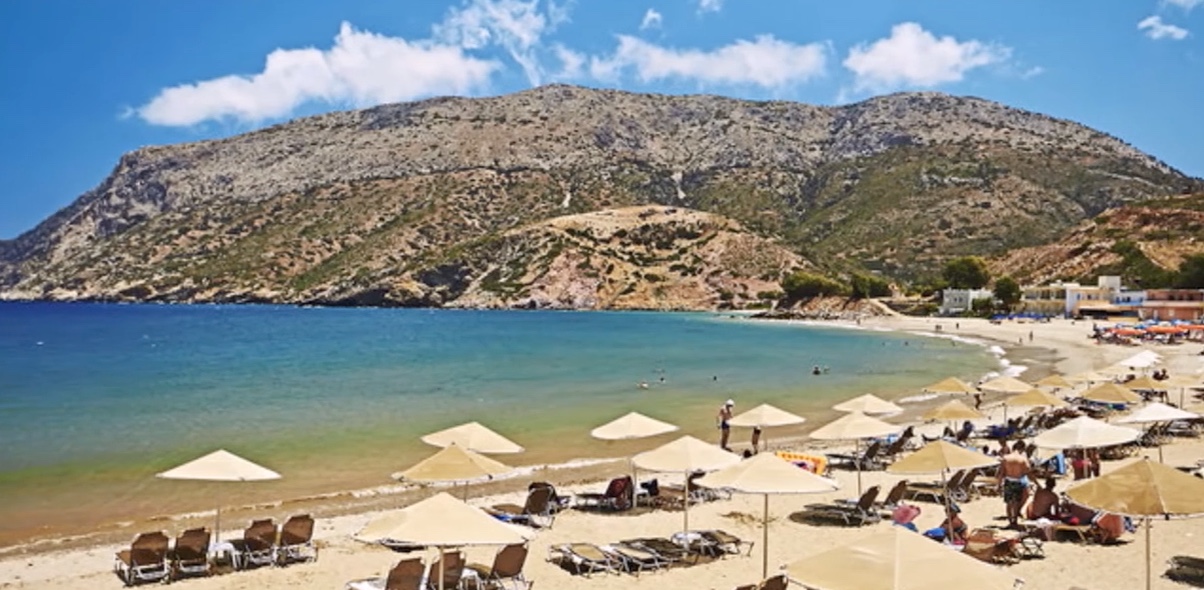
Leaves rustle through the lanes, and everywhere there is the murmur of the Pantomatris, the river that runs through the village the whole year round beneath a canopy of tall planes and reaches the sea in an attractive small bay. A shaded path follows its bank past the tavernas. According to local tradition this quiet bay once served as the trading harbour of the ancient city of Axos; some scholars connect the area with the ancient settlement of Pantomatrion, whose name is thought to survive in that of the river. In later centuries boats put in here for repairs, and the produce of the valley was shipped from the bay. The beach today is long and mostly sandy with a few pebbly stretches, organised at one end and left natural at the other.
The name of the village probably goes back to a Venetian family, the Fodelle, attested in Crete as early as the 13th century; in Venetian sources, such as a census of 1577, the place appears as Fodhele in the district of Mylopotamos. On the surrounding heights there are still ruins of watchtowers, the so-called koules, which the Ottoman authorities built late in the Turkish period, around the time of the great uprising of 1866–1869, to keep the insurgents under observation. To this day the inhabitants live from livestock, vegetables, olives and above all from oranges – grown alongside lemons and mandarins – for which Fodele is known throughout Crete. Every year in March, or sometimes early April, the village holds an orange festival, a custom begun in 2013, with marmalades, sweets, cakes, liqueurs and live Cretan music.
The Church of the Presentation of the Virgin – a temple of art
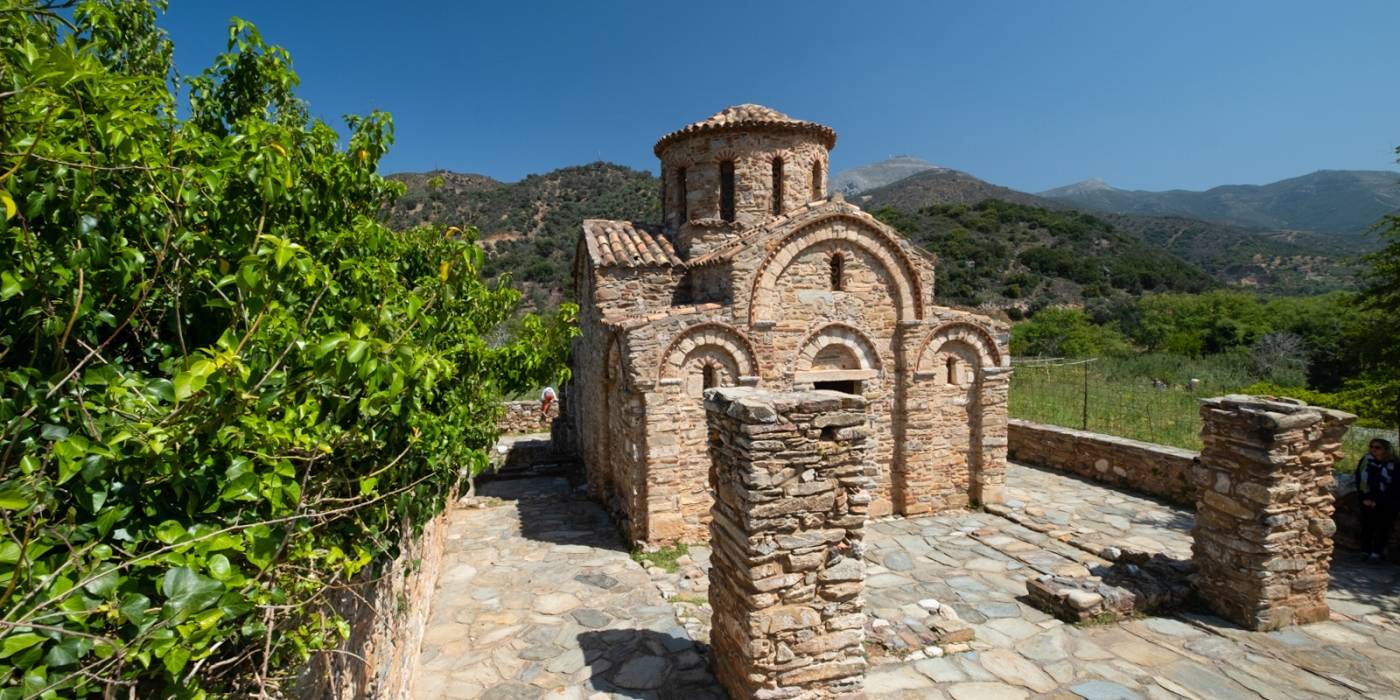
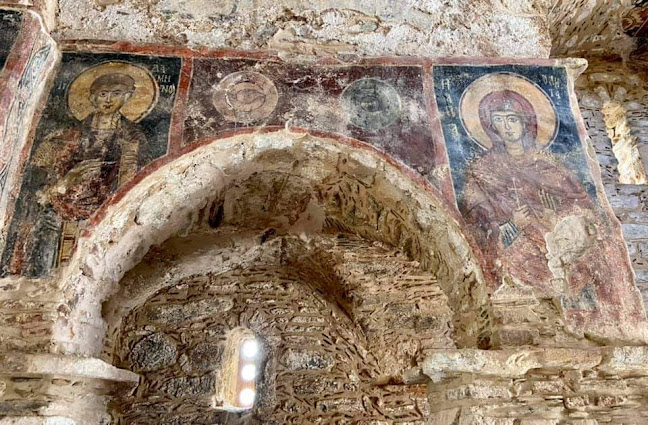
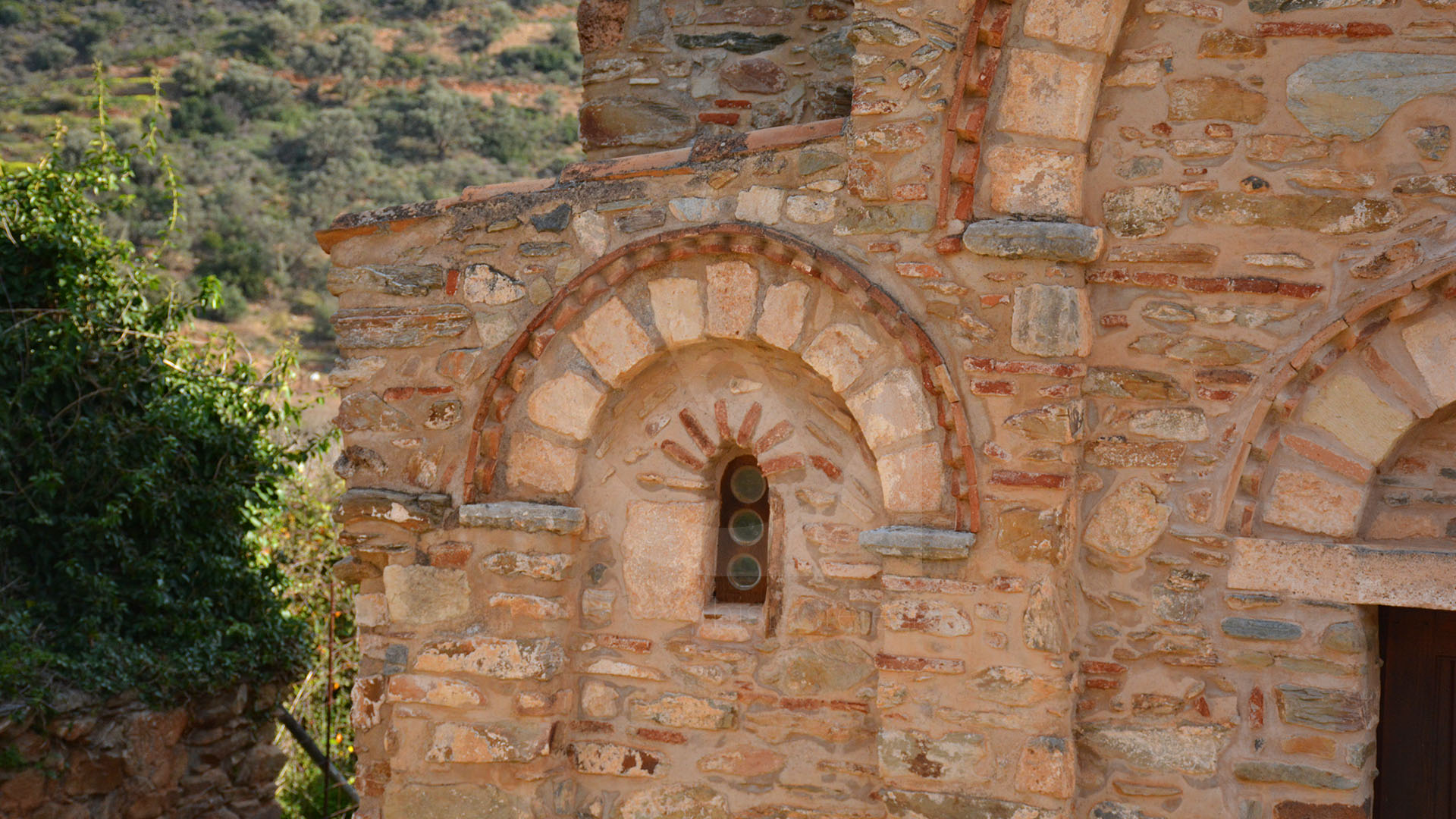
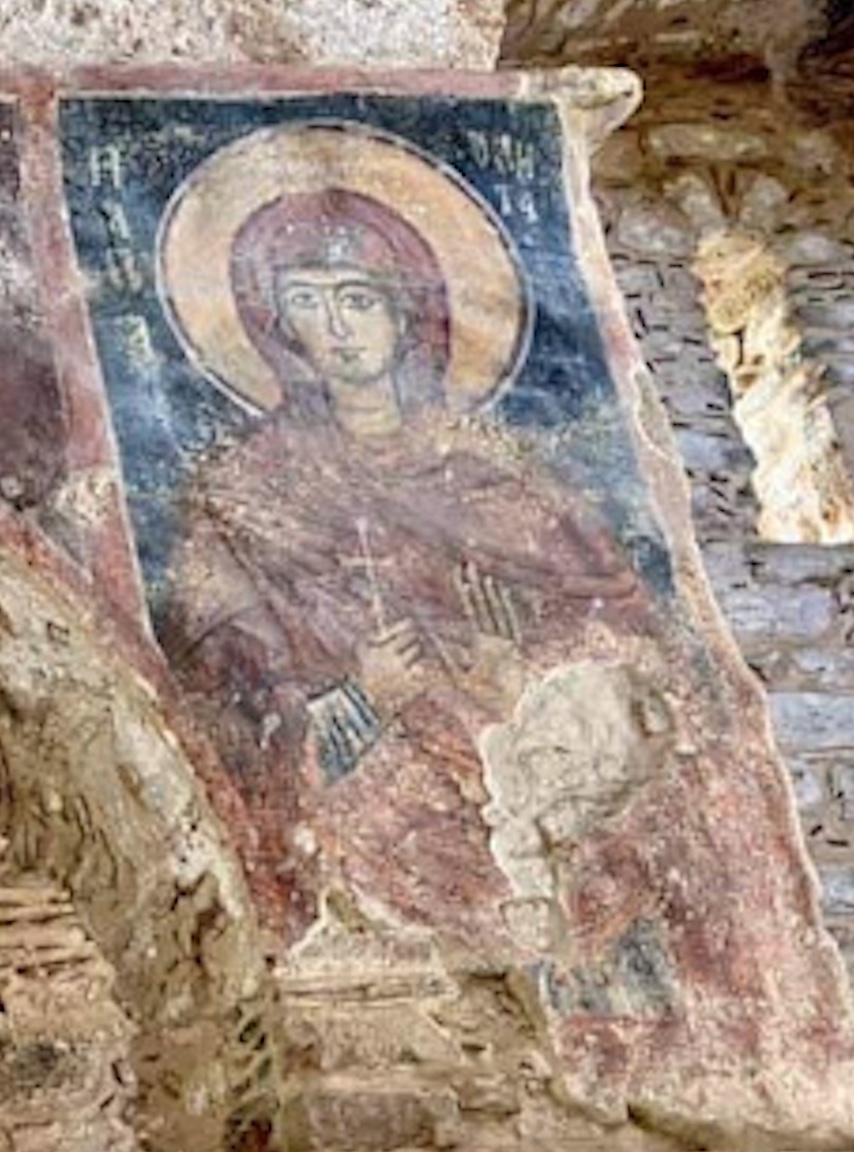
Beside the museum of Domenikos Theotokopoulos, on the edge of the village in the locality of Loumbinies (also called Theotokiana), about a kilometre north-west of the centre and surrounded by orange groves, stands one of the jewels of Fodele: the Church of the Presentation of the All-Holy Mother of God in the Temple (Εκκλησία των Εισοδίων της Θεοτόκου), built in the 11th century. The small church, almost a thousand years old, is moving both for its beauty and for its atmosphere of quiet reverence. A paved road leads right up to it.
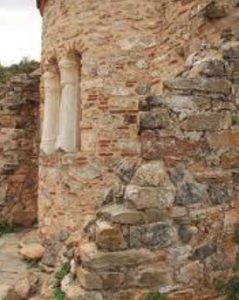
The architecture embodies the typical features of the Byzantine style that mark the Orthodox churches of Crete. Specialists describe the building as a plain four-column cross-in-square church of the so-called Helladic school, without a narthex, though some of its structural and decorative details look to the architecture of Constantinople. It was raised over the eastern half of an older three-aisled Early Christian basilica of the 6th century, a building of roughly 16 by 12 metres adorned with marble, part of whose floor and whose baptistery survive; its outer walls and two of its piers are partly incorporated into the present walls. The cylindrical drum of the dome has eight windows with brick arches and a conical roof; four masonry columns carry the dome, and their plaster is scored with incised lines imitating courses of stone. The apse is markedly smaller than that of the old basilica and has a three-light window with marble supports.
The walls, covered with images of saints and frescoes, speak of the rich spiritual life and deep faith of the villagers. Two layers of painting survive, both of high quality: in the western parts of the interior a decoration of the 11th century, classical in character, with broad brushwork and the clear influence of the art of Constantinople, and a later layer of 1323, dated by a donor’s inscription in the south arm of the cross, with more popular traits – on the north wall, for instance, rows of full-length saints and martyrs. The church is open from May to October on Saturdays and Sundays from 8.30 am to 3.30 pm, and from November to April on Sundays from 8.30 am to 3.30 pm.
Tradition has it that it was this very church that moved the young Domenikos Theotokopoulos to turn to icon painting. One might object that great creators belong less to the countries in which they were born than to the countries and peoples for whom they worked – in this sense Maximus the Greek, for example, is usually counted as part of Russian culture. Even so, the Byzantine roots of El Greco’s aesthetic, above all his unmistakable play with light,
and his particular way of seeing a world that seems to point beyond the earthly, are without doubt bound up with his early working years in Crete.
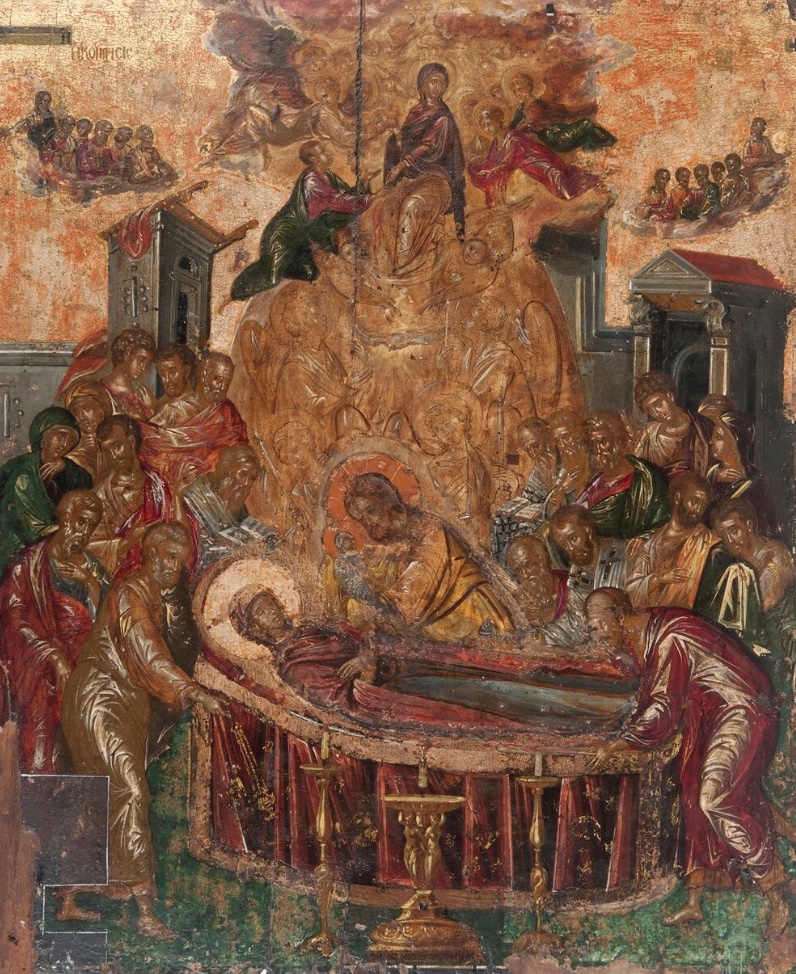
On these foundations he developed a style of his own, transforming the Byzantine inheritance within the culture of the European Renaissance. Although El Greco contributed much to Spanish art and to the art of Europe as a whole, his work remains inseparable from his Cretan and Byzantine roots. Shown below is one of his icons from the Cretan period, the “Dormition of the Virgin” (Koimisis), painted in tempera and gold on a panel of only 61.4 by 45 centimetres in about 1565–1566. It is kept in the Church of the Dormition at Ermoupolis on the island of Syros and bears the young painter’s Greek signature, which came to light only in 1983 on the base of the central candelabrum – a discovery that changed what was known of his early years and led to the attribution of other signed works.
It is these roots in icon painting that set apart the works of the later great Spanish and European painter in his Toledo period. In this sense the church is not only a house of God dedicated to the “Presentation of the Virgin in the Temple”, but also the presentation of the little Greek in the temple of art – the path to the great El Greco.
El Greco – the course of his life
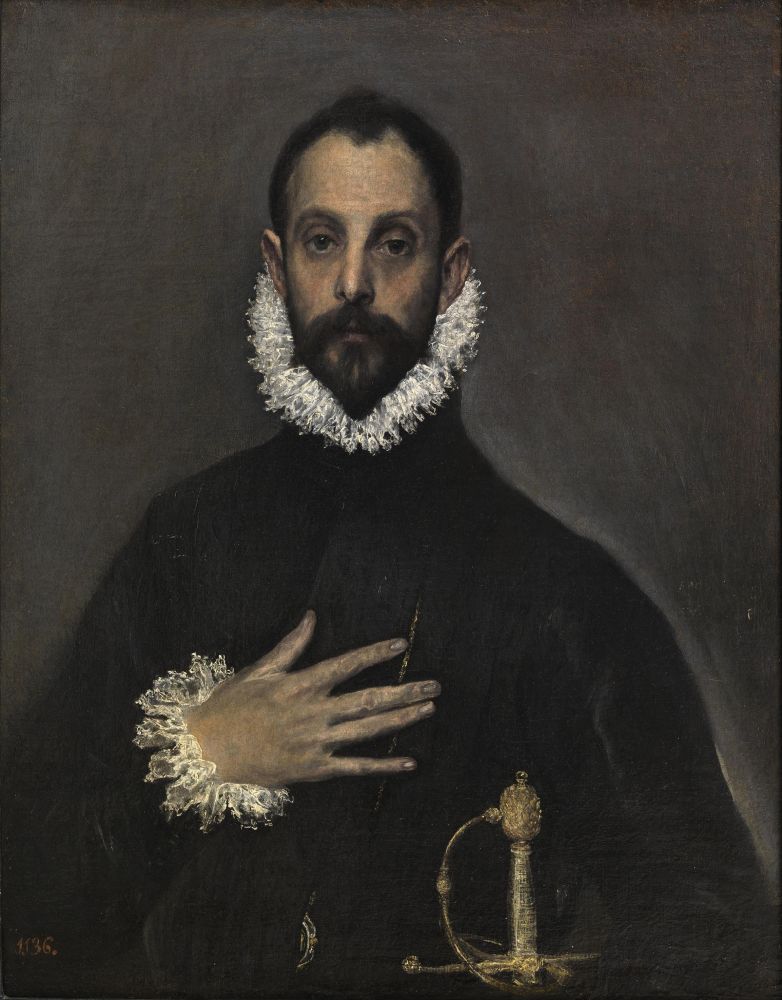
The painter, born in 1541 – according to the tradition of Fodele, here – left a lasting mark on the art of the Renaissance. He became famous for his singular religious pictures and portraits, filled with deep spiritual content and painted in a highly expressive manner.
The young Domenikos began his career as an icon painter in Candia, the present-day Heraklion and capital of Venetian Crete, where his talent quickly showed; as early as 1563, at the age of twenty-two, he is described in documents as a master, and in 1566 he signed a contract as witness with the words “Master Menegos Theotokopoulos, painter”. The wish to develop and perfect his art took him, around 1567, to Venice, then the cultural metropolis, where he could study the works of great Renaissance masters such as Titian and Tintoretto. The Venetian years shaped his style decisively; elements of Mannerism now came to the fore. Around 1570 he went on to Rome, where, on the recommendation of the miniaturist Giulio Clovio, he moved in the circle of Cardinal Alessandro Farnese; in September 1572 he was enrolled in the painters’ guild of St Luke.
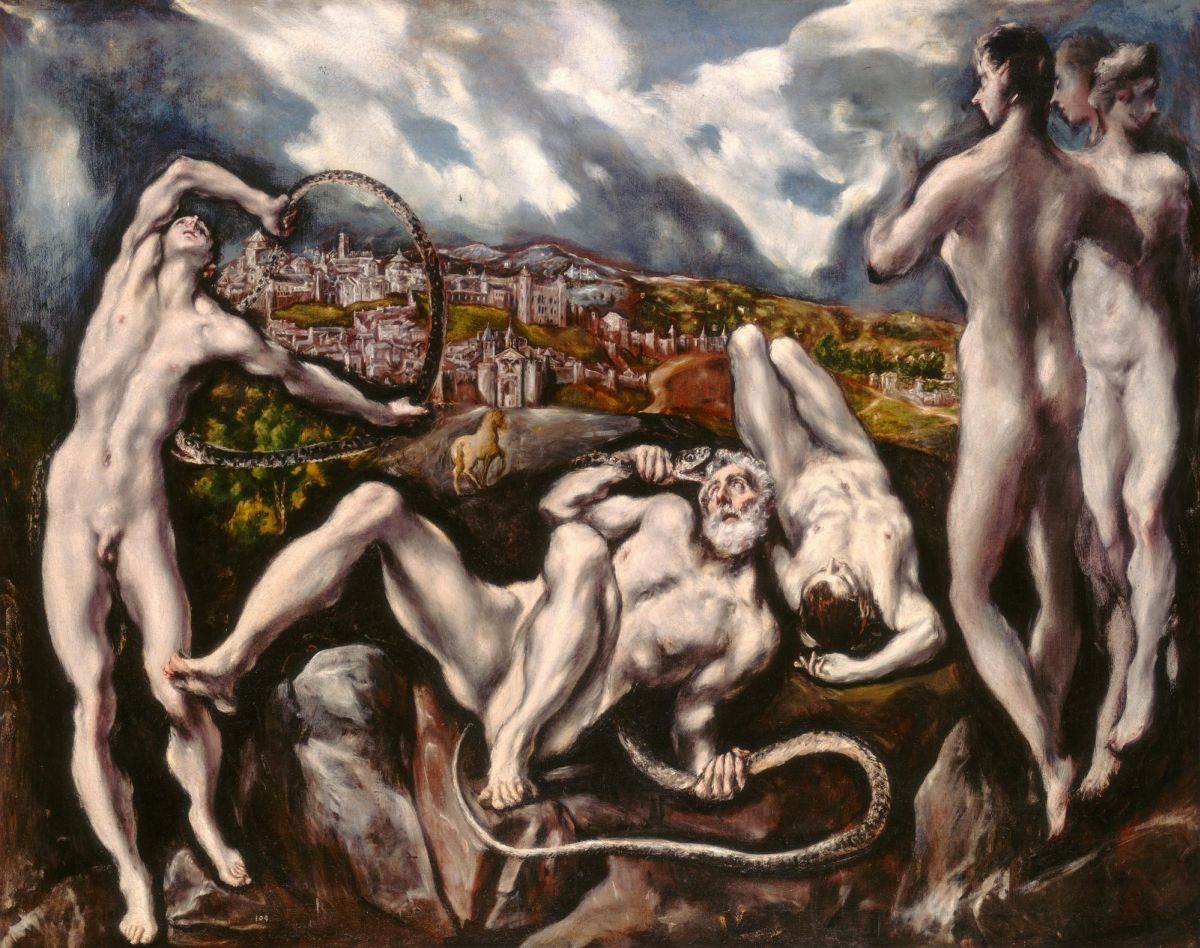
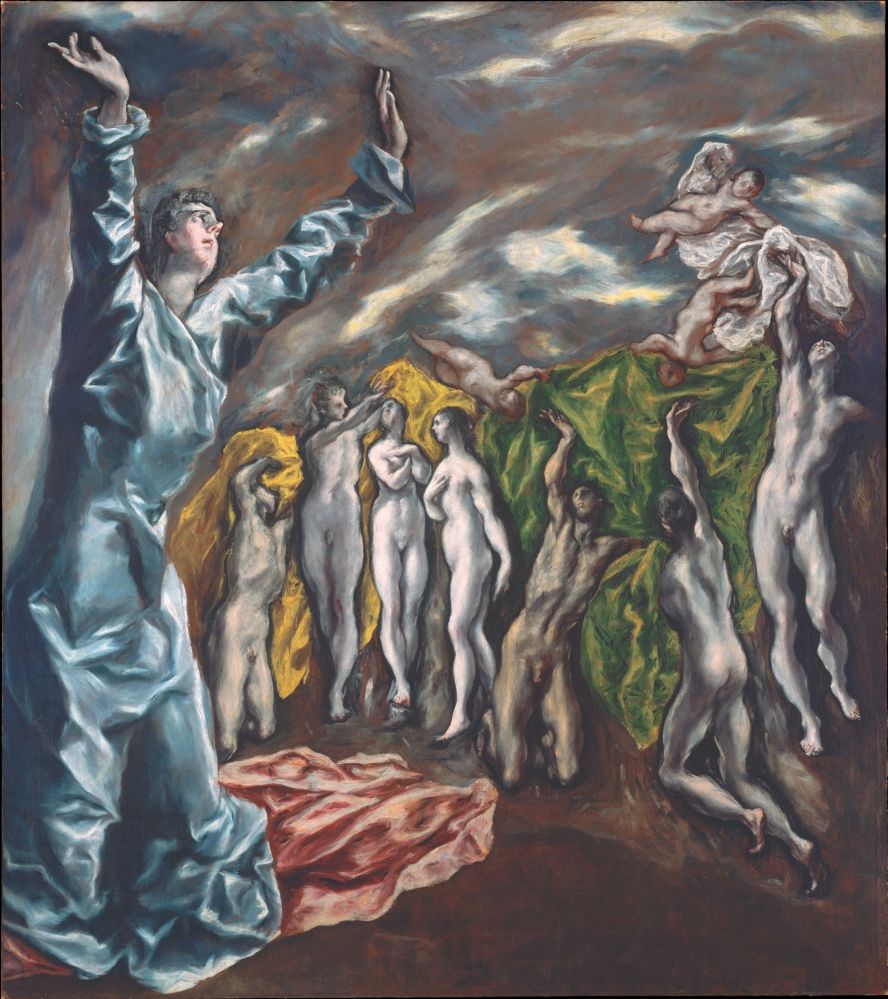
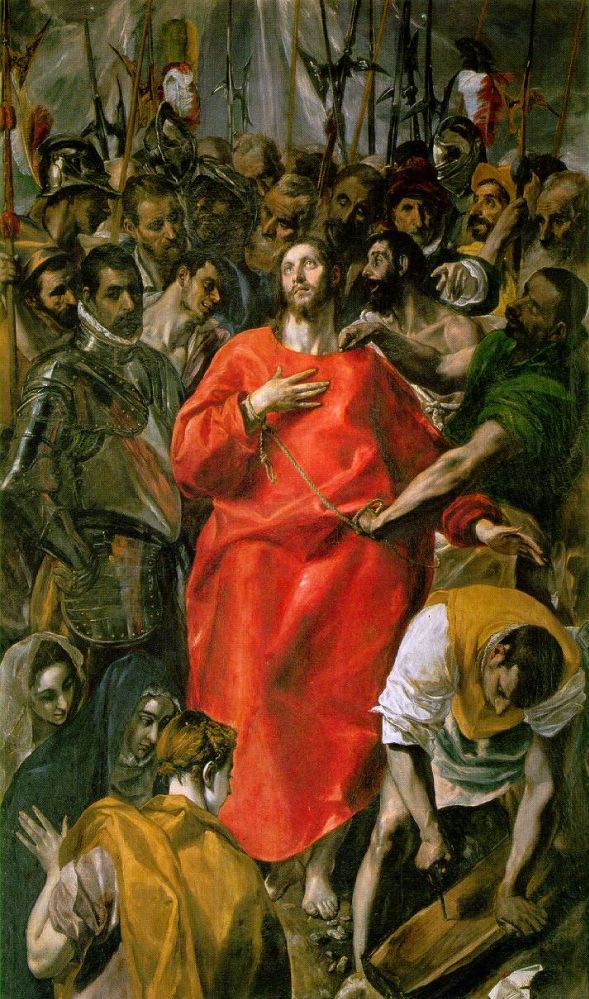
The search for new horizons took Theotokopoulos around 1576–77 to Spain, where he settled for good in Toledo – the city that became his second home, and where his first large commission was for the church of Santo Domingo el Antiguo. Here El Greco created most of his celebrated works, among them
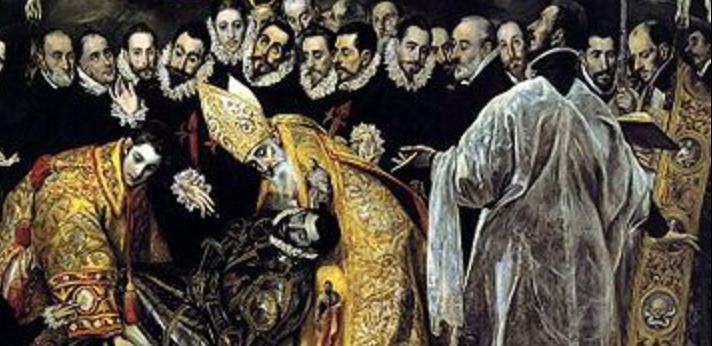
“The Burial of the Count of Orgaz” (1586–1588) in the Toledan church of Santo Tomé, a canvas 4.8 metres high and 3.6 wide commissioned by the parish priest Andrés Núñez. It shows the legend of 1323, in which St Stephen and St Augustine came down from heaven to lay the pious Don Gonzalo Ruiz in his tomb with their own hands; the painter’s young son Jorge Manuel stands at the left,
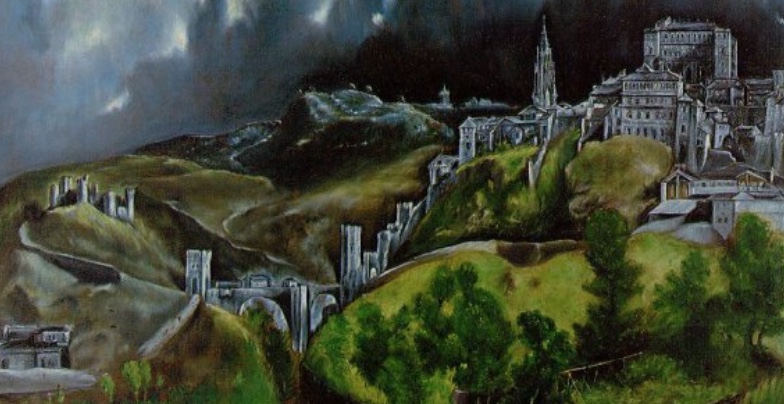
the “View of Toledo” (1596–1600, now in the Metropolitan Museum of Art in New York), one of only two landscapes of his to survive, with its green hills under a dark and stormy sky, and numerous portraits and religious compositions. His works are distinguished by elongated figures, a bold handling of colour and light and a deep spiritual content – a style of unmistakable individuality, recognisable at first glance.
In his lifetime El Greco did not find in Spain the full recognition he deserved; Philip II, whose patronage he had hoped for, did not take him up. After his death in Toledo on 7 April 1614, at the age of seventy-two, his work fell into long neglect, was rediscovered by the Romantics of the 19th century and then began to exert a lasting influence on European art – Picasso studied him closely, and the 20th century saw in him a forerunner of Expressionism and Cubism. Today he is regarded as one of the greatest masters of the Renaissance, and his paintings hang in the most important museums of the world.
A birthplace with a question mark
The question mark over the birthplace of Domenikos is not there without reason: there is no documentary proof, only indirect indications.
Nevertheless, after lengthy research carried out in cooperation with the Spanish consulate in Greece and under the direction of Professor Tormo, an archaeologist at the University of Valladolid, Spanish professors and students confirmed the local popular tradition that Fodele was the birthplace of Domenikos Theotokopoulos. On 27 July 1934 the scholars travelled to the “charming little village of Fodele” to pay their respects to the great painter and to the place of his birth. They brought with them a bronze plaque set into a piece of rock from Toledo, and put it up in the village, where it can still be seen.
The inscription reads, in substance: THE FACULTY OF HISTORY OF THE UNIVERSITY OF VALLADOLID, / A PULSE IN THE HEART OF CASTILE, / DEDICATES TO FODELE THIS PLAQUE, / HEWN FROM THE ROCK OF TOLEDO, / IN MEMORY OF THE GLORY / OF DOMENIKOS THEOTOKOPOULOS. / JULY 1934.
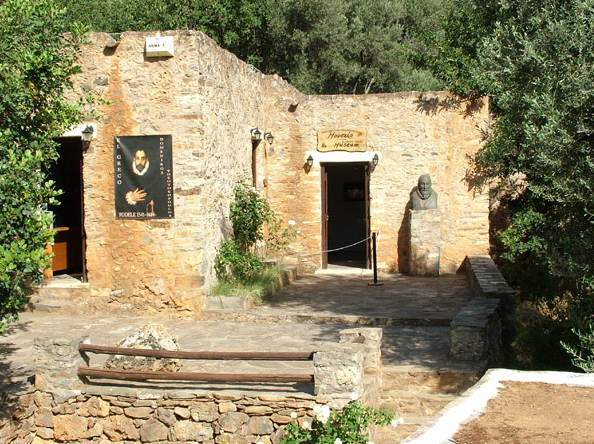
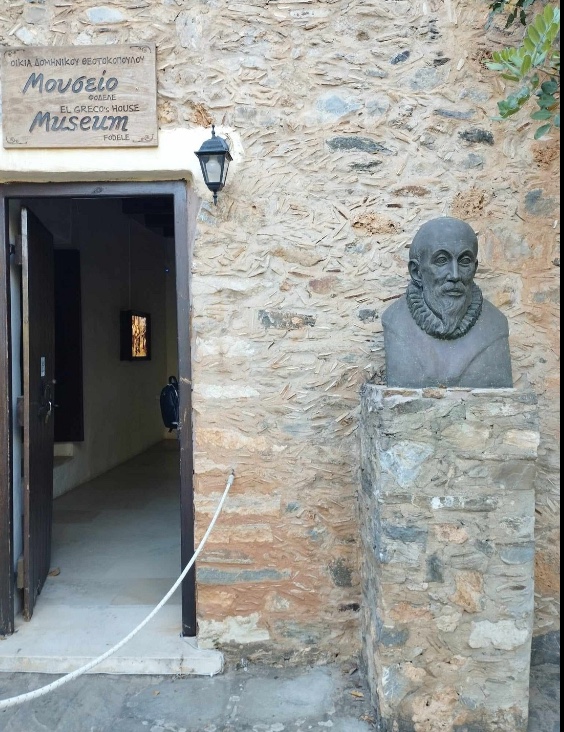
The museum itself occupies a stone building of the post-Byzantine period, which had fallen into a poor state and was carefully restored, from 1982 onwards, under the supervision and at the expense of the Greek Ministry of Culture. It stands opposite the Byzantine church, about a kilometre from the centre of the village, and has been open as a museum since August 1998.
Before the entrance stands a bust of El Greco, the work of the sculptor Th. Aparte – a symbol of the artist’s lasting bond with his homeland. In all, two marble busts in the village commemorate the painter.
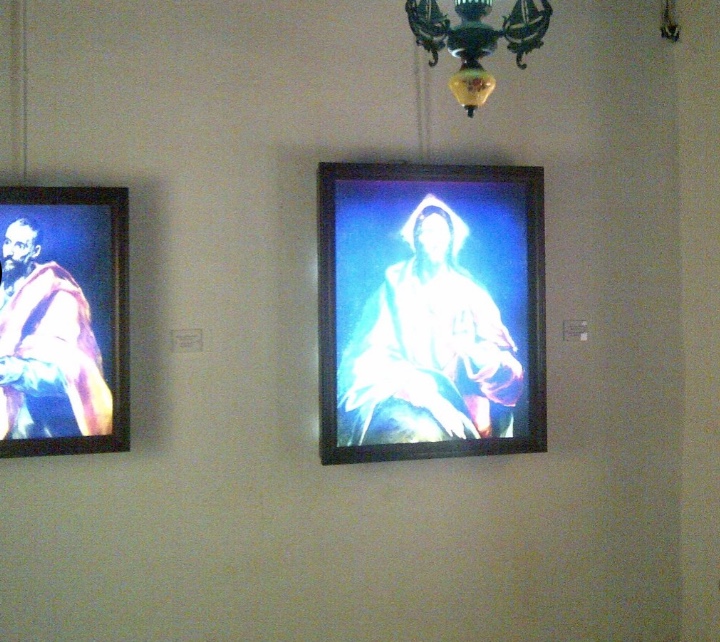
The museum shows reproductions of El Greco’s works. In Crete, originals by Domenikos Theotokopoulos are held only by the Historical Museum of Crete in Heraklion, an institution founded in 1953 by the Society of Cretan Historical Studies: the “View of Mount Sinai and the Monastery of St Catherine” (c. 1570) and the “Baptism of Christ” (1567), both from his Italian period – the only originals by the painter on the island. But one does not go to Fodele to see originals; one goes to immerse oneself in the original surroundings that produced the artist.
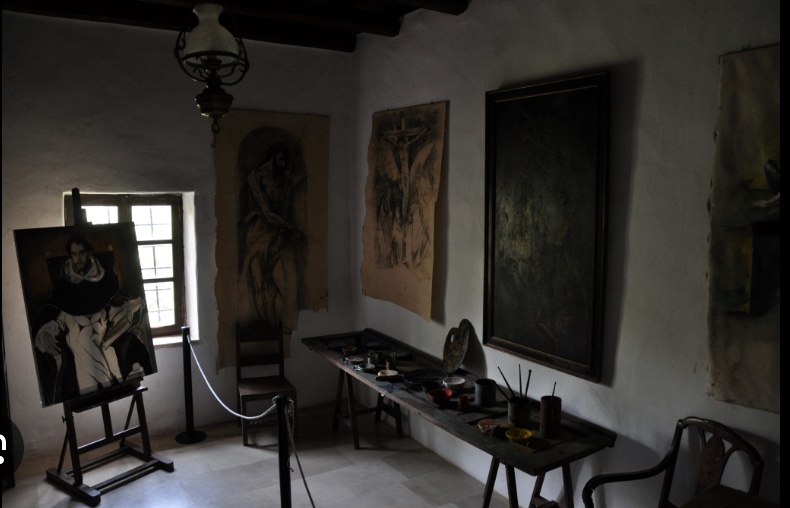
One of the rooms is fitted out as a painter’s workshop and invites visitors to imagine the creative surroundings in which a painter of that time worked. Alongside it are rare photographs and documents on the history of the honours paid to El Greco, including pictures of the visit of the professors from Valladolid. The well-lit reproductions make it possible to see in one place what is scattered across the museums of Europe and beyond. One also learns something of El Greco’s family and his forebears. Opposite rises the thousand-year-old church of the Mother of God, which according to tradition was the font in which the great master’s aesthetic was born.
Notes on the museum and church of Fodele
Fodele is a Cretan village with which tradition connects the early years of Domenikos Theotokopoulos, El Greco. Standing side by side here are the museum devoted to the painter and the Church of the Presentation of the All-Holy Mother of God in the Temple – monuments in which the link between the Cretan School of icon painting and later European painting can be read.
The Church of the Presentation of the Virgin in the Temple
The Byzantine church of Fodele is dedicated to the Presentation of the All-Holy Mother of God in the Temple. The surviving parts of the early basilica of the 6th century and the later rebuilding – the domed church of the 11th century and the repainting of 1323 – show how one and the same church site developed over the centuries. The name of the feast refers to the event in the tradition of the Church in which Mary was dedicated to God.
The Cretan School of icon painting
The Cretan School is a current of post-Byzantine icon painting that took shape on the island under Venetian rule and flourished from the 15th to the 17th century. Its centre was Candia, where the painters were organised in a guild on the Italian model; about 145 of them are recorded there between 1454 and 1526 alone. Its masters, among them Angelos Akotantos, Michael Damaskinos and Georgios Klontzas, held to the Orthodox canon while at the same time adopting particular devices of Italian art. It is this milieu that is regarded as an essential part of the early artistic experience of Theotokopoulos.
Theotokopoulos began as an icon painter on Venetian Crete. The Cretan School combined the Byzantine canon with individual achievements of Western painting – a feeling for space, light and the texture of surfaces. Its workshops could paint in the Greek manner or the Latin as the customer wished: an order of 1499 called for 700 icons of the Virgin, 500 in the Western style and 200 in the Byzantine, to be delivered within 45 days. This experience became the foundation of his further path by way of Venice and Rome to Toledo. The school itself ended with the Ottoman conquest of Candia in 1669, when its painters dispersed and the Ionian Islands became the new centre of Greek art.
On the name El Greco
El Greco means “the Greek” in Spanish. The painter himself signed his works in Greek letters as Domenikos Theotokopoulos, the Cretan (Δομήνικος Θεοτοκόπουλος Κρής), and in doing so stressed his origin and his place in the Cretan artistic tradition. He kept the habit to the end of his life in Toledo.
The painter’s life
In the 1560s Theotokopoulos was already working as a master icon painter in Candia; he then moved to Venice, spent time in Rome and finally settled in Toledo. There he became known by the name El Greco – “the Greek”. His mature painting unites the Cretan icon tradition with Mannerism and with an entirely personal pictorial language of elongated figures, tense light and expressive colour.
Domenikos Theotokopoulos was born in 1541 and left Venetian Crete for Venice around 1567. In Italy he came to know the art of Titian, Tintoretto and late Mannerism; from 1577 he worked in Spain. In Toledo, where he died in 1614 and was buried in the church of Santo Domingo el Antiguo, he created works in which elongated figures, strongly contrasted light and turbulent movement give expression to a spiritual tension.
An excursion nearby: the Monastery of Agios Panteleimon
Some three to four kilometres from the village, at an altitude of about 170 metres among springs, orange trees and olives, lies the monastery of St Panteleimon. The date of its foundation is uncertain; according to tradition three monks – Makarios, Jeremias and Kosmas – fled here around 1537–1539 from the pirate raids of Barbarossa, which had destroyed their house on the coast, and joined a monastic community that already existed. The first historical traces reach back to the Venetian period, and a marble inscription attests that it was functioning in 1677. Remains of defensive walls betray the once fortified character of the complex, and icons of the Cretan School of the 17th century are kept in the katholikon; others that once belonged to the monastery have been taken to the museum of religious art in Heraklion. During the revolution of 1821 the monastery served as a field hospital, and in the uprising of 1866–1869 as a refuge and supply depot for the insurgents; in 1861 Abbot Neofytos Pediatis had it renovated. Most of the buildings were demolished in 1972 – and around this demolition there still clings the legend of a treasure hidden in the foundations. A few monks remain. On 27 July, the feast of the saint, the monastery celebrates its patronal festival.