The most complete guide to Crete: 221 places on the map, 23 routes and 49 articles — with photos, videos and the story behind every place. Everything is open and free: no sign-up, no paid sections and no advertising, open or hidden. You can install the guide on your smartphone as an app.
Routes drawn along real roads
Weather at every stop
Full-text search
“Near me” by geolocation
Create your own printable itinerary
Satellite, terrain, dark mode
Works offline
⌕
Searches 1.7 million characters of descriptions, not just names
—places
4regions
—routes
—with video
Search results
—
Interactive map
Find what is near you
Filters narrow the map and the list at once. Zoom out and pins group together.
Region
Category
Фильтры карты
Landmarks
Featured places
RegionCategory
Routes
Ready-made day trips
Individual places
Articles about landmarks
A description of a route that includes a visit to the monastery can be found under
this link
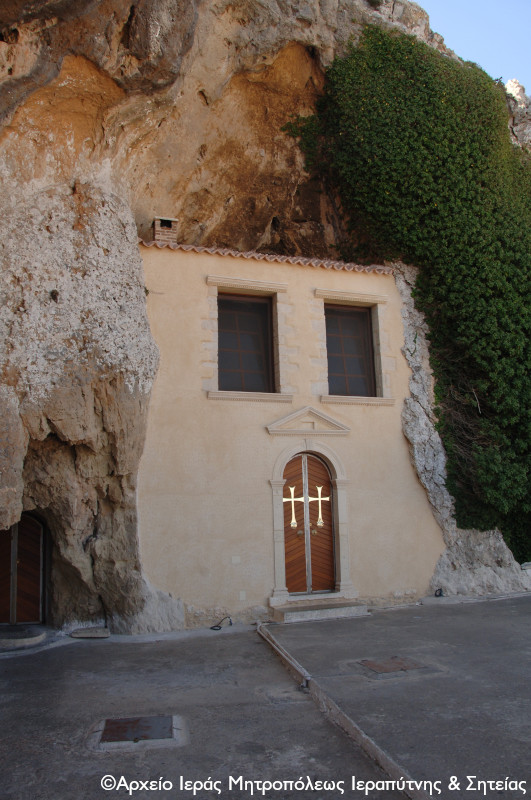
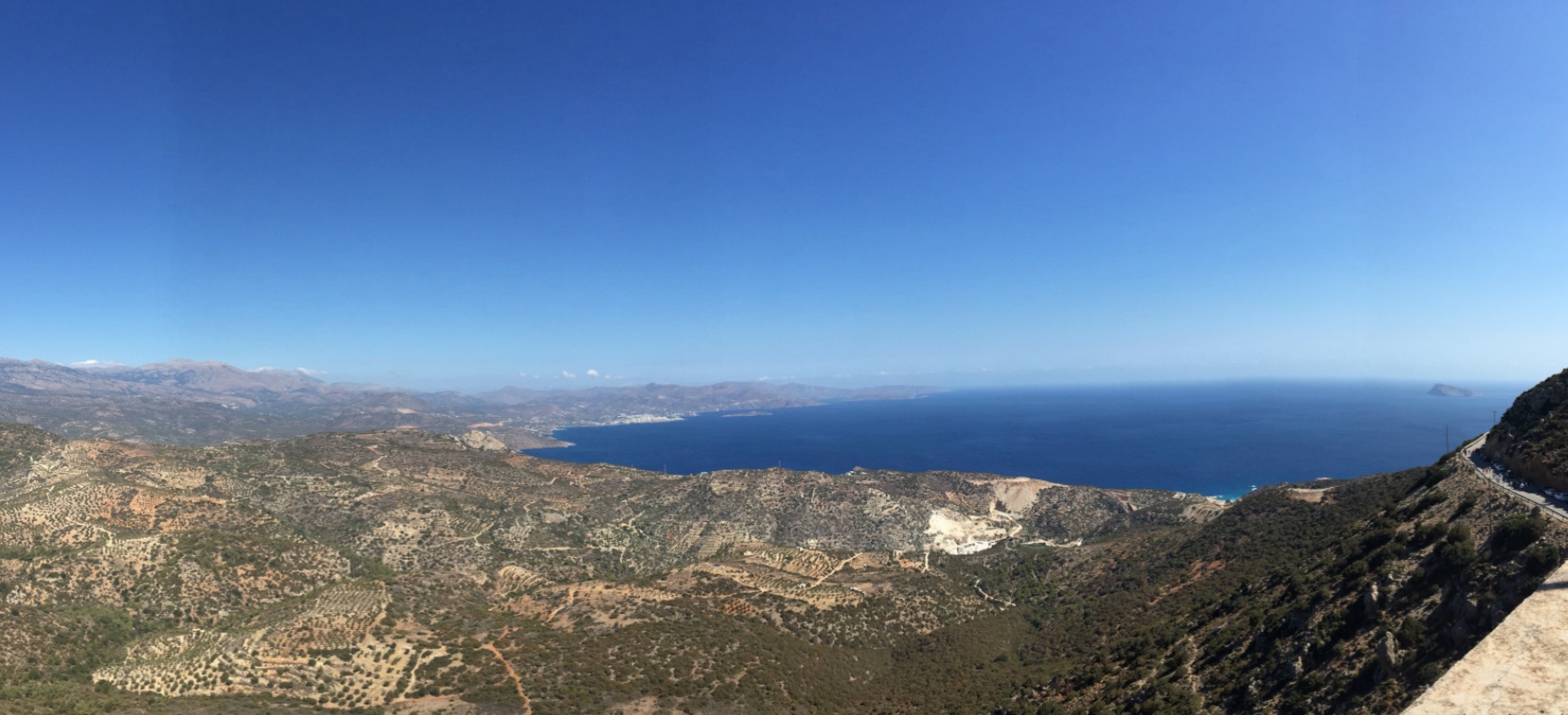
The monastery of Panagia Faneromeni (Μονή Παναγίας Φανερωμένης), the monastery of the Appearance of the Mother of God, lies on the steep northern slope of Mount Stavros, a spur of the Dikti Mountains, some 540 metres above the sea. It stands south-west of Pachia Ammos, about 24 kilometres from Agios Nikolaos and not far from the Minoan town of Gournia, which is why local people also call it the “Panagia of Gournia” (Παναγία των Γουρνιών). A surfaced road climbs to it from the coast. Administratively it belongs to the municipality of Ierapetra and to the metropolitan see of Ierapetra and Sitia; in the district it is known affectionately as the “Lady of Ierapetra”. From the monastery courtyard the eye ranges over the whole of Mirabello Bay, across to Agios Nikolaos and to the mountains of the Sitia peninsula. Faneromeni is a living monastery of men following the communal (coenobitic) rule, and it ranks among the most important places of pilgrimage in the east of the island.
No precise date of foundation has come down to us, and there is no founder’s inscription; nor can the surviving masonry settle the question. Scholars take the cave church and the sanctuary attached to it back to the middle or late Byzantine period, that is, to the centuries between the reconquest of Crete by Byzantium in 961 and the Fourth Crusade of 1204; by the middle of the 13th century at the latest a religious community was established here. The present fortified complex, by contrast, grew up in stages between the 16th and the 19th century – a restoration is recorded in 1624 – and owes its appearance today chiefly to the rebuilding of the 19th century, followed by extensive alterations in the middle of the 20th. The complex forms a rectangle of about 49.5 by 24.5 metres, stepped up the hillside on six levels: four ranges of building enclose a narrow inner court and contain the monks’ cells, the domestic offices – storerooms and a bakery among them – and the guest house. All are connected with the katholikon, the main church, which is set on the fifth level into a natural hollow in the limestone beneath a deeply overhanging roof of rock.
History and layout of the monastery
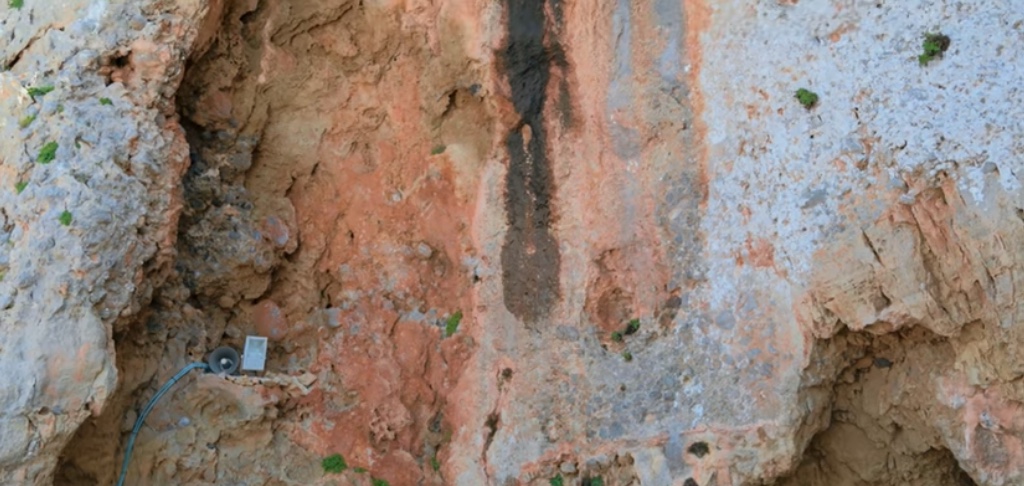
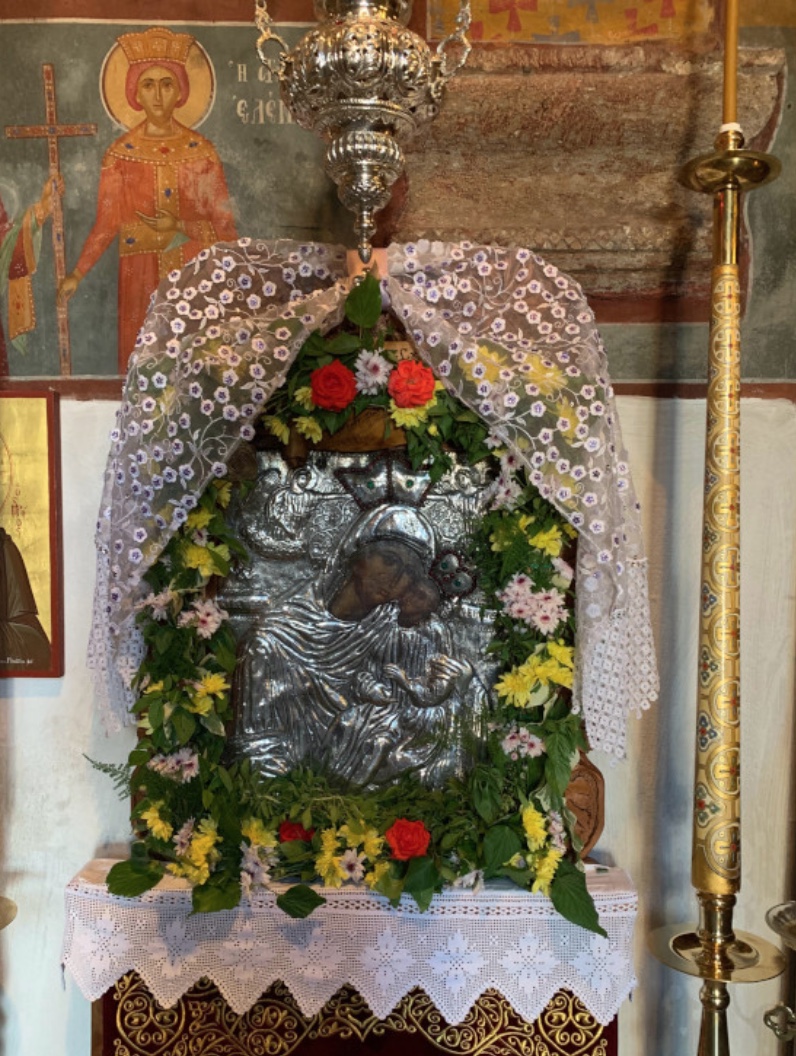
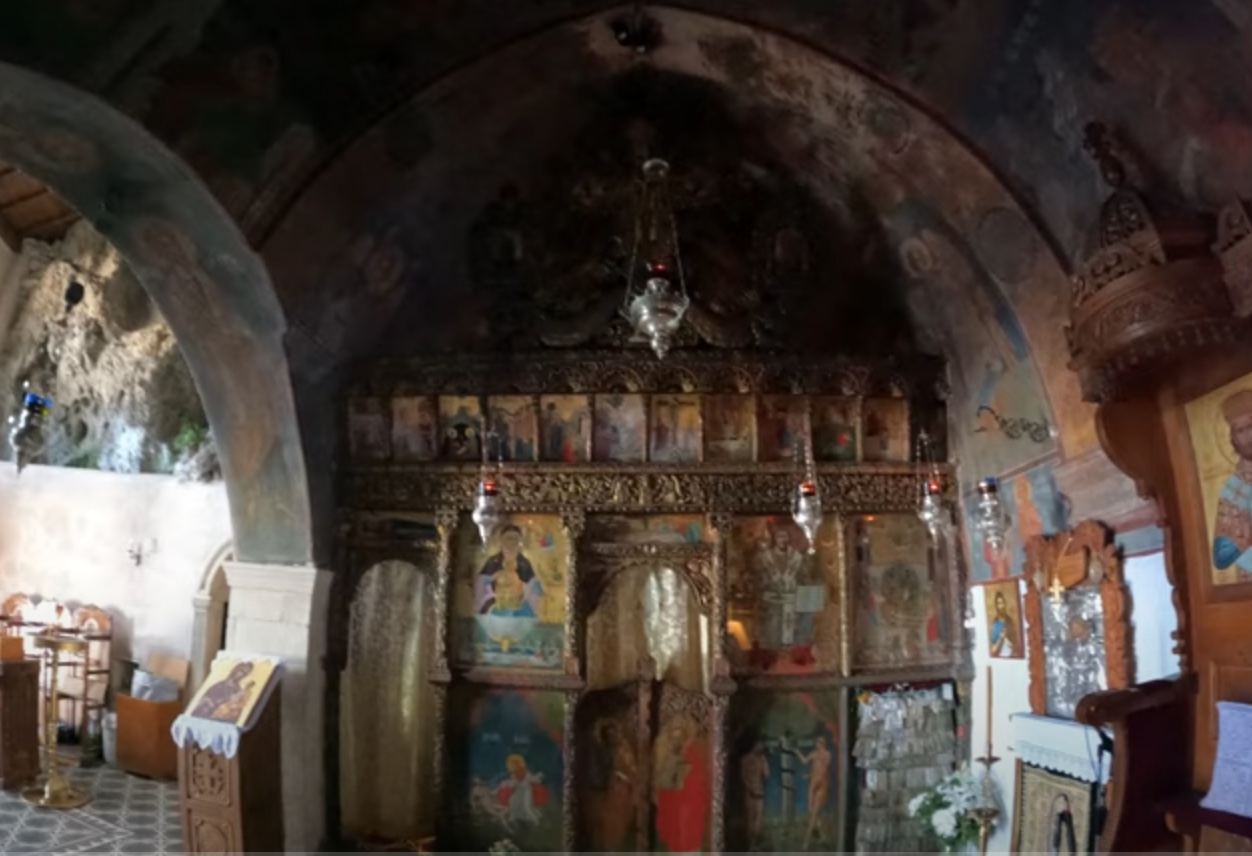
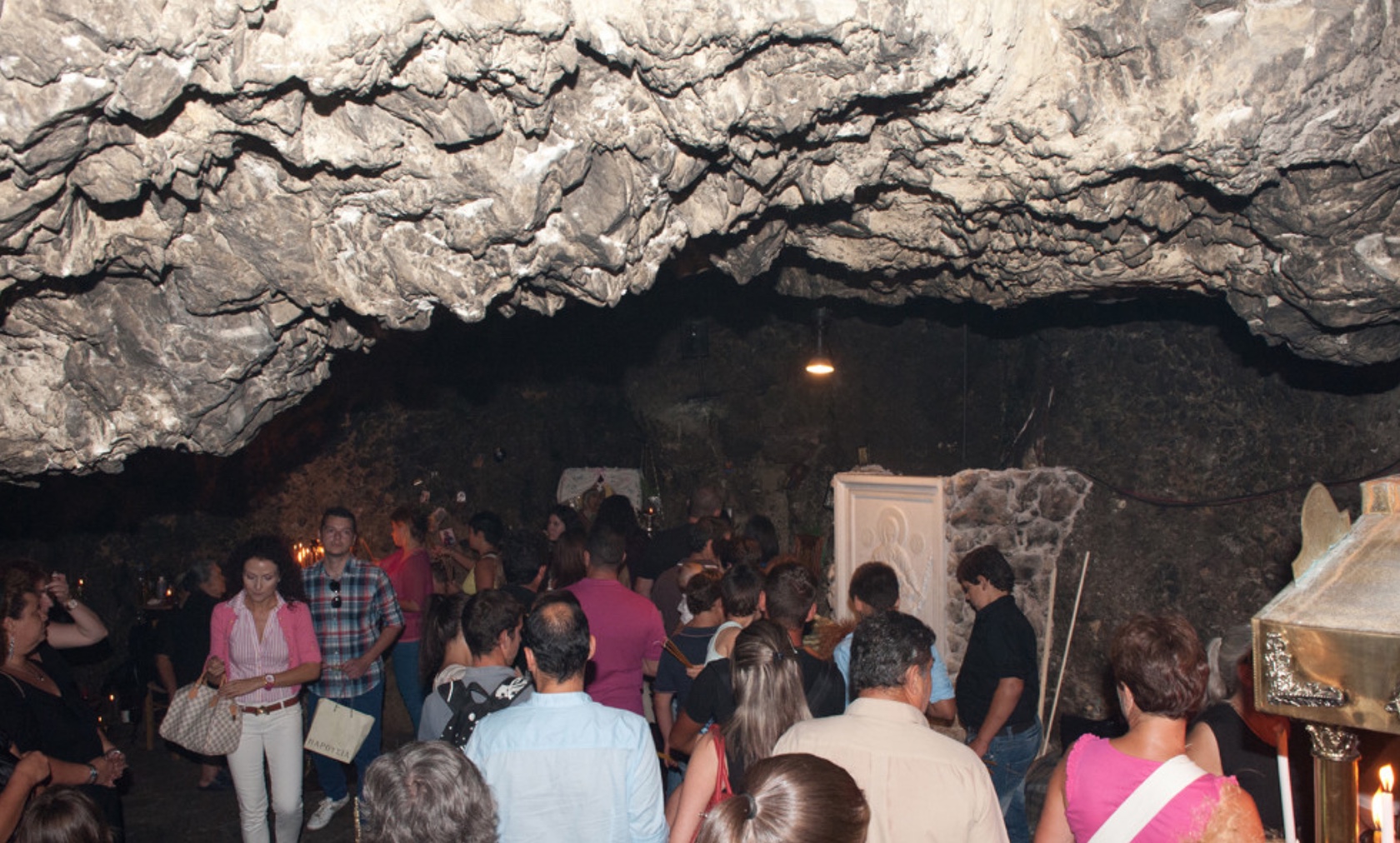
The katholikon, a church of two aisles, is dedicated jointly to the Dormition of the Mother of God (Koimisis tis Theotokou) and to the Life-giving Spring (Zoodochos Pigi). The cave of the church communicates with a second chamber alongside, in which water gathers on the rock surfaces and runs together drop by drop; the faithful revere it as holy water and take it home in little bottles. An iconostasis with old icons divides the sanctuary from the nave. The name “Faneromeni” means “she who appeared” or “she who reveals herself”, and recalls the tradition of the miraculous finding of the icon of the Virgin on this very spot.
According to the legend, a shepherd noticed that the lead ram of his flock vanished without trace every day at the hour of noon. Out of curiosity he followed the animal and found it by a rock from which a spring gushed – and beside the water lay an icon of the Mother of God. The shepherd took the image with him, meaning to carry it to a worthier place, but every attempt to bear the icon away came to nothing: each time it returned in some mysterious fashion to the cave in the rock. Another form of the tale has the icon appearing and vanishing again in the cave on the feasts of the Virgin. So the faithful understood that the Mother of God wished to be venerated here. The icon was left where it was, and little by little the monastery grew up around the grotto. It is honoured with particular solemnity on the feast of the Dormition of the Mother of God on 15 August, but worshippers flock here on the other Marian feasts of the Church year as well.
Its isolation and fortress-like exterior made the monastery for centuries a place of refuge, where Cretans sought safety under Venetian and under Ottoman rule. Numerous defensive features survive in the walls: loopholes, battlements, small narrow windows, projecting look-outs and, above the main entrance, what is called a zematistra – a “scalding hole” through which attackers could be driven off with boiling oil, water or molten lead. Local tradition tells of underground passages linking the monastery with the cemetery, by which supplies could be brought in or, in an emergency, an escape made. During the German and Italian occupation in the Second World War, too, the persecuted and members of the resistance found shelter here; the monks also hid British and other Allied soldiers in the caves of the neighbourhood until they could be smuggled away to safety in Egypt.
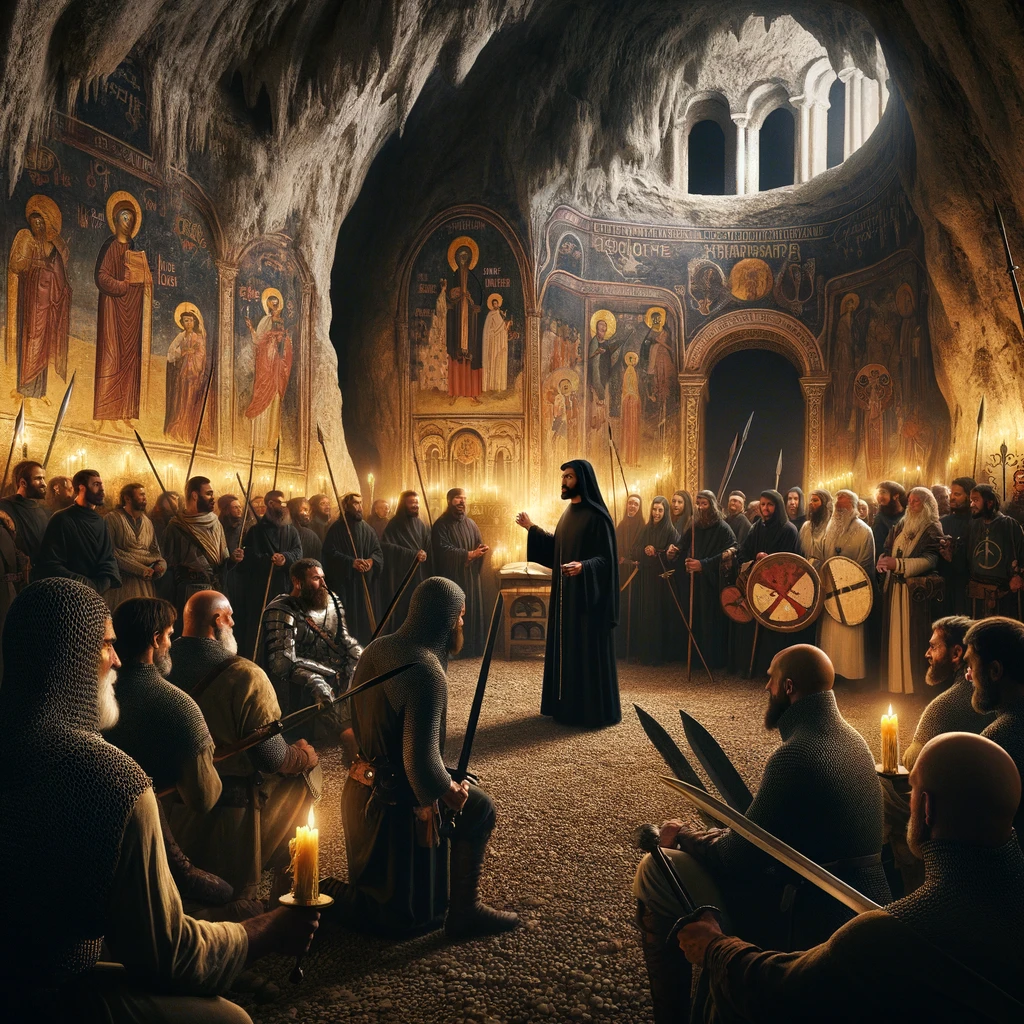
After the Fourth Crusade Crete fell in 1204 first to the Genoese and then, in 1211, to Venice. Against their new masters the Cretans rose again and again; the most important revolt of the age, led by the archon Alexios Kallergis, broke out in 1282 and lasted almost two decades. Monastic tradition connects Faneromeni with an assembly of the Cretan leaders on Palm Sunday of the year 1293. The abbot is said to have called together the quarrelling rebel chiefs, who were at odds over whether to rely on Genoese help or to follow the course set by Kallergis; according to this tradition those assembled renewed on that occasion their oath of loyalty to the Byzantine emperor Andronikos II Palaiologos. Whether the meeting really led to agreement is uncertain – some accounts speak rather of the camps breaking apart. These reports belong to the historical memory of the monastery and explain its role as a place of counsel and of resistance.
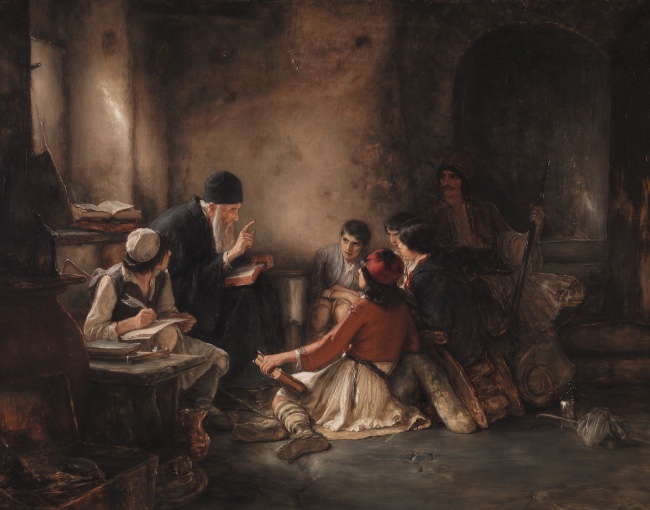
Under Ottoman rule, too, the monastery retained its spiritual and cultural importance. It supported the Cretan risings with money and provisions, and fighters for freedom such as Frangios Tsantirakis repeatedly found refuge here. In the monastery rooms there was a secret school – by local account the first in Crete – in which children from the surrounding country learned to read and write, to chant and to read the liturgy: an education that the occupying power wished to suppress. From 1839, under Abbot Gerasimos Chatzis, a new chapter in the history of the house began: he had the buildings repaired and enlarged, and gave the cave church, too, its present form. The community grew again in these years; in 1881 seven monks were living in the monastery, and by 1901 there were nineteen, after two other monasteries of the Ierapetra district had been dissolved and their brethren moved here.
The secret school and Rodanthi Kritsotopoula
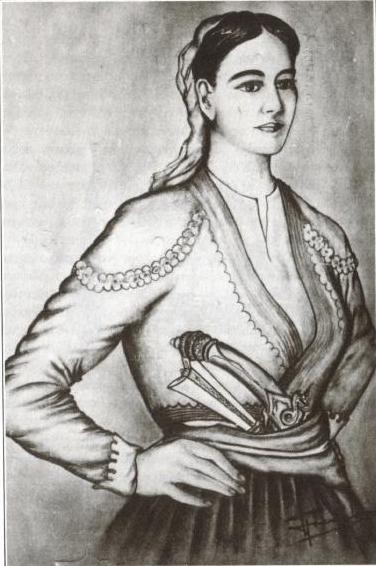
With the monastery is bound up the memory of Rodanthi, who has gone down in the history of Crete as Kritsotopoula – “the girl from Kritsa”. She was the daughter of the priest of Kritsa, unusually well schooled for a village girl of her day, and she fought against Ottoman rule. According to local tradition she received her first education at the secret school of Faneromeni, which is held to be one of the oldest in Crete. The schoolroom lay to the south-west, immediately beside the main entrance, and had – as safety required – only small windows like loopholes. Rodanthi’s story shows that the monastery was not only a place of prayer but also a stronghold in which the Greek language, the written word and the memory of the community were kept alive.
In 1817 Rodanthi was carried off against her will to the harem of a Turkish potentate and forced into marriage; tradition names him as Hursit Pasha. On the wedding night she killed him in the bridal chamber and escaped. She did not return home: disguised as a man she joined the irregulars on the Lasithi plateau, who were led by Manolis Kazanis. Under the assumed name of “Spanomanolis” – spanos in Crete denotes a beardless man, and Manolis is one of the commonest Christian names on the island – she fought with unbending courage and spared no enemy; among the adversaries she brought to bay is said to have been her mother’s murderer. In one of the decisive battles of the struggle for independence – by the usual account in 1823, at Koutarantos near the ruins of ancient Lato, above her native village – Rodanthi was mortally wounded.
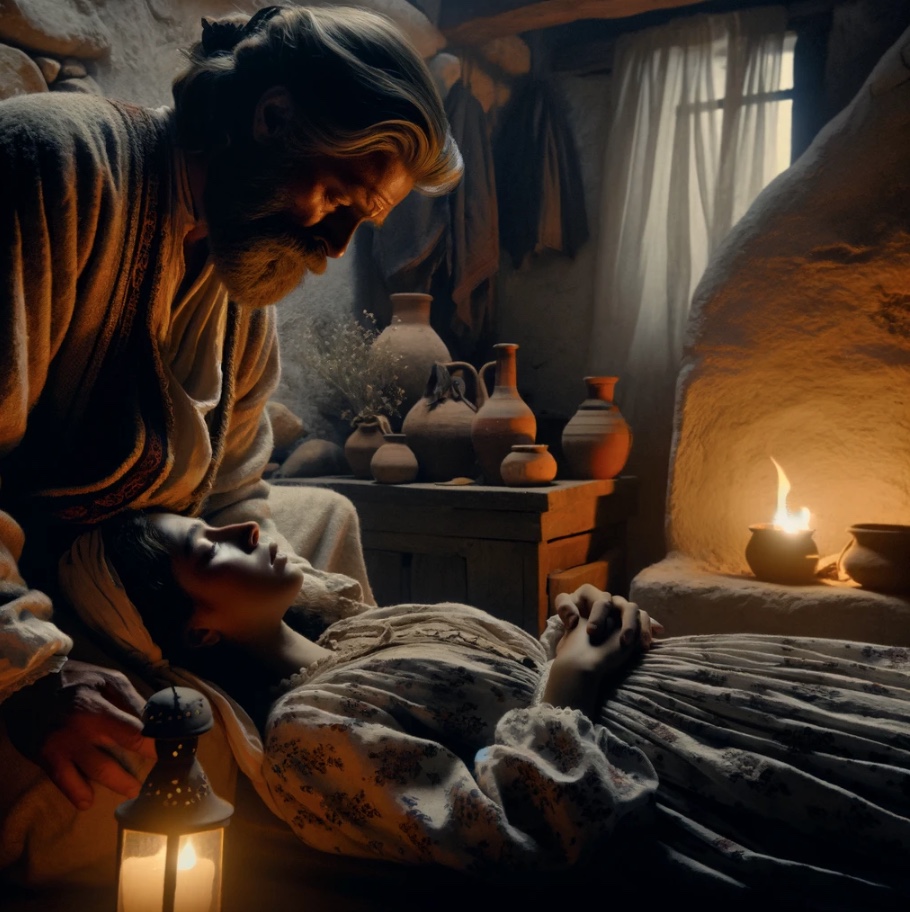
The wound forced her back to Kritsa, where the supposed young fighter was taken to the priest’s house to be nursed. Only there, on the threshold of death, did her true identity come to light: the father recognised the daughter he had believed lost, and both died, so the story goes, in each other’s arms. So ended a life at once heroic and tragic, which remains to this day among the most moving chapters of the Cretan struggle for freedom. In Kritsa a monument commemorates the young fighter: a statue entitled “The Thread of Life”, by the sculptor Nigel Ratcliffe, stands in the main street beside the village cultural association, and a second work by the same hand at Koutarantos shows the wounded Rodanthi in the arms of a comrade. The house in the village said to have been hers is kept as a small folk museum.
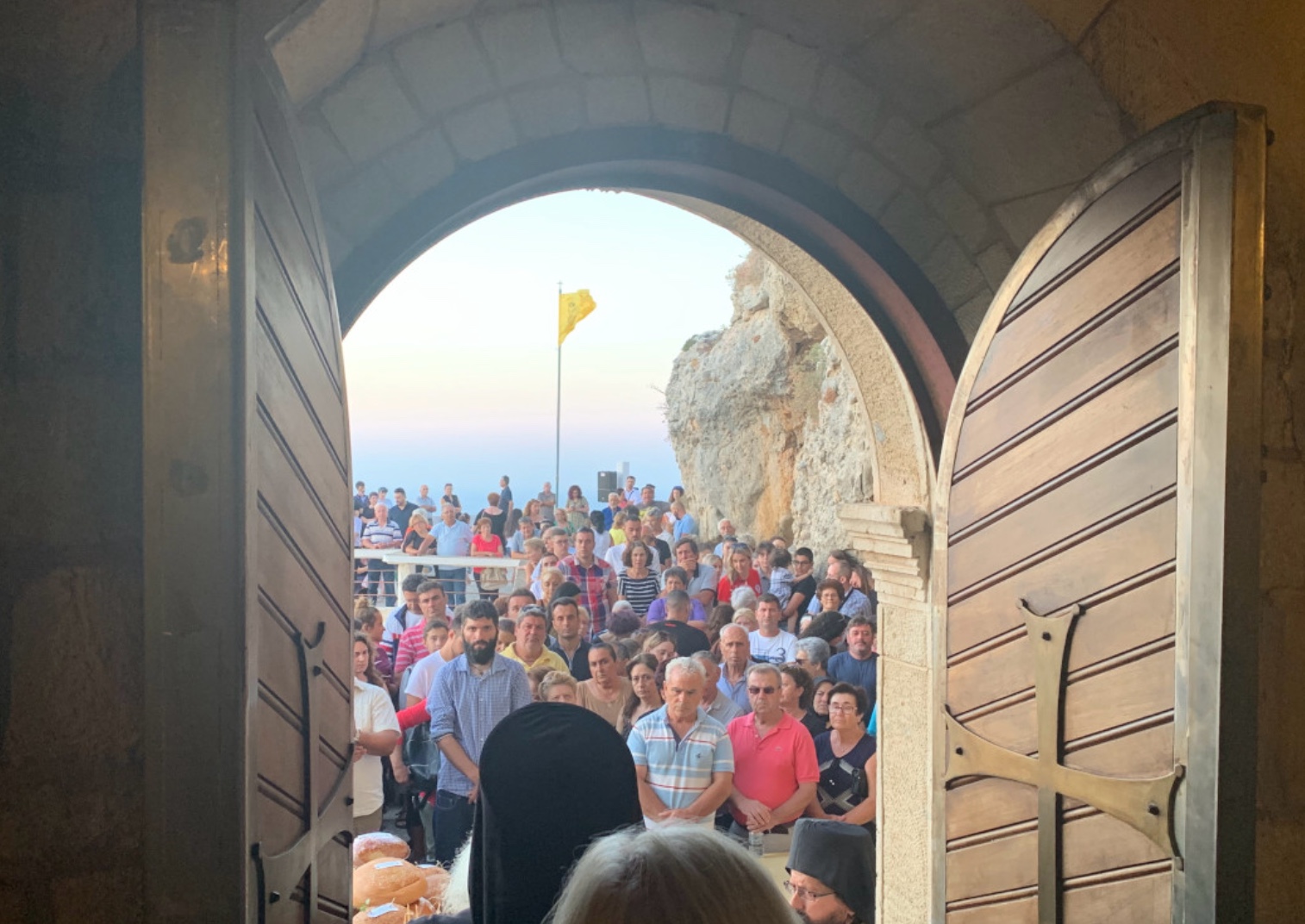
Thanks to endowments and to its own lands the monastery remained economically independent. Towards the end of the 19th century, around 1893, it possessed some 10,000 stremmata (about 1,000 hectares) of land reaching down to the coast, together with four dependent monasteries and metochia – Pyrovoli, Asari, Achlada and Vrigiomenos are named – and scattered plots in well over two hundred places in three dioceses. As neighbouring monasteries fell into decay, Faneromeni took over their spiritual and administrative care. The 20th century brought severe reverses: under a law of 1925 the monastery had to surrender three fifths of its land for the support of the refugees from Asia Minor, and more than once – around 1900 and again in 1930 – it was even declared dissolved on paper, before being recognised once more by law as a working monastery in 1961. Today only a small brotherhood lives here. Pilgrims, however, come from all over Crete; in the days before 15 August many set out on foot to fulfil a vow and to thank the All-Holy for help received. During the first half of August, the period of the fast of the Virgin, the monastery lodges numerous worshippers, who take part daily in the liturgy, vespers and the services of supplication (Paraklisis).
Miracles and the tradition of pilgrimage
Miracles associated with the icon of the Virgin
The monks and the faithful of the district tell of many answered prayers. The accounts that follow come from the tradition of the monastery and are given here as they are told at Faneromeni.
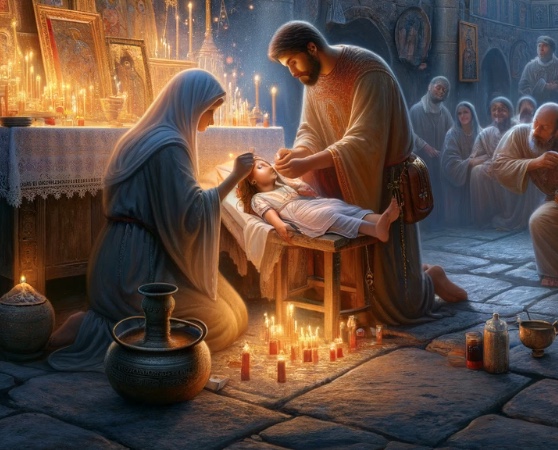
At the beginning of August 1997 a party of pilgrims from Heraklion arrived at the monastery. The family had the pious custom of climbing to the monastery on foot in the days of the Panagia, and had kept it up for more than ten years. They all set out together from Heraklion – parents and children, uncles and aunts, cousins – and covered the whole distance to Faneromeni on foot; the walk took about two days. Asked what miracle of the Panagia Faneromeni had moved them to this practice, they told the following story. Their daughter, then ten years old, had fallen ill with leukaemia. The child was examined and treated, but the hoped-for results failed to appear. In their despair and grief someone told them of the monastery of Faneromeni and of the wonder-working grace of the Mother of God. They came here with their daughter, bowed before the icon, took a little oil from the lamp and anointed their child with it. As they left the monastery both parents, without having spoken of it to each other, made the same vow: if the grace of the Panagia should help their daughter to recover, they would walk from their home to the monastery as pilgrims for as many years as the child was then old – that is, for ten years. The treatments that followed gave very encouraging results, and within a short time the girl had recovered completely.
Some fifteen years ago – so they say at the monastery – a woman from Heraklion who longed for a child turned to the nun Philothei of blessed memory, who was then serving at the monastery. She asked her to go up with her to the church in the night and pray together to the Panagia. And indeed the two of them went up to the cave church shortly after midnight and held their devotions. After the prayer the nun handed the woman a small piece of the wick of the lamp that burns before the icon of the Virgin. “Eat it on an empty stomach, after fasting,” she said. Some time later the woman gave birth to a healthy boy. As the doctor left the delivery room after the birth, he asked the mother: “Did you have this child by a miracle?” – “Yes, by a miracle. Why do you ask?” she replied. “Because I noticed this mark on the baby’s leg.” To her astonishment the mother discovered on her child’s ankle a small mark that looked like a tiny eye – exactly the shape and size of the scrap of wick from the lamp of the Panagia that she had eaten. The sign remained visible on the child’s leg for many years.
In the weeks before Easter 2006 a young soldier serving at the air force station of Ziros, in the east of Crete, visited the monastery to pray before the Panagia. On the way back he lost control of his car and plunged into a ravine, falling about 150 metres. When the rescue services had freed him and brought him to hospital, the doctors found that he had suffered nothing worse than a few superficial grazes. Through the protection of the Mother of God, the faithful are convinced, the young man was left unharmed as if by a miracle, while his car was no more than a heap of twisted metal.
Some years ago a mother and her son came to the monastery from the village of Anatoli, above Ierapetra. The child had had a birthmark under his eye since infancy. In time it had grown, had begun to bleed and had turned into one large sore; an operation seemed urgently necessary. Before matters came to that, mother and son made the pilgrimage to Faneromeni, took a little oil from the lamp of the All-Holy Mother of God and dabbed the wound with it every day. Within a few days it had disappeared entirely – and the birthmark with it.
In the hard years between the two great wars that shook Greece (1922–1940), a woman from Ierapetra who already had three children gave birth to a fourth. The child was born healthy, but after being badly chilled in the open air in the district of Asari, where the family was then living, he was left completely paralysed. The boy was about four years old. In her great poverty the mother saw no means of bringing him up, and resolved to entrust him to the monastery of Faneromeni. In the night she climbed up on foot and laid the child before the monastery gate. “May the Panagia take him into her care – or take him to herself,” she said to herself.
Next morning the monks found the child at the gate and decided to hand him over to the parish. In the night, however, the Mother of God appeared to the abbot in a dream and said to him: “In the morning take the child that you found at the gate, go down to the sea and bury him in the sand.” The following day the abbot told the fathers of the strange dream. The brethren were dismayed; they suspected that it might be a message from the Mother of God, yet shrank from carrying out the command. On the second night the abbot saw the Mother of God again, and with urgency she repeated the same words. In the morning, after the service, the elder announced to the monks once more the vision and the charge to bury the child in the sand – and again the brethren refused. On the third night the Mother of God came before the abbot yet again and commanded him emphatically to fulfil her bidding, or great misfortune would come upon them all.
Now the fathers were persuaded that this truly was the will of the Mother of God. They wrapped the child in a linen sheet, went down to the shore and did as they had been told: they dug the little body into the dunes so that only the head showed, and returned to the monastery. In the evening they all said the service of supplication (Paraklisis) to the All-Holy together, and the next day they celebrated the Divine Liturgy, to implore the Mother of God to reveal her providence to them. On the third day a farmer came up to the monastery with a child in his arms. It was the very boy whom the fathers had buried on the beach. The man said that he had heard cries on the shore and had taken the child out of the sand; the boy himself had given him to understand that he wished to be brought to the monastery. The Mother of God had healed him completely.
A married couple from Chania remained childless for twelve years. The two of them made many attempts, but even with the help of modern medicine the pregnancy they longed for did not come about. They meant to try their luck one last time with in vitro fertilisation. A few days before the procedure the woman saw in a dream a young woman dressed in black, standing high up on a rock and holding a small child in her arms. “This child will be yours if you come and bow before me,” she said. “Who are you?” asked the woman. “I am the All-Holy Mother of God Faneromeni,” answered the apparition, and vanished.
In the morning the woman told her husband of the dream and begged him to look for a church or monastery of the Panagia Faneromeni, so that they might go there as pilgrims. The man, unbelieving, soothed her and promised to find out where there was such a monastery. But he gave no credence to her words, and after a few days the apparition was forgotten. Some evenings later the black-clad Mother of God came to the woman in a dream once more and said for the second time: “Come and bow before me, and the child I am holding will be yours.” The next day the woman, in tears, again asked her husband to seek out the church of the Panagia Faneromeni – and again he attached scarcely any importance to her request and tried only to calm her.
On the eve of the procedure the Mother of God appeared to the woman a third time, now in an unmistakably stern tone: “Come and bow before me, and the child I am holding will be yours. Otherwise I shall let him go from my arms, and you will never bear a child.” Shaken, the woman rose and, weeping, begged her husband to drive with her to the Panagia Faneromeni. “Let us go to the doctor first and have the procedure; I promise you that the very next day we shall find out where this church is and go there,” he answered. So they went to the clinic, but the woman would not let herself be prepared for the treatment. The doctor saw how tense and oppressed she was, and hesitated. “Let her make her pilgrimage to the Mother of God first and find some peace, then come back and we shall go on. In her present state nothing can be done in any case,” he advised the husband.
And so the following day they made enquiries and learned of the monastery of Panagia Faneromeni near Ierapetra. Full of awe they drove there; it was the year 2000. They climbed the steep steps and stood before the cave church of the Mother of God. Then tears of wonder ran down the woman’s face: the rugged rocks and the landscape round the shrine were exactly those in which she had three times seen, in her dream, the Mother of God with the child in her maternal arms. She knelt before the holy icon, bowed down, and left the monastery full of hope. A few days later the couple returned to the clinic to be examined. After a short while the gynaecologist informed them that medical assistance was no longer required: the woman was pregnant.